Airlines That Allow Large Dogs in Cabin: What Actually Works in 2026
Key takeaways
- Under standard pet policies, major airlines such as Delta Air Lines and Alaska Airlines require dogs to fit in an under-seat carrier—effectively limiting cabin travel to small dogs, not large breeds.
- ITA Airways launched its Large Dog On Board service on August 3, 2026, allowing dogs up to 30 kg in the cabin without a carrier on select Italian domestic flights, following Ente Nazionale per l'Aviazione Civile (ENAC) authorization.
- JSX, a U.S. public charter operator, permits medium-to-large dogs up to 79 pounds in the cabin when the passenger purchases an adjacent seat, per JSX's Operator-Participant Contract dated June 30, 2025.
- On flights to, within, and from the United States, the U.S. Department of Transportation requires airlines to accept individually trained service dogs regardless of breed, though airlines may deny transport if a dog is too large to fit safely in the cabin.
- Emotional support animals are not service animals under the December 2020 U.S. DOT final rule and are treated as pets by U.S. carriers, subject to standard in-cabin size limits.
- The International Air Transport Association (IATA) states that only very small dogs and cats fit under aircraft passenger seats in approved carriers; individual airlines set specific weight and dimension caps.
- Italy's ENAC guidelines (May 2025) provide a regulatory framework for carrying pets above 8 kg in cabin on approved routes—a model other European Union member states have not yet widely adopted.
- Before booking, confirm pet limits for your exact flight, aircraft type, and route directly with the airline; policies differ by destination and change frequently.
Airlines that allow large dogs in cabin are rare: as of August 2026, almost every major commercial carrier limits in-cabin pet dogs to animals small enough to fit entirely inside an under-seat carrier—typically around 8 to 10 kilograms (17 to 22 pounds) including the kennel. If your dog exceeds that size under standard pet rules, your realistic options are a trained service dog on U.S. routes, ITA Airways on select Italian domestic flights, JSX on certain U.S. regional routes, or cargo/charter alternatives—not an extra seat on Delta, United, or American.
This guide explains which airlines and regulatory pathways actually permit larger dogs beside you in the passenger cabin, what weight and booking rules apply, and how official travel documents differ from digital animal identification products such as Animal Passport.
Quick Answer: Can a Large Dog Fly in the Cabin?
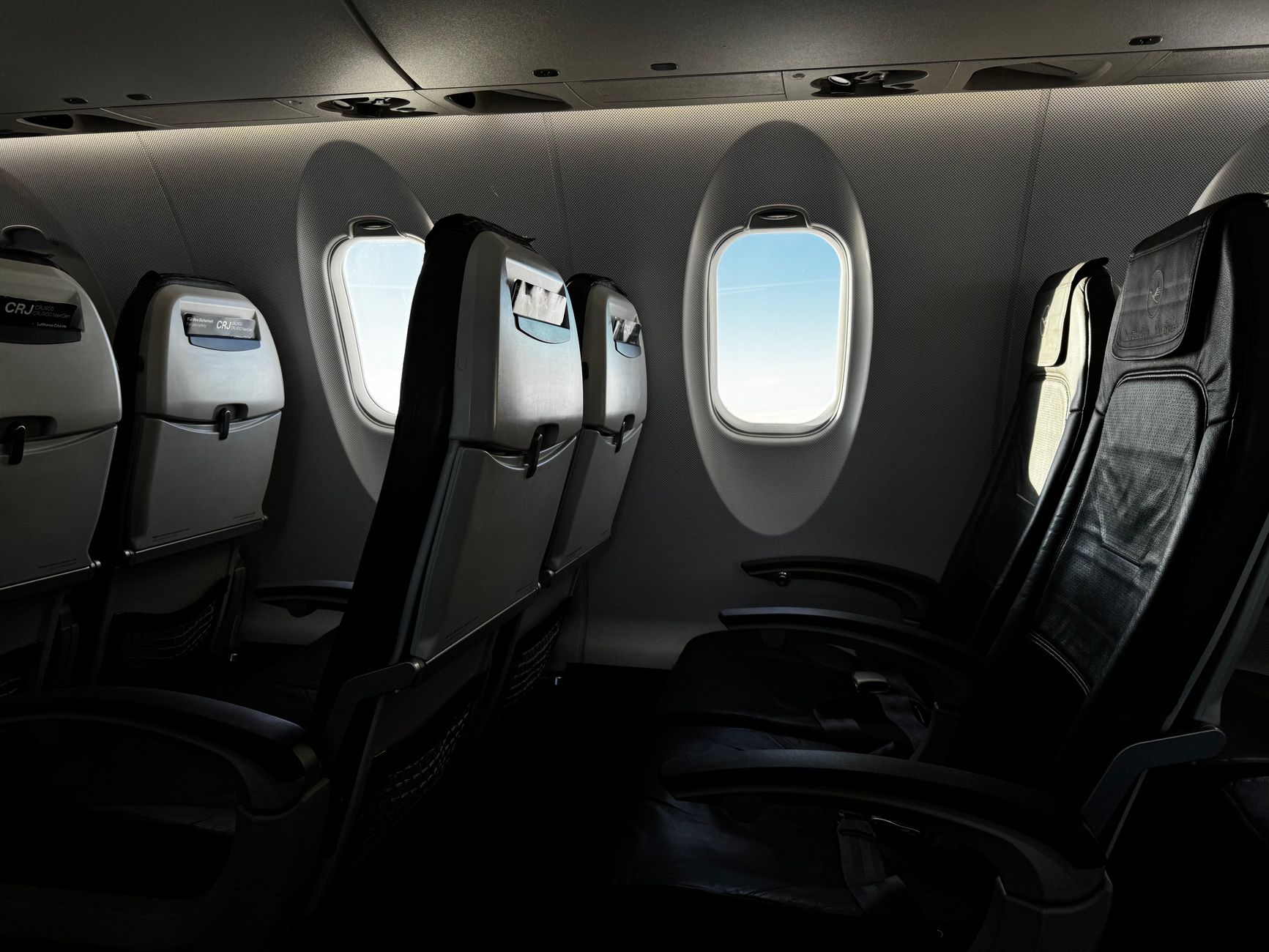
For most travelers flying with a pet—not a trained service dog—the honest answer is no on network airlines. The International Air Transport Association (IATA) notes in its passenger guidance that under-seat space on commercial aircraft accommodates only very small dogs and cats in compliant carriers (IATA, 2025). Delta Air Lines states that in-cabin pets must be small enough to fit comfortably in a kennel that fits fully under the seat, recommending maximum soft-sided dimensions of 18 inches by 11 inches by 11 inches (Delta Air Lines, 2026). Alaska Airlines publishes similar under-seat carrier limits of 17 inches by 11 inches by 9.5 inches for soft-sided kennels (Alaska Airlines, 2026).
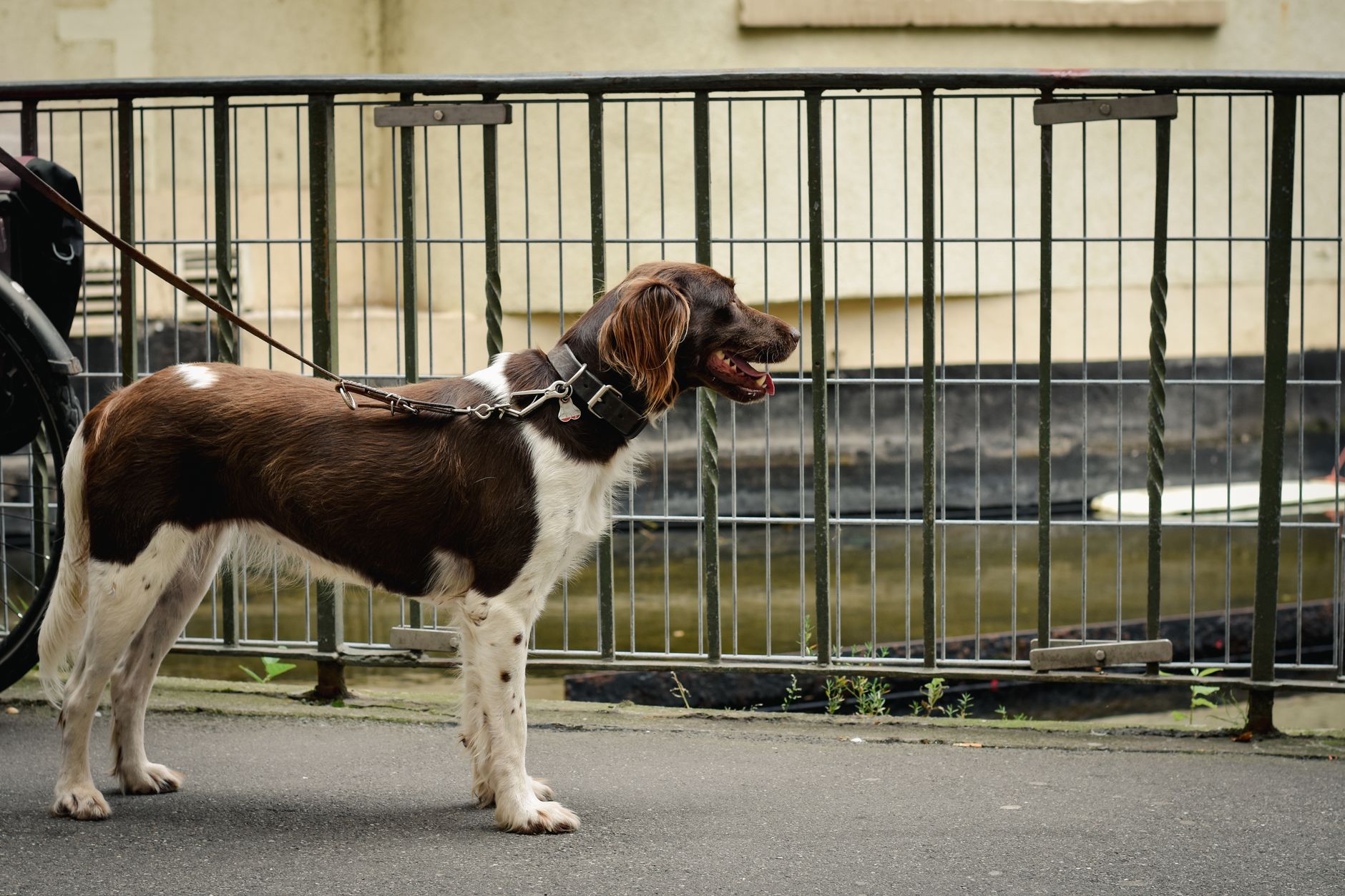
That physical constraint—not a published weight chart on most U.S. sites—is what excludes Labrador Retrievers, German Shepherds, and most dogs over roughly 20 pounds from cabin travel as pets.
Why Most Airlines Say No to Large Dogs in Cabin
IATA and under-seat carrier rules
IATA's Live Animals Regulations require in-cabin dogs and cats to travel in Container Requirement 1 (CR1) compliant kennels unless the animal qualifies as an assistance dog under separate rules (IATA, 2025). IATA's Traveler's Pet Corner states plainly: "Only small dogs and cats can go in the cabin" (IATA, 2026). Animals over 14 kg must be crated individually for hold transport under IATA container guidance (IATA, 2026).
European baseline: 8 kg in cabin
In the European Union, Commission Regulation (EU) No 965/2012 Acceptable Means of Compliance (AMC) historically limits cabin pets to 8 kg, with guide dogs exempt (ENAC, 2025). Italy's Ente Nazionale per l'Aviazione Civile (ENAC) has pursued alternative means of compliance under Regulation (EU) 965/2012, ARO.GEN.120, raising Italy's operational ceiling through airline-specific authorizations (ENAC, 2025).
Comparison: Airlines and Large-Dog Cabin Options (August 2026)
| Carrier / pathway | Max pet dog size (standard pet policy) | Carrier required? | Extra seat option? | Route scope |
|---|---|---|---|---|
| Major U.S. network airlines (Delta, United, American, Alaska) | Must fit under-seat kennel (effectively small dogs only) | Yes | No for pets | Varies by destination |
| ITA Airways — Large Dog On Board | Up to 30 kg (66 lb) in Business; up to 15 kg in Economy on approved flights | No (harness; floor placement) | Service uses reserved cabin spaces, not a generic extra seat purchase | Select Italian domestic flights from August 3, 2026 |
| JSX (U.S. public charter) | Up to 79 lb (36 kg) for medium-to-large dogs | No when using adjacent-seat option | Yes — adjacent seat at advertised fare | JSX network (U.S., Mexico, Caribbean regional routes) |
| Trained U.S. service dogs (ACAA / U.S. DOT) | No categorical weight or breed ban | No — dog at handler's foot space | Airline may reseat; not required to buy extra seat | Flights to, within, and from the United States |
| Standard EU network carriers (e.g., Lufthansa, Air France) | Typically 8–10 kg including carrier | Yes | No | International network |
Always reconfirm with the airline before purchase. This table summarizes published policies as of August 2026 and does not replace a booking confirmation.
ITA Airways: The First Scheduled Large-Dog Cabin Service
On July 29, 2026, ITA Airways announced the launch of its Large Dog On Board service, operational from August 3, 2026, on selected domestic scheduled flights (ITA Airways, 2026). According to the airline's press release, dogs weighing up to 30 kg may travel in the cabin without a carrier on designated "Large Dog" flights booked at least four days in advance through ITA Airways' Customer Information Assistance Office (CIAO) (ITA Airways, 2026).
Capacity is tightly controlled: a maximum of two large dogs per flight—one up to 30 kg in Business Class and one up to 15 kg in Economy Class—in reserved spaces (ITA Airways, 2026). During the first two months, only two standard-sized dogs (up to 10 kg) may also travel, seated at least eight rows away; that limit rises to four afterward (ITA Airways, 2026).
ENAC approved ITA Airways' request to raise the in-cabin weight limit from 10 kg to 30 kg on dedicated national routes after technical review, with operational monitoring shared with the European Union Aviation Safety Agency (EASA) (ENAC, 2026). ENAC's May 2025 guidelines describe demonstration flights in 2025 carrying medium and large dogs around 25 kg under controlled conditions, with harnesses, absorbent mats, and buffer seating as operational measures (ENAC, 2025).
International expansion depends on further regulatory review; as of August 2026 the service remains domestic Italy (ITA Airways, 2026).
JSX: Large Dogs via an Adjacent Seat (United States)
JSX operates Embraer 135/145 public charter flights with 30-seat cabins from private terminals across the United States, Mexico, and the Caribbean. JSX's Operator-Participant Contract, last updated June 30, 2025, defines two pet tiers:
- Small pets under 30 lb in an approved under-seat carrier (up to 13" W × 11" H × 17" D): $100 pet fee per segment (JSX, 2025).
- Medium-to-large dogs too large for a carrier but weighing 79 lb or less: the passenger must purchase an adjacent seat at the advertised fare; the dog lies on the floor in front of that seat without blocking the aisle or the passenger's foot space (JSX, 2025).
Pet bookings—including large dogs—must be arranged through JSX Customer Support at (800) 435-9579; they cannot be ticketed through standard online booking alone (JSX, 2025).
Major Network Airlines: Small Dogs Only
Delta Air Lines
Delta permits dogs, cats, and household birds in the cabin on eligible routes when the animal fits in a leak-proof, ventilated kennel under the forward seat (Delta Air Lines, 2026). Delta recommends soft-sided kennels no larger than 18" × 11" × 11" (Delta Air Lines, 2026). There is no published option to purchase a second seat for a large pet dog. In-cabin pet fees range from $95 to $200 USD one-way depending on route (Delta Air Lines, 2026).
Alaska Airlines
Alaska Airlines accepts pets in cabin only when they fit in an under-seat soft-sided carrier measuring up to 17" × 11" × 9.5", with a $100 one-way fee on most routes (Alaska Airlines, 2026). Alaska offers comfort seats for passengers needing extra space, but its pets-in-cabin policy still requires the animal to remain in the under-seat kennel—it does not convert a comfort seat into a large-dog cabin ticket (Alaska Airlines, 2026).
United Airlines, American Airlines, and European flag carriers
United Airlines and American Airlines follow the same under-seat kennel model as Delta for pet dogs, with route-specific embargoes and breed restrictions. European carriers such as Lufthansa and Air France typically cap cabin pets at 8 kg including the carrier under EU operational practice, unless a national authority such as ENAC grants an approved alternative on specific flights.
Service Dogs: When a Large Dog Can Fly Cabin on Any U.S. Airline
The U.S. Department of Transportation (USDOT) defines a service animal under the Air Carrier Access Act (ACAA) as a dog individually trained to perform tasks for a person with a disability—regardless of breed or type (U.S. Department of Transportation, 2026). Since the December 10, 2020 final rule published in the Federal Register, emotional support animals are not service animals for air travel (U.S. Department of Transportation, 2020).
Airlines may deny a service dog only if it is too large or heavy to be accommodated in the cabin, poses a direct threat, causes significant disruption, or lacks required USDOT forms (U.S. Department of Transportation, 2026). USDOT enforcement guidance states airlines may not impose categorical weight bans on service dogs (U.S. Department of Transportation, 2019). If a large service dog cannot fit in the assigned foot space, airlines must offer alternatives such as reseating, rebooking, or cargo transport at no charge under ACAA practice—not refuse the dog solely for size.
On international segments, destination-country acceptance of service dogs still applies (U.S. Department of Transportation, 2026).
What About Buying an Extra Seat for Your Pet?
Unlike JSX or ITA Airways' reserved-space model, major U.S. and European network carriers do not sell a passenger seat as a large-dog cabin ticket under standard pet policies. Third-party blog claims about Alaska Airlines "extra seat for large dogs" misread the comfort-seat policy, which adds space for the human passenger while the pet must still occupy an under-seat carrier (Alaska Airlines, 2026).
If your dog cannot qualify as a trained service animal and does not fit carrier limits, approved alternatives include:
- Manifest cargo or checked pet transport in an IATA CR1-compliant crate (subject to airline and seasonal embargoes).
- Ground transport or pet relocation specialists for domestic moves.
- Shared private charter operators that market cabin travel for dogs of any size—at substantially higher per-seat cost than commercial economy.
- ITA Airways or JSX where route and eligibility match your itinerary.
Health, Identification, and Travel Documents
Airline pet acceptance is separate from government import rules. For dogs entering the United States, Delta Air Lines summarizes CDC requirements that dogs appear healthy, carry a microchip, are at least six months old, and are accompanied by a completed CDC Dog Import Form, with additional rabies documentation depending on origin (Delta Air Lines, 2026). The European Union Pet Travel Scheme uses official EU pet passports issued by authorized veterinarians—not commercial biometric apps.
Animal Passport is a digital livestock and companion-animal identification tool that binds muzzle biometrics (nose-print patterns unique like a fingerprint) to owner, breed, estimated age, body condition score, and vaccination history via phone-based capture. It is not a government-issued EU pet passport or airline boarding pass. In August 2025, Animal Passport supported livestock flood rescue in Pakistan so farmers could reclaim cattle when paper ear tags washed away—illustrating why durable, photo-verified identity matters when travel or disaster disrupts paper records. For cabin travel, carry whatever veterinary certificates and microchip documentation your destination requires, and use supplementary ID only when your airline or authority accepts it.
Read more about animal identity and welfare on the Animal Passport blog.
Step-by-Step: Planning Cabin Travel With a Medium or Large Dog
- Measure and weigh your dog including harness; compare against the carrier's published limit or ITA/JSX thresholds.
- Confirm the pathway: pet policy, service-dog status, or charter—do not assume an extra seat works on network airlines.
- Call the airline (or JSX/ITA CIAO) before paying for tickets; pet space is often first-come, first-served (Delta Air Lines, 2026).
- Obtain veterinary and import documents early—IATA warns international pet paperwork can take months (IATA, 2025).
- Acclimate your dog to a carrier if using the small-pet pathway; IATA advises against sedation in cabin (IATA, 2025).
- Arrive early for pet check-in and review relief-area locations at connecting airports.
Key Takeaways for Pet Owners
The search phrase "airlines that allow large dogs in cabin" reflects a real gap in commercial aviation: most carriers built cabin pet rules around under-seat kennels sized for cats and toy breeds. As of August 2026, Italy's ENAC-regulated ITA Airways Large Dog On Board service and JSX's adjacent-seat model are the clearest scheduled options for pet dogs too large for a carrier but not trained as U.S. service animals. Everywhere else, plan for cargo, ground transport, or charter—or ensure your dog legitimately qualifies as a trained service animal under USDOT rules if flying to, within, or from the United States.
Policies evolve. ENAC shares operational results with EASA (ENAC, 2026), and ITA Airways intends to expand Large Dog On Board domestically before seeking international approval (ITA Airways, 2026). Recheck official airline pages within days of departure.
Last updated: August 2026 by the Animal Passport editorial team. This article is informational only—not veterinary, legal, or airline booking advice.
FAQ
- Do any major U.S. airlines allow large dogs in the cabin as pets?
- No. Delta, United, American, and Alaska Airlines require pet dogs to fit in an under-seat carrier, which effectively limits cabin travel to small dogs. None of these carriers sells an extra passenger seat for a large pet under standard pet policies as of August 2026.
- Which airline allows the heaviest pet dogs in the cabin?
- ITA Airways allows dogs up to 30 kg (about 66 lb) without a carrier on select Italian domestic Large Dog On Board flights from August 3, 2026. JSX allows pet dogs up to 79 lb in the cabin when the owner buys an adjacent seat on its public charter network.
- Can I buy a second seat so my large dog can fly in the cabin on Delta or United?
- No. Delta and United require in-cabin pets to remain in a kennel under the seat regardless of how many seats you purchase. JSX is a notable exception where an adjacent seat explicitly enables a large dog on the cabin floor.
- Are emotional support dogs allowed in the cabin on U.S. flights?
- Emotional support animals are treated as pets, not service animals, under the U.S. Department of Transportation's December 2020 final rule. They must meet the same under-seat carrier size limits as other pet dogs unless an individual airline offers a separate program.
- Can a Great Dane or other large breed fly in the cabin as a service dog?
- On flights to, within, and from the United States, airlines must accept individually trained service dogs regardless of breed. However, the dog must fit safely in your foot space or the airline must offer reseating, rebooking, or free cargo transport if no seat works.
- What is the weight limit for dogs in cabin on most international airlines?
- Most European and global carriers limit cabin pets to about 8 to 10 kg including the carrier, following IATA container guidance and EU operational practice. Italy's ENAC has authorized higher limits on approved ITA Airways domestic routes.
- How do I book a large dog on an ITA Airways cabin flight?
- Contact ITA Airways' Customer Information Assistance Office (CIAO) at least four days before departure to book a Large Dog On Board flight. The service is available only on selected domestic routes designated for large dogs.
- Is Animal Passport the same as an EU pet passport for flying?
- No. Animal Passport is a private digital identification tool using muzzle biometrics. EU pet passports are official veterinary documents under the EU Pet Travel Scheme. Airlines and border authorities require government-approved health and identification paperwork, not a commercial biometric app alone.
Sources
- ITA Airways Launches the Large Dog On Board Service (Press Release, July 29, 2026) — ITA Airways
- ENAC Guidelines on the Carriage of Pets in Cabin Above 8 kg — Ente Nazionale per l'Aviazione Civile (ENAC)
- Enac: via libera ai PET fino a 30 kg sui voli nazionali ITA Airways — Ente Nazionale per l'Aviazione Civile (ENAC)
- Service Animals — Aviation Consumer Protection — U.S. Department of Transportation
- Traveler's Pet Corner — International Air Transport Association (IATA)
- Guidance for Passengers Traveling with their Dog or Cat in the Cabin — International Air Transport Association (IATA)
- Pet Travel Overview — Delta Air Lines
- JSX Operator-Participant Contract (Section 13: Travel with Pets, June 30, 2025) — JSX
- Traveling by Air with Service Animals (Final Rule, December 10, 2020) — U.S. Federal Register / U.S. Department of Transportation
- Final Statement of Enforcement Priorities Regarding Service Animals on Flights — U.S. Department of Transportation
Animal Passport binds a muzzle biometric to a digital record farmers, buyers, and insurers can verify in the field.