American Airlines Cat Policy: Carry-On Fees, Carrier Sizes and Rules for 2026

Key takeaways
- American Airlines charges $150 per kennel, each way, to fly a cat in the cabin within and between the U.S., Canada, Mexico, Central America and the Caribbean (American Airlines, 2026).
- Most travelers can only fly a cat as a carry-on; checked pets are limited to active-duty U.S. military and U.S. State Department Foreign Service personnel on official orders.
- The recommended soft-sided carrier is 18 x 11 x 11 inches; hard-sided carriers max out at 19 x 13 x 9 inches on mainline and 16 x 12 x 8 inches on American Eagle flights.
- Cats must be at least 8 weeks old for travel within the U.S. and Puerto Rico, and American does not accept sedated or tranquilized pets, following American Veterinary Medical Association (AVMA) guidance.
- Carry-on pets are not allowed to or from Hawaii, on trans-Atlantic or trans-Pacific trips, to Jamaica, or to or from Argentina, Brazil, Chile, Colombia and Uruguay.
- Persian, Himalayan, Burmese and Exotic Shorthair cats (and their mixes) are refused as checked pets and by American Airlines Cargo because of breathing risks.
- The U.S. Centers for Disease Control and Prevention (CDC) does not require proof of rabies vaccination for cats entering the U.S., but cats must look healthy on arrival.
- Animal Passport is a biometric livestock ID tool, not an airline-accepted pet travel document; follow American Airlines, CDC and USDA APHIS paperwork rules for your cat.
American Airlines cat policy, in short: as of October 2026, most travelers can fly one cat in the cabin in a carrier that fits under the seat in front of them, for a $150 fee per kennel, each way, on routes within and between the U.S., Canada, Mexico, Central America and the Caribbean (American Airlines, 2026). Cats must be at least 8 weeks old for U.S. travel, must not be sedated, and cannot fly in the cabin to Hawaii or across the Atlantic or Pacific.
The American Airlines cat policy is the set of rules American Airlines publishes on aa.com that controls when, how and for what fee a domestic cat can travel with a passenger, whether in the cabin, as a checked pet, or through American Airlines Cargo. This guide pulls those rules from American's official pages and the federal agencies that set entry and screening requirements, so you can plan a trip with your cat without surprises at the ticket counter.
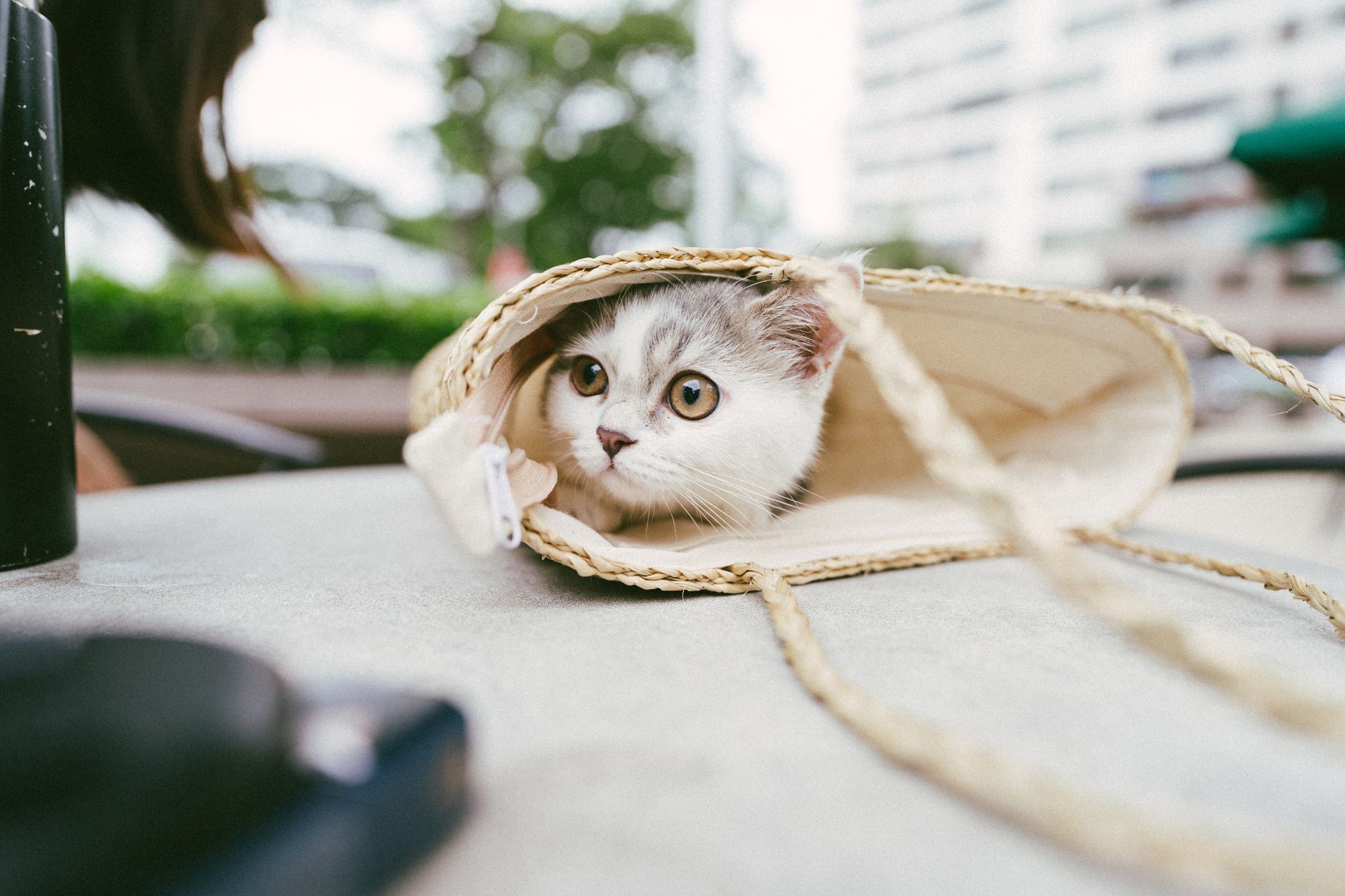
Quick answer: what American Airlines allows for cats
American Airlines states that carry-on pets "are limited to cats and dogs that meet the size, age and destination requirements" (American Airlines, Traveling with pets, 2026). For the large majority of travelers, the cabin is the only option, because American only accepts checked pets at the ticket counter from active-duty U.S. military and U.S. State Department Foreign Service personnel traveling on official orders.
| Rule | American Airlines requirement (October 2026) |
|---|---|
| Carry-on cat fee | $150 per kennel, each way |
| Checked pet fee (military / State Department only) | $200 per kennel; $150 to or from Brazil |
| Soft-sided carrier (recommended) | 18 x 11 x 11 in (46 x 28 x 28 cm), all flights |
| Hard-sided carrier, mainline | 19 x 13 x 9 in (48 x 33 x 22 cm) |
| Hard-sided carrier, American Eagle | 16 x 12 x 8 in (40 x 30 x 20 cm) |
| Minimum age | 8 weeks within the U.S. and Puerto Rico |
| Sedation | Not accepted |
| Cabin pets to Hawaii | Not allowed |
| Extra bag allowed with pet | One personal item or one carry-on bag, not both |
Can I bring my cat in the cabin on American Airlines?
Yes. According to American Airlines (2026), you can bring one pet carrier as a carry-on if you pay the carry-on pet fee and your pet stays in the carrier, under the seat in front of you, for the entire flight. Your cat cannot sit on your lap or ride in an empty seat.
Bringing a cat also changes your own bag allowance. American Airlines says you may bring only one additional item on board with your pet: either a personal item such as a purse or small handbag, or a carry-on bag that fits in the overhead bin. Pet strollers must be checked at the ticket counter, and normal checked bag fees apply.
Carrier size rules
American Airlines (2026) sets these carrier rules for carry-on pets:
- Your cat must fit comfortably inside the closed, zipped carrier.
- Soft-sided, collapsible carriers are recommended. They must be secure, padded, made of water-repellent material and have nylon mesh ventilation on three or more sides.
- Soft carriers can be slightly larger than the listed size but must fit under the seat without excessive collapsing.
- Non-collapsible (hard) kennels cannot exceed the under-seat space of any aircraft on your itinerary, and American advises calling Reservations to confirm maximum dimensions.
Because American Eagle regional jets have smaller hard-carrier limits than mainline jets, a soft carrier at or under 18 x 11 x 11 inches is the safest choice if your trip includes a regional connection.
How many cats fit on one flight?
American Airlines caps the number of pet carriers per flight, so space is first-come. On Airbus A319, A320, A321, A321neo and Boeing 737 aircraft, the limit is 20 pet carriers across all cabins, excluding service animals (American Airlines, 2026). On American Eagle CRJ and ERJ regional jets, the limit is 1 carrier in the premium cabin and 5 in the Main Cabin.
Some premium cabins have no under-seat space at all. American Airlines says carry-on pets are not permitted in First or Business on the Boeing 777-200, 777-300ER, 787-8 and 787-9, or in Row 11 of the Airbus A321XLR. On the three-cabin Airbus A321T, First and Business pets ride in two dedicated animal-friendly compartments at the front of the plane, and the pet plus carrier must not exceed 20 pounds (9.07 kg).
Seats you cannot choose with a cat
Due to Federal Aviation Administration (FAA) safety requirements or a lack of under-seat storage, American Airlines (2026) does not allow carry-on pets in bulkhead seats, exit rows, or seat 13D on the Airbus A321neo.
How much does it cost to fly a cat on American Airlines?
The carry-on pet fee is $150 per kennel, according to both American's pets page and its Bag and optional fees page (American Airlines, 2026). That fee applies in Main Cabin, Premium Economy, Business and First. Key fee rules from American Airlines:
- Pet fees are nonrefundable and apply per kennel, each way.
- If your trip includes a stopover or connection of 4 hours or more, fees apply to each connection segment.
- You pay at the airport or a travel center by credit card or paper voucher where accepted; American does not accept cash or checks.
- American does not collect pet fees for partner airlines, even on codeshare flights with an American flight number. Look for "Operated by" on your ticket and pay that airline at check-in.
- Flights departing Canada show pet fees in Canadian dollars on a separate page.
A round trip with one cat on a nonstop domestic route therefore costs $300 in pet fees on top of your ticket.
Where can a cat fly in the cabin on American Airlines?
American Airlines (2026) says you can travel with a pet on most flights up to 12 hours, including within the 48 contiguous states, between the U.S. and Canada, Alaska, Mexico, Puerto Rico, St. Croix and St. Thomas. Its fee table also lists Central America and the Caribbean, "based on specific country's entry policy."
Carry-on pets are not allowed on these routes, per American Airlines (2026):
- To or from Hawaii
- Any trans-Atlantic trip
- Any trans-Pacific trip
- To Jamaica
- To or from Argentina, Brazil, Chile, Colombia and Uruguay
American also notes that pets flying to Trinidad and Tobago (POS) cannot arrive before 8 a.m. or after 4 p.m. For Mexico, the New World Screwworm inspection certificate rule on American's page applies to dogs, not cats, but Mexico's own entry rules still apply to your cat.
Age, breed and health rules for cats
Minimum age
American Airlines (2026) requires cats to be at least 8 weeks old when traveling within the U.S. and Puerto Rico. American Airlines Cargo adds that older pets and very young pets are more susceptible to travel stress and recommends talking to a veterinarian before the trip.
Snub-nosed (brachycephalic) cats
American Airlines does not accept brachycephalic cats "of any 'mix'" as checked pets, naming Burmese, Persian, Himalayan and Exotic Shorthair (American Airlines, 2026). American Airlines Cargo applies the same four-breed restriction because of hereditary respiratory issues. These breed lists appear under the checked-pet and cargo rules; the carry-on section does not list a breed ban, so a Persian in an under-seat carrier is not excluded by the published cabin rules. Confirm with Reservations if you are unsure.
No sedation
"As recommended by the American Veterinary Medical Association (AVMA), we don't accept pets that have been sedated or tranquilized," American Airlines states, explaining that sedated pets face higher respiratory and cardiovascular risk at altitude (American Airlines, 2026). American Airlines Cargo suggests acclimating your cat to its carrier well in advance instead, and asking your veterinarian before trying any calming product.
Health certificates
American's published health certificate rule sits under checked pets: a veterinarian must issue it within 10 days of travel, within 60 days of your return on the same ticket, or within 10 days of your return on a separate ticket (American Airlines, 2026). For carry-on cats, American points you to destination entry requirements. Your destination state, territory or country may require a certificate even if the airline does not, so check with a United States Department of Agriculture (USDA)-accredited veterinarian.
How to add a cat to your American Airlines booking
- Find your trip on aa.com or in the American app.
- In the Additional Services section, select "Add carry-on pets."
- Review and agree to the carry-on pet requirements.
- Select the flights your cat will travel on.
- Confirm the carry-on pet to complete the change.
- At the airport, go to the American ticket counter to pay the $150 fee and have your cat and carrier checked against the requirements.
These steps come directly from American Airlines (2026). Add your cat as early as possible, because each aircraft has a fixed carrier limit.
Getting your cat through airport security
The Transportation Security Administration (TSA) asks travelers to remove the pet from its carrier and send the empty case through the X-ray machine, then carry the pet through the metal detector, keeping control with a leash that is removed for the walk-through (TSA FAQ, accessed October 2026). TSA also says carriers undergo visual and/or physical inspection and reminds travelers to contact the airline about its pet policy before arriving.
Because cats can bolt in a busy checkpoint, a snug harness fitted at home gives you something secure to hold during the few seconds your cat is outside the carrier. If your cat is especially nervous, ask the TSA officer what screening options are available before you open the carrier.
What if my cat cannot fly in the cabin?
If your cat is too large for an under-seat carrier, or you are not eligible for checked pets, American directs you to American PetEmbark, the pet shipping service of American Airlines Cargo. Key rules from American Airlines Cargo (2026):
- Domestic pets under 100 pounds combined with kennel, in a kennel no larger than 36 x 26 x 28 inches, fly as Priority Parcel Service (PPS); international or larger pets fly as ExpediteFS.
- An additional $150 handling fee per air waybill applies on top of animal rates.
- Warm-blooded animals travel only when ground temperatures are between 45°F and 85°F; between 20°F and 44°F requires a veterinarian's acclimation letter, and nothing moves below 20°F or above 85°F.
- Comfort stops for cats are only required on itineraries longer than 24 hours.
- Pets are not carried on certain Airbus A319, A320 and A321 variants, except on New York JFK to or from Los Angeles (LAX) and San Francisco (SFO).
- Bookings open up to 10 days ahead; American recommends booking at least 24 hours in advance.
American Airlines Cargo also offers active-duty U.S. military members a 50% discount on published rates for cats and dogs moving within the domestic U.S. and San Juan under PCS or TDY orders.
Flying a cat into the United States
Cat entry rules are lighter than dog rules. The U.S. Centers for Disease Control and Prevention (CDC) says cats must appear healthy upon arrival, may be inspected at ports of entry, and may be refused if they show evidence of a disease that can spread to people (CDC, 2025). Cats do not need proof of rabies vaccination to enter the U.S., though CDC recommends vaccination and says your U.S. destination may require it. All cats arriving in Hawaii and Guam, even from the mainland, face local quarantine rules.
CDC also says it does not require general health certificates for pets entering the U.S., but airlines and states may. That is why the airline's rules and your destination's rules both matter.
For trips leaving the U.S., the United States Department of Agriculture Animal and Plant Health Inspection Service (USDA APHIS) advises contacting a USDA-accredited veterinarian as soon as you decide to travel, so they can identify the destination country's entry requirements and help obtain a USDA-endorsed pet health certificate (USDA APHIS, page last modified March 2026).
Where the official sources differ
American's own pages are consistent on the $150 cabin fee, but a few details read differently depending on where you look:
- Routes: the destinations list names the U.S., Canada, Mexico, Puerto Rico, St. Croix and St. Thomas, while the fee table also covers Central America and the Caribbean, subject to each country's entry rules. Check your specific route before booking.
- Temperature: American's passenger pets page and American Airlines Cargo both use a 45°F to 85°F window, with a veterinarian's acclimation letter allowing travel down to 20°F. The passenger pets page adds a seasonal ban: pets not traveling in the cabin cannot fly to, through or from Phoenix, Tucson, Las Vegas or Palm Springs from May 1 to September 30. American frames these temperature limits around checked and cargo pets, not cabin cats.
- Two pets in one carrier: American's published two-pets-per-kennel rule (same species, under 20 pounds each, 8 weeks to 6 months old) appears in its checked and cargo guidance, not in the carry-on section. Ask Reservations before assuming two kittens can share an under-seat carrier.
Animal Passport is not a pet travel document
Travelers sometimes search for a "pet passport" when booking a flight, so to be clear: Animal Passport is a digital animal and livestock identity record built on muzzle biometrics, where an animal's nose print works like a fingerprint. Using a phone, it links an animal to its owner, breed, estimated age (from a dental photograph, with a confidence score), body condition score from 1 to 5 (from a side-profile photo), and vaccination history. In August 2025 it was used in livestock flood rescue in Pakistan, helping farmers reclaim animals after paper tags washed away.
Animal Passport is not a government-issued travel document, and American Airlines, CDC and USDA APHIS do not list it as an accepted document for flying a cat. For your flight, rely on the airline's carry-on rules, any health certificate your destination requires, and, for international trips, the official paperwork your USDA-accredited veterinarian arranges. More identity and animal-movement guides are on the Animal Passport blog.
Bottom line
As of October 2026, flying a cat on American Airlines means booking the cabin early, paying $150 each way, using a soft carrier of about 18 x 11 x 11 inches, skipping sedation, and avoiding Hawaii and long-haul international cabin travel. If your cat cannot fly in the cabin, American PetEmbark through American Airlines Cargo is the alternative, with its own temperature, breed and fee rules. Because airline pet policies change, recheck aa.com within a week of departure.
By Animal Passport. Last updated October 6, 2026. This guide summarizes published airline and government rules and is not veterinary or legal advice.
FAQ
- How much does American Airlines charge to fly a cat?
- As of October 2026, American Airlines charges $150 per kennel, each way, for a carry-on cat within and between the U.S., Canada, Mexico, Central America and the Caribbean. Fees are nonrefundable and apply again on connections of 4 hours or more.
- What size cat carrier does American Airlines allow?
- American Airlines recommends a soft-sided carrier of 18 x 11 x 11 inches (46 x 28 x 28 cm) on all flights. Hard-sided carriers can be up to 19 x 13 x 9 inches on mainline flights and 16 x 12 x 8 inches on American Eagle flights.
- Can my cat sit on my lap on an American Airlines flight?
- No. American Airlines requires your cat to stay inside its carrier, under the seat in front of you, for the entire flight.
- Can I check my cat as baggage on American Airlines?
- Only if you are active-duty U.S. military or U.S. State Department Foreign Service personnel traveling on official orders. Other travelers must fly the cat in the cabin or ship it through American Airlines Cargo's PetEmbark service.
- How old does a cat need to be to fly on American Airlines?
- Cats must be at least 8 weeks old to travel within the U.S. and Puerto Rico on American Airlines. International destinations may set a higher minimum age.
- Can I fly my cat to Hawaii on American Airlines?
- Not in the cabin, because American Airlines does not allow carry-on pets to or from Hawaii. Cats can reach Hawaii as checked pets (eligible travelers only) or through American Airlines Cargo, connecting only via Honolulu and following Hawaii's quarantine rules.
- Does American Airlines allow Persian or other snub-nosed cats?
- American Airlines and American Airlines Cargo refuse Burmese, Persian, Himalayan and Exotic Shorthair cats and their mixes as checked or cargo pets because of breathing risks. The published carry-on rules do not list this breed ban, so confirm with Reservations before booking a cabin seat.
- Does my cat need a rabies vaccine to enter the United States?
- No. The U.S. Centers for Disease Control and Prevention (CDC) does not require proof of rabies vaccination for cats entering the U.S., but cats must look healthy on arrival, and CDC recommends rabies vaccination.
Sources
- Traveling with pets — American Airlines
- Bag and optional fees — American Airlines
- Policies & Restrictions - Pets & Animals — American Airlines Cargo
- FAQs - Pets & Animals — American Airlines Cargo
- Bringing an Animal into the U.S. — U.S. Centers for Disease Control and Prevention (CDC)
- Can I take my pet through the security checkpoint? — Transportation Security Administration (TSA)
- Travel With a Pet — USDA Animal and Plant Health Inspection Service (APHIS)