Best Pet Transportation Services: How to Choose a Safe, Legal Pet Shipper

Key takeaways
- The best pet transportation services are IPATA-member companies that combine ground or air logistics with paperwork handling for USDA APHIS and destination-country entry rules.
- Cross-country ground transport for one dog or cat typically costs $800–$2,000+, while international air shipping can run $1,000–$5,000+ depending on crate size, route, and destination requirements.
- USDA APHIS does not issue pet passports; it endorses health certificates issued by USDA-accredited veterinarians, with endorsement fees starting at $101 as of January 10, 2025.
- The EU pet passport is an official document issued only by an authorized EU veterinarian for dogs, cats, and ferrets moving within the EU — it is unrelated to any private identification app.
- IATA's Live Animals Regulations (LAR), updated for January 1, 2026, set worldwide standards for crates, brachycephalic-breed restrictions, and in-cabin pet handling that legitimate shippers must follow.
- IPATA does not ship pets itself; verify a shipper through IPATA's own member directory, since there is no legitimate company that puts 'IPATA' in its business name.
- Interstate pet travel rules are set by the destination state's veterinarian office, not by USDA APHIS, so requirements can differ from international export rules.
- Animal Passport's muzzle-biometric ID is a private livestock identification tool, not a government pet travel document — it should never be substituted for an APHIS health certificate or EU pet passport.
The best pet transportation services are professional pet shippers — usually members of the International Pet and Animal Transportation Association (IPATA) — who combine ground or air logistics with the paperwork your pet legally needs, including a USDA-accredited veterinary health certificate for international moves. Costs range from roughly $800 for regional ground transport to several thousand dollars for international air shipping. This guide compares your options, explains the official rules from USDA APHIS, IATA, and the European Commission, and shows where private digital ID tools fit in.
What counts as a "pet transportation service"?
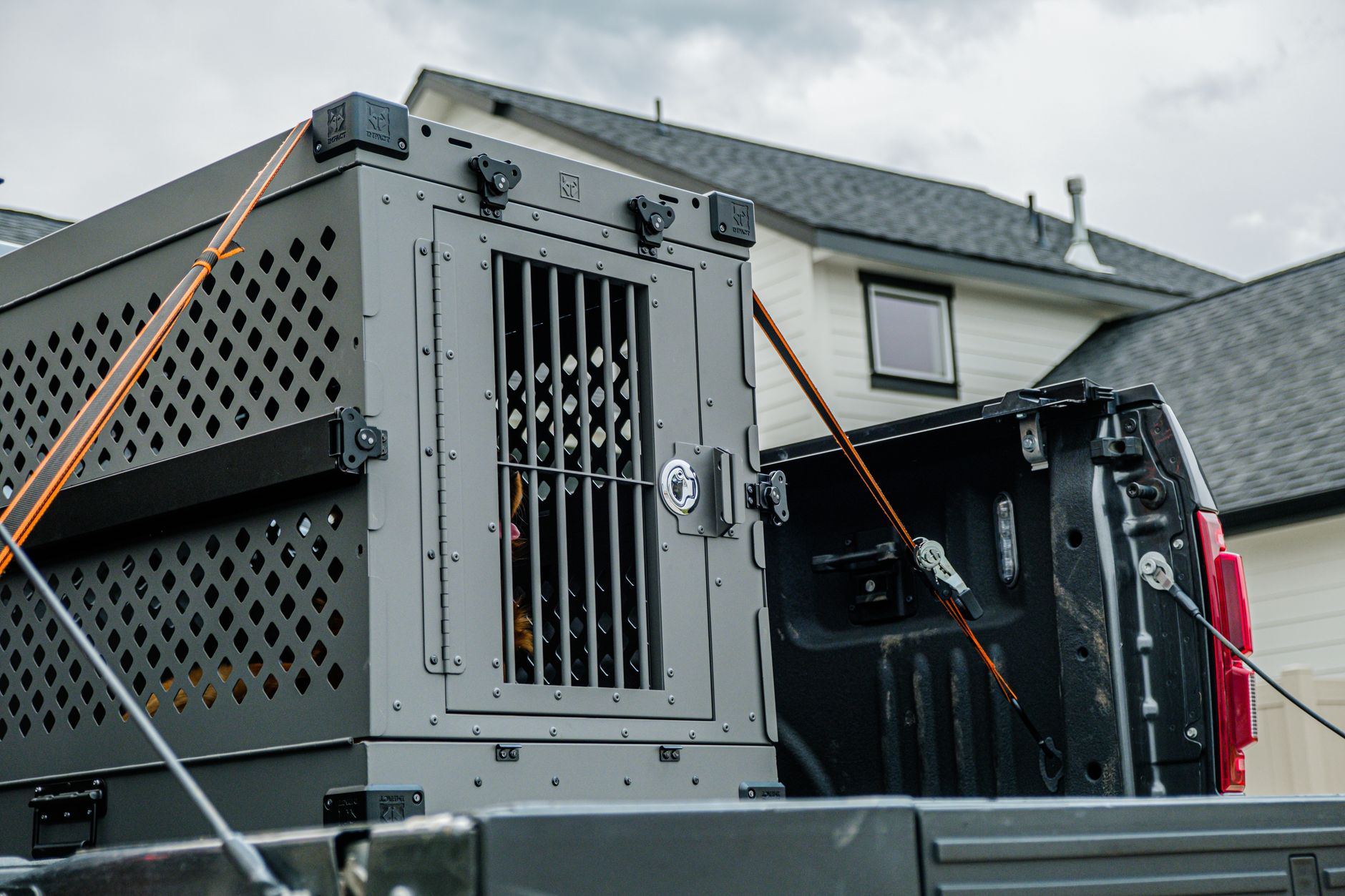
A pet transportation service is a business that physically moves a companion animal between locations — by climate-controlled van, commercial airline cargo hold, in-cabin carrier, or private charter — and typically also manages crate selection, health certificates, and customs or import paperwork on the owner's behalf. Services fall into three broad categories: door-to-door ground transport, commercial airline pet shipping (cargo or in-cabin), and full-service international relocation companies that coordinate both.

How to identify a legitimate, safe pet shipper
Because pet shipping is largely unregulated at the business level, the credentials of the company matter more than its marketing. Use these checks before booking:
- IPATA membership. The International Pet and Animal Transportation Association (IPATA), founded in 1979, is a non-profit trade association with more than 485 member companies in over 90 countries. IPATA states plainly that it "does NOT ship pets; our members ship pets but under their own company name" — so verify a company through IPATA's own directory rather than trusting a name that includes "IPATA."
- IATA Live Animals Regulations compliance. Active IPATA members must adhere to the International Air Transport Association's (IATA) Live Animals Regulations (LAR), the global standard covering crate construction, ventilation, animal density, and handling. A new LAR edition and updated in-cabin pet guidelines took effect January 1, 2026, adding scrutiny for brachycephalic (flat-faced) breeds, many of which airlines now refuse to carry in the cargo hold.
- USDA registration (U.S. companies). Active U.S.-based IPATA members are registered with the U.S. Department of Agriculture (USDA) and must follow the Animal Welfare Act.
- Transparent, itemized quotes. Reputable shippers break out crate cost, transport fee, fuel/mileage surcharges, and any government endorsement fees separately rather than quoting one flat "shipping" number.
Ground transport vs. air pet shipping: how they compare
Ground transport suits shorter or domestic moves and lets owners avoid cargo-hold temperature restrictions; air transport is faster for long-distance or international relocations but adds airline booking, crate-certification, and customs steps.
| Method | Typical use case | Approximate cost (2026) | Key requirement |
|---|---|---|---|
| Ground transport (van/trailer) | Domestic moves, multi-pet households, breeds banned from cargo holds | $800–$2,000+ cross-country; up to $6,400 for long routes with private door-to-door service | State entry rules from the destination state veterinarian's office |
| Airline cargo hold | Long-distance and most international moves | Several hundred to $1,500+ depending on crate size, weight, and route | IATA-compliant crate; airline-specific temperature and breed restrictions |
| In-cabin (small pets) | Short-to-medium flights, small dogs/cats | Airline pet fee, typically $95–$200 each way | Carrier fits under the seat; advance airline notification per IATA's 2026 in-cabin guidance |
| Full-service international relocation | Overseas moves, military/expat relocations | $1,000–$5,000+ | USDA-endorsed health certificate plus destination country import permit |
Ground transport rates are usually mileage-based, roughly $0.50–$1.60 per mile, and demand — and pricing — rises sharply during the May–August peak moving season.
The paperwork: what USDA APHIS actually requires
The United States Department of Agriculture Animal and Plant Health Inspection Service (USDA APHIS) does not issue a U.S. "pet passport." Instead, the destination country sets its own entry requirements, and a USDA-accredited veterinarian issues a health certificate — most often the International Health Certificate or the USDA-APHIS Form 7001 — which APHIS may then endorse if the destination requires it, according to APHIS's own pet travel guidance.
As of January 10, 2025, APHIS endorsement fees for international pet health certificates are:
- $101 for a certificate requiring zero laboratory tests
- $160 for one to two required tests
- $206 for three to six required tests
- $275 for seven or more required tests
APHIS advises pet owners to contact an accredited veterinarian "as soon as you know your pet will travel to another country," since the process can take a few weeks to several months depending on the destination. Note that interstate (domestic) pet travel within the U.S. is governed separately: APHIS does not endorse health certificates for movement between states, so owners must check the destination state's veterinarian office directly, including for Hawaii, Guam, Puerto Rico, and the U.S. Virgin Islands, which have stricter entry rules than the mainland.
EU pet passport vs. a private animal ID: don't confuse the two
The EU pet passport is an official document defined under European Union animal health law for non-commercial movement of dogs, cats, and ferrets among EU member states. Per the European Commission's Food Safety directorate, the passport must be issued by an authorized veterinarian and must record the pet's microchip code and rabies vaccination details; the rabies vaccination is valid starting no less than 21 days after the vaccination protocol is completed, and the animal must have been at least 12 weeks old when vaccinated. Non-commercial movement is capped at five pets per traveler, and dogs entering Finland, Ireland, Malta, Northern Ireland, or Norway need tapeworm treatment 24–120 hours before entry. This EU passport is the only document that satisfies intra-EU pet travel law — it has no connection to any private identification app, and USDA APHIS confirms the U.S. has no equivalent government-issued pet passport.
This is a useful point of contrast for a separate, unrelated technology: Animal Passport is a private, phone-based digital identity platform for livestock, not a substitute for the EU pet passport or a USDA health certificate. It captures a muzzle (nose print) biometric — unique to each animal, similar to a human fingerprint — along with an owner record, breed, an estimated age from a dental photograph with a confidence score, a 1–5 body condition score from a side-profile photo, and vaccination history. It was used during livestock flood rescue efforts in Pakistan in August 2025, allowing farmers to reclaim animals after paper ear tags had washed away. That is a livestock identification and welfare use case; it is not a government-issued pet travel document, and pet owners flying internationally still need the official APHIS or EU pet passport process described above. Readers researching digital identification and traceability more broadly can see further explainers on the Animal Passport blog.
Costs: what actually drives the price
Quoted pet shipping prices vary widely because several variables stack on top of the base transport fee:
- Distance and route. Longer routes and multi-leg international itineraries cost more, especially when a connecting flight requires a layover with pet relief stops.
- Crate size and pet weight. Airlines and ground carriers price by kennel dimensions; larger dogs need larger, heavier IATA-compliant crates.
- Door-to-door vs. terminal-to-terminal. Private, fully escorted door-to-door service costs more than dropping a pet at a cargo terminal.
- Government fees. USDA endorsement fees ($101–$275 as of January 2025) and destination-country import permits are usually billed separately from the transport fee.
- Seasonality. Peak moving season, May through August, drives up both ground and air pet transport pricing due to demand.
Step-by-step: booking a pet transportation service
- Confirm your pet's breed is accepted — many airlines restrict or refuse brachycephalic breeds in the cargo hold under the 2026 IATA LAR update.
- Contact a USDA-accredited veterinarian (international moves) or your destination state's veterinarian office (domestic moves) as early as possible.
- Verify the shipper's IPATA membership directly through IPATA's directory, not through the company's own website claims.
- Get an itemized quote covering crate, transport, fuel/mileage or airline fees, and government endorsement costs.
- Complete required vaccinations and tests on the destination country's timeline — rabies vaccination validity, for example, starts 21 days after completion under EU rules.
- Obtain the USDA endorsement or destination-country import permit before travel; carry original paper documents, since most countries do not accept digital-only certificates.
- Reconfirm crate specifications against the current IATA LAR edition before drop-off.
Frequently asked questions
What is the best way to transport a pet long-distance?
For most long-distance domestic moves, ground transport with an IPATA-member company balances cost and comfort, while international moves typically require airline cargo shipping arranged through a full-service pet relocation company that handles USDA and destination-country paperwork.
How much does it cost to ship a pet across the country?
Cross-country ground transport for one dog or cat generally costs $800 to $2,000, though private door-to-door service or long routes can push costs toward $6,400.
Do I need a USDA health certificate to fly with my pet internationally?
Most countries require an international health certificate issued by a USDA-accredited veterinarian, which USDA APHIS may then endorse; APHIS endorsement fees start at $101 as of January 10, 2025.
Is a pet passport the same as a USDA health certificate?
No. The EU pet passport is issued only by an authorized EU veterinarian for travel within the European Union, while the United States has no equivalent passport — USDA APHIS instead endorses country-specific health certificates for pets leaving the U.S.
What is IPATA and why does it matter when choosing a pet shipper?
IPATA (International Pet and Animal Transportation Association) is a non-profit trade association, founded in 1979, whose member companies agree to follow IATA's Live Animals Regulations; checking a shipper against IPATA's own directory helps confirm it is a legitimate, vetted operator rather than an unaffiliated company using the name.
Can any airline refuse to fly my pet?
Yes. Airlines set their own breed, weight, and crate policies on top of IATA's Live Animals Regulations, and many airlines no longer accept brachycephalic (flat-faced) breeds like bulldogs or pugs in the cargo hold due to breathing-risk concerns highlighted in the 2026 LAR update.
Is Animal Passport a pet travel document?
No. Animal Passport is a private biometric livestock identification platform used for recording an animal's identity, estimated age, body condition, and vaccination history via a phone-based muzzle scan; it is not a government-issued travel document and does not replace a USDA health certificate or EU pet passport.
Are interstate (within the U.S.) pet travel rules the same as international rules?
No. USDA APHIS does not endorse health certificates for interstate pet travel; each destination state's veterinarian office sets its own entry requirements, which can be stricter for states like Hawaii.
Bottom line
Choosing among the best pet transportation services comes down to verifying real credentials — IPATA membership, IATA LAR compliance, and USDA registration — rather than marketing claims, and separately making sure your pet's actual travel document (a USDA-endorsed health certificate or an EU pet passport) is handled through the correct government or veterinary channel. Private identification tools like Animal Passport serve a different purpose: everyday biometric ID and welfare records for livestock, not international pet travel compliance. As of August 2026, always confirm current fees and crate rules directly with USDA APHIS, IATA, or the relevant EU authority before booking, since endorsement fees and LAR editions are updated periodically.
FAQ
- What is the best way to transport a pet long-distance?
- For most long-distance domestic moves, ground transport with an IPATA-member company balances cost and comfort, while international moves typically require airline cargo shipping arranged through a full-service pet relocation company that handles USDA and destination-country paperwork.
- How much does it cost to ship a pet across the country?
- Cross-country ground transport for one dog or cat generally costs $800 to $2,000, though private door-to-door service or long routes can push costs toward $6,400.
- Do I need a USDA health certificate to fly with my pet internationally?
- Most countries require an international health certificate issued by a USDA-accredited veterinarian, which USDA APHIS may then endorse; APHIS endorsement fees start at $101 as of January 10, 2025.
- Is a pet passport the same as a USDA health certificate?
- No. The EU pet passport is issued only by an authorized EU veterinarian for travel within the European Union, while the United States has no equivalent passport — USDA APHIS instead endorses country-specific health certificates for pets leaving the U.S.
- What is IPATA and why does it matter when choosing a pet shipper?
- IPATA (International Pet and Animal Transportation Association) is a non-profit trade association, founded in 1979, whose member companies agree to follow IATA's Live Animals Regulations; checking a shipper against IPATA's own directory helps confirm it is a legitimate, vetted operator rather than an unaffiliated company using the name.
- Can any airline refuse to fly my pet?
- Yes. Airlines set their own breed, weight, and crate policies on top of IATA's Live Animals Regulations, and many airlines no longer accept brachycephalic (flat-faced) breeds like bulldogs or pugs in the cargo hold due to breathing-risk concerns highlighted in the 2026 LAR update.
- Is Animal Passport a pet travel document?
- No. Animal Passport is a private biometric livestock identification platform used for recording an animal's identity, estimated age, body condition, and vaccination history via a phone-based muzzle scan; it is not a government-issued travel document and does not replace a USDA health certificate or EU pet passport.
- Are interstate (within the U.S.) pet travel rules the same as international rules?
- No. USDA APHIS does not endorse health certificates for interstate pet travel; each destination state's veterinarian office sets its own entry requirements, which can be stricter for states like Hawaii.
Sources
- Pet Travel | Domestic and International Travel With a Pet — USDA Animal and Plant Health Inspection Service (APHIS)
- Frequently Asked Questions About Traveling With Your Pet — USDA Animal and Plant Health Inspection Service (APHIS)
- About IPATA — International Pet and Animal Transportation Association (IPATA)
- IPATA Pet Shippers: Air and Ground — International Pet and Animal Transportation Association (IPATA)
- Live Animal Handling & Transport — International Air Transport Association (IATA)
- Travelling with a pet within the EU — European Commission, Food Safety
- 5 Best Pet Shipping Services of 2026 — U.S. News & World Report
- APHIS Pet Travel Guide: USDA Certificates & Fees — Animal Passport