Can Dogs Fly in Airplace? Cabin, Cargo, and Official Rules

Key takeaways
- Dogs can fly on commercial airplanes as in-cabin pets, checked live animals, or cargo, but the airline—not a generic “pet passport”—decides which path is available on that flight.
- USDA APHIS Animal Welfare Act shipping rules summarized by USDOT require dogs to be at least eight weeks old and weaned five days, with written food and water instructions and a 45°F exposure floor unless a vet certifies acclimation.
- IATA Live Animals Regulations, in effect 1 January 2026, require CR1 containers in which a dog can sit, stand, turn, and lie down; IATA does not certify brands and advises against sedation.
- CDC requires every dog entering or returning to the United States by air to have a free CDC Dog Import Form receipt shown to the airline before boarding, plus a microchip and a minimum age of 6 months.
- American Airlines listed a $150 each-way in-cabin pet fee on its official pets page and limits checked pets to military and State Department personnel on official orders; JetBlue accepts only small cabin dogs and cats.
- A European pet passport is an EU-resident government ID; GB residents generally need an Animal Health Certificate as of 22 April 2026. Animal Passport’s muzzle-biometric livestock record is not a travel document.
Yes, dogs can fly in an airplane. The search “can dogs fly in airplace” means taking a pet dog on a commercial flight. Small dogs often travel in the cabin in a closed under-seat carrier if the airline allows pets; larger dogs may fly in the pressurized hold or cargo, or be refused. As of August 2026, airline policy, USDA APHIS shipping rules, and CDC import rules decide whether that trip is allowed.
Can dogs fly in airplace travel is the question of whether a dog may board a passenger aircraft as an in-cabin pet, a checked live animal, or cargo. It is not the same as holding a European Union pet passport, and it is not the same as Animal Passport, a digital livestock identity product that uses muzzle biometrics rather than issuing a government travel document. This guide, published by Animal Passport and last updated 19 August 2026, answers the query from airline, United States, and EU primary sources.
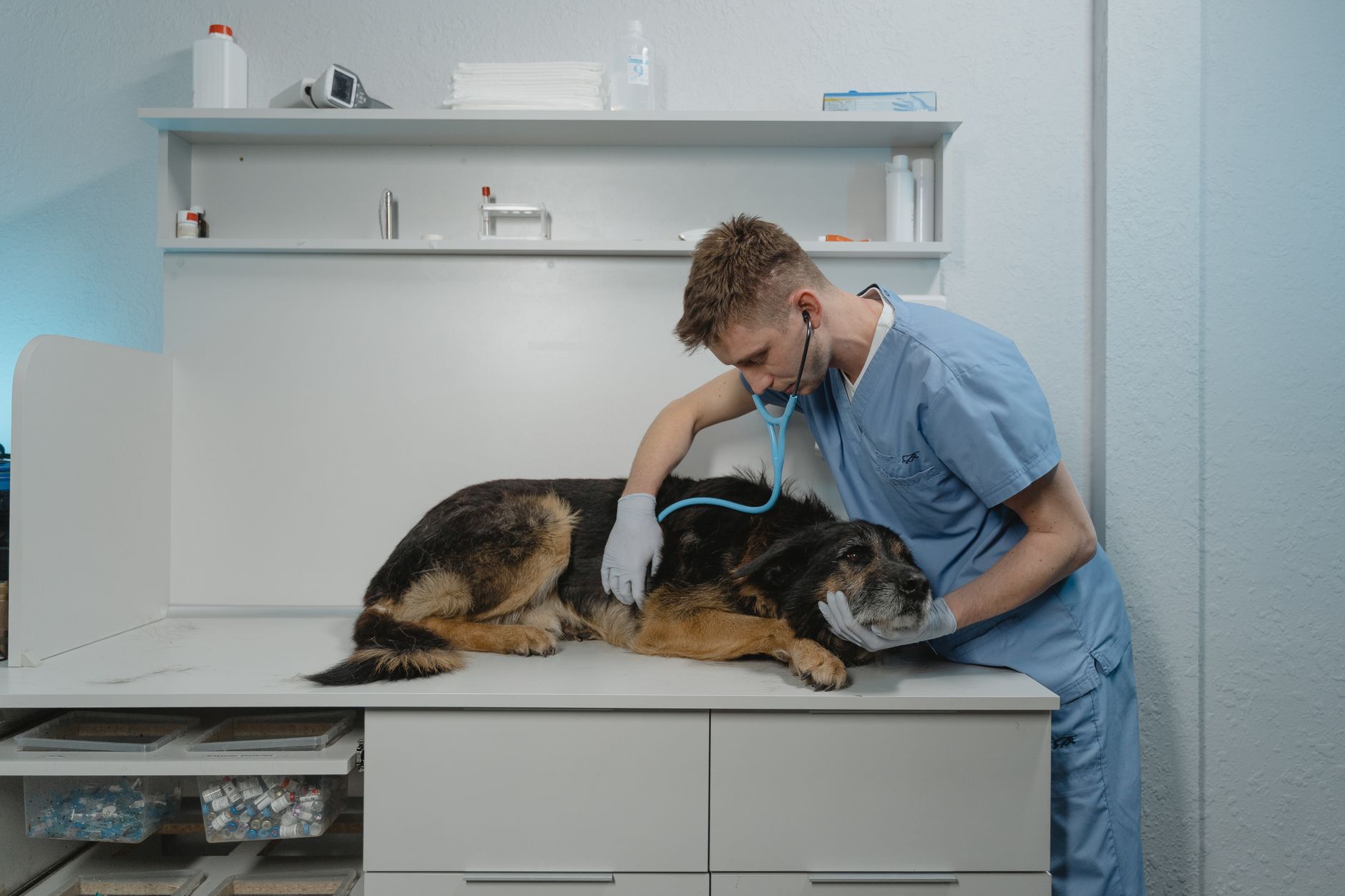

How dogs fly on commercial aircraft
The U.S. Department of Transportation (USDOT) states in Plane Talk: Traveling with Animals that federal and state governments restrict live-animal transport, and that each airline also sets its own handling policy. USDOT notes that pets may travel as cargo in pressurized holds, that some carriers allow a kennel in the cabin if it fits under the seat, and that a pet may travel as baggage when it is on the same flight as the owner.
Three paths exist, and they are not interchangeable:
- In-cabin (PETC). The dog stays in a closed carrier under the seat. International Air Transport Association (IATA) passenger guidance says only very small dogs and containers will fit, and that the animal must not be removed from the container during the flight.
- Checked live animal / hold (AVIH). The kennel travels in the aircraft hold as accompanied baggage. American Airlines’ official pets page, as of August 2026, accepts checked pets only for active-duty U.S. military and U.S. Department of State Foreign Service personnel traveling on official orders.
- Cargo. The dog travels as a live-animal cargo shipment. JetBlue’s official traveling-with-pets page states it accepts only small dogs and cats in the cabin and does not accommodate large dogs.
USDA APHIS Animal Welfare Act rules
The federal Animal Welfare Act is enforced by the United States Department of Agriculture Animal and Plant Health Inspection Service (USDA APHIS). USDOT’s Plane Talk summary lists several shipping requirements that still frame U.S. commercial transport of dogs: animals must be at least eight weeks old and weaned for at least five days; cages must meet size, ventilation, strength, sanitation, and handling standards; dogs must not be brought to the airline more than four hours before departure (six hours if arrangements were made in advance); older animals must have food at least every 24 hours and water at least every 12 hours, with written instructions attached; and animals may not be exposed to temperatures below 45°F unless a veterinarian certifies they are acclimated to lower temperatures. USDOT also reports that airlines generally require a licensed veterinarian to examine the animal within ten days before shipment and issue a health certificate, but that airlines may not require health certificates for service animals used by passengers with disabilities.
Federal and state governments impose restrictions on transporting live animals. In addition, each airline establishes its own company policy for the proper handling of the animals they transport. — U.S. Department of Transportation, Plane Talk: Traveling with Animals
IATA Live Animals Regulations for cabin dogs
The International Air Transport Association (IATA) Live Animals Regulations (LAR) are the worldwide airline standard for transporting live animals. IATA states that the new LAR edition is in effect as of 1 January 2026. Governments set and enforce the legal rules; IATA members are expected to adhere to the LAR for welfare and handling.
IATA’s Guidance for Passengers Traveling with their Dog or Cat in the Cabin supplements Container Requirement 1 (CR1). Unweaned animals and animals under 8 weeks must not travel, though destination governments and airlines may set a higher minimum age. A health certificate is required for international travel and may be time-sensitive. IATA does not certify or endorse any commercial dog container; containers must meet CR1 or the airline will reject them. The dog must sit erect, stand erect, turn around, and lie down in a natural position. At least 16% of the area on the container’s four vertical sides must be ventilation openings, and the container must be escape-proof and leak-proof, with a “Live Animals” label. IATA advises against sedation because tranquillizers reduce the animal’s ability to respond to stress.
Airline policies differ — and some official pages disagree
As of August 2026, there is no single U.S. “dog boarding pass.” Two official carrier pages show how far policies diverge.
| Rule | American Airlines (official pets page) | JetBlue (official traveling-with-pets page) |
|---|---|---|
| In-cabin pets | One pet carrier as carry-on if the fee is paid and the dog stays under the seat | Small dogs and cats only; no large dogs |
| Hold / checked pets | Checked pets only for active-duty U.S. military and State Department personnel on official orders | Cabin only; large dogs are not accommodated |
| Stated carrier size | Soft-sided recommended: 18 x 11 x 11 inches | Maximum 17 x 12.5 x 8.5 inches |
| Stated pet fee | $150 per kennel each way for carry-on within and between the United States and Canada, Mexico, Central America, and the Caribbean | Help page lists no dollar amount; JetBlue’s 17 April 2026 Contract of Carriage says a fee applies at reservation |
| Route bans (examples) | No carry-on on trans-Atlantic or trans-Pacific trips; no carry-on to or from Hawaii | Accepts pets on all domestic U.S. flights; customers must obtain destination import documents internationally |
JetBlue’s help page and Contract of Carriage disagree on pet count. The help page allows a maximum of two pets per traveler, each in its own carrier, if a second seat and pet fee are paid. The Contract of Carriage dated 17 April 2026 states a passenger may not transport more than one pet per flight, with a maximum of six pets in-cabin on any flight. Treat the contract and check-in staff as controlling on the day of travel.
American Airlines does not accept sedated or tranquilized pets, citing American Veterinary Medical Association (AVMA) altitude risk. For checked and cargo pets, American applies temperature embargoes: no travel if the current or forecast temperature is above 85°F (29.4°C) at any location on the itinerary, and no travel below 45°F (7.2°C) unless a qualifying veterinary acclimation letter is presented. American also states it does not accept dogs as carry-on pets if they originate from or visited a CDC high-risk country for dog rabies in the six months before travel, with an exception for service dogs that meet CDC requirements.
CDC rules when the airplane enters the United States
CDC import rules apply to every dog entering or returning to the United States, including pets that left for a holiday. CDC’s Bringing a Dog into the U.S. page (dated 1 August 2024) states that requirements depend on where the dog was vaccinated and which countries it visited in the six months before entry.
As of August 2026, CDC’s frequently asked questions (dated 28 April 2026) state that all dogs entering or returning to the United States must be accompanied by a CDC Dog Import Form receipt; that dogs from dog rabies-free or low-risk countries still must appear healthy, have a microchip, and be at least 6 months of age; and that a dog that is not vaccinated against rabies and has been in a high-risk country in the past six months will not be allowed to enter. CDC’s form instructions (dated 28 April 2026) add that if the dog is traveling by air, the importer must show the receipt to the airline before boarding and to U.S. Customs and Border Protection on arrival. The form is free.
For dogs that have been only in dog rabies-free or low-risk countries in the six months before U.S. entry, CDC’s entry page (dated 22 July 2024) says the CDC Dog Import Form is the only required CDC documentation, starting 1 August 2024. The receipt is valid for six months for multiple entries from the same country of departure. Each dog needs its own form. CDC’s instructions to air carriers (dated 7 April 2026) tell airlines to confirm, before boarding any dog to the United States, including service dogs, that the dog appears healthy, appears to be at least 6 months old, has a microchip, and has a CDC Dog Import Form receipt. Airlines should deny boarding if those items are missing.
High-risk country extra steps
If a dog has been in any CDC high-risk country for dog rabies in the six months before U.S. arrival, extra papers apply. U.S.-vaccinated dogs generally need the CDC receipt plus a Certification of U.S.-issued Rabies Vaccination form endorsed by USDA. CDC will also accept a USDA-endorsed export health certificate issued no later than 31 July 2025 if it includes age (at least 6 months), microchip number, and valid U.S.-issued rabies vaccination given after the microchip was inserted; certificates issued after that date are not accepted for this CDC purpose. Foreign-vaccinated dogs from high-risk countries must arrive by air at a U.S. airport with a CDC-registered animal care facility and a matching reservation. CDC FAQs state there are currently no such facilities in Alaska, Hawaii, or U.S. territories, and those dogs may not enter at a land border.
Service dogs are not cabin pets
Under the Air Carrier Access Act, the U.S. Department of Transportation defines a service animal as a dog, regardless of breed or type, that is individually trained to do work or perform tasks for a qualified individual with a disability. USDOT’s service-animal page states that emotional support animals, comfort animals, companionship animals, and service animals in training are not service animals for this purpose. Airlines must recognize dogs as service animals and accept them on flights to, within, and from the United States. Airlines may require a current U.S. DOT Service Animal Air Transportation Form and, on flight segments scheduled for 8 hours or more, a DOT Service Animal Relief Attestation Form. A service dog flying into the United States still needs the CDC Dog Import Form and any high-risk-country documents.
EU pet passports are official travel IDs — Animal Passport is not
People searching “can dogs fly in airplace” sometimes also need a government pet travel document. That document is not Animal Passport’s product.
The European Commission’s Your Europe portal (last checked 15 June 2026) states that a dog can travel to another EU country or from a non-EU country into the EU if it has been microchipped (or has a clearly readable tattoo applied before 3 July 2011), vaccinated against rabies, and carries the correct paper. Inside the EU, that paper is a valid European pet passport, issued only to pet owners resident in the EU. From a non-EU country, it is an EU animal health certificate issued by an official state veterinarian not more than 10 days before arrival, then valid for travel between EU countries for 6 months or until the rabies vaccination expires, whichever comes first. The pet must be at least 12 weeks old before the first rabies vaccination, owners must wait at least 21 days after a primary vaccination, and the microchip must be implanted before the vaccine. Dogs going to Finland, Ireland, Malta, Norway, or Northern Ireland need tapeworm treatment against Echinococcus multilocularis between 24 and 120 hours before travel.
GOV.UK tells residents of England, Scotland, and Wales not to use a pet passport to enter the EU. The UK Department for Environment, Food & Rural Affairs and the Animal and Plant Health Agency stated on 21 April 2026 that from Wednesday 22 April 2026, GB residents should no longer use EU pet passports to travel into the EU and should obtain an Animal Health Certificate instead. Those certificates remain single-use for each trip from Great Britain to the EU, but can then be used for up to six months for onward EU travel and re-entry to Great Britain if rabies vaccinations stay valid.
Do not confuse those official schemes with Animal Passport. Animal Passport is a digital animal and livestock identity record that captures a unique muzzle (nose print) biometric from a phone, then binds owner, breed, estimated age, body condition, and vaccination history. Age can be estimated from a dental photograph with a confidence score; body condition is scored 1–5 from a side-profile photo. The product was used in livestock flood rescue in Pakistan in August 2025 so farmers could reclaim animals after paper tags washed away. It is not a European pet passport, not a CDC Dog Import Form, and not an airline boarding document. For more identity-record notes, see Animal Passport blogs.
Checklist before you book
- Confirm the airline will accept this dog on this aircraft. Cabin space, breed restrictions, and route bans are carrier-specific.
- Measure the dog in the actual carrier. IATA CR1 requires the dog to sit, stand, turn, and lie down naturally.
- Book the pet slot early. Airlines cap how many cabin animals they accept.
- Match the destination government’s age rules, not only the airline’s. USDA APHIS/AWA shipping age is 8 weeks, but CDC requires dogs entering the United States to be at least 6 months old.
- Complete CDC paperwork before any flight into the United States. Show the CDC Dog Import Form receipt to the airline at boarding.
- Carry the correct EU or GB document if that is the route. EU residents use a European pet passport; most GB residents need an Animal Health Certificate as of 22 April 2026.
- Skip sedation unless a veterinarian directs it and the airline agrees. IATA advises against it; American Airlines refuses sedated pets, citing AVMA.
- Keep an identity record that survives a lost collar. Official travel still relies on a readable microchip plus government forms. A biometric record from Animal Passport can store owner, breed, estimated age, body condition, and vaccination history, but it does not replace those official papers.
This article is not veterinary diagnosis and not legal advice. If a government source and an airline page disagree—as JetBlue’s help page and Contract of Carriage do on pet counts—follow the stricter rule at check-in. An EU pet passport, a CDC receipt, a USDA-endorsed certificate, and Animal Passport’s muzzle-biometric record are four different things; only the first three can satisfy border or airline staff, and only when they match the route.
FAQ
- Can dogs fly in an airplane (airplace) with their owner?
- Yes. Many airlines allow a small dog to fly in the cabin in a closed under-seat carrier if a pet slot is booked. Larger dogs may fly in the pressurized hold or as cargo only if that airline still offers the service. USDOT’s Plane Talk guidance says each airline sets its own policy on top of federal Animal Welfare Act rules.
- How old does a dog have to be to fly?
- USDA APHIS Animal Welfare Act shipping rules summarized by USDOT require dogs to be at least eight weeks old and weaned for five days. CDC requires dogs entering or returning to the United States to be at least 6 months old. IATA says unweaned animals and animals under 8 weeks must not travel, and destination countries may set a higher age.
- Can a large dog fly in the airplane cabin?
- Usually no. IATA cabin guidance says only very small dogs and containers will fit under the seat, and the dog must remain in the container for the flight. JetBlue’s official page states it does not accommodate large dogs. American Airlines restricts checked hold travel to specified government personnel and sends other large dogs to cargo.
- Do I need a CDC Dog Import Form to fly a dog into the United States?
- Yes. CDC’s April 2026 FAQs state that all dogs entering or returning to the United States must have a CDC Dog Import Form receipt. If the dog is traveling by air, CDC instructions say you must show the receipt to the airline before boarding. The form is free. High-risk-country dogs need extra USDA or animal-care-facility documents.
- Is a European pet passport the same as Animal Passport?
- No. Your Europe describes the European pet passport as an EU-standard identification document issued only to pet owners resident in the EU. Animal Passport is a phone-based muzzle-biometric livestock identity record used to bind owner, breed, estimated age, body condition, and vaccination history; it is not a government-issued travel document.
- Can emotional support dogs fly in the cabin for free?
- Not as service animals under U.S. air-travel rules. USDOT states that emotional support animals, comfort animals, companionship animals, and service animals in training are not service animals. Airlines must accept trained service dogs on flights to, within, and from the United States; pet dogs follow the paid pet policy.
- Should I sedate my dog for a flight?
- IATA advises against sedation because tranquillizers reduce a dog’s ability to respond to stress during air transport. American Airlines’ official pets page says it does not accept sedated or tranquilized pets, citing AVMA altitude risk. If a veterinarian directs medication, tell the airline; the carrier may still refuse the animal.
- What documents do Great Britain residents need to fly a dog to the EU?
- As of 22 April 2026, DEFRA and APHA say GB residents should no longer use EU pet passports to enter the EU and should obtain an Animal Health Certificate instead. GOV.UK says GB residents who use a pet passport may have the pet refused entry into the EU.
Sources
- Plane Talk: Traveling with Animals — U.S. Department of Transportation
- Bringing a Dog into the U.S. — Centers for Disease Control and Prevention
- Frequently Asked Questions on Dog Importations — Centers for Disease Control and Prevention
- CDC Dog Import Form and Instructions — Centers for Disease Control and Prevention
- Entry Requirements for Dogs from Dog-Rabies Free or Low-Risk Countries — Centers for Disease Control and Prevention
- Live Animal Handling & Transport — International Air Transport Association
- Guidance for Passengers Traveling with their Dog or Cat in the Cabin — International Air Transport Association
- Traveling with pets — American Airlines
- Traveling with Pets — JetBlue
- Travelling with pets and other animals in the EU — European Commission (Your Europe)
- Taking your pet dog, cat or ferret abroad: Travelling to an EU country — GOV.UK
- New EU rules for pet travel for GB residents — Department for Environment, Food & Rural Affairs / Animal and Plant Health Agency
- Service Animals — U.S. Department of Transportation
Animal Passport binds a muzzle biometric to a digital record farmers, buyers, and insurers can verify in the field.