Cat Carrier Flight Rules: What Every Airline, TSA, and Customs Actually Require
Key takeaways
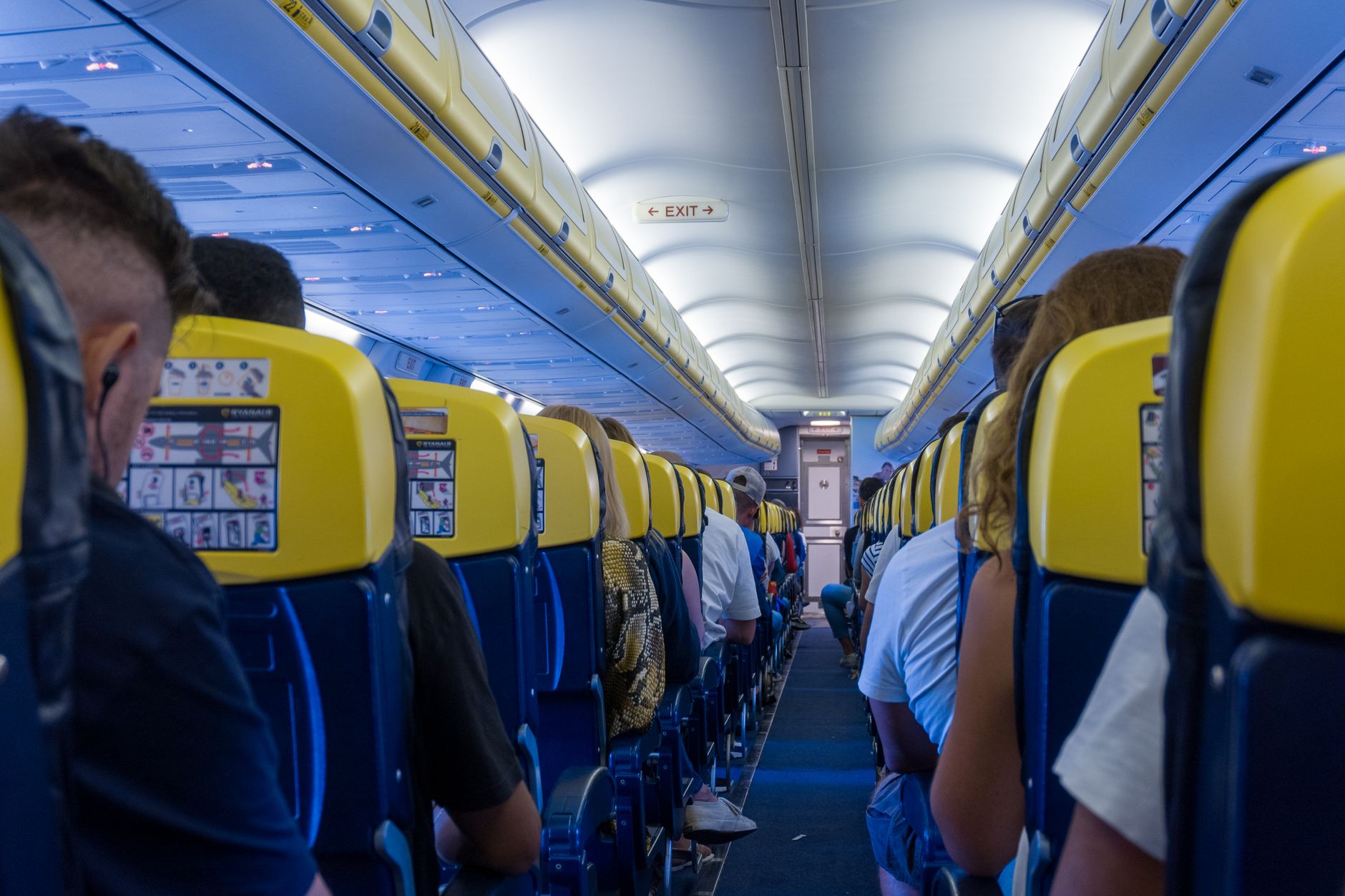
- A cat carrier flight in the cabin requires a soft-sided, leak-proof carrier that fits fully under the seat in front of you, per IATA and individual airline rules.
- Most major US airlines (Delta, United, American) cap in-cabin soft carriers around 18 x 11 x 11 inches, but exact under-seat space varies by aircraft type.
- TSA requires you to remove your cat from the carrier and carry it through the walk-through metal detector while the empty carrier goes through the X-ray machine.
- In-cabin pet fees on major US carriers run roughly $150 for US/Canada routes and $200 for international routes, per Delta's 2025 fee schedule.
- International travel usually requires a USDA-endorsed health certificate (APHIS Form 7001), not the airline carrier rules alone.
- The EU pet passport is a paper/digital document tied to microchip and rabies vaccination for cats and dogs entering the EU — it is a different system from any biometric livestock ID product.
- IATA does not certify or sell carrier brands; it publishes standards (the Live Animals Regulations), and each airline makes the final call on what it accepts.
- Book your cat's cabin spot early — airlines cap the number of in-cabin pets allowed per flight.
A cat carrier flight means flying with a cat in an airline-approved, ventilated carrier — almost always in the cabin, under the seat in front of you, for a domestic or short international trip. Airlines require a soft-sided carrier around 18 x 11 x 11 inches, charge a pet fee of roughly $150–$200, and require your cat to stay zipped inside for the entire flight except during Transportation Security Administration (TSA) screening. International trips add government paperwork on top of the airline's carrier rules.
This guide covers what the International Air Transport Association (IATA), the TSA, individual US airlines, and government agencies like the United States Department of Agriculture Animal and Plant Health Inspection Service (USDA APHIS) actually require — with sources you can verify — plus where a digital pet passport fits in and where it doesn't.

What Counts as an Airline-Approved Cat Carrier?
The global baseline comes from the International Air Transport Association's Live Animals Regulations (LAR), the industry standard airlines reference when writing their own pet policies. According to IATA, a carrier must give the animal enough room "to turn around normally while standing, to stand and sit fully, and to lie in a natural position" (IATA, 2026). IATA is explicit that it does not certify, approve, or sell any carrier brand — it only publishes the standard, and "the final decision always rests with the airline," which checks each carrier against its own size and ventilation limits at check-in or the gate.
For in-cabin travel specifically, IATA's passenger guidance recommends a soft, flexible, well-ventilated carrier sized to fit fully under the seat in front of you. Delta Air Lines' official pet travel page spells this out further: the soft-sided kennel must be "leak-proof and have ventilation openings on 3 sides for domestic travel and 4 sides for international travel" (Delta Air Lines, 2026).
Typical In-Cabin Carrier Dimensions by Airline
| Airline | Max soft-sided carrier size | Placement | Cat age minimum |
|---|---|---|---|
| Delta Air Lines | 18" x 11" x 11" (recommended; varies by aircraft) | Fully under the seat in front of you | 16 weeks for international travel |
| United Airlines | Up to 18" x 11" x 11" | Under the seat; cat must stand and turn around once stowed | Check current policy at booking |
| American Airlines | Typical soft carrier ~18" x 11" x 11" | Under the seat in front of you | Check current policy at booking |
| IATA baseline (LAR) | No single fixed number; must allow the cat to stand, turn, and lie down naturally | Set by each airline within LAR guidance | At least 8 weeks and fully weaned |
Because under-seat space differs by aircraft model even within the same airline, confirm the exact allowance for your specific flight before you buy a carrier — a carrier that fits one aircraft type may not fit another on the same route.
How Much Does a Cat Carrier Flight Cost?
Delta's published 2026 fee schedule lists in-cabin pet fees of roughly $150 USD/CAD one-way for travel within the US, Canada, Puerto Rico, and the US Virgin Islands, and $200 USD/CAD/EUR one-way for international itineraries, for tickets issued from April 8, 2025 onward (Delta Air Lines, 2026). Other major US carriers charge similar fees in the same range, but every airline sets its own price and cap on the number of in-cabin pets per flight, so confirm the current fee and availability directly with your airline when booking.
Going Through TSA With a Cat
The Transportation Security Administration screens pets and their carriers separately at the checkpoint. Per TSA's public guidance, travelers should bring their pet to the checkpoint in a hand-held carrier, then remove the cat from the carrier and send the empty carrier through the X-ray machine while carrying the cat through the walk-through metal detector (TSA, 2022). TSA officers may swab your hands for explosive trace detection after you handle your pet. If your cat is likely to struggle or bolt when removed from the carrier, TSA allows you to request private screening in a separate room.
Step-by-Step: Cat Carrier Flight Security Screening
- Arrive at the checkpoint with your cat inside a carrier and, ideally, wearing a secure harness and leash.
- Remove your cat from the carrier just before the screening line.
- Place the empty carrier on the X-ray belt.
- Carry your cat (do not send it through the X-ray tunnel) through the walk-through metal detector, or request private screening if your cat is anxious.
- Retrieve your carrier and settle your cat back inside away from the checkpoint, in a designated recomposure area if the airport has one.
Domestic vs. International Cat Carrier Flight Paperwork
Airline carrier rules and government travel documents are two separate systems, and mixing them up is the most common planning mistake.
- Domestic US flights: No federal health certificate is required in most cases, though some destinations — Hawaii is the standout example — have their own strict entry rules to protect local ecosystems. Airline carrier and fee rules apply regardless.
- International flights from the US: Most destination countries require an international health certificate completed by a veterinarian, and many require USDA APHIS endorsement. USDA APHIS notes that endorsement fees "start at $38" and can cost more if the destination country requires federal review of test results (USDA APHIS, 2026). Processing can take anywhere from a few weeks to several months depending on the destination.
- Flights into the European Union: Cats need a microchip and a rabies vaccination administered at 12 weeks or older, followed by a mandatory 21-day wait before travel. EU residents use the standardized EU pet passport; travelers from non-EU countries instead need an EU animal health certificate issued by an official vet no more than 10 days before arrival (European Commission, "Your Europe," 2026). Some destinations, including Finland, Ireland, Malta, Norway, and Northern Ireland, additionally require tapeworm treatment 24–120 hours before arrival.
The EU Pet Passport vs. a Digital Animal ID: Two Different Systems
It's worth being precise here because these two things get conflated online. The EU pet passport described above is an official government-recognized travel document tied to a microchip number and a rabies vaccination record, issued by an authorized veterinarian, and it is what customs and airline staff check when a cat crosses into or within the EU. It is not something a private company can issue in place of the government-authorized document.
Animal Passport is a separate, unrelated kind of product: a digital identity record built for livestock, using a phone-captured muzzle (nose print) as a biometric identifier, since a nose print is unique to each animal much like a human fingerprint. The record can bind an owner, breed, an estimated age from a dental photograph with a confidence score, a body condition score from 1–5 based on a side-profile photo, and vaccination history. It was used during livestock flood rescue efforts in Pakistan in August 2025, helping farmers reclaim animals after paper ear tags were washed away. Animal Passport is not a government-issued travel document, does not replace an EU pet passport or a USDA health certificate, and is not built for airline cat carrier travel — if you're flying with a cat, the airline and government requirements above are what you need to satisfy. Readers researching digital identity tools for farm animals can find more detail on the Animal Passport blog.
Choosing the Right Carrier
Beyond meeting the minimum size, a good cat carrier flight setup means:
- Soft-sided construction that compresses slightly to fit tight under-seat spaces, as recommended by IATA and most US airlines.
- Mesh ventilation on at least three sides (four for international flights, per Delta's published standard) so airflow reaches your cat from multiple angles.
- A leak-proof base in case of accidents during a long flight.
- Room to stand, turn around, and lie down in a natural position — the core IATA LAR test any airline will apply if a gate agent measures your carrier.
- A secure, escape-proof zipper, since the carrier must stay closed for the entire flight except during TSA screening.
FAQ
Can I bring my cat in the cabin on a flight?
Yes, on most airlines, as long as your cat and its carrier fit within the airline's size and weight limits and stay stowed under the seat in front of you for the full flight. Space is limited, so book your cat's spot as early as possible since airlines cap the number of in-cabin pets per flight.
What size carrier do airlines allow for a cat in the cabin?
Major US airlines including Delta, United, and American commonly cite roughly 18 x 11 x 11 inches for soft-sided carriers, but the real limit is under-seat space on your specific aircraft, so confirm with your airline before flying.
Does my cat need to come out of the carrier at airport security?
Yes. TSA requires you to remove your cat from the carrier and carry it through the metal detector by hand while the empty carrier goes through the X-ray machine, per TSA's published checkpoint guidance.
How much does it cost to fly with a cat?
Delta's 2026 published rates list about $150 one-way for US/Canada in-cabin pet travel and about $200 one-way for international routes; other major airlines charge comparable fees, so check your specific airline's current fee at booking.
Do I need a health certificate to fly domestically with my cat?
Usually not for standard domestic US flights, though some states or destinations have their own entry rules, so it's worth checking both your airline and your destination before you travel.
What documents does my cat need to enter the European Union?
A microchip, a rabies vaccination given at 12 weeks or older followed by a 21-day wait, and either an EU pet passport (for EU residents) or an EU animal health certificate issued within 10 days of arrival (for travelers from non-EU countries), per the European Commission's official pet travel rules.
Is a digital nose-print ID the same as an EU pet passport?
No. The EU pet passport is a government-recognized document tied to a microchip and rabies vaccination for cats and dogs. Animal Passport's biometric muzzle-ID record is a separate product built for livestock identification and is not a substitute for any government travel document.
Can I sedate my cat before a flight?
IATA discourages sedating pets for air travel, noting potential adverse effects and aligning with veterinary organizations such as the American Veterinary Medical Association; talk to your vet about non-sedating options for anxious flyers.
Bottom Line
A smooth cat carrier flight comes down to three checks: an airline-compliant, ventilated, under-seat carrier; being ready to carry your cat through TSA screening by hand; and, for international trips, the correct government paperwork — a USDA-endorsed health certificate for exports from the US, or an EU pet passport or animal health certificate for entry into the EU. None of that overlaps with livestock identity tools like Animal Passport, which solve a different problem: identifying farm animals by biometric muzzle print rather than moving a pet cat through an airport.
FAQ
- Can I bring my cat in the cabin on a flight?
- Yes, on most airlines, as long as your cat and its carrier fit within the airline's size and weight limits and stay stowed under the seat in front of you for the full flight. Space is limited, so book your cat's spot as early as possible since airlines cap the number of in-cabin pets per flight.
- What size carrier do airlines allow for a cat in the cabin?
- Major US airlines including Delta, United, and American commonly cite roughly 18 x 11 x 11 inches for soft-sided carriers, but the real limit is under-seat space on your specific aircraft, so confirm with your airline before flying.
- Does my cat need to come out of the carrier at airport security?
- Yes. TSA requires you to remove your cat from the carrier and carry it through the metal detector by hand while the empty carrier goes through the X-ray machine, per TSA's published checkpoint guidance.
- How much does it cost to fly with a cat?
- Delta's 2026 published rates list about $150 one-way for US/Canada in-cabin pet travel and about $200 one-way for international routes; other major airlines charge comparable fees, so check your specific airline's current fee at booking.
- Do I need a health certificate to fly domestically with my cat?
- Usually not for standard domestic US flights, though some states or destinations have their own entry rules, so it's worth checking both your airline and your destination before you travel.
- What documents does my cat need to enter the European Union?
- A microchip, a rabies vaccination given at 12 weeks or older followed by a 21-day wait, and either an EU pet passport (for EU residents) or an EU animal health certificate issued within 10 days of arrival (for travelers from non-EU countries), per the European Commission's official pet travel rules.
- Is a digital nose-print ID the same as an EU pet passport?
- No. The EU pet passport is a government-recognized document tied to a microchip and rabies vaccination for cats and dogs. Animal Passport's biometric muzzle-ID record is a separate product built for livestock identification and is not a substitute for any government travel document.
- Can I sedate my cat before a flight?
- IATA discourages sedating pets for air travel, noting potential adverse effects and aligning with veterinary organizations such as the American Veterinary Medical Association; talk to your vet about non-sedating options for anxious flyers.
Sources
- IATA - Traveling with Pets — International Air Transport Association (IATA)
- Small Pets | Transportation Security Administration — Transportation Security Administration (TSA)
- TSA offers tips for traveling with small pets through the security checkpoint this holiday season — Transportation Security Administration (TSA)
- Pet Travel Overview — Delta Air Lines
- Frequently Asked Questions About Traveling With Your Pet — USDA Animal and Plant Health Inspection Service (APHIS)
- Pet Travel | Domestic and International Travel With a Pet — USDA Animal and Plant Health Inspection Service (APHIS)
- EU rules on travelling with pets and other animals in the EU — European Commission - Your Europe
- Guidance for Passengers Traveling with their Dog or Cat in the Cabin — International Air Transport Association (IATA)