Cheap Cat Carriers: How to Choose Safe, Airline-Ready Options on a Budget
Key takeaways
- Cheap cat carriers are ventilated enclosures—hard plastic or soft nylon—that let a cat stand, turn, and lie down; price often ranges from about $20 for basic kennels to under $50 for soft cabin bags.
- IATA does not certify or approve any pet carrier brand; airlines apply Container Requirement 1 standards plus their own under-seat dimensions (IATA, 2026).
- American Airlines recommends soft-sided carriers up to 18 x 11 x 11 inches for cabin travel as of 2026; hard-sided limits differ by aircraft type.
- Measure nose-to-tail, shoulder width, and standing height before buying; IATA hold crates use length = A + ½B, width = C × 2, height = D + bedding.
- Hard-sided top-load kennels suit anxious cats and car travel; soft-sided bags fit under airplane seats but must not be over-compressed, which blocks vents.
- EU and UK pet travel documents (microchip, rabies vaccine, animal health certificate) are separate from carrier choice and from Animal Passport biometric ID.
- Introduce the carrier at home weeks before travel; IATA advises acclimation to reduce in-flight stress.
- Avoid cardboard shelter carriers for regular use and skip sedatives unless a veterinarian directs—and inform the airline (IATA, 2026).
Cheap cat carriers are ventilated, escape-resistant travel boxes or soft-sided bags sized so your cat can stand, turn around, and lie down—typically costing far less than premium travel gear while still meeting vet-visit and many airline rules. As of August 2026, budget hard-sided kennels often start near $20, soft-sided cabin bags often cost less than premium travel crates, and the safest buys match your cat's measurements and your airline's under-seat limits before you focus on price.
By Animal Passport · Last updated August 19, 2026
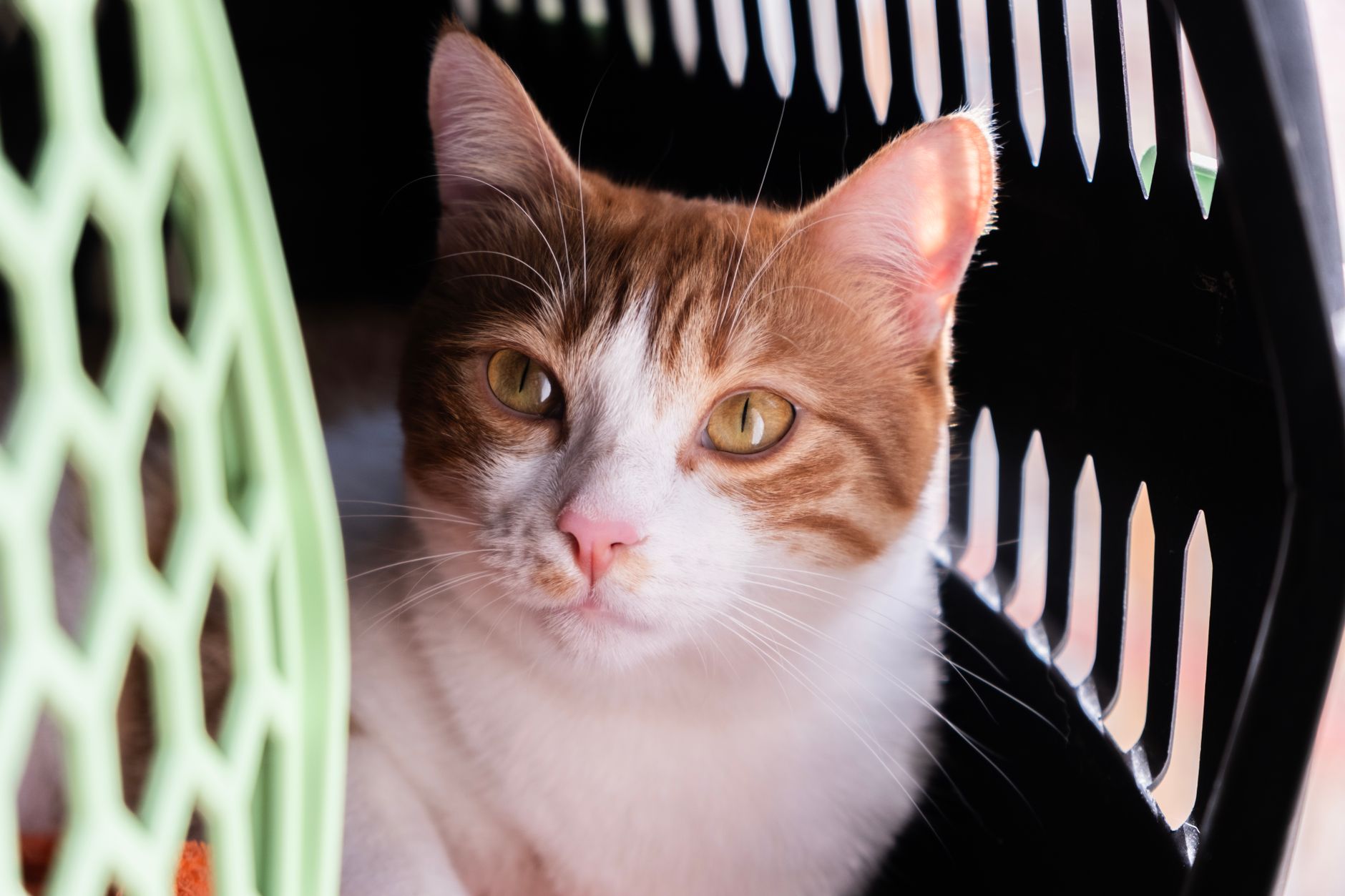

A cat carrier is a portable enclosure used to transport a cat safely by car, taxi, train, or aircraft cabin. Cheap does not mean disposable: the goal is a secure shell or bag with reliable closures, adequate airflow, and enough interior space that your cat is not forced into an unnatural posture. This guide explains how to shop on a budget without violating carrier rules set by airlines, the International Air Transport Association (IATA), or—when animals ship as commercial cargo—the United States Department of Agriculture Animal and Plant Health Inspection Service (USDA APHIS) under the Animal Welfare Act.
What Counts as a Cheap Cat Carrier?
Retail listings group cat carriers across a wide price span. Hill's Pet Nutrition notes that functional carriers are available for a moderate price around $20, while luxury models can cost thousands (Hill's Pet Nutrition, 2020). In practice, "cheap" in 2026 usually means hard plastic top-load kennels at big-box pet stores, soft-sided bags under $50, or fold-flat fabric carriers marketed for occasional vet trips—not leather designer totes or crash-tested premium crates.
Price alone is a poor filter. A $15 carrier with weak zippers can cost more in stress, escape risk, or a rejected boarding attempt than a $40 model that fits under an airline seat. Start with use case (vet-only, car, cabin flight, or cargo hold), then measure your cat, then compare prices within the type that fits those constraints.
Hard-Sided vs. Soft-Sided Budget Carriers
Most cheap cat carriers fall into two families. Each has trade-offs that matter more than the sticker price.
| Feature | Hard-sided (plastic kennel) | Soft-sided (nylon/polyester bag) |
|---|---|---|
| Typical budget use | Vet visits, car travel, cargo hold | Cabin flights, taxis, short trips |
| Durability | High; resists claws and impacts (Hill's Pet Nutrition, 2020) | Moderate; claws can tear mesh over time |
| Storage | Bulky when not in use | Often folds flat |
| Airline cabin fit | Allowed if dimensions fit; American Airlines lists 19 x 13 x 9 in. hard-sided on mainline flights (American Airlines, 2026) | Recommended by American Airlines at 18 x 11 x 11 in. soft-sided (American Airlines, 2026) |
| Difficult cats | Top removes for loading; latched door (American Association of Feline Practitioners, cited in Hill's Pet Nutrition, 2020) | Zipper escapes possible if underspecified |
| Cargo / checked air | Must meet rigid IATA Container Requirement 1 (IATA, 2026) | Not acceptable for cargo hold (IATA, 2026) |
When a hard-sided cheap carrier wins
For cats who panic, scratch, or bolt, veterinarians affiliated with the American Association of Feline Practitioners recommend a hard-sided carrier with a removable top and latched front gate (Hill's Pet Nutrition, 2020). Budget plastic kennels from brands like Petmate or Frisco-style two-door models appear on many "best budget" roundups because the shell survives years of clinic visits. They are also the realistic path to checked or cargo air travel, where IATA requires rigid construction, leak-proof floors, and secure metal hardware for hold shipments (IATA, Edition 52, January 2026).
When a soft-sided cheap carrier wins
Soft-sided carriers weigh less, slide under airplane seats, and store in a closet when folded. IATA's cabin guidance states that in-cabin containers need not be rigid but must allow the cat to sit erect, stand, turn around, and lie naturally; provide ventilation on four vertical sides equal to at least 16% of each side's area; and remain escape-proof and leak-proof (IATA, current Live Animals Regulations). American Airlines explicitly recommends soft-sided collapsible kennels that fit under the seat without excessive compression, with mesh on three or more sides (American Airlines, 2026). Compression matters: IATA warns that squeezing a soft bag can block vents and cause heat buildup (IATA, cabin guidance).
How to Size a Cat Carrier Correctly
Never buy by weight label alone. Measure your cat in centimeters or inches:
- A — Body length: tip of nose to base of tail.
- B — Leg height: ground to elbow.
- C — Shoulder width: widest point across shoulders.
- D — Standing height: floor to top of head or ear tip, whichever is higher.
For hold shipments, IATA's minimum internal dimensions for one animal are: length = A + ½B; width = C × 2; height = D plus bedding thickness; snub-nosed breeds need 10% more space (IATA, Edition 52, January 2026). For cabin travel, those calculated sizes often exceed under-seat limits—only small cats fit. Your airline's published maximum external dimensions override generic formulas.
USDA APHIS regulations at 9 CFR § 3.15 require that any primary enclosure used when dogs or cats are transported in commerce must be large enough for each animal to turn about normally while standing, sit and stand erect, and lie in a natural position (Electronic Code of Federal Regulations, 2020). Ventilation must total at least 14% of combined wall surface area, with specific patterns depending on which walls have openings (9 CFR § 3.15(c), 2020). These rules apply to commercial shippers; USDA APHIS states that transportation of pets remaining in the custody of their owners—such as a cat in the aircraft cabin with you—is not regulated under the Animal Welfare Act, though other federal or state rules may still apply (USDA APHIS, April 2026).
Hill's Pet Nutrition advises a snug—not cavernous—carrier: too much room lets a cat slide and feel insecure, but the cat must still turn around and lie down (Hill's Pet Nutrition, 2020).
Airline Rules That Affect Cheap Carriers
"Airline approved" is marketing language, not an IATA certification. IATA states it does not certify, approve, sell, or endorse any commercial pet container brand (IATA, cabin guidance). Airlines apply Container Requirement 1 principles plus their own size caps.
On American Airlines as of August 2026, carry-on cats must travel in an approved carrier with these maximum dimensions:
- Soft-sided (recommended): 18 × 11 × 11 inches (46 × 28 × 28 cm) on all flights (American Airlines, 2026).
- Hard-sided mainline: 19 × 13 × 9 inches (American Airlines, 2026).
- Hard-sided American Eagle: 16 × 12 × 8 inches (American Airlines, 2026).
Some aircraft ban cabin pets entirely due to lack of under-seat space—for example, American Airlines lists several wide-body types where premium-cabin pets are not permitted (American Airlines, 2026). Always confirm dimensions for your specific flight before buying a budget soft carrier online.
Additional IATA cabin checklist items relevant to cheap carriers:
- Animals must be at least 8 weeks old; some countries require older minimum ages (IATA, cabin guidance).
- A "Live Animals" label should be affixed without blocking vents (IATA, cabin guidance).
- Sedation is discouraged because altitude and tranquillizers combine to increase cardiovascular risk (IATA, cabin guidance; American Airlines cites AVMA guidance, 2026).
- Do not open the carrier inflight (IATA, cabin guidance).
Seven Features Worth Paying For (Even on a Budget)
When comparing inexpensive listings, prioritize safety mechanics over color or pockets:
- Escape-resistant closure: latched hard doors beat bare zippers for nervous cats (Hill's Pet Nutrition, 2020). If you choose zippers, look for internal clips or buckles.
- Top and front access: top-loading hard kennels let a vet examine a cat while the base stays put.
- Ventilation: mesh on three or more sides for soft bags (American Airlines, 2026); rigid vents for plastic kennels.
- Leak-proof floor: required for IATA-compliant hold crates and good practice in cars (IATA, 2026).
- Seat-belt loops or straps: reduces sliding during braking.
- Washable liner: accidents happen; removable pads speed cleanup (Hill's Pet Nutrition, 2020).
- Owner ID label: name, phone, and a photo on the carrier—not a substitute for microchip registration or official travel papers.
Skip cardboard adoption totes for routine transport. Hill's Pet Nutrition classifies them as short-term shelter giveaways, not durable travel gear (Hill's Pet Nutrition, 2020).
Travel Documents Are Not the Same as a Carrier
Search results for "cheap cat carriers" are about physical gear. Do not confuse that with pet travel documents, which governments issue separately.
For United Kingdom residents traveling to the European Union, GOV.UK states you need microchipping, rabies vaccination, and— for England, Scotland, or Wales—an animal health certificate from a veterinarian rather than an old EU pet passport (GOV.UK, 2026). Northern Ireland residents may use a pet passport under separate rules (GOV.UK, 2026). None of these documents replace an airline-sized carrier.
Animal Passport is a different product entirely: a digital animal identity record using phone-based muzzle biometrics (each cat's nose print is unique, similar to a fingerprint), owner linkage, breed, estimated age from dental photographs with a confidence score, body condition score 1–5 from a side-profile photo, and vaccination history. It is not a government-issued EU pet passport, not an airline boarding pass, and not veterinary diagnosis. In August 2025, similar biometric livestock identification was used in flood rescue in Pakistan so farmers could reclaim animals when paper ear tags washed away—a reminder that durable ID and a physical carrier solve different problems. For travel compliance, follow destination-country veterinary rules and airline pet policies; use Animal Passport where you need portable biometric identity tied to health records. Read more on the Animal Passport blog.
Step-by-Step: Buy and Train a Budget Carrier
1. Define the trip
Vet-only? Any hard or soft carrier with solid locks works. Cabin flight? Shop to airline dimensions first. Cargo? Budget hard IATA-type crates start higher than $50 but avoid rejected check-in.
2. Measure twice
Record A, B, C, and D per IATA (IATA, 2026). Compare to product internal dimensions listed by the seller, not the cat weight chart alone.
3. Set a ceiling
Filter listings at or below your budget—Hill's Pet Nutrition suggests focusing on carriers within your price range rather than browsing luxury models first (Hill's Pet Nutrition, 2020).
4. Acclimate at home
IATA recommends introducing the travel container well before departure to limit stress (IATA, cabin guidance). Leave the cheap carrier open with treats inside for days, not only on vet day.
5. Pre-flight check
Confirm airline pet reservations, aircraft restrictions, and whether combined pet-plus-carrier weight limits apply—American Airlines weighs pet and carrier together at 20 pounds (9.07 kg) on certain Airbus A321T configurations (American Airlines, 2026).
Bottom Line
Cheap cat carriers can be safe and airline-compatible when you match type to trip, size to anatomy, and features to escape risk. Soft-sided bags near $25–$50 suit many cabin itineraries if they meet airline inch limits; hard-sided kennels near $20–$40 excel for vet and car use. IATA does not bless brands—only construction standards—so verify your airline's published dimensions before checkout. Keep travel certificates, microchips, and biometric ID platforms like Animal Passport separate from the carrier itself: you need both the box and the paperwork when crossing borders.
FAQ
- What is the cheapest type of cat carrier?
- Basic hard-sided plastic kennels and fold-flat soft bags are usually the lowest-cost options. Hill's Pet Nutrition notes functional carriers around $20, while soft-sided cabin bags often list under $50 at major retailers.
- Are cheap cat carriers airline approved?
- No official "airline approved" certification exists—IATA does not endorse brands. A budget carrier is acceptable only if it fits your airline's published under-seat dimensions and lets your cat stand, turn, and lie down naturally.
- What size cat carrier do I need?
- Your cat must turn around, stand erect, sit, and lie naturally inside. For hold travel, IATA calculates minimum internal size from nose-to-tail length, leg height, shoulder width, and standing height; cabin cats must also fit airline inch limits, often near 18 x 11 x 11 inches soft-sided on U.S. majors.
- Can I use a cardboard cat carrier long term?
- No. Cardboard boxes from shelters are meant for short-term transport after adoption. Hill's Pet Nutrition recommends upgrading to a hard or soft durable carrier for vet visits and travel because cardboard breaks down quickly.
- How much should I spend on a cat carrier?
- You do not need luxury prices. A moderate hard kennel near $20 or a soft-sided bag under $50 can work if closures, ventilation, and sizing are correct. Spending slightly more for secure latches often costs less than a failed trip to the airport.
- Do cats prefer hard or soft carriers?
- It depends on temperament and trip type. Anxious or escape-prone cats often do better in hard-sided carriers with latched doors and removable tops, while calm cats on flights may tolerate soft-sided bags that fit under seats.
- What is the difference between a pet passport and a cat carrier?
- A cat carrier is physical travel equipment. An EU pet passport or UK animal health certificate is an official veterinary travel document for border rules—they do not substitute for each other. Animal Passport at animalpassport.co is a separate biometric digital ID product, not a government travel passport.
- Can I sedate my cat in a cheap carrier for flying?
- IATA and American Airlines discourage sedation for air travel because altitude and tranquillizers increase respiratory and cardiovascular risk. If a veterinarian prescribes sedation, disclose it to the airline before departure.
Sources
- Guidance for Passengers Traveling with their Dog or Cat in the Cabin — International Air Transport Association (IATA)
- Container Requirement 1 — Pet Container Requirements (Live Animals Regulations, Edition 52, January 2026) — International Air Transport Association (IATA)
- 9 CFR § 3.15 — Primary enclosures used to transport live dogs and cats — Electronic Code of Federal Regulations (e-CFR), Cornell Legal Information Institute
- Traveling with pets — American Airlines
- A Guide for Choosing the Best Cat Carrier — Hill's Pet Nutrition
- Taking your pet dog, cat or ferret abroad: Travelling to an EU country — GOV.UK
- Transporting Animals in Commerce – Resources & Guidance — United States Department of Agriculture Animal and Plant Health Inspection Service (USDA APHIS)
Animal Passport binds a muzzle biometric to a digital record farmers, buyers, and insurers can verify in the field.