Delta Flying With a Cat: Fees, Carrier Size, Booking and Paperwork (2026)

Key takeaways
- Delta Air Lines carries cats only in the cabin for regular passengers; it does not accept pets as checked baggage, except for active U.S. military and State Department Foreign Service Officers with transfer orders.
- The in-cabin pet fee is $150 USD/CAD each way within the U.S., Canada, Puerto Rico and the U.S. Virgin Islands for tickets issued on or after April 8, 2025, and $200 for international trips, per Delta's pet travel page.
- Delta recommends a soft-sided, leak-proof carrier no larger than 18 x 11 x 11 inches, ventilated on 3 sides for domestic and 4 sides for international flights, that fits fully under the seat in front of you.
- You must call Delta Reservations to add your cat; space is first-come, first-served, with 4 pets per flight in Delta Main/Comfort and 2 in domestic Delta First.
- Cats cannot fly in Delta's cabin to or from Hawaii, the United Kingdom, Australia, New Zealand, Hong Kong, Iceland, Jamaica, Barbados, South Africa or the UAE, among others.
- At the TSA checkpoint you take your cat out of the carrier and carry it through the metal detector; ask for a private screening room if your cat might bolt.
- The CDC does not require proof of rabies vaccination for cats entering the U.S., but destination countries, U.S. states and Delta itself may require health certificates, microchips and vaccines.
- Animal Passport's muzzle-biometric livestock ID is not an airline or government pet travel document and does not replace Delta, USDA APHIS or EU paperwork.
Delta flying with a cat means booking your cat as an in-cabin pet on Delta Air Lines: the cat rides in a leak-proof carrier under the seat in front of you, and you pay a one-way fee at check-in. As of October 2026, Delta charges $150 each way within the U.S. and Canada and $200 on international trips. It recommends a soft carrier no larger than 18 x 11 x 11 inches, and you must call Delta Reservations to add your cat.
This guide is based on Delta's official pet pages, the Transportation Security Administration (TSA), the Centers for Disease Control and Prevention (CDC) and the United States Department of Agriculture Animal and Plant Health Inspection Service (USDA APHIS). Delta changes its pet rules often, and some older Delta pages still show out-of-date numbers. We point out those conflicts below so you know which figure to trust.
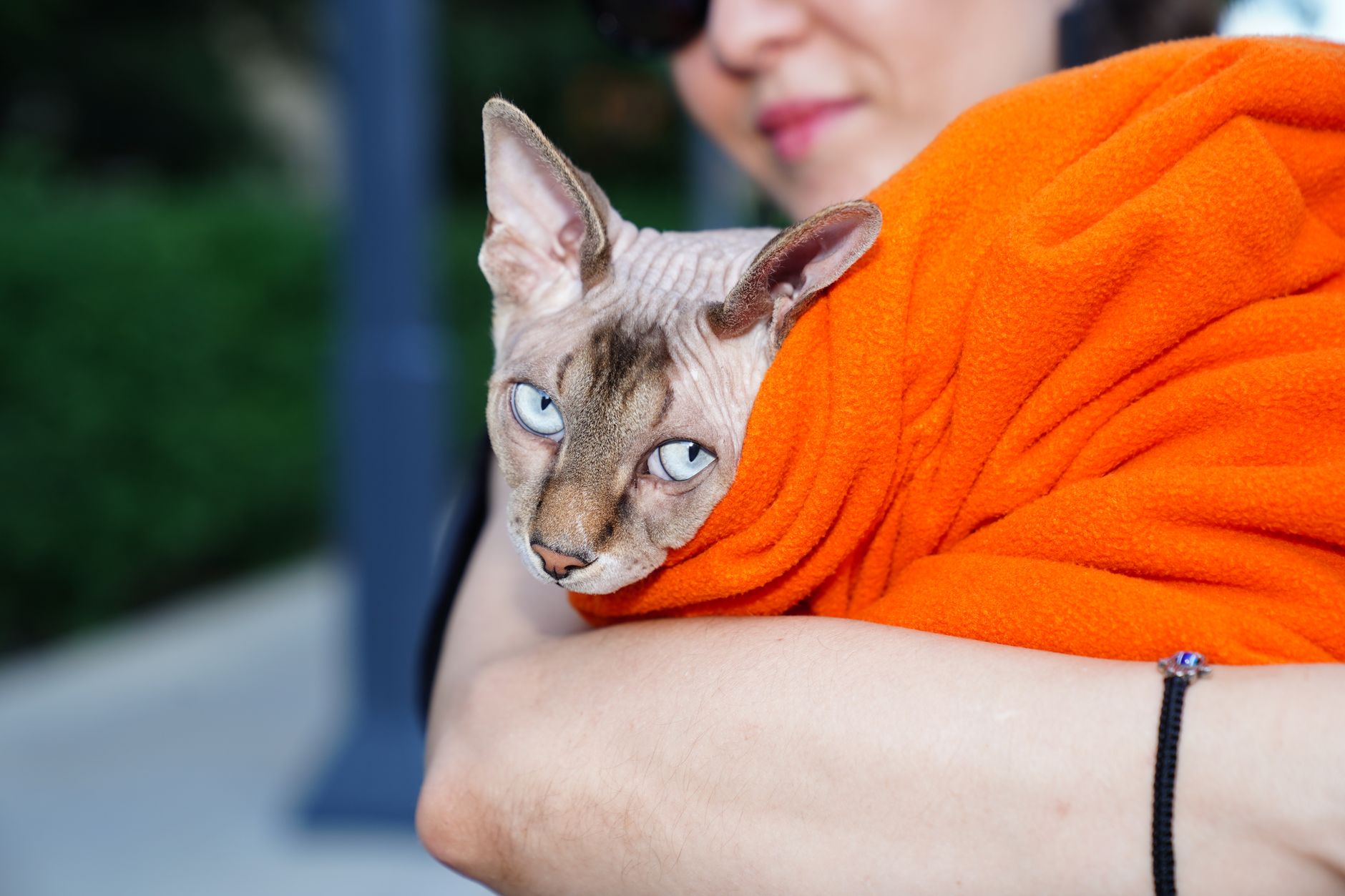

Can you fly with a cat on Delta?
Yes. Delta's Pet Travel Overview (accessed October 2026) says that on domestic flights within the contiguous U.S., small dogs, cats and household birds that meet age, health, size and kennel requirements can travel in the cabin for a one-way fee collected at check-in. Travel outside the contiguous U.S. is allowed only if you hold every document needed for your cat to enter the destination and, where relevant, to return home.
The main limit is the cargo hold. Delta's Pet Travel Requirements and Restrictions page says Delta does not accept pets as checked baggage. The only exceptions are active U.S. military personnel and U.S. State Department Foreign Service Officers with transfer orders. If your cat is too big for an under-seat carrier, your only Delta option is shipping it as freight through Delta Cargo. That requires a separate booking, a drop-off at a cargo facility at least three hours before departure, and no guarantee your cat flies on your flight.
Delta in-cabin cat requirements at a glance
The table below summarizes Delta's current rules for cats as of October 2026, taken from Delta's Pet Travel Overview unless noted otherwise.
| Requirement | Delta rule (2026) | Source |
|---|---|---|
| Fee: U.S., Canada, Puerto Rico, U.S. Virgin Islands | $150 USD/CAD each way (tickets issued on or after April 8, 2025); $95 for tickets issued before that date | Delta Pet Travel Overview |
| Fee: international | $200 USD/CAD/EUR each way | Delta Pet Travel Overview |
| Fee: Brazil | $200 USD (tickets issued on or after April 8, 2025) | Delta Pet Travel Overview |
| Recommended carrier size | Soft-sided, maximum 18 x 11 x 11 inches; must fit fully under the seat in front | Delta Pet Travel Overview |
| Ventilation | Openings on 3 sides (domestic) or 4 sides (international); leak-proof | Delta Pet Travel Overview |
| Minimum age | 8 weeks (domestic); 16 weeks for cats entering the U.S. from abroad; 15 weeks to the EU | Delta Pet Travel Overview |
| Pets per carrier | 1, except same-breed, same-size pets aged 8 weeks to 6 months, or a mother with an un-weaned litter | Delta Pet Travel Overview |
| Pets per flight | 4 in Delta Main/Comfort; 2 in domestic Delta First; 0 in Delta One, Delta Premium and international business class | Delta Pet Travel Overview |
| Carry-on allowance | Carrier plus 1 personal item or 1 carry-on item | Delta Pet Travel Overview |
Where Delta's own pages disagree
Delta still hosts an older Pet Travel Options page with different figures. It lists a $125 U.S./Canada fee, a 10-week minimum age for domestic travel, and a phone booking line of 800-221-1212. Delta's older Requirements and Restrictions page also says in-cabin kennels need ventilation on at least 2 sides, not 3. The newer Pet Travel Overview, which lists the April 8, 2025 fee change, appears to be the current one. If you get a different answer on the phone, ask the agent which rule applies to your ticket's issue date, because Delta says fees follow the contract of carriage in effect when the ticket was issued.
How to book your cat on Delta: step by step
- Book your own ticket first. Pick a seat in Delta Main or Comfort, or in a domestic Delta First cabin without flat-bed seats. Pets are not permitted in Delta One or Delta Premium cabins.
- Measure your carrier. Delta asks you to have the carrier's length, width and height ready when you call. Under-seat space varies by aircraft, and Delta says regional jets may need a smaller carrier.
- Call Delta Reservations as soon as possible. In-cabin pet spots are first-come, first-served, and each flight has a cap. Delta's older options page lists 800-221-1212.
- Avoid restricted seats. Delta does not allow pet owners in bulkhead rows, emergency exit rows, "no stowage" seats, flat-bed or Delta One seats, rows 46–51 on the A330-200, rows 54–59 on the A330-300, or center seats on the B757-200.
- Get any required health paperwork. Delta does not require a health certificate for every domestic cabin pet. However, its Requirements page notes that some destination states may require one, and that it must be issued by a licensed veterinarian within 10 days of transport when it is required.
- Check in at the Special Service Counter. An agent checks your cat and carrier, collects the fee and gives you a cabin pet tag. Allow extra time.
Getting through TSA security with a cat
The Transportation Security Administration (TSA) says in its official FAQ that you must remove your pet from the carrying case and place the case through the X-ray machine, then carry or leash the animal through the metal detector. Carriers also get a visual or physical inspection. Delta repeats this rule: you remove your cat from the kennel at the checkpoint, then keep it in the kennel everywhere else in the airport except designated pet relief areas.
TSA's 2023 press guidance for Washington Dulles International Airport warns that cats in particular often get skittish at checkpoints. Travelers whose pets may struggle or jump away can ask a TSA officer for screening in a private room, and will be escorted there with the cat still in its carrier. A snug harness and leash put on at home makes this step much safer.
Where Delta will not let your cat fly in the cabin
Delta's Pet Travel Overview (accessed October 2026) lists these in-cabin exceptions. Pets are not permitted in the cabin to or from:
- Australia and New Zealand (by law, pets must travel as cargo)
- Barbados, Iceland, Jamaica, Hong Kong, South Africa and the United Arab Emirates
- The United Kingdom (Delta accepts no live animals as checked or carry-on baggage to or from the UK)
- Hawaii (pet travel is not allowed on Delta flights to Hawaii)
- Brazil, Colombia and the Dominican Republic, for pets originating in those countries
Delta's International and Connection Pet Travel page adds that live animals are prohibited on flights operated outside the U.S., except Canada. It also says Delta will not carry warm-blooded animals on flights averaging more than 12 hours. For the Republic of Ireland, Delta says cabin travelers must notify Ireland's Department of Agriculture in advance. Partner airlines set their own rules, so check each carrier on a codeshare itinerary.
Paperwork for flying a cat internationally on Delta
Returning to or entering the United States
The CDC's page on Bringing an Animal into the U.S. (updated August 2025) says cats must appear healthy on arrival and may be examined by a licensed veterinarian at the owner's expense if they appear ill. Cats are not required to have proof of rabies vaccination for U.S. entry, although the CDC recommends rabies vaccination for all cats. CDC's 2024 final rule, effective August 1, 2024, tightened dog imports but did not substantively change how cats are imported. Cats arriving in Hawaii and Guam, even from the mainland, face local quarantine rules.
Be careful with dog-focused advice online. The CDC Dog Import Form and the 6-month minimum age apply to dogs, not cats. For cats, Delta requires a minimum age of 16 weeks when traveling to the U.S. from another country.
Leaving the United States with your cat
USDA APHIS's Pet Travel Process Overview (last modified June 2026) advises contacting a USDA-accredited veterinarian as soon as you decide to travel. Depending on the country, a USDA-endorsed health certificate may be needed, and once it is signed you may have a limited window, such as 30 days, to travel. APHIS notes that original endorsed hard copies must travel with the pet and that airlines may add their own requirements.
For the European Union, USDA APHIS guidance says your cat needs a working ISO-compliant microchip before its rabies vaccination. After that vaccination you must wait at least 21 days, or longer if the vaccine manufacturer specifies, before entering the EU. APHIS cites EU Regulation 576/2013. Delta's international page, by contrast, still cites the older Regulation (EC) No. 998/2003. Follow the APHIS country page and your accredited veterinarian rather than the airline's legal citation.
Practical tips for a calmer Delta flight
- Get your cat used to the carrier. Tips from Foothills Animal Shelter, published in TSA's December 2022 Denver holiday release, suggest leaving the carrier in your cat's living space and feeding the cat in it before the trip.
- Plan food and litter. The same release suggests a small elimination area in the carrier or a feeding schedule that avoids bathroom needs mid-flight.
- Ask your vet about sedation. Delta's Requirements page says tranquilizer effects at altitude are unpredictable and requires written veterinary consent if you sedate your pet. Delta agents cannot give medication.
- Flat-faced breeds: Delta lists Burmese, Exotic, Himalayan and Persian cats as snub-nosed breeds it will not accept as checked baggage. Delta's in-cabin rules do not list a breed ban, but discuss flight risk with your veterinarian.
- Keep the cat zipped in. Delta warns that letting your pet out of the kennel in the airport or on board may cost you the ability to fly with pets in the future. The same rule applies in Delta Sky Club lounges.
Airline pet documents vs. Animal Passport biometric ID
People often mix up airline pet paperwork with "animal passports." They are different things. The documents that matter for a Delta flight are your Delta in-cabin booking and the health certificates, vaccination records, microchip records and permits required by your destination and by USDA APHIS or the CDC. Inside the EU, there is also the official EU pet passport.
Animal Passport is a separate product: a digital animal and livestock passport that identifies animals by muzzle biometrics, since a nose print is unique like a fingerprint. Using a phone, it builds a record that links the animal to its owner, breed, estimated age (from a dental photograph, with a confidence score), body condition score (1–5 from a side-profile photo) and vaccination history. It was used in livestock flood rescue in Pakistan in August 2025 so farmers could reclaim animals after paper tags washed away.
Animal Passport is not a government-issued travel document. It is not a USDA-endorsed health certificate or an EU pet passport, and Delta does not ask for it. It does not provide veterinary diagnosis or legal advice. For a Delta flight with your cat, rely on the official sources cited here. For more on animal identification and records, browse the Animal Passport blog.
Bottom line
Flying with a cat on Delta in 2026 is straightforward on most domestic routes. Book early by phone, use a soft carrier around 18 x 11 x 11 inches, budget $150 each way ($200 internationally), and expect to carry your cat through TSA screening. International trips and Hawaii are where plans fall apart, so check Delta's exception list, the CDC, and the USDA APHIS country page well before you buy a ticket.
By Animal Passport. Last updated October 4, 2026. Airline and government pet rules change often; confirm with Delta and the relevant authority before you travel.
FAQ
- How much does it cost to fly with a cat on Delta?
- As of October 2026, Delta charges $150 USD/CAD each way for an in-cabin cat within the U.S., Canada, Puerto Rico and the U.S. Virgin Islands on tickets issued on or after April 8, 2025. International in-cabin trips cost $200 each way, and the fee is collected at check-in.
- What size carrier does Delta allow for a cat?
- Delta recommends a soft-sided, leak-proof carrier no larger than 18 x 11 x 11 inches, ventilated on 3 sides for domestic and 4 sides for international flights. It must fit fully under the seat in front of you, and regional jets may need a smaller carrier.
- Can I book my cat online with Delta?
- Delta's pet travel page tells customers to contact Delta Reservations to add a pet after booking their own ticket, so plan to call rather than book online. In-cabin pet space is first-come, first-served and limited per flight.
- Does a cat count as a carry-on on Delta?
- Yes. On Delta, the cat carrier counts as your carry-on, and you may bring only one personal item or one carry-on bag in addition to it. The pet fee still applies.
- Can my cat fly in cargo on Delta?
- Delta does not accept pets as checked baggage, except for active U.S. military and State Department Foreign Service Officers with transfer orders. Larger cats can be shipped as freight through Delta Cargo on a separate booking, and they may not fly on your flight.
- Do I need a health certificate to fly my cat on Delta?
- Delta does not require a health certificate for every domestic in-cabin cat, but some U.S. states and most foreign destinations do. When one is required, Delta says a licensed veterinarian must issue it within 10 days of travel.
- Can I fly with my cat to Hawaii or the UK on Delta?
- No. Delta's 2026 pet policy does not allow pets in the cabin on flights to Hawaii or to or from the United Kingdom. Australia, New Zealand, Hong Kong and several other destinations are also excluded.
- Do I have to take my cat out of the carrier at airport security?
- Yes. TSA requires you to take your cat out of the carrier, send the empty carrier through the X-ray, and carry the cat through the metal detector. If your cat may bolt, you can ask TSA for a private screening room.
Sources
- Pet Travel Overview — Delta Air Lines
- Pet Travel Requirements & Restrictions — Delta Air Lines
- Pet Travel Options — Delta Air Lines
- International & Connection Pet Travel — Delta Air Lines
- Can I take my pet through the security checkpoint? — Transportation Security Administration (TSA)
- TSA tips on traveling with pets through a security checkpoint at Washington Dulles International Airport — Transportation Security Administration (TSA)
- TSA offers tips for traveling with small pets through the security checkpoint this holiday season — Transportation Security Administration (TSA)
- Bringing an Animal into the U.S. — Centers for Disease Control and Prevention (CDC)
- Control of Communicable Diseases; Foreign Quarantine: Importation of Dogs and Cats (89 FR 41726) — Federal Register / Centers for Disease Control and Prevention (CDC)
- Pet Travel Process Overview — USDA Animal and Plant Health Inspection Service (APHIS)
- Pet Travel From the United States to Slovakia (EU requirements) — USDA Animal and Plant Health Inspection Service (APHIS)
Animal Passport binds a muzzle biometric to a digital record farmers, buyers, and insurers can verify in the field.