Dog Travel Bag: Airline, TSA, and International Rules Explained
Key takeaways
- A dog travel bag is a soft- or hard-sided ventilated carrier, not a legal travel document — it gets your dog to the gate, but it doesn't satisfy health or entry paperwork requirements.
- The International Air Transport Association (IATA) sets baseline in-cabin container standards under Container Requirement 1 (CR1) of the Live Animals Regulations, effective January 1, 2026, but each airline sets its own final size and weight limits.
- U.S. airlines commonly cap in-cabin dog carriers around 18 x 11 x 11 inches; Delta Air Lines charges $150 USD/CAD per in-cabin pet on tickets issued on or after April 8, 2025.
- The Transportation Security Administration (TSA) requires you to remove your dog from the carrier and send the empty bag through the X-ray machine while you carry or leash-walk your dog through the metal detector.
- International travel from the U.S. requires a United States Interstate and International Certificate for Health Examination for Small Animals (USDA APHIS Form 7001), issued by a USDA-accredited veterinarian — a travel bag does not replace this paperwork.
- Inside the European Union, dogs need an EU pet passport issued by an authorised veterinarian, a microchip, and a rabies vaccination given at 12 weeks or older with at least 21 days before travel, per the European Commission.
- Animal Passport's biometric muzzle-ID record is a separate, digital livestock/animal identity tool — it is not an EU pet passport, a USDA health certificate, or an airline-approved carrier.
- Choose a carrier with ventilation on at least three sides, a leak-proof base, and dimensions confirmed against your specific airline and aircraft before you book.
A dog travel bag is a ventilated, leak-proof carrier — soft- or hard-sided — built to hold a dog safely under an airplane seat, in a car, or while walking through an airport. It is not a legal travel document: airlines, the Transportation Security Administration (TSA), and government agencies like the United States Department of Agriculture Animal and Plant Health Inspection Service (USDA APHIS) each have separate paperwork and screening rules that a bag alone cannot satisfy. This guide covers container standards, checkpoint procedures, and the health documents you still need.
What Counts as a Dog Travel Bag?
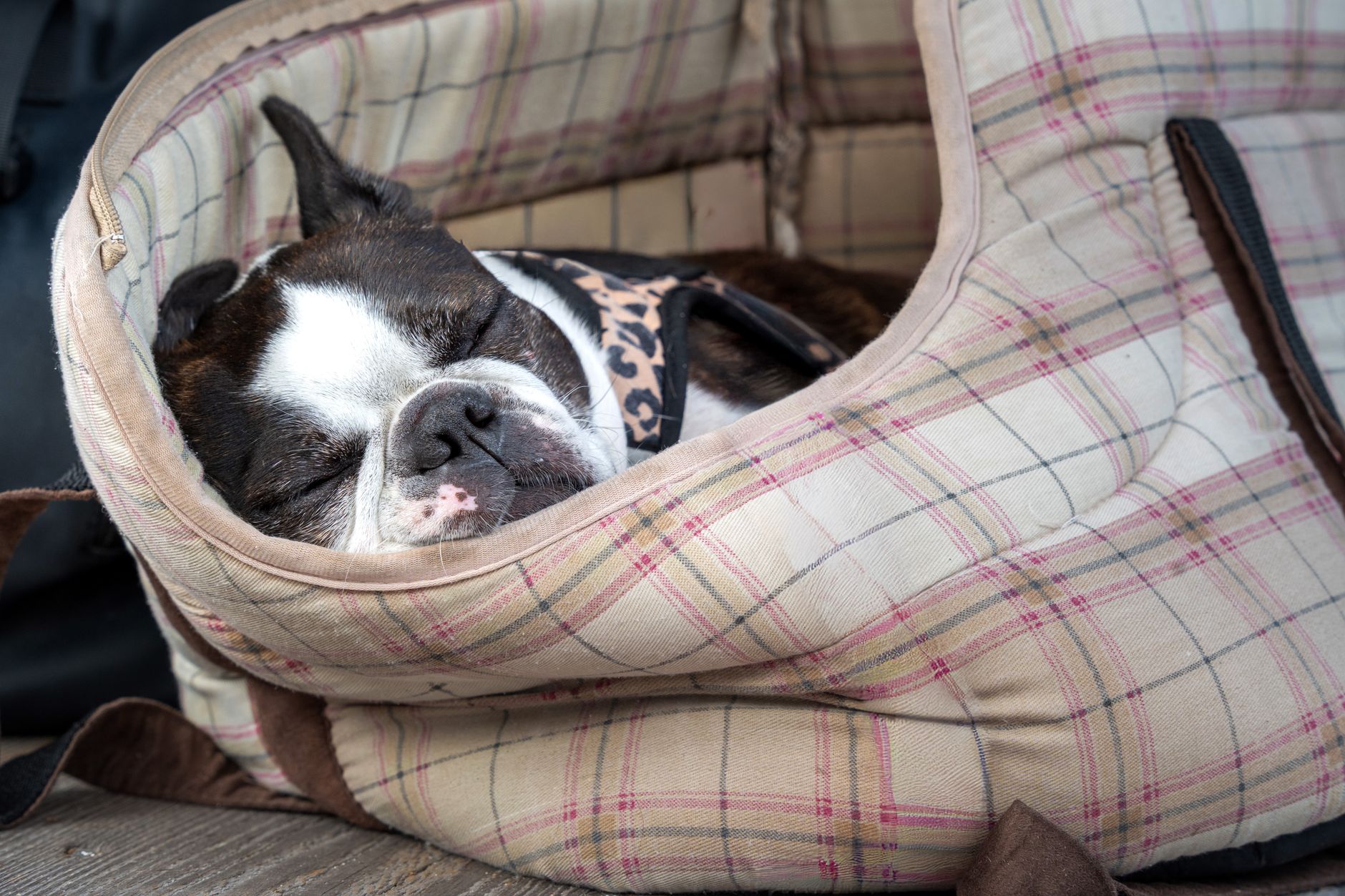
A dog travel bag (also called an in-cabin pet carrier) is a structured or soft-sided case with mesh ventilation panels, a leak-proof floor, and a shoulder strap or handles, sized to fit under an airline seat or in a car footwell. It differs from a shipping crate, which is a larger, rigid container used for dogs traveling in the cargo hold.

Most travel bags are made for small dogs weighing roughly 15–20 lb (7–9 kg) or less, since in-cabin space is limited to what fits under the seat in front of a passenger.
Airline and IATA Carrier Standards
The International Air Transport Association (IATA) publishes baseline container standards for in-cabin pet transport under Container Requirement 1 (CR1) of its Live Animals Regulations (LAR), with a new edition of the LAR effective January 1, 2026, according to IATA. CR1 requires that a dog be able to "turn about normally while standing, to stand and sit erect, and to lie in a natural position," and IATA notes that snub-nosed (brachycephalic) breeds require a 10% larger container.
IATA sets the floor, but individual airlines set the final word on size, weight, and fees — always confirm with your specific carrier before booking. As one concrete example, Delta Air Lines recommends a soft-sided kennel with maximum dimensions of 18" x 11" x 11", ventilation on three sides for domestic flights (four sides for international), and charges $150 USD/CAD per in-cabin pet on tickets issued on or after April 8, 2025 — up from a previous $95 fee, per Delta's official pet travel page.
Typical In-Cabin Carrier Size Limits by Airline
| Airline | Typical Max Carrier Size | Carrier Type Required |
|---|---|---|
| Delta Air Lines | 18" x 11" x 11" | Soft-sided, leak-proof, ventilated 3 sides (domestic) |
| United Airlines | ~18" x 11" x 11" | Soft-sided carrier, fits under seat |
| American Airlines | ~18" x 11" x 11" | Soft-sided carrier, fits under seat |
| Southwest Airlines | ~18.5" x 13.5" x 8.5" | Soft- or hard-sided, fits under seat |
Figures for United, American, and Southwest are drawn from airline pet-policy aggregator research current as of 2026 and should be verified against each airline's own site before you fly, since aircraft type changes under-seat space.
TSA Rules for Bringing a Dog Through Airport Security
The Transportation Security Administration requires that a dog be removed from its travel bag at the checkpoint. Per TSA's official guidance, travelers should place the empty carrier on the X-ray belt while carrying the dog through the walk-through metal detector or walking the dog on a leash — a pet must never be placed inside the X-ray tunnel, since that scanner is built for property, not living animals. After screening, TSA advises returning your dog to the carrier away from the checkpoint. Travelers with pets that may struggle when handled can request private screening.
Health Paperwork: What a Travel Bag Does Not Cover
A travel bag gets a dog physically to the gate; it does not satisfy government entry or health requirements. For international travel out of the United States, USDA APHIS explains that most destination countries require a United States Interstate and International Certificate for Health Examination for Small Animals (USDA APHIS Form 7001), completed by a USDA-accredited veterinarian and, in many cases, endorsed by USDA within a set window before departure. Dogs traveling to or from a country the USDA classifies as high-risk for dog rabies also need a separate Certification of U.S.-Issued Rabies Vaccination, which cannot be issued after the dog has already left the country, per USDA APHIS.
USDA APHIS covers entry requirements for more than 130 destination countries on its Pet Travel website, and requirements vary significantly by country — always check the destination-specific page before booking travel.
EU Pet Passport vs. a Dog Travel Bag: Don't Confuse Them
Travelers researching a dog travel bag for a trip to Europe sometimes conflate the carrier with the EU pet passport, but these are entirely different things solving different problems. According to the European Commission's official Your Europe portal, an EU pet passport is a standard-format document, issued only to pet owners resident in the EU by an authorised veterinarian, that records a dog's microchip code and vaccination history. Per the European Commission's food safety directorate, a dog must be identified by microchip, and the rabies vaccine must be given at 12 weeks of age or older, with a waiting period of at least 21 days from completion of the vaccination protocol before the passport confers travel validity.
A dog travel bag is physical transport equipment; the EU pet passport is a veterinary identity and health record. You need both a compliant carrier and the correct paperwork — one does not substitute for the other.
How This Differs From Animal Passport's Biometric ID
It's also worth separating both of the above from Animal Passport, a digital identity product built around muzzle biometrics — a dog or livestock animal's nose print, which is unique in the way a human fingerprint is. Animal Passport's phone-based capture binds an owner record to a breed, an estimated age (drawn from a dental photograph with a confidence score), a body condition score from 1–5 based on a side-profile photo, and vaccination history. It has been used in livestock flood rescue efforts in Pakistan in August 2025, helping farmers reclaim animals after paper ear tags were washed away. This is a digital record of animal identity and health status — it is not an airline-approved container, a TSA-compliant carrier, a USDA health certificate, or an EU pet passport, and it does not replace any of the official paperwork described above. See more on how digital identity records work on the Animal Passport blog.
How to Choose a Dog Travel Bag
- Measure your dog first. Your dog should be able to stand, turn around, and lie down inside the bag — this is the IATA CR1 baseline standard.
- Check your specific airline's page. Don't rely on general size guides; confirm current dimensions and fees directly with the airline, since fees and limits change (Delta's in-cabin pet fee rose to $150 in 2025).
- Prioritize ventilation. Look for mesh panels on at least three sides for domestic travel, four for international, per Delta's published standard.
- Pick a leak-proof, washable base. Required by both TSA screening practicality and airline cleanliness rules.
- Confirm under-seat dimensions for your actual aircraft, not just the airline's general policy, since under-seat space varies by aircraft type.
- Separately gather your paperwork — a USDA APHIS Form 7001 health certificate for international export from the U.S., or an EU pet passport if traveling within the EU.
Frequently Asked Questions
What is a dog travel bag?
A dog travel bag is a ventilated, leak-proof carrier designed to hold a small dog under an airline seat, in a car, or through an airport, distinct from a rigid cargo-hold shipping crate.
What size dog travel bag do airlines allow in the cabin?
Most major U.S. airlines, including Delta, United, and American, cap in-cabin carriers around 18" x 11" x 11", though the exact figure varies by airline and aircraft, so always verify with your carrier before flying.
Do I have to take my dog out of the bag at TSA security?
Yes. TSA requires you to remove your dog from the carrier, send the empty bag through the X-ray machine, and carry or leash-walk your dog through the metal detector, since pets cannot pass through the X-ray tunnel.
Does a dog travel bag replace a health certificate for international travel?
No. A travel bag is transport equipment only. International travel typically requires a USDA APHIS Form 7001 health certificate from a USDA-accredited veterinarian, per USDA APHIS.
Is an EU pet passport the same as a dog travel bag?
No. An EU pet passport is a veterinary document recording microchip and rabies vaccination data, issued by an authorised veterinarian, per the European Commission; a travel bag is the physical carrier used to transport the dog.
Is Animal Passport's biometric ID an official pet travel document?
No. Animal Passport's muzzle-biometric record is a digital animal identity and health-history tool; it is not a government-issued travel document, EU pet passport, or USDA health certificate.
How old must a dog be for a rabies vaccination to count toward EU travel?
The dog must be at least 12 weeks old when vaccinated, and the vaccination protocol must be completed at least 21 days before travel, per the European Commission's official pet travel guidance.
Can a dog travel bag fit any small dog?
Only if the dog can stand, turn around, and lie down naturally inside it; IATA's CR1 standard also calls for a 10% larger container for snub-nosed (brachycephalic) breeds.
FAQ
- What is a dog travel bag?
- A dog travel bag is a ventilated, leak-proof carrier designed to hold a small dog under an airline seat, in a car, or through an airport, distinct from a rigid cargo-hold shipping crate.
- What size dog travel bag do airlines allow in the cabin?
- Most major U.S. airlines, including Delta, United, and American, cap in-cabin carriers around 18" x 11" x 11", though the exact figure varies by airline and aircraft, so always verify with your carrier before flying.
- Do I have to take my dog out of the bag at TSA security?
- Yes. TSA requires you to remove your dog from the carrier, send the empty bag through the X-ray machine, and carry or leash-walk your dog through the metal detector, since pets cannot pass through the X-ray tunnel.
- Does a dog travel bag replace a health certificate for international travel?
- No. A travel bag is transport equipment only. International travel typically requires a USDA APHIS Form 7001 health certificate from a USDA-accredited veterinarian, per USDA APHIS.
- Is an EU pet passport the same as a dog travel bag?
- No. An EU pet passport is a veterinary document recording microchip and rabies vaccination data, issued by an authorised veterinarian, per the European Commission; a travel bag is the physical carrier used to transport the dog.
- Is Animal Passport's biometric ID an official pet travel document?
- No. Animal Passport's muzzle-biometric record is a digital animal identity and health-history tool; it is not a government-issued travel document, EU pet passport, or USDA health certificate.
- How old must a dog be for a rabies vaccination to count toward EU travel?
- The dog must be at least 12 weeks old when vaccinated, and the vaccination protocol must be completed at least 21 days before travel, per the European Commission's official pet travel guidance.
- Can a dog travel bag fit any small dog?
- Only if the dog can stand, turn around, and lie down naturally inside it; IATA's CR1 standard also calls for a 10% larger container for snub-nosed (brachycephalic) breeds.
Sources
- IATA Traveler's Pet Corner – In-Cabin Pet Transport — International Air Transport Association (IATA)
- Delta Pet Travel Overview — Delta Air Lines
- Small Pets – What Can I Bring — Transportation Security Administration (TSA)
- Pet Travel Process Overview — USDA Animal and Plant Health Inspection Service (APHIS)
- Travel With a Pet — USDA Animal and Plant Health Inspection Service (APHIS)
- EU rules on travelling with pets and other animals in the EU — European Commission (Your Europe)
- Travelling with a pet within the EU — European Commission – Food Safety
Animal Passport binds a muzzle biometric to a digital record farmers, buyers, and insurers can verify in the field.