How Much Does It Cost to Fly a Dog? Cabin, Cargo, and Hidden Fees
Key takeaways
- As of August 2026, major U.S. in-cabin pet fees cluster between $100 and $150 each way per kennel, separate from the passenger ticket.
- The cabin fee is usually charged per kennel and per direction; a round trip doubles it, and some carriers charge again on long connections.
- Southwest Airlines still publishes $125 for U.S. mainland cabin pets and refunds the pet fare if you cancel; several other carriers call pet fees nonrefundable.
- Larger dogs cannot use the cabin on most airlines. Alaska Airlines and Hawaiian Airlines list $200 each way for the baggage compartment; American Airlines Cargo quotes at booking.
- The U.S. Centers for Disease Control and Prevention (CDC) Dog Import Form is free, but USDA APHIS-endorsed health certificates and destination tests add real cost on international trips.
- An EU pet passport is a government travel document for EU-resident dogs, cats, and ferrets. Animal Passport’s muzzle-biometric livestock ID product is not that document and is not an airline ticket.
- Book the pet slot early. Airlines cap pets per flight, and the International Air Transport Association (IATA) Live Animals Regulations (LAR) 2026 edition governs container size and handling, not the fare.
How much does it cost to fly a dog? As of August 2026, in-cabin travel for a small dog on major U.S. airlines typically costs $100 to $150 each way per kennel, separate from your ticket. Larger dogs that must travel in the hold often start at $200 each way where the service is still offered, while cargo quotes vary by crate size and route. Paperwork for international trips can exceed the airline fee.
Flying a dog is the paid movement of a canine as a cabin pet, checked companion animal, or cargo consignment on a commercial aircraft. This guide, published by Animal Passport and last updated 19 August 2026, uses official airline, government, European Union, and International Air Transport Association (IATA) pages. It is not veterinary diagnosis or legal advice. Confirm the live fee on the carrier’s site before you pay.

Cabin, hold, or cargo: three different products
Airlines do not sell a single “dog ticket.” They sell three products, and the price gap is large.
- In-cabin pet. A small dog rides in a leak-proof carrier that fits under the seat in front of you. This is the cheapest option on U.S. carriers that still sell it.
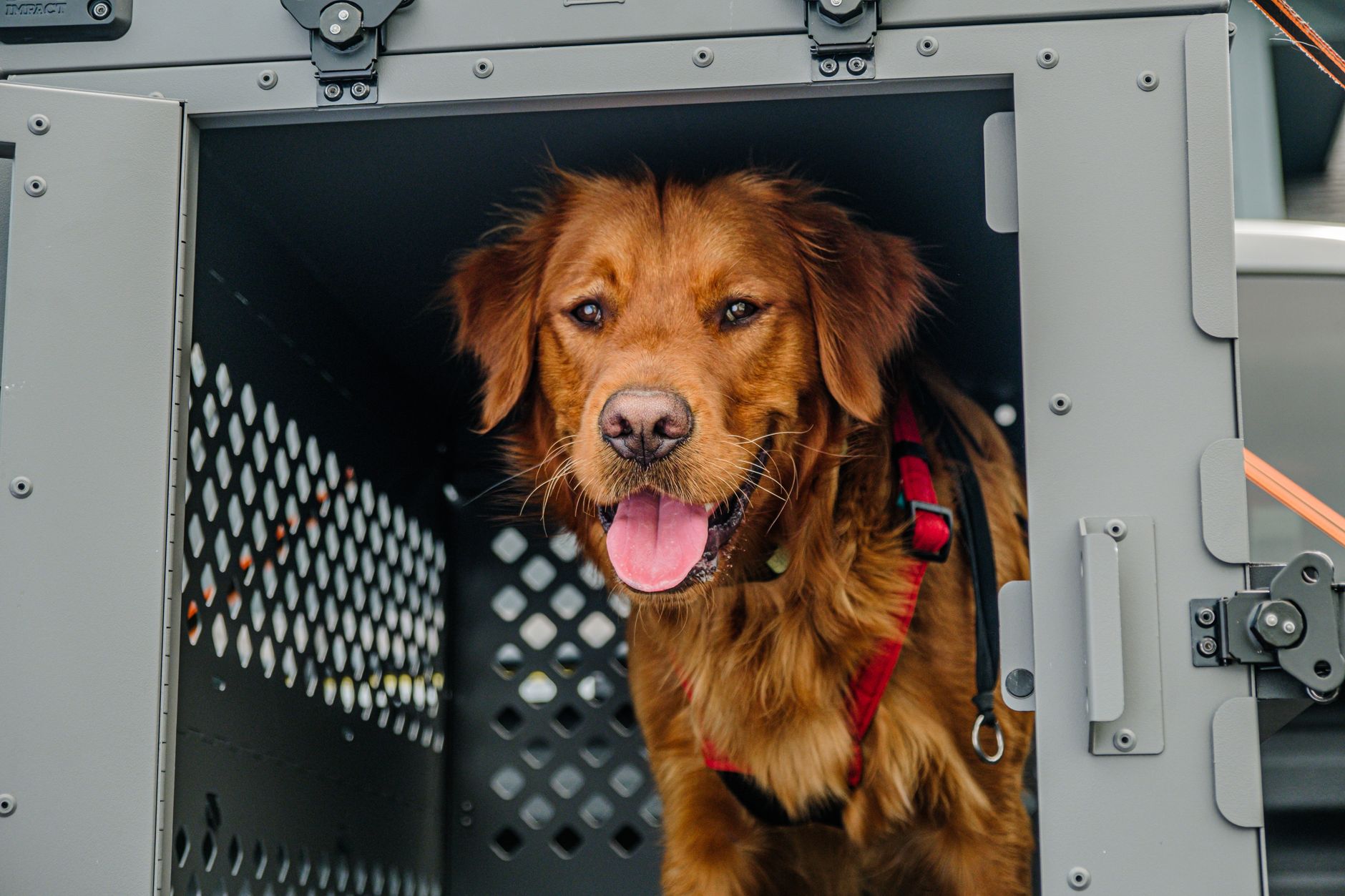
- Baggage-compartment / checked pet. The dog travels in a hard kennel in a pressurized hold on the same flight as you. As of August 2026, Alaska Airlines and Hawaiian Airlines still publish this option for the public. American Airlines limits ticket-counter checked pets to active-duty U.S. military and U.S. Department of State personnel on official orders.
- Manifest cargo. The dog is booked as a live-animal shipment. American Airlines Cargo states that cargo pet fees vary and are confirmed at booking.
The International Air Transport Association (IATA) Live Animals Regulations (LAR) are the worldwide handling standard. IATA states that the current LAR edition took effect on 1 January 2026. IATA does not set the dollar price. Its Traveler’s Pet Corner states that only small dogs and cats can go in the cabin, that animals must be at least eight weeks old and fully weaned, and that most airlines require a veterinarian-issued health certificate. IATA and the American Veterinary Medical Association (AVMA) discourage sedatives for air transport.
Official U.S. airline cabin fees as of August 2026
The table quotes published one-way cabin fees from carrier pages opened for this article. Fees are per kennel or per pet. Older roundup sites still list $95 for Delta Air Lines; Delta’s own pet page is the figure to use.
| Airline | In-cabin fee (each way) | Hold or cargo for the public? | Source, year |
|---|---|---|---|
| Alaska Airlines and Hawaiian Airlines | $100 per kennel; $35 wholly within Hawaii | Yes. Baggage compartment $200 per kennel ($60 within Hawaii; $100 within Alaska or for eligible military travel) for tickets on or after 14 October 2025, travel on or after 2 January 2026 | Alaska Airlines optional services, 2026 |
| Southwest Airlines | $125 per pet carrier on the U.S. mainland; $35 between Hawaiian islands | No cargo pets | Southwest Airlines Optional Travel Charges, 2026 |
| Frontier Airlines | $149 per pet, per direction (nonrefundable) | Cabin only; checked pets not allowed | Frontier Airlines Optional Services, 2026 |
| American Airlines | $150 per kennel within and between the United States, Canada, Mexico, Central America, and the Caribbean | Ticket-counter checked pets: military and State Department only ($200; $150 to or from Brazil). Cargo: varies, confirmed at booking | American Airlines traveling with pets, 2026 |
| Delta Air Lines | $150 USD/CAD for U.S./Canada/Puerto Rico/U.S. Virgin Islands tickets issued on or after 8 April 2025 ($95 if issued before that date); $200 international | Public page is an in-cabin program; military and State Department have a separate process | Delta Air Lines Pet Travel Overview, 2025–2026 |
| JetBlue Airways | A pet fee applies at reservation; the public help page does not list a dollar amount. Airport pet carriers sell for $55 | No large dogs | JetBlue Traveling with Pets; Contract of Carriage dated 17 April 2026 |
Read the footnotes. American Airlines states that all pet fees are nonrefundable and apply per kennel, each way, and that a stopover or connection of four hours or more is billed as another segment. Southwest Airlines states that the Pet Fare is refundable if you cancel. Round-trip math is easy to miss: a $150 each-way cabin fee is $300 for the dog before your own seats.
What a cabin pet still has to fit
Price is irrelevant if the carrier is rejected at the gate. IATA Container Requirement 1 in the 2026 LAR requires enough space for the dog to turn about normally while standing, to stand and sit erect, and to lie in a natural position. For snub-nosed breeds, IATA’s Traveler’s Pet Corner requires a container about 10 percent larger.
Airline under-seat limits are tighter. Delta Air Lines recommends a soft-sided kennel of 18 by 11 by 11 inches and requires ventilation on three sides for domestic travel and four sides for international travel. American Airlines lists 18 by 11 by 11 inches for recommended soft-sided carriers. JetBlue Airways publishes a hard maximum of 17 by 12.5 by 8.5 inches. Delta also limits cabin pets—up to four in Delta Comfort or Delta Main on many flights—and bars bulkheads, exit rows, and “no stowage” seats.
Age floors differ. IATA’s baseline is eight weeks and fully weaned. Delta Air Lines matches eight weeks for domestic travel, requires six months for a dog traveling to the United States from another country, and requires 15 weeks for travel to the European Union. The U.S. Centers for Disease Control and Prevention (CDC) requires dogs entering or returning to the United States to be at least six months old.
Hold and cargo prices when the dog will not fit
For any dog whose closed carrier will not slide under a seat, the cabin table does not apply. Alaska Airlines and Hawaiian Airlines still sell climate-controlled baggage-compartment travel. Their optional-services page states that, for tickets issued on or after 14 October 2025 for travel on or after 2 January 2026, the hold fee is $200 USD per kennel, $60 within Hawaii, and $100 for travel wholly within Alaska or for active-duty U.S. military and military dependents on orders. Their pets hub summarizes fees as $100 to $200 depending on type of travel and route, priced each way, per kennel, on Alaska or Hawaiian metal only. They do not transfer hold pets to other carriers.
American Airlines Cargo’s American PetEmbark service is the public path when the dog does not qualify as a carry-on or a military checked pet. The passenger pets page states cargo fees vary and will be confirmed at booking, depending on trip details and kennel size. Treat shipper-blog averages as private quotes, not an American Airlines tariff.
Southwest Airlines states that no pets are transported in the cargo compartment. Frontier Airlines states that pets travel in the cabin only. JetBlue Airways states it only accepts small dogs and cats. If your dog is large, compare Alaska or Hawaiian hold inventory, American Airlines Cargo, a licensed live-animal shipper, or ground transport. IATA notes that some airlines accept animals only from a professional shipper, and those invoices can dwarf a $150 cabin fee.
Hidden costs on top of the pet fee
A complete budget usually has five layers:
- Airline pet fee — the table above.
- Hardware — an airline-approved soft carrier for cabin, or an IATA-style hard kennel for the hold. JetBlue sells carriers at John F. Kennedy International Airport Terminal 5 for $55. Southwest sells a pet carrier at the ticket counter for $58.
- Veterinary exam — IATA says most airlines require a health certificate stating the animal is healthy and fit to fly. Clinic prices vary by city.
- Export paperwork — destination countries often require a United States Department of Agriculture Animal and Plant Health Inspection Service (USDA APHIS) endorsed international health certificate from a USDA-accredited veterinarian. A USDA blog published 28 June 2017 stated that endorsement fees started at $38 and rose if the destination required federal review of tests; that 2017 floor is historical, not a 2026 quote. Check the current APHIS endorsement schedule and add the veterinarian’s own fee.
- Re-entry to the United States — the CDC Dog Import Form. CDC’s low-risk-country page states the form is free. CDC’s frequently asked questions page, updated 28 April 2026, states every dog entering or returning to the United States needs a form receipt, a microchip readable with a universal scanner, an apparently healthy appearance, and a minimum age of six months. Dogs that visited a high-risk rabies country in the prior six months need additional USDA-endorsed vaccination paperwork and, for many foreign-vaccinated dogs, a reservation at a CDC-registered animal care facility. CDC’s form instructions, dated 28 April 2026, state that if the dog is traveling by air you must show the receipt to the airline before boarding.
Delta Air Lines also flags New World screwworm rules: as of 3 August 2026, dogs entering Mexico need a New World Screwworm Inspection Certificate from a USDA-accredited veterinarian issued no more than five days before arrival. USDA APHIS requires similar documentation for dogs arriving in the United States from affected countries. Frontier Airlines notes that besides the pet container you may bring either a personal item or a carry-on, and that carry-on fees apply—so a $149 pet charge can sit next to a bag fee and a seat fee.
International flying: government papers are not airline fees
When you leave the United States, the destination country—not the airline—sets entry rules. USDA’s 28 June 2017 pet-travel explainer told owners to start with a USDA-accredited veterinarian, because almost all countries require an international health certificate completed within a set number of days before departure, then endorsed by APHIS. The same post said APHIS listed requirements for more than 130 countries. Verify the live APHIS country page for every trip.
The CDC, not USDA APHIS, is the primary U.S. authority for dogs coming into the United States. Starting 1 August 2024, CDC states that dogs that have been only in dog-rabies-free or low-risk countries for the past six months need the CDC Dog Import Form as the only CDC document, plus health, age, and microchip conditions. The receipt is valid for six months for repeat entries from the same country of departure. CDC updated the look of the form web system on 5 February 2026 without changing importation requirements.
Inside the European Union, a different document applies. Your Europe, last checked 15 June 2026, states that dogs, cats, and ferrets traveling between EU countries (or Northern Ireland) generally need a valid European pet passport, a microchip (or a readable tattoo applied before 3 July 2011), a valid rabies vaccination, and—for dogs entering Finland, Ireland, Malta, Norway, or Northern Ireland—treatment against the tapeworm Echinococcus multilocularis between 24 and 120 hours before travel. The passport is issued only to pet owners resident in the EU. Travelers from a non-EU country need an EU animal health certificate issued by an official state veterinarian not more than 10 days before arrival.
The European Commission’s food-safety page states that non-commercial intra-EU pet movements are framed by Commission Delegated Regulation (EU) 2026/131: the pet must travel with the owner (or an authorised person within five days), with a maximum of five animals unless competition exceptions apply. An EU pet passport does not waive Delta’s $200 international cabin fee or a cargo quote.
EU pet passports versus Animal Passport’s biometric ID product
Search results for “passport” mix two unrelated things. The European pet passport is a government-standard booklet. The United States does not issue an equivalent “U.S. pet passport”; USDA APHIS uses destination-specific health certificates instead.
Animal Passport is a digital animal and livestock identity product that uses muzzle biometrics (a nose print unique like a fingerprint). Capture is phone-based. A record can bind owner, breed, estimated age, body condition, and vaccination history. Age can be estimated from a dental photograph with a confidence score, and a body condition score of 1–5 can be taken from a side-profile photo. In August 2025 the same identity approach was used in livestock flood rescue in Pakistan so farmers could reclaim animals after paper tags washed away.
That product is not a USDA-endorsed export certificate, not a CDC Dog Import Form, not an EU pet passport, and not a government-issued travel document. Airlines will not accept a biometric livestock ID in place of their pet reservation or IATA kennel. It can still help you keep a consistent identity file while you gather official papers. For more notes on identity and movement records, see the Animal Passport blog.
How to book without paying twice
- Measure the dog and a closed carrier against the specific aircraft, not a generic “20-pound” internet rule.
- Read the operating carrier’s pet page for your ticket date. Alaska Airlines warns that codeshare flights can bill a partner’s fee.
- Reserve the pet slot immediately. Delta Air Lines, Southwest Airlines, Alaska Airlines, and IATA all warn that pet numbers per flight are capped. IATA recommends reconfirming at least 48 hours before departure.
- Pay according to the carrier: Delta collects the in-cabin fee at check-in; Southwest collects the Pet Fare at the ticket counter; American collects at the airport or a travel center (no cash); Frontier allows payment during booking or at check-in.
- For international itineraries, start USDA APHIS and CDC steps before you buy nonrefundable pet fees.
- Acclimate the dog to the carrier weeks ahead. Skip routine sedation unless a veterinarian documents a medical exception on the health certificate.
IATA’s Traveler’s Pet Corner: contact the airline to confirm that they accept your pet on the day and flight you prefer. Some airlines restrict the number of animals on a flight, so the more advance notice you give them the better.
A domestic U.S. round trip with a cabin-sized dog on American Airlines or Delta Air Lines is typically $300 in pet fees ($150 × 2) before a carrier, extra bag, or veterinary letter. The same dog in Alaska’s hold is $400 ($200 × 2) on standard tickets for travel on or after 2 January 2026, plus a hard kennel. On an international move, treat the airline fee as the smaller invoice: veterinary work, APHIS endorsement, possible rabies serology, and destination quarantine dominate. CDC’s form is free, but a failed document check can mean denied boarding.
Reported August 2026 by Animal Passport from primary carrier and government pages. Recheck the airline, USDA APHIS, CDC, and destination authority the week you fly.
FAQ
- How much does it cost to fly a dog in the cabin?
- As of August 2026, major U.S. airlines typically charge $100 to $150 each way per kennel for a small dog that fits under the seat. Alaska Airlines and Hawaiian Airlines list $100 per kennel in cabin ($35 wholly within Hawaii), Southwest Airlines lists $125 on the U.S. mainland, Frontier Airlines lists $149, and American Airlines and Delta Air Lines list $150 for many domestic itineraries.
- How much does it cost to fly a large dog?
- A dog too large for an under-seat carrier cannot fly in the cabin on most U.S. airlines. Alaska Airlines and Hawaiian Airlines publish $200 each way per kennel in the baggage compartment for tickets issued on or after 14 October 2025 for travel on or after 2 January 2026. American Airlines Cargo confirms animal rates at booking and they vary by route and kennel size. Southwest Airlines, Frontier Airlines, JetBlue, and Delta’s general in-cabin program do not offer a public cargo alternative for oversized pets.
- Is the pet fee charged per flight segment or only once each way?
- It depends on the airline. American Airlines states that pet fees apply per kennel, each way, and that a stopover or connection of four hours or more is charged as a separate segment. Delta Air Lines and Alaska Airlines publish one-way fees per kennel. Always read the carrier’s current pet page for your exact itinerary.
- Do I need a health certificate to fly a dog within the United States?
- Domestic U.S. cabin flights often do not require a USDA-endorsed international health certificate, but airlines and some states still set age, vaccination, and carrier rules. The International Air Transport Association (IATA) notes that most airlines require a veterinarian-issued health certificate for animals they transport. Confirm with your carrier and destination state before you fly.
- How much does it cost to fly a dog internationally?
- International airline pet fees are often higher than domestic cabin fees—Delta Air Lines lists $200 each way for international in-cabin pets—and they sit on top of veterinary exams, tests, and USDA Animal and Plant Health Inspection Service (USDA APHIS) endorsement. Returning to the United States also requires a free CDC Dog Import Form receipt, a readable microchip, and a dog at least six months old, with extra documents if the dog visited a high-risk rabies country.
- Can a 20-pound dog fly in the cabin?
- Sometimes, but weight is not the only test. Airlines require the closed carrier to fit fully under the seat and the dog to stand, turn, and lie down inside it. JetBlue Airways publishes a maximum carrier size of 17 by 12.5 by 8.5 inches; Delta Air Lines recommends 18 by 11 by 11 inches. A 20-pound dog that cannot fit comfortably will be denied cabin travel even if another carrier would have accepted the weight.
- Does an EU pet passport let me fly a dog into the United States?
- No. A European pet passport is an EU-standard identification and vaccination booklet issued to pet owners resident in the EU, according to Your Europe (last checked 15 June 2026). Dogs entering or returning to the United States must meet CDC import rules, including the CDC Dog Import Form, regardless of whether they hold an EU passport.
- Are trained service dogs charged the same pet fee?
- Trained service animals that meet U.S. Department of Transportation rules generally travel without the published pet fee. Alaska Airlines and Hawaiian Airlines state that trained service animals travel for free. Emotional support animals are treated as pets on commercial airlines and pay the pet fee if they travel in a carrier.
Sources
- Pet Travel Overview — Delta Air Lines
- Traveling with pets — American Airlines
- Optional Travel Charges — Southwest Airlines
- Optional Services and Fees — Alaska Airlines and Hawaiian Airlines
- Optional Services — Frontier Airlines
- Traveling with Pets — JetBlue Airways
- Live Animal Handling & Transport — International Air Transport Association (IATA)
- Traveler's Pet Corner — International Air Transport Association (IATA)
- Bringing a Dog into the U.S. — U.S. Centers for Disease Control and Prevention (CDC)
- Entry Requirements for Dogs from Dog-Rabies Free or Low-Risk Countries — U.S. Centers for Disease Control and Prevention (CDC)
- EU rules on travelling with pets and other animals in the EU — Your Europe / European Union
- Travelling with a pet within the EU — European Commission
- Navigating Pet Travel? Let APHIS Help. — U.S. Department of Agriculture (USDA)
Animal Passport binds a muzzle biometric to a digital record farmers, buyers, and insurers can verify in the field.