Transporting Pets: Official Rules, Shipping Options, and Relocation
Key takeaways
- Transporting pets is a compliance chain: destination health rules, USDA or equivalent endorsements, airline policy, and IATA crate standards can each block a trip even if the others are met.
- As of August 2026, dogs entering the United States need a CDC Dog Import Form receipt; low-risk itineraries need little else from CDC, while high-risk-country histories need extra vaccination documents.
- USDA APHIS requires a USDA-accredited veterinarian for export certificates it must endorse, original papers to travel with the animal, and—as of 18 June 2026—a $101 fee per certificate with no laboratory tests.
- IATA Live Animals Regulations (52nd edition, 2026) require enough space to stand, sit, lie, and turn; snub-nosed breeds need a 10% larger crate; cargo kennels should use metal bolts, not plastic clips alone.
- An EU pet passport or Great Britain health certificate is a government travel document; Animal Passport’s muzzle-biometric livestock record is not a substitute for those papers.
- IATA and the American Veterinary Medical Association recommend against sedating pets for air travel because drug effects at altitude are unpredictable.
- IPATA is a trade association of independent shippers, not a shipping company; U.S. professional handlers generally need USDA Intermediate Handler or Class B dealer credentials.
Transporting pets is the process of moving a companion animal—usually a dog or cat—by air, road, or a professional shipping service under destination-country health rules, airline policies, and International Air Transport Association (IATA) crate standards. As of August 2026, owners typically need a microchip, a veterinary health certificate, and, for dogs entering the United States, a CDC Dog Import Form receipt from the U.S. Centers for Disease Control and Prevention (CDC).
This explainer is published by Animal Passport and last updated 19 August 2026. It is not veterinary diagnosis or legal advice. Confirm the destination page and your carrier before you book. Related identity notes are on the Animal Passport blogs.

What transporting pets actually involves
A pet move is a compliance chain, not a single ticket. The United States Department of Agriculture Animal and Plant Health Inspection Service (USDA APHIS) states that destination countries set vaccinations, tests, and treatments; that country pages can change frequently; and that airlines may impose different or additional requirements (USDA APHIS Pet Travel Process Overview, last modified 18 June 2026). IATA separately publishes Live Animals Regulations (LAR) that airlines use for container design. Those layers often disagree on timing. The American Veterinary Medical Association (AVMA) says a Certificate of Veterinary Inspection for air travel is generally issued within 10 days of the flight.
USDA APHIS limits which animals count as “pets” for this paperwork path. Dogs, cats, ferrets, rabbits, rodents, and some other companion species qualify; livestock or poultry such as pigs and chickens do not (USDA APHIS, 2026).
Official rules by authority
USDA APHIS: exporting a pet from the United States
Contact a USDA-accredited veterinarian as soon as you decide to travel, USDA APHIS advises. Accreditation is state-specific and voluntary. If the destination requires a USDA-endorsed health certificate, the veterinarian completes it and either submits it in the Veterinary Export Health Certification System (VEHCS) or you ship originals to an APHIS Endorsement Office.
The original signed or endorsed paperwork must accompany your pet during travel. Electronic versions of documents will not be accepted by officials of the destination country.
That instruction is from USDA APHIS (June 2026). Some destinations allow specified treatments after endorsement—USDA APHIS cites tapeworm treatment for dogs traveling to Finland, Ireland, Norway, the United Kingdom, and Malta—and some require consulate approval or pre-notification.
As of 18 June 2026, USDA APHIS charges $101 per endorsed certificate with no laboratory tests (vaccines are not counted as tests), then $160, $206, or $275 for one pet as tests rise to 1–2, 3–6, or 7 or more (USDA APHIS, Cost To Endorse Your Pet's Health Certificate). Extra pets on the same certificate add $10 to $21. Those fees exclude the veterinarian’s charges. USDA APHIS waives endorsement fees for ADA service dogs but not for emotional support animals.
CDC: bringing a dog into the United States
CDC is the primary U.S. public-health authority for dog imports, including dogs returning home. Requirements depend on vaccination origin and countries visited in the six months before entry (CDC, 1 August 2024; FAQs updated 28 April 2026). Every dog needs a free CDC Dog Import Form receipt, one form per dog. On 5 February 2026 CDC updated the receipt layout but said importation requirements did not change (CDC, Dog Import Form and Instructions). Show the receipt to the airline before boarding and to U.S. Customs and Border Protection on arrival.
For dogs that stayed only in dog-rabies-free or low-risk countries for those six months, CDC says the form is the only CDC document required, starting 1 August 2024. Those dogs must appear healthy, be at least 6 months old, and carry a microchip readable by a universal scanner. They may arrive at any airport, seaport, or land border. The receipt is valid for six months unless the dog visits a high-risk country or departs from a different low-risk country than the one listed (CDC, 22 July 2024).
Dogs that visited any high-risk country need extra documents. Unvaccinated dogs from high-risk countries cannot enter. Foreign-vaccinated dogs from high-risk countries must have a reservation at a CDC-registered animal care facility and may arrive only at that airport, not at a land border. USDA-endorsed export health certificates issued after 31 July 2025 are not accepted for CDC import rules; CDC instead requires the Certification of U.S.-Issued Rabies Vaccination form, endorsed before the dog leaves the United States (CDC FAQs, 28 April 2026).
Age floors disagree. IATA says animals must be at least eight weeks old and fully weaned before air travel, and that many airlines require pets to be older internationally (IATA, Traveling with Pets). CDC requires dogs to be at least 6 months old to enter the United States. Use the stricter rule that applies to your route.
IATA crate and handling standards
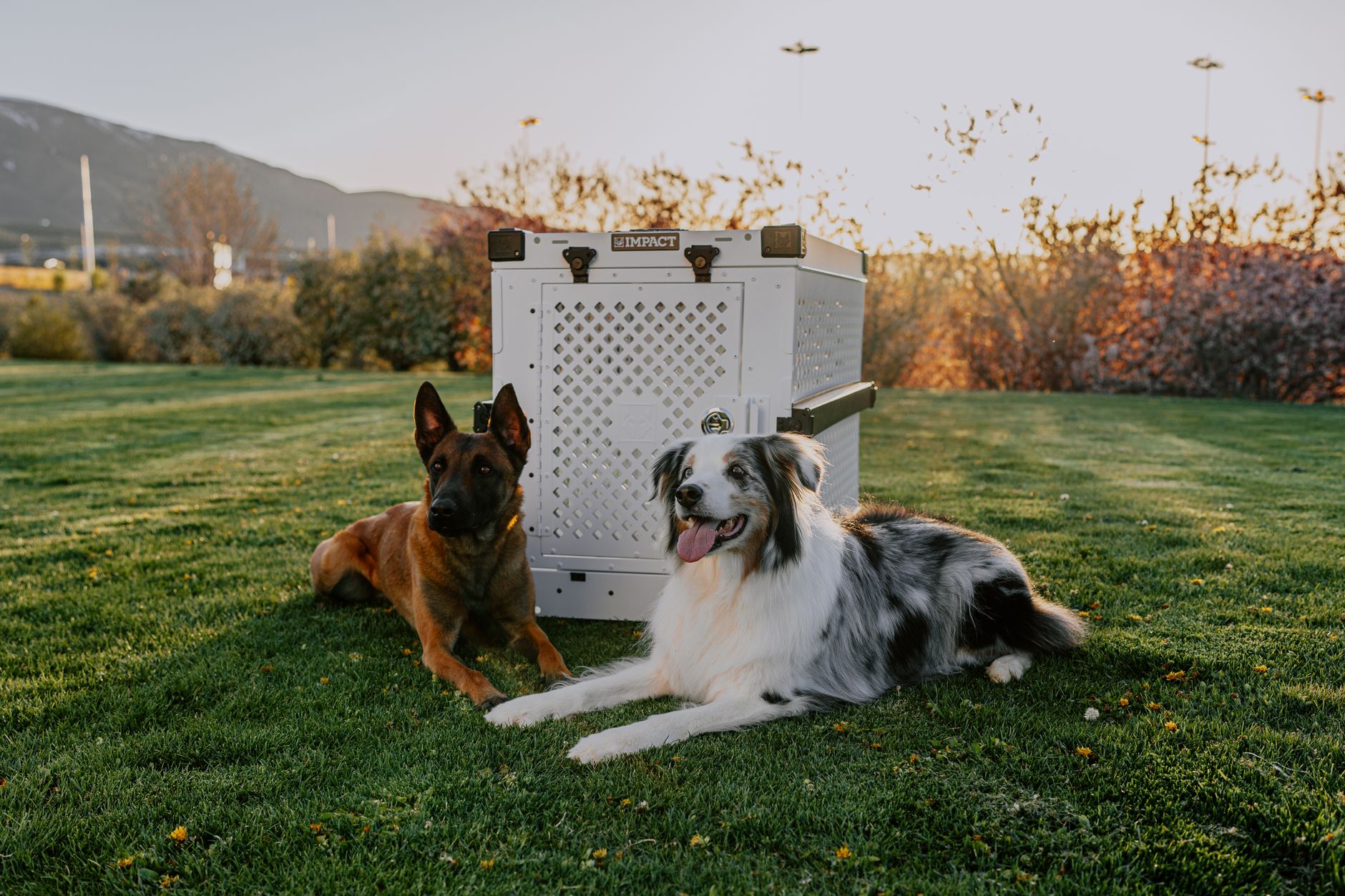
IATA’s 52nd-edition Live Animals Regulations (January 2026) set Container Requirement 1 (CR1) for domestic cats and dogs. IATA does not certify crate brands. Each animal must have enough space to stand, sit erect, lie naturally, and turn while standing. Minimum internal length is A + ½ B (nose-to-tail-root plus half elbow height); width is twice the shoulder or widest point; height is standing height plus bedding. Snub-nosed breeds need a container 10% larger. Animals over 14 kg must travel alone. Cargo kennels should use metal nuts and bolts in every hole, not plastic clips alone. Ventilation must cover at least 16% of the four sides, with an open water container filled from outside (IATA CR1, 2026).
Cabin carriers follow CR1 with exceptions: they need not be rigid, spacers and bowls are not required, and soft-sided bags need not have a welded-wire end. They still need a Live Animal label that does not block vents, plus the airline’s under-seat fit.
EU pet passports and Great Britain documents
An EU pet passport is a government document for non-commercial movement of dogs, cats, or ferrets. It is not the same product as Animal Passport’s digital livestock identity tool.
Your Europe, last checked 15 June 2026, says intra-EU travel generally requires a microchip (or a readable tattoo applied before 3 July 2011), rabies vaccination, and a European pet passport issued by an authorised veterinarian to EU-resident owners. After a primary rabies vaccine given at 12 weeks of age or older, wait at least 21 days. From a non-EU country, pets generally need an EU animal health certificate issued by an official veterinarian not more than 10 days before arrival. Dogs entering Finland, Ireland, Malta, Norway, or Northern Ireland need tapeworm treatment against Echinococcus multilocularis 24–120 hours before travel, unless moving directly among those territories. Commission Delegated Regulation (EU) 2026/131 (20 January 2026) limits non-commercial movement to five pets unless they are over six months old and registered for a competition, exhibition, or sporting event. An authorised person may travel with the pet if the owner travels within five days and attaches a written declaration (European Commission).
Great Britain (England, Wales, and Scotland) uses GOV.UK rules: microchip before rabies vaccination; wait at least 21 full days after the first vaccine or last primary dose; dogs often need tapeworm treatment 24 hours to five days before arrival; the required document depends on the country of departure. Non-compliant pets may be quarantined for up to four months or refused entry by sea, with fees charged to the owner (GOV.UK).
How to transport a pet: numbered steps
- Confirm destination health rules (USDA APHIS country page, CDC Dog Importation Navigator, Your Europe, or GOV.UK) and the airline’s current pet policy. Recheck close to departure.
- Book a USDA-accredited veterinarian. AVMA says interstate or international planning may take at least six months. Some CDC rabies forms cannot be issued retroactively after a dog leaves the United States.
- Microchip first, then vaccinate. EU and Great Britain require that order. CDC requires a universally scannable chip; if a high-risk-country dog’s chip cannot be scanned on arrival, CDC says the dog may be returned at the importer’s expense.
- Finish certificates and USDA endorsement via VEHCS or overnight shipping. Pay APHIS user fees. Carry originals with the animal.
- Fit an IATA CR1 crate or cabin carrier. Measure the animal, add bedding height, and use metal bolts on cargo kennels.
- Condition the pet to the kennel for weeks. IATA recommends a light meal about two hours before dispatch—IATA also calls that timing a legal requirement in the United States—plus water and exercise before check-in.
- Reconfirm the flight at least 48 hours ahead, as IATA advises. Animal space is limited.
- If you hire help, use a licensed shipper. The International Pet and Animal Transportation Association (IPATA) is a trade association and does not ship pets. U.S. members must be USDA Intermediate Handlers or Class B Dealers (IPATA FAQs).
Cabin, cargo, ground, or a relocation company
IATA notes that only small dogs and cats can travel in the cabin, that some airlines refuse cabin pets, and that animals in a heated, ventilated hold often rest better in a quieter, darker space (IATA Traveler’s Pet Corner). AVMA flags extra risk for brachycephalic (short-nosed) pets such as pugs or Persians, and it recommends nonstop flights, avoiding busy holidays, morning or evening flights in hot months, and afternoon flights in cold months. Airlines set temperature embargoes and breed lists that governments do not. IATA advises against shipping snub-nosed dogs such as boxers, pugs, bulldogs, and Pekingese in hot weather.
| Option | Who it usually fits | What official sources emphasize | Main constraint |
|---|---|---|---|
| Airline cabin | Small dogs and cats whose carrier fits under the seat | IATA CR1 cabin exceptions; airline eligibility limits | Size, species, and per-flight quotas vary by carrier |
| Airline hold or manifest cargo | Larger pets; many international itineraries | IATA CR1 rigid kennel and Live Animal labels | Temperature embargoes and brachycephalic policies |
| Ground vehicle | Domestic moves or anxious flyers | AVMA: crate training; border health papers still apply | Longer transit; documents still required at borders |
| Professional pet shipper | Door-to-door or quarantine destinations | IPATA: members use their own company names; U.S. USDA credentials | Itemize crate, vet, endorsement, and customs in the quote |
Airline and shipper prices are commercial, not government tariffs. The federal fee cited here is USDA APHIS endorsement (from $101). CDC’s form is free.
EU pet passports versus a biometric livestock record
Search results for “pet passport” usually mean the EU booklet or a Great Britain health certificate. Those official veterinary documents identify the animal mainly by microchip, owner details, and recorded vaccinations.
Animal Passport publishes a different tool: a digital animal and livestock passport that uses muzzle biometrics, because a nose print is unique like a fingerprint. Capture is phone-based. The record binds owner, breed, estimated age, body condition, and vaccination history. Age is estimated from a dental photograph with a confidence score. Body condition is scored 1–5 from a side-profile photo. In August 2025 the same identity approach was used in livestock flood rescue in Pakistan so farmers could reclaim animals after paper tags washed away.
That product is not a government-issued travel document, an EU pet passport, or a substitute for a USDA-endorsed health certificate or a CDC Dog Import Form. It does not diagnose disease. Keep official papers in the travel pouch; treat any private identity record as a backup when a tag is lost, not as permission to board.
Sedation and other welfare rules
IATA and AVMA discourage sedatives and tranquilizers for air travel because drugs that lower blood pressure combine poorly with cabin pressure equivalent to about 8,000 feet. If a veterinarian directs medication for a valid medical reason, IATA CR1 (January 2026) requires the drug name, time, dose, and route on the container and shipment documents. IATA also forbids unweaned animals and weaned puppies or kittens younger than eight weeks. Remove undeclared GPS trackers before crating. Check in late for cabin pets and early for hold animals (IATA Traveler’s Pet Corner).
How to choose a pet shipping company
IPATA, with news updates through August 2026, is a non-profit association of independent shippers. It does not operate a shipping company and warns that any firm using “IPATA” in its trading name is a scam. Ask who holds the USDA handler or dealer registration, who obtains the endorsement, and which IATA CR1 kennel they will use. IATA notes that in some countries airlines accept animals only from a shipper.
Frequently asked questions about transporting pets
Do I need a pet passport for transporting pets internationally?
Only if your route uses an official EU-style passport or equivalent health certificate. Your Europe (2026) says EU passports are issued by authorised veterinarians to resident owners for dogs, cats, and ferrets. A private digital identity record is not that document.
How far in advance should I plan when transporting pets abroad?
AVMA says interstate or international planning may take at least six months. Rabies waits are 21 days after a valid primary vaccine in the EU and Great Britain; some non-EU routes add a titration test and a three-month wait (Your Europe, 2026).
Is the CDC Dog Import Form enough when transporting pets into the United States?
For dogs that stayed only in low-risk countries for six months, CDC says the free receipt plus health, a 6-month minimum age, and a scannable microchip. High-risk histories need extra vaccination paperwork (CDC, 2024–2026).
Can I take my dog in the cabin when transporting pets by air?
Only if the airline allows it, the carrier meets IATA CR1 cabin rules and under-seat limits, and the pet is an accepted size and species. Some airlines refuse cabin pets and use the hold instead (IATA).
What crate is required when transporting pets as cargo?
IATA CR1, 52nd edition (January 2026): room to stand, sit, lie, and turn; 10% larger for snub-nosed breeds; metal bolts; at least 16% side ventilation; an open water container with outside access.
Should I sedate my pet when transporting pets on a plane?
IATA and AVMA recommend against it except under veterinary direction for a documented medical reason. Effects at altitude can be dangerous or fatal.
How much does USDA charge when transporting pets out of the United States?
As of 18 June 2026, USDA APHIS charges $101 per endorsed certificate with no laboratory tests, then $160, $206, or $275 for one pet as tests increase. Veterinarian fees are extra. The CDC form is free.
Are cargo holds safe when transporting pets?
IATA says millions of animals travel by air each year and often rest better in a quiet, dark hold. Safety still depends on a CR1 kennel, airline temperature and breed policies, and a fit-to-fly exam; AVMA flags extra risk for short-nosed breeds.
Recheck USDA APHIS, CDC, IATA, the European Commission, and GOV.UK, then the airline, before every journey. For identity records that survive lost tags, see Animal Passport and the Animal Passport blogs, kept separate from official travel certificates.
FAQ
- Do I need a pet passport for transporting pets internationally?
- Only if your destination uses an official scheme such as the EU pet passport for dogs, cats, and ferrets, which Your Europe (2026) says is issued by an authorised veterinarian to EU-resident owners. A private digital identity app is not that government document.
- How far in advance should I plan when transporting pets abroad?
- The American Veterinary Medical Association says interstate or international arrangements may take at least six months. Rabies waiting periods are at least 21 days after a valid primary vaccine in the EU and Great Britain, and some non-EU routes add a blood test and a three-month wait.
- Is the CDC Dog Import Form enough when transporting pets into the United States?
- For dogs that stayed only in dog-rabies-free or low-risk countries for six months, CDC says the free Dog Import Form receipt is the only CDC document, plus appearing healthy, being at least 6 months old, and having a universally scannable microchip. High-risk-country histories need extra vaccination paperwork.
- Can I take my dog in the cabin when transporting pets by air?
- Only if the airline allows cabin pets, the carrier meets IATA Container Requirement 1 cabin rules and under-seat size limits, and the animal is an accepted species and size. IATA notes that some airlines refuse cabin pets and carry them in a heated, ventilated hold instead.
- What crate is required when transporting pets as cargo?
- IATA Container Requirement 1 (Live Animals Regulations, 52nd edition, January 2026) for domestic dogs and cats: enough room to stand, sit erect, lie naturally, and turn while standing; a 10% larger crate for snub-nosed breeds; metal bolts on plastic kennels; at least 16% side ventilation.
- Should I sedate my pet when transporting pets on a plane?
- No, except under veterinary direction for a documented medical reason. IATA and the American Veterinary Medical Association discourage sedatives and tranquilizers because effects at cabin pressure equivalent to about 8,000 feet can be dangerous or fatal.
- How much does USDA charge when transporting pets out of the United States?
- As of 18 June 2026, USDA APHIS charges $101 per endorsed health certificate with no laboratory tests, then $160, $206, or $275 for one pet as the number of tests rises. Veterinarian fees are separate. The CDC Dog Import Form is free.
- Are cargo holds safe when transporting pets?
- IATA says millions of animals travel by air each year and that cats and dogs often rest better in a quiet, dark hold than in the cabin. Safety still depends on an IATA-compliant kennel, airline temperature and breed policies, and a veterinary fit-to-fly exam; short-nosed breeds face extra risk.
Sources
- Pet Travel Process Overview — USDA APHIS
- Cost To Endorse Your Pet's Health Certificate — USDA APHIS
- Bringing a Dog into the U.S. — U.S. Centers for Disease Control and Prevention
- Frequently Asked Questions on Dog Importations — U.S. Centers for Disease Control and Prevention
- Entry Requirements for Dogs from Dog-Rabies Free or Low-Risk Countries — U.S. Centers for Disease Control and Prevention
- CDC Dog Import Form and Instructions — U.S. Centers for Disease Control and Prevention
- Traveler's Pet Corner — International Air Transport Association
- Traveling with Pets — International Air Transport Association
- Live Animals Regulations (LAR) — International Air Transport Association
- Container Requirement 1 (CR1 LAR 2026) — International Air Transport Association
- Travelling with pets and other animals in the EU — European Commission (Your Europe)
- Travelling with a pet within the EU — European Commission
- Bringing your pet dog, cat or ferret to Great Britain — GOV.UK
- Which pet travel document you need — GOV.UK
- Traveling with your dog or cat — American Veterinary Medical Association
- International Pet and Animal Transportation Association — IPATA
- Frequently asked questions: traveling with pets or animals — IPATA
Animal Passport binds a muzzle biometric to a digital record farmers, buyers, and insurers can verify in the field.