American Airline Cat Policy (2026): How to Fly With a Cat on American Airlines

Key takeaways
- As of October 2026, American Airlines charges $150 per kennel, each way, to fly a cat in the cabin on eligible routes, and the fee is nonrefundable.
- Cats must be at least 8 weeks old to fly within the United States and Puerto Rico, and must stay in a carrier under the seat in front of you for the whole flight.
- Soft-sided carriers can measure up to 18 x 11 x 11 inches on all flights. Hard-sided carriers can measure up to 19 x 13 x 9 inches on mainline flights and 16 x 12 x 8 inches on American Eagle flights.
- Cats cannot fly in the cabin to or from Hawaii, on trans-Atlantic or trans-Pacific trips, to Jamaica, or to or from Argentina, Brazil, Chile, Colombia and Uruguay.
- Snub-nosed (brachycephalic) cats such as Persians, Himalayans, Burmese and Exotic Shorthairs are refused as checked pets, and American Airlines does not accept sedated pets.
- The CDC does not require proof of rabies vaccination for a cat entering the United States. Canada asks for a rabies certificate for cats 3 months and older, and Mexico requires no health certificate for cats.
- Animal Passport is a biometric livestock and animal ID record. It is not an airline pet document or a government travel certificate.
American Airlines' cat policy (as of October 2026): a cat at least 8 weeks old can fly in the cabin for $150 per kennel, each way, if it stays in a carrier under the seat in front of you for the whole flight. The American Airlines cat policy is the set of rules the airline uses for cats: carrier size, eligible routes, age, breed and fees. Cats cannot fly in the cabin to Hawaii or on trans-Atlantic or trans-Pacific trips.
This guide is written by Animal Passport and is based on American Airlines' official pet and fee pages, together with rules from the U.S. Centers for Disease Control and Prevention (CDC), the United States Department of Agriculture Animal and Plant Health Inspection Service (USDA APHIS), the Transportation Security Administration (TSA), the Canadian Food Inspection Agency (CFIA) and the Hawaii Department of Agriculture and Biosecurity. Airline rules change, so check your booking with American Airlines before you fly. For American's rules on dogs and cargo, see our broader guide to pet travel on American Airlines.

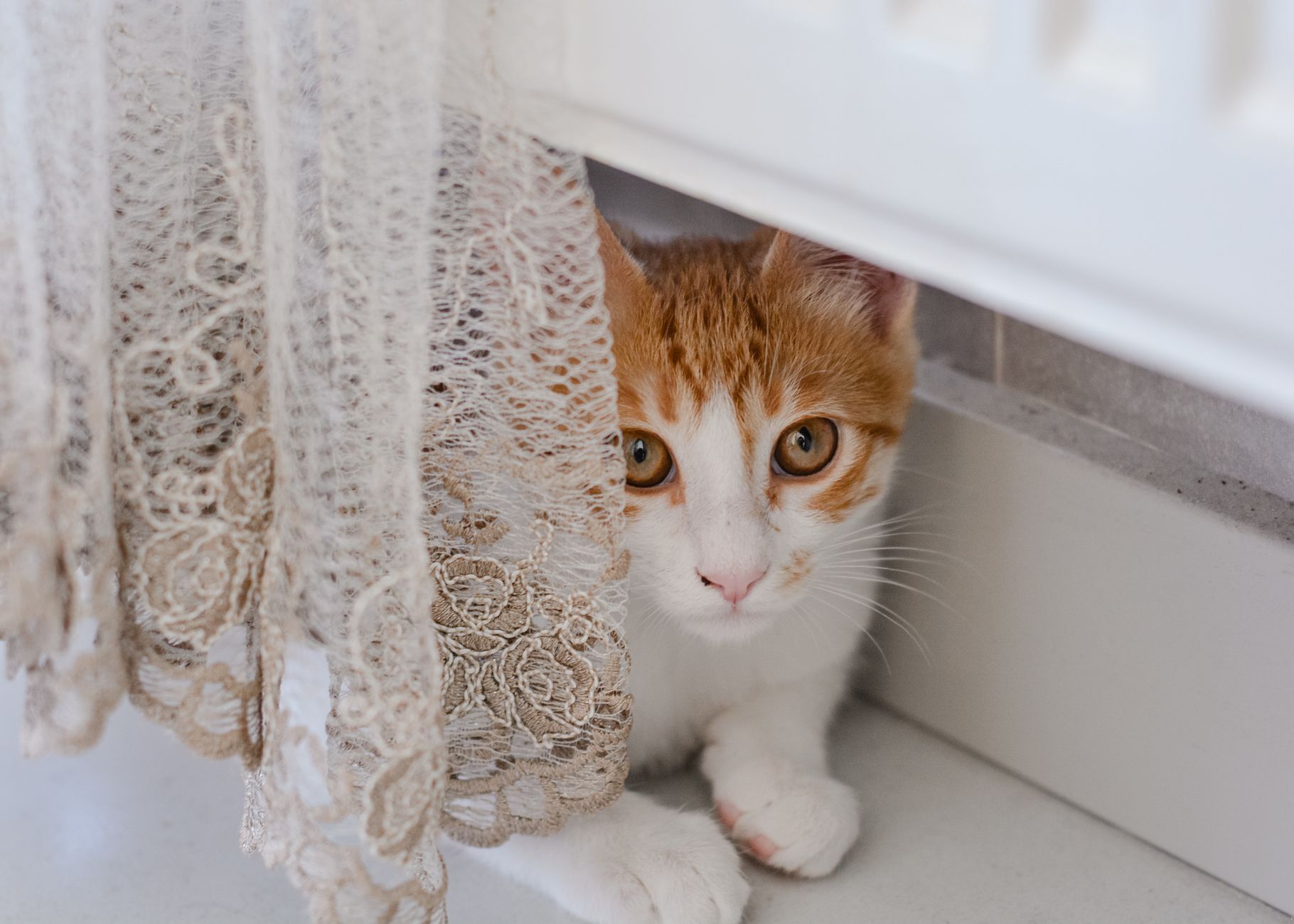
What is American Airlines' cat policy in 2026?
American Airlines says on its Traveling with pets page (2026) that carry-on pets are "limited to cats and dogs that meet the size, age and destination requirements." For most cat owners, that means three rules:
- Cabin only for most travelers. American Airlines (2026) accepts checked pets at the ticket counter only from active-duty U.S. military and U.S. State Department Foreign Service personnel traveling on official orders. Everyone else flies a cat in the cabin. If the cat qualifies for neither, it has to ship through American Airlines Cargo.
- One carrier, under the seat. You may bring one pet carrier as a carry-on if you pay the fee and the cat stays in the carrier under the seat in front of you for the whole flight, according to American Airlines (2026).
- Minimum age. American Airlines (2026) says cats must be at least 8 weeks old to travel within the U.S. and Puerto Rico.
American Airlines also says pets can travel "on most flights up to 12 hours." Eligible places include the 48 contiguous states, Canada, Alaska, Mexico, Puerto Rico, St. Croix and St. Thomas. Extra restrictions apply to Canada and Mexico.
How much does it cost to fly a cat on American Airlines?
The carry-on pet fee is $150 per kennel in every cabin: Main Cabin, Premium Economy, Business and First. That figure comes from American Airlines' Bag and optional fees page, which says its fees were updated for tickets issued on or after May 18, 2026. The fee covers routes within and between the U.S. and Canada, Mexico, Central America and the Caribbean, where the destination country allows entry.
A round trip with one cat therefore costs at least $300. Watch for these extra costs:
- Long connections. American Airlines (2026) says that if your trip includes a stopover or connection of 4 hours or more, "fees apply for each connection segment."
- No refunds. All pet fees "are nonrefundable and apply per kennel, each way," according to American Airlines (2026).
- Partner airlines. American does not collect pet fees for other airlines on your trip, even on flights with an American flight number. If your ticket says "Operated by" another airline, you check in and pay that airline separately.
- Payment method. You pay at the airport or a travel center with a credit card or paper voucher. American Airlines does not accept cash or checks.
Checked pets cost $200 per kennel, or $150 to and from Brazil, but only for eligible military and State Department travelers (American Airlines, 2026). American Airlines Cargo prices "vary" and are confirmed at booking.
What size cat carrier does American Airlines allow?
American Airlines publishes these maximum carrier sizes (length x width x height) as of 2026:
| Carrier type | Aircraft | Maximum size |
|---|---|---|
| Soft-sided (recommended) | All flights | 18 x 11 x 11 in (46 x 28 x 28 cm) |
| Hard-sided | American mainline flights | 19 x 13 x 9 in (48 x 33 x 22 cm) |
| Hard-sided | American Eagle regional flights | 16 x 12 x 8 in (40 x 30 x 20 cm) |
American Airlines says your cat must be "small enough to fit comfortably inside the closed / zipped carrier." Soft-sided carriers must be secure, padded and water-repellent, with nylon mesh ventilation on 3 or more sides. They can be slightly larger than a hard-sided carrier, but they still have to fit under the seat without being squashed too much. American does not publish one weight limit for all cabin pets. On the three-cabin Airbus A321T, however, a pet flying in First or Business plus its carrier must weigh no more than 20 lb (9.07 kg), and American weighs them at check-in.
How many cats are allowed per flight, and where can I sit?
Space is limited, so add your cat to the reservation early. According to American Airlines (2026):
- Mainline Airbus and Boeing aircraft accept a maximum of 20 pet carriers across all cabins, not counting service animals.
- American Eagle regional jets (CRJ-200, CRJ-700, CRJ-900, ERJ-145, ERJ-175, ERJ-190) accept 1 carrier in the premium cabin and 5 in the Main Cabin.
- Pets are not allowed in bulkhead or exit-row seats. They are also not allowed in First or Business on the Boeing 777-200, 777-300ER, 787-8 and 787-9, because those seats have no under-seat storage.
When you bring a cat carrier, you can bring only one other item on board: either a personal item or a carry-on bag, not both. Pet strollers must be checked at the ticket counter, and checked-bag fees apply.
Which cat breeds does American Airlines restrict?
American Airlines (2026) does not accept "brachycephalic cats of any 'mix' as checked pets." Brachycephalic means short-nosed or flat-faced, and these cats can have trouble breathing. The airline lists these breeds as examples:
- Burmese
- Persian
- Himalayan
- Exotic Shorthair
This breed rule is listed under checked pet restrictions. American's carry-on pet rules do not include a breed ban. If you own a flat-faced cat, ask your veterinarian whether flying is safe for that cat, even in the cabin.
Can I sedate my cat for an American Airlines flight?
No. American Airlines follows the American Veterinary Medical Association (AVMA) recommendation and does not accept pets that have been sedated or tranquilized. The airline says such pets "are at a higher risk of respiratory and cardiovascular problems at high altitudes."
Where can't my cat fly in the cabin on American Airlines?
As of October 2026, American Airlines lists these exclusions for carry-on pets:
- Hawaii: no carry-on pets to or from Hawaii. Checked pets must connect only through Honolulu (HNL) and follow Hawaii's quarantine rules. Because checked pets are limited to military and State Department travelers, most cat owners cannot use this option.
- Trans-Atlantic and trans-Pacific trips: no carry-on pets.
- South America: no carry-on pets to or from Argentina, Brazil, Chile, Colombia or Uruguay.
- Jamaica: no carry-on pets.
- United Kingdom and Ireland: no checked pets, apart from service animals. American Airlines says dogs and cats can travel to London Heathrow (LHR) and Manchester (MAN) through American Airlines Cargo.
- Trinidad and Tobago (POS): pets cannot arrive on a flight before 8 a.m. or after 4 p.m.
What documents does a cat need to fly American Airlines?
American Airlines does not list a health certificate for carry-on cats on domestic flights. Your destination may still ask for one. The CDC (page dated August 22, 2025) says health certificates "may be required for entry into some states or may be required by airlines," so check with the state you are flying to before travel day.
| Trip | Cat in cabin on American? | Government rules for a pet cat |
|---|---|---|
| Within the 48 contiguous states | Yes, $150 each way | No federal document. Some states or cities may require rabies vaccination (CDC, 2025) |
| U.S. to Canada | Yes, $150 each way | Veterinarian's rabies certificate for cats 3 months and older (CFIA) |
| U.S. to Mexico | Yes, $150 each way | No health certificate. SENASICA inspects the cat on arrival (USDA APHIS, 2026) |
| To Hawaii | No | Microchip, 2 rabies vaccinations and a passing FAVN rabies antibody test, or up to 120 days of quarantine (Hawaii Department of Agriculture and Biosecurity) |
| Returning to the U.S. | Depends on route | Cat must appear healthy. No proof of rabies vaccination is required (CDC, 2025) |
Flying a cat to Canada
The CFIA's Import Reference Document says domestic cats under 3 months old "are not subject to any restrictions for importation." Cats 3 months or older need a veterinarian's certificate, in English or French, that identifies the cat and shows it is currently vaccinated against rabies. The CFIA also accepts two alternatives: proof that the cat comes from a rabies-free country, or a rabies antibody titre test. USDA APHIS summarizes the rule more narrowly, as a rabies certificate "proving vaccination within 3 years." Because the two agencies word the rule differently, ask your veterinarian to make sure the certificate shows the vaccination date and the vaccine type.
Flying a cat to Mexico
USDA APHIS (page last modified September 21, 2026) says pet cats have not needed a health certificate to enter Mexico since December 16, 2019. Officials from SENASICA, Mexico's agricultural health service, inspect each cat on arrival for signs of disease, external parasites and fresh or healing wounds. The New World screwworm inspection certificate that American Airlines and USDA APHIS require for dogs does not apply to cats. APHIS warns owners not to add cats to the dog or bird forms, because that makes those forms invalid. Bring a clean carrier. SENASICA may remove bedding, toys and food, and only the day's portion of pet food is allowed in.
Bringing a cat into the United States
The CDC (2025) says cats must "appear healthy upon arrival" and "are not required to have proof of rabies vaccination for importation into the United States." A cat that looks ill may need a veterinary exam at the owner's expense. The CDC still recommends rabies vaccination for all cats. The strict CDC rules that took effect on August 1, 2024 apply to dogs, not cats.
Cats and Hawaii
The Hawaii Department of Agriculture and Biosecurity says all dogs and cats, "regardless of age," must meet its rabies quarantine rules. To qualify for the 5 Day Or Less program, a cat needs a microchip, at least two rabies vaccinations and a passing FAVN rabies antibody test, followed by a 30-day waiting period. As of 2026, the program fee is $244. A cat that does not meet every requirement can be quarantined for up to 120 days. Because American Airlines does not allow carry-on pets to Hawaii, plan this trip with both the state and American Airlines Cargo well in advance.
How to book a cat on American Airlines: step by step
- Check the route. Make sure every flight is operated by American and that none of the restrictions above apply.
- Measure the cat and the carrier. Your cat must fit comfortably in a zipped carrier that is within the size limits for every aircraft on the trip.
- Add the cat to your booking. Find your trip on aa.com or in the American app. Choose "Add carry-on pets" under Additional Services, accept the requirements and pick the flights, following American Airlines' instructions (2026).
- Get the paperwork ready. For international trips, ask a USDA-accredited veterinarian about the destination's rules. USDA APHIS says the destination country sets them and they "can change without notice."
- Get through TSA screening. The TSA says to "remove your pet from the carrying case and place the case through the X-ray machine." Keep control of the cat on a leash or harness while you carry it through the metal detector, and remove the leash before you walk through.
- Pay at the counter. At the American ticket counter, staff check the cat and carrier and take the $150 fee.
Practical tip: a cat that escapes at a security checkpoint is hard to catch. The TSA says pets should never go through the X-ray, so put a harness on your cat before you leave home.
Is Animal Passport a pet passport for flying cats?
No. Airline pet rules and official travel documents are separate from Animal Passport. Official documents include CDC entry requirements, USDA-endorsed health certificates, CFIA rabies certificates and EU pet passports. American Airlines and border officials check those documents. Animal Passport is not a government-issued travel document, and American Airlines does not list it as a requirement.
Animal Passport is a digital animal and livestock identity record that uses muzzle biometrics. An animal's nose print is unique, like a fingerprint. Using a phone, an owner creates a record that links the animal to its owner, breed, estimated age, body condition and vaccination history. The age estimate comes from a dental photograph and includes a confidence score. The body condition score, on a scale of 1 to 5, comes from a side-profile photo. In August 2025, the system was used during livestock flood rescues in Pakistan to help farmers reclaim animals after their paper tags washed away. Animal Passport does not provide veterinary diagnosis or legal advice. For more on animal identity and travel rules, see the Animal Passport blog.
Bottom line
As of October 2026, American Airlines' cat policy works best for healthy cats at least 8 weeks old on domestic, Canadian, Mexican, Central American and Caribbean routes. The cat flies in an approved carrier under the seat for $150 each way. Hawaii, Europe, Asia and parts of South America are closed to cats in the cabin, and flat-faced breeds cannot fly as checked pets. Check the government rules for your destination, not just the airline's, before you book.
By Animal Passport. Last updated October 11, 2026. Sources: American Airlines, CDC, TSA, USDA APHIS, CFIA and Hawaii Department of Agriculture and Biosecurity official pages, accessed October 2026.
FAQ
- Can I bring my cat on an American Airlines flight?
- Yes. As of October 2026, American Airlines lets cats at least 8 weeks old fly in the cabin on eligible routes, in a carrier that stays under the seat in front of you for the whole flight.
- How much does American Airlines charge for a cat in the cabin?
- American Airlines charges $150 per kennel, each way, for a carry-on cat in every cabin class, according to its 2026 fee page. Pet fees are nonrefundable and apply again on any connection of 4 hours or more.
- What size cat carrier does American Airlines allow?
- Soft-sided carriers can measure up to 18 x 11 x 11 inches on all flights. Hard-sided carriers can measure up to 19 x 13 x 9 inches on American mainline flights and 16 x 12 x 8 inches on American Eagle flights.
- Does a cat count as a carry-on on American Airlines?
- Yes. With a pet carrier, American Airlines lets you bring only one other item on board: either a personal item or a carry-on bag, not both.
- Can I fly my cat to Hawaii on American Airlines?
- Not in the cabin. American Airlines does not allow carry-on pets to or from Hawaii, and its checked-pet option is limited to active-duty military and State Department personnel on official orders.
- Does my cat need a health certificate to fly American Airlines?
- American Airlines does not list a health certificate for carry-on cats on domestic flights, but some states and destination countries require documents. Canada requires a rabies certificate for cats 3 months and older, while Mexico requires no health certificate for cats.
- Does American Airlines allow Persian or other flat-faced cats?
- American Airlines does not accept brachycephalic cats of any mix, including Persian, Himalayan, Burmese and Exotic Shorthair cats, as checked pets. Its carry-on pet rules do not list a breed ban.
- Can I sedate my cat before an American Airlines flight?
- No. Following the American Veterinary Medical Association's recommendation, American Airlines does not accept sedated or tranquilized pets because they face higher respiratory and cardiovascular risks at altitude.
Sources
- Traveling with pets — American Airlines
- Bag and optional fees — American Airlines
- Bringing an Animal into the U.S. — U.S. Centers for Disease Control and Prevention (CDC)
- Can I take my pet through the security checkpoint? — Transportation Security Administration (TSA)
- Pet Travel From the United States to Mexico — USDA Animal and Plant Health Inspection Service (APHIS)
- Import Reference Document (As referenced in the Health of Animals Regulations) — Canadian Food Inspection Agency (CFIA)
- Animal Quarantine Information Page — Hawaii Department of Agriculture and Biosecurity, Animal Industry Division