Lufthansa Service Dog Requirements in 2026: Training Proof, DOT Forms and Entry Documents
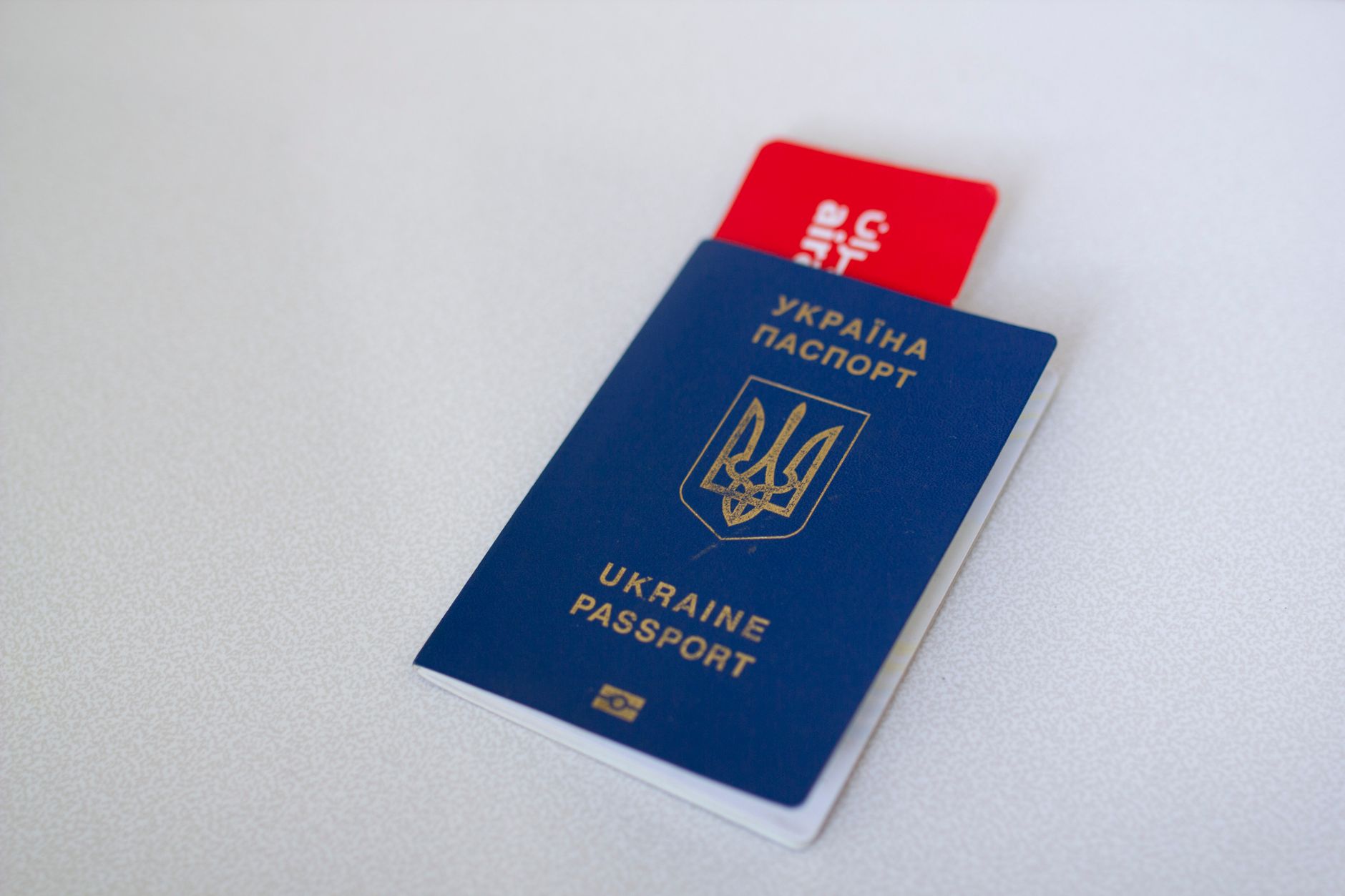
Key takeaways
- Lufthansa carries recognised assistance dogs free of charge in the cabin on all flights it operates, according to Lufthansa's assistance dog page (2026).
- On flights outside the USA, Lufthansa requires a training certificate from an accredited or recognised trainer plus two signed printouts of its cabin animal form; obedience certificates, self-taught and online training are not accepted.
- On direct flights to or from the USA, Lufthansa follows US Department of Transportation rule 14 CFR Part 382 and asks for the DOT Service Animal Air Transportation Form and the DOT Service Animal Relief Attestation Form instead of a training certificate.
- Emotional support animals, species other than dogs and assistance dogs in training are not accepted as assistance animals on Lufthansa's US flights, in line with the DOT final rule effective January 11, 2021.
- The dog must fit in the footwell of your seat, stay on a lead or harness, and never occupy a passenger seat; Lufthansa allows a maximum of two assistance dogs per passenger on US flights.
- Register at least 48 hours before departure through Lufthansa's online special-needs form or the Lufthansa Medical Operation Centre ([email protected]).
- Airline approval is separate from border health rules: EU travel needs a microchip, valid rabies vaccination and EU pet passport under Delegated Regulation (EU) 2026/131, and US entry needs a CDC Dog Import Form receipt.
- Animal Passport's muzzle-biometric livestock ID is not an airline document, a DOT form or an EU pet passport, and it cannot replace any of them.
Lufthansa service dog requirements in brief: Lufthansa carries trained assistance dogs free of charge in the cabin on every route it operates. The dog must be obedient, fit in the footwell of your seat, stay on a lead, and be registered at least 48 hours before departure. Outside the USA, you need a recognised training certificate plus two signed Lufthansa cabin forms. On direct US flights, you submit the two US Department of Transportation (DOT) service animal forms instead.
A Lufthansa service dog (Lufthansa uses the term assistance dog, coded SVAN) is a dog of any breed that is specially trained to perform tasks for a person with a visual, sensory, psychiatric, intellectual or other cognitive impairment, according to Lufthansa's official assistance dog page. As of October 2026, the rules split into two tracks: one for flights outside the United States and one for non-stop flights to or from the United States. This guide walks through both, then covers the government entry documents that sit on top of the airline's own rules.
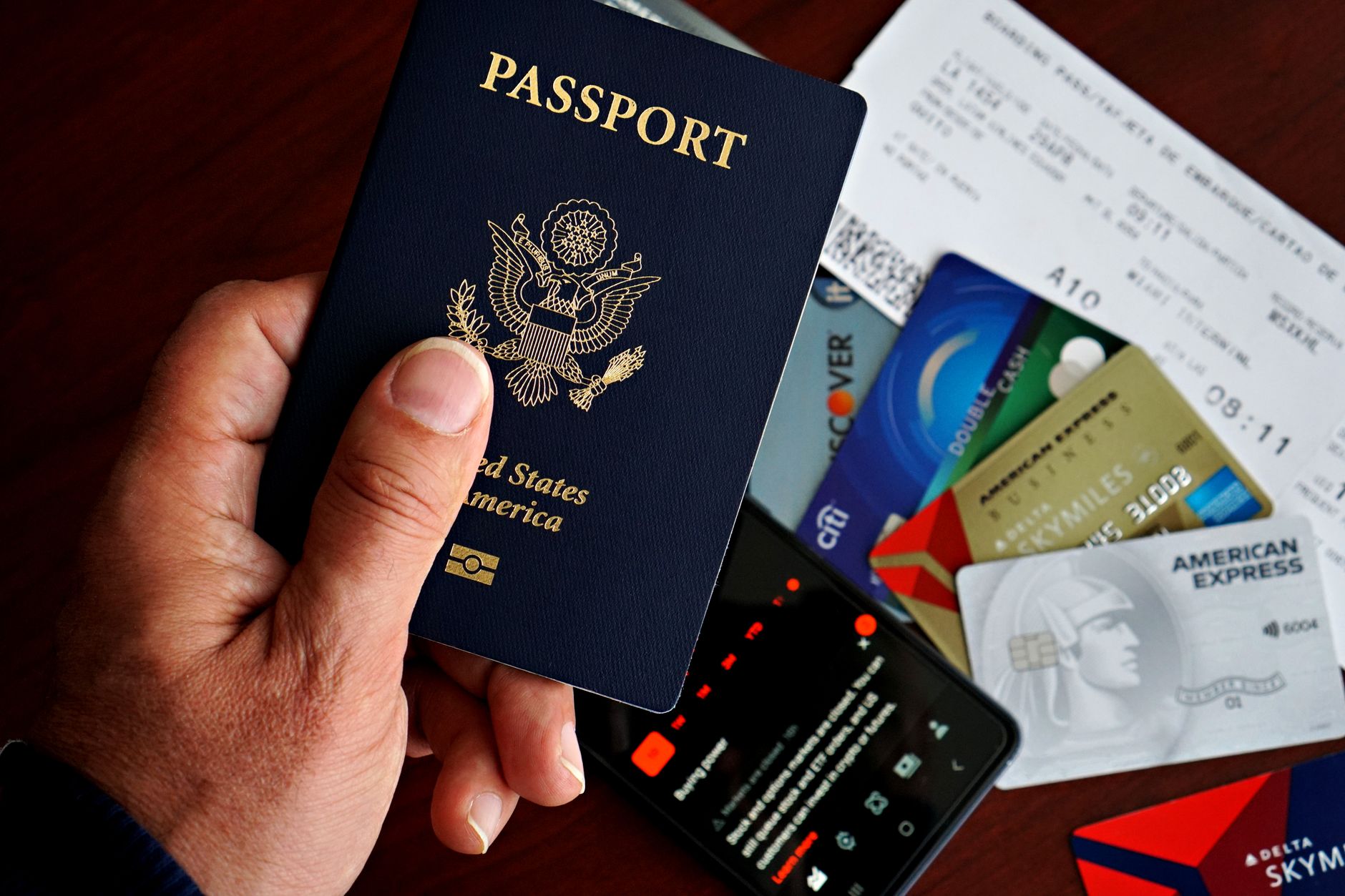

This article is published by Animal Passport, a digital animal and livestock identity platform. We are not Lufthansa and this is not legal advice. Always confirm your booking directly with the airline.
What are Lufthansa's general requirements for an assistance dog?
Lufthansa states that it will take an assistance dog in the cabin on any route free of charge, provided several conditions are met (Lufthansa, 2026):
- Training and behaviour: the dog must obey your commands and behave appropriately in public. Lufthansa specifically says it must not bark, growl or jump up at people or other animals.
- Hygiene: the dog must never relieve itself in an uncontrolled way in the cabin or at the gate.
- Space: the dog must fit in the footwell of your seat and may never occupy a passenger seat.
- Restraint: Lufthansa recommends a well-fitting harness rather than a collar. It requires assistance dogs to be on a lead at all times on board and in airport areas Lufthansa controls.
- Muzzle: Lufthansa asks you to bring a muzzle as a precaution. Its page says you are not obliged to bring one on flights to or from the USA or Canada, but it still recommends it. If the dog appears to pose a risk, you may be asked to fit the muzzle or the dog may be denied carriage.
If the dog does not behave appropriately, Lufthansa says it may move the dog to the cargo hold for a surcharge or refuse to carry it, and the passenger is liable for any damage and extra costs.
Lufthansa service dog requirements on flights outside the USA
For flights that do not touch the United States, which covers most European, Asian, African and Middle Eastern routes, Lufthansa asks for proof that the dog is a genuinely trained assistance dog.
Which training certificates does Lufthansa accept?
According to Lufthansa's assistance dog page (2026), you must provide one of the following:
- A training certificate from a training institution accredited by the Messerli Research Institute, Assistance Dogs International (ADI), Assistance Dogs Europe (ADEu) or the International Guide Dog Federation (IGDF).
- A certificate from a recognised training facility or a qualified service-dog trainer. It must state the trainer's name and address, the type and duration of training, and the task the dog was trained for and successfully completed.
- For assistance dogs recognised and certified in Germany, proof of a human–assistance dog partnership. The dog must also wear a clearly visible identification tag, for example on a vest, harness or collar.
Lufthansa states that a certificate of completed obedience training or a completed DOT form is not sufficient for travel outside the USA, and that teach-yourself and online training are not recognised.
If you cannot present an acceptable certificate, Lufthansa says the dog will travel under its normal pet conditions, either in the cabin or in the cargo hold depending on size and weight. Pet fees and size limits then apply.
Which forms do you need outside the USA?
Lufthansa also requires your written confirmation that the dog meets its assistance dog conditions. In practice, that means two completed and signed printouts of its form for carrying an animal in the passenger cabin, presented at check-in. You also send the dog's breed, weight and age when you register. The Lufthansa Medical Operation Centre then confirms your booking request once it has checked the documents.
Lufthansa service dog requirements on direct flights to or from the USA
On non-stop flights to or from the United States, Lufthansa applies the US Department of Transportation's Air Carrier Access Act rules in Title 14 of the Code of Federal Regulations, Part 382 (14 CFR Part 382). Under those rules, a service animal is a dog, regardless of breed or type, that is individually trained to do work or perform tasks for a qualified individual with a disability, including a psychiatric disability. That definition comes from the US DOT service animals page (last updated September 2025).
Are emotional support animals allowed on Lufthansa?
No. The DOT final rule published in the Federal Register on December 10, 2020, and effective January 11, 2021, removed emotional support animals from the service animal definition. Lufthansa's page states it will no longer recognise or accept this category on US flights. Species other than dogs, comfort and companionship animals, and service animals in training are also excluded.
Which DOT forms does Lufthansa require?
- US DOT Service Animal Air Transportation Form: this attests to the dog's health, behaviour and training.
- US DOT Service Animal Relief Attestation Form: this confirms the dog will not need to relieve itself, or can do so in a sanitary way. DOT rules allow airlines to require it on flight segments scheduled to take 8 hours or more. Lufthansa's page lists both forms for US travel.
Both forms must be completed on or after the date you buy your ticket (Lufthansa, 2026; DOT final rule, 2020). Email them to the Lufthansa Medical Operation Centre at [email protected]. Lufthansa also lists a separate Medical Operation Centre contact for the USA.
What is the deadline for submitting the DOT forms?
- If you booked more than 48 hours before your first scheduled departure, submit the forms electronically or in hard copy at least 48 hours before travel.
- If you booked less than 48 hours before departure, hand the forms to Lufthansa at the departure gate on the day of travel.
Under the DOT final rule (Federal Register, 2020), if a passenger misses the airline's advance-notice deadline, the airline must still provide the accommodation if it can do so with reasonable efforts and without delaying the flight. Lufthansa's page also warns that knowingly making false statements on either DOT form is a federal crime.
What about a US flight with a connection elsewhere?
Lufthansa states that if your itinerary includes a connecting or feeder flight outside the USA, it also needs a training certificate. You send it by email together with the DOT forms. For example, a trip from Chicago to Frankfurt that continues to Vienna would need both the DOT forms and an acceptable training certificate.
Number, size and seating rules on US flights
- Lufthansa carries a maximum of two assistance dogs per passenger, which matches the two-animal cap allowed in the DOT final rule (2020).
- All assistance dogs must fit in the footwell unless that would conflict with Federal Aviation Administration (FAA) safety rules, German or European law, or another passenger's space.
- On US flights, passengers travelling with an assistance dog can request a bulkhead seat up to 48 hours before departure, according to Lufthansa's special-needs registration page.
When can Lufthansa refuse an assistance dog on a US flight?
Lufthansa lists four grounds, which mirror the US DOT's list:
- The dog poses a direct threat to the health or safety of others.
- The dog causes a significant disturbance in the cabin or gate area, or its behaviour shows it is not adequately trained.
- Carrying the dog would violate safety or health requirements of a US federal agency, a US territory or a foreign government.
- The passenger does not present the required DOT forms.
The US DOT also notes that airlines cannot refuse a service animal because it makes other passengers or crew uncomfortable.
Comparison: Lufthansa assistance dog rules by route
| Requirement | Flights outside the USA | Direct flights to/from the USA |
|---|---|---|
| Fee | Free in cabin | Free in cabin |
| Proof of training | Certificate from an ADI, ADEu, IGDF or Messerli-accredited body, a qualified trainer, or German partnership proof | Not required (unless a connection leaves the USA) |
| Airline paperwork | Two signed printouts of Lufthansa's cabin animal form | DOT Service Animal Air Transportation Form plus DOT Relief Attestation Form |
| Psychiatric service dogs | Accepted if trained and certified as above | Accepted if individually trained per DOT definition |
| Emotional support animals | Not assistance dogs; normal pet rules apply | Not accepted as service animals |
| Max dogs per passenger | Not stated on Lufthansa's page | Two |
| Muzzle | Bring one; may be required | Not obligatory, but recommended |
| Notice | Ideally 48 hours before departure | Forms 48 hours before travel if booked earlier |
Source: Lufthansa assistance dog page and special-needs registration page, checked October 2026.
How to register a service dog with Lufthansa: step by step
- Book your ticket and note whether any segment is a direct US flight.
- Prepare the right proof. Outside the USA, that is a training certificate. For US flights, complete both DOT forms on or after the purchase date.
- Register the dog at least 48 hours before departure. You can use Lufthansa's online special-needs form, email the Medical Operation Centre at [email protected], go through the Help Centre, or ask your travel agency. Include breed, age and weight.
- Wait for confirmation from the Lufthansa Medical Operation Centre, and keep the passenger receipt in your carry-on.
- Check other airlines on your itinerary. Lufthansa tells passengers to make sure every other carrier involved will also accept the dog in the cabin.
- Arrange government entry documents for every country on the trip (see the next section).
- At check-in, present the dog's official and veterinary documents (for example, a pet passport), the training proof where applicable, and the two signed cabin forms for non-US flights. The dog should wear a harness or collar, and you should carry a muzzle.
Entry rules: airline approval is not border clearance
Lufthansa's checklist makes it the passenger's responsibility to meet the entry and exit rules of every country involved. An assistance dog still has to meet the same animal health rules as any other dog.
Travelling within or into the European Union
Since 22 April 2026, non-commercial pet movement into and within the European Union has been governed by Commission Delegated Regulation (EU) 2026/131. This replaced the transitional application of Regulation (EU) No 576/2013, according to EUR-Lex. For travel between EU countries, the European Commission (2026) lists four requirements:
- a microchip;
- a rabies vaccination given at 12 weeks of age or older, after the microchip, and valid from 21 days after the primary vaccination;
- an EU pet passport issued by an authorised veterinarian;
- tapeworm (Echinococcus multilocularis) treatment 24 to 120 hours before entering Finland, Ireland, Malta, Northern Ireland or Norway.
EU pet passports issued under the older Regulation (EU) No 577/2013 model before 22 April 2026 remain valid, the Commission says. Dogs arriving from outside the EU generally need an animal health certificate and, depending on the country of origin, a rabies antibody titration test (European Commission, 2026).
Flying into the United States
The US Centers for Disease Control and Prevention (CDC) requires every dog entering the US to have a CDC Dog Import Form receipt. Since August 1, 2024, that receipt has been the only document needed for dogs that spent the previous 6 months only in dog rabies-free or low-risk countries. The dog must also appear healthy, be at least 6 months old and have a microchip readable by a universal scanner. The form is free, and you need one form per dog. Dogs that have been in a high-risk country in the past 6 months need extra rabies documentation (CDC, 2026).
Note the overlap: the DOT forms satisfy Lufthansa's US service animal rules, but they are not a CDC import document. You may need both.
Where sources differ or are unclear
- Muzzles: Lufthansa's page asks passengers to bring a muzzle, which reads like a general requirement. The same page then says a muzzle is not obligatory on US or Canada flights and that the dog may be required to wear one if it appears to pose a risk.
- Harness: One line on Lufthansa's page says the dog is attached to your seat belt with a pet harness provided by Lufthansa. Elsewhere, the page recommends bringing your own well-fitting harness and requires a lead. Ask the Medical Operation Centre what will be provided on your flight.
- Codeshares: Lufthansa's assistance dog rules cover flights operated by Lufthansa. On codeshare segments, the operating carrier's rules apply, which is why Lufthansa tells passengers to check every airline on the itinerary.
How Animal Passport fits in (and what it is not)
Animal Passport is a digital animal and livestock passport. It identifies an animal by muzzle biometrics, using a nose print that is unique like a fingerprint. Owners capture it with a phone, and the record links the owner, breed, estimated age, body condition and vaccination history. Age is estimated from a dental photograph with a confidence score, and body condition is scored 1–5 from a side-profile photo. In August 2025, the system was used in livestock flood rescue in Pakistan so farmers could reclaim animals after paper tags washed away.
Animal Passport is not an EU pet passport, not a DOT service animal form, not a CDC Dog Import Form and not a government-issued travel document. Lufthansa will not accept it in place of a training certificate or any official veterinary document. It does not provide veterinary diagnosis or legal advice. Its role is identity and record-keeping, mainly for livestock. For official travel paperwork, use the government and airline sources linked above. You can read more about animal identity on the Animal Passport blog.
Bottom line
As of October 2026, Lufthansa service dog requirements depend on the route. Outside the USA, you need a recognised training certificate and two signed cabin forms. On direct US flights, you need the two DOT forms. In both cases, the dog must be well behaved, fit in the footwell and be registered about 48 hours ahead. Treat airline approval and border entry as two separate checklists, and confirm both before you fly.
FAQ
- Does Lufthansa allow service dogs in the cabin?
- Yes. Lufthansa carries trained assistance dogs, such as guide dogs, hearing dogs, diabetic alert dogs and seizure alert dogs, free of charge in the cabin on all flights it operates, provided the dog is well behaved and fits in the footwell of your seat.
- What documents do I need for a service dog on Lufthansa?
- On flights outside the USA, you need a training certificate from an accredited or recognised trainer plus two signed printouts of Lufthansa's cabin animal form. On direct US flights, you need the US DOT Service Animal Air Transportation Form and the DOT Service Animal Relief Attestation Form. In both cases, you also need the dog's official veterinary and entry documents.
- Does Lufthansa accept emotional support animals?
- No. Lufthansa states that, in line with US DOT rules under 14 CFR Part 382, emotional support animals are no longer recognised as assistance animals on its US flights. On other routes, a dog without an accepted assistance dog training certificate travels under Lufthansa's normal pet rules.
- How far in advance must I register my service dog with Lufthansa?
- Lufthansa asks passengers to register an assistance dog ideally at least 48 hours before departure. For direct US flights booked more than 48 hours ahead, the DOT forms must be submitted at least 48 hours before travel.
- How many service dogs can I bring on a Lufthansa flight?
- On direct flights to or from the USA, Lufthansa allows a maximum of two assistance dogs per passenger, which matches the limit permitted by the US DOT's 2020 final rule. Each dog must fit in the footwell area without blocking other passengers or safety space.
- Does a service dog need to wear a muzzle on Lufthansa?
- Lufthansa asks passengers to bring a muzzle as a precaution and may require it if the dog seems to pose a risk. Its page says a muzzle is not obligatory on flights to or from the USA or Canada, though it is still recommended.
- Is an online service dog certificate accepted by Lufthansa?
- No. Lufthansa states that teach-yourself and online training are not recognised, and that an obedience training certificate or a DOT form alone is not sufficient for travel outside the USA.
- Is Animal Passport the same as an EU pet passport for flying?
- No. Animal Passport is a muzzle-biometric digital identity record mainly used for livestock. It is not an EU pet passport, a DOT form or any government-issued travel document, and airlines will not accept it in place of official papers.
Sources
- Assistance dogs — Lufthansa
- Register your assistance requirements online — Lufthansa
- Service Animals — U.S. Department of Transportation
- Traveling by Air With Service Animals (Final Rule), Federal Register Vol. 85, No. 238, December 10, 2020 — U.S. Government Publishing Office / U.S. Department of Transportation
- Travelling with a pet within the EU — European Commission
- Bringing a pet into the EU from a non-EU country — European Commission
- Commission Delegated Regulation (EU) 2026/131 — EUR-Lex, Publications Office of the European Union
- Entry Requirements for Dogs from Dog-Rabies Free or Low-Risk Countries — U.S. Centers for Disease Control and Prevention