British Airways Pet Policy (October 2026): How Pets, Assistance Dogs and Paperwork Really Work
Key takeaways
- British Airways (BA) does not carry pets in the cabin or as checked baggage; pets fly in the temperature-controlled hold as cargo handled by IAG Cargo.
- Pets leaving the UK on BA are booked through PetAir UK, IAG Cargo's partner; pets flying from other countries are booked through IAG Cargo's network of pet travel agents.
- IAG Cargo opens live-animal bookings up to 14 days before departure (6 weeks for USA and Canada) and requires animals to be checked in 4 hours before departure.
- Recognised assistance dogs can fly free in the cabin on most BA flights. Emotional support dogs must fly as pets in the hold.
- Assistance dogs arriving at or transiting through London Heathrow need a pre-approval letter from the Heathrow Animal Reception Centre (HARC), which asks for documents at least seven days before departure.
- Since 22 April 2026, residents of Great Britain need a new Animal Health Certificate for each trip to the EU; the UK government says multi-use pet passports are expected once the UK–EU SPS agreement takes effect, which it intends for mid-2027.
- Airline pet rules and official pet travel documents are separate from Animal Passport, which is a biometric livestock identification record and not a government travel document.
British Airways pet policy, in short: as of October 2026, British Airways (BA) does not carry pets in the passenger cabin or as checked baggage on any route. Dogs, cats and other pets fly in the aircraft hold as cargo, handled by IAG Cargo, BA's cargo arm. PetAir UK manages bookings for pets leaving the UK. The exception is recognised assistance dogs, which can fly free in the cabin. Emotional support dogs have to fly as pets.
The British Airways pet policy is the set of rules that decides how an animal travels on a BA-operated flight: in the hold as cargo, or in the cabin as a recognised assistance dog. Those rules sit on top of the official entry requirements for every country on the route. This guide covers both, using IAG Cargo, the UK Department for Environment, Food and Rural Affairs (Defra), the Animal and Plant Health Agency (APHA) and the Heathrow Animal Reception Centre (HARC) as sources.
What is the British Airways pet policy?
British Airways publishes a Travelling with pets page that says pets travel in the hold, not the cabin, and that a partner manages the arrangements depending on where the journey starts. In practice there are three ways an animal can travel on BA, and only one of them puts the animal next to you.
| Animal type | Where it travels on BA | Who books it | Cost to the passenger |
|---|---|---|---|
| Recognised assistance dog (trained to Assistance Dogs International, International Guide Dog Federation or equivalent standards) | Cabin, with the handler | Passenger, through BA's assistance dog registration process | Free of charge on most BA flights |
| Emotional support dog | Hold, as a pet | Pet travel agent (PetAir UK for UK departures) | Quoted individually |
| Pet dog, cat, ferret, rabbit, bird or other pet | Hold, as cargo (special handling code AVI) | PetAir UK from the UK; IAG Cargo's partner agents elsewhere | Quoted individually |
| Any pet as checked baggage | Not accepted | Not applicable | Not applicable |
PetAir UK, which calls itself BA's preferred partner for pets leaving the UK, summarised the policy in September 2025: only certified assistance dogs travel in the cabin, emotional support animals are not accepted in the cabin, and BA does not accept pets as checked baggage on any route.
How pets fly on British Airways: the IAG Cargo route
IAG Cargo describes itself as the cargo handling arm of British Airways, Iberia, Aer Lingus, Vueling and LEVEL, and says it has moved pets since the 1950s. All live-animal shipments follow the International Air Transport Association (IATA) Live Animals Regulations (LAR). Shipments of protected species also follow the Convention on International Trade in Endangered Species (CITES).
Who you book with depends on where the trip starts
- Leaving the UK: IAG Cargo says it has partnered with Pet Air UK for all pets departing from the UK, including quotes and export bookings.
- Leaving Ireland: IAG Cargo provides a separate enquiry form.
- Leaving any other country: you fill in IAG Cargo's Pets form, and IAG Cargo passes your details to a partner pet travel agent who provides a quote.
IAG Cargo's live-animal page adds that, apart from pet bookings from North America and the Caribbean, all live-animal bookings must go through a freight forwarder with animal experience. It points owners to the International Pet and Animal Transport Association (IPATA) and the Animal Transport Association (ATA) to find one.
Key timings published by IAG Cargo
- Booking window: up to 14 days before scheduled departure, or up to 6 weeks for USA and Canada bookings (IAG Cargo, live animals specification).
- Check-in cut-off: live animals must be checked in 4 hours before departure, depending on what the local station can handle.
- Connections: live animals can transit in London and Madrid. IAG Cargo lists minimum connection times of 240 minutes at London Heathrow (LHR) and London Gatwick (LGW), and 360 minutes at Madrid (MAD).
- Disruption: if an animal does not fly as booked, IAG Cargo says it will tell you within 2 hours of actual departure and plans for the animal to reach its destination within 24 hours of the original scheduled arrival, subject to customs hours and weekend or holiday closures at the destination.
PetAir UK adds a practical point: pets are checked in at the IAG Cargo facility, not at the passenger terminal. Plan your own airport arrival with that in mind.
What it costs
Neither IAG Cargo's pets page nor its live-animal page lists a fixed public fare. Pet agents quote each move individually, so ask for a written quote that shows the freight charge, the crate and any veterinary or customs fees separately.
British Airways crate requirements for pets in the hold
IAG Cargo says pets travel in a temperature-controlled hold that is kept dark, because in its experience pets settle better in the dark. Its container rules, which follow IATA's LAR, include:
- For cats departing from the USA and Canada only, the minimum container is a 200-series kennel (68 × 50 × 48 cm, or 27 × 20 × 19 in). Series 100 kennels are acceptable from all other countries.
- Snub-nosed (brachycephalic) dogs and cats need a container 10% larger than the minimum.
- Ventilation on all four sides, and a door that cannot open by accident or be opened by the pet.
- The pet's nose and paws must not fit through any ventilation opening or door mesh.
- A secured water pot that can be filled from outside the container.
- Fibreboard, wire-mesh and wicker containers are not accepted.
- The pet must be able to stand and sit upright without touching the roof, and turn around comfortably. The listed sizes are minimum internal dimensions, so add room for bedding.
IAG Cargo's pre-flight advice is short: give your pet only a light meal, and give it a chance to urinate and defecate before it goes into the container.
Breed restrictions on British Airways
IAG Cargo says some dangerous dog breeds and some snub-nosed breeds of cats and dogs may not be accepted, and that your pet travel agent will advise once you send an enquiry. It does not publish a fixed breed list on its pets page. Raise breed questions before you commit to dates. Separately, GOV.UK says you cannot bring a banned dog breed into Great Britain unless it already has a valid Certificate of Exemption, whatever the airline decides.
Assistance dogs vs emotional support dogs on British Airways
This is the part of the British Airways pet policy that changes your trip the most, so the difference matters.
Recognised assistance dogs
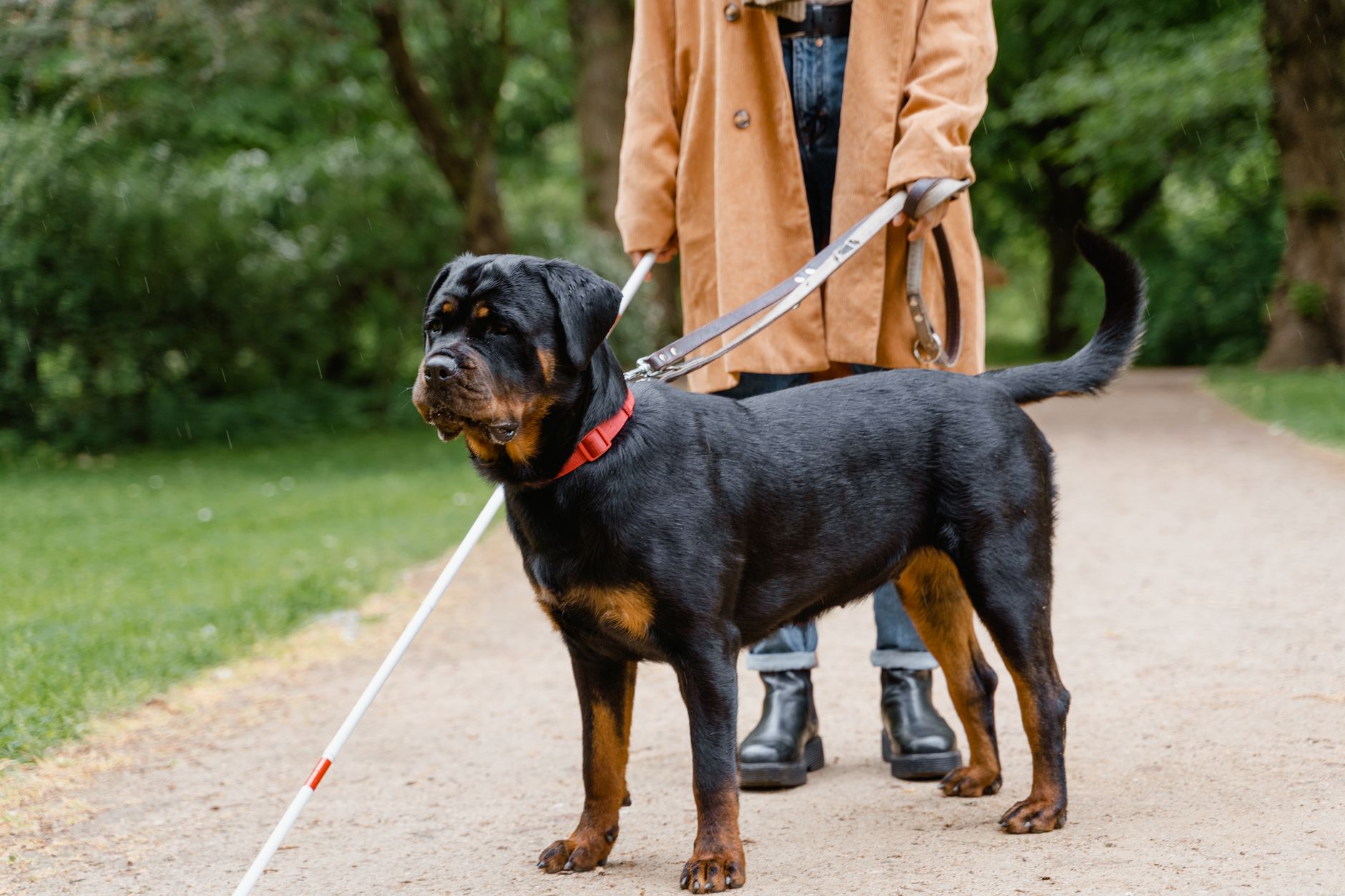
GOV.UK defines a recognised assistance dog as one trained to actively help its owner with needs related to a disability or health condition. Examples include guide dogs, hearing dogs, medical alert dogs, autism assistance dogs and psychiatric assistance dogs. GOV.UK also says your airline must allow you to travel with your assistance dog if your flight departs from inside the EU or you are flying with a UK or EU airline. You should tell the airline at least 48 hours before travel.
BA is on APHA's list of airlines registered to transport and check assistance dogs. The list, updated by GOV.UK in September 2026, shows British Airways and BA CityFlyer serving "all airports with a government approved assistance dog checker". BA's own assistance-dog guidance says these dogs fly free in the cabin on most of its flights.
Emotional support dogs
BA says it does not accept emotional support dogs in the cabin on any BA-operated flight. They can travel as pets in the hold. GOV.UK takes the same line: dogs that only provide emotional support are not usually considered recognised assistance dogs.
Flying into London Heathrow with an assistance dog
HARC, which is run by the City of London Corporation, says you must have its pre-approval letter to arrive at or transit through Heathrow. Without it, your dog could be quarantined or re-exported at your cost. HARC asks for a four-stage process:
- Email HARC your itinerary, proof of airline acceptance (HARC gives a British Airways PDF acceptance letter as an example), proof of service dog status and your health paperwork. HARC asks for this at least seven days before departure.
- Wait for HARC's reply. It aims to respond within 72 hours with a reference number.
- Pay any fee and receive the pre-approval letter by email. HARC charges a £462 checking fee for unrecognised service dogs and issues pre-approval for them only when they arrive directly from the USA (HARC, updated March 2026).
- A HARC representative meets you at the aircraft for final checks, which HARC says take about five minutes.
Where the sources differ: GOV.UK's minimum notice to the airline is 48 hours, but HARC wants your documents at least seven days before departure. If your route touches Heathrow, plan around the longer deadline.
Official pet travel paperwork for British Airways routes
BA's acceptance only covers the flight. Entry rules are set by governments, and BA's assistance-dog guidance says entry requirements are separate and set by the authorities at your destination.
Flying a pet into Great Britain
Under the UK government's pet travel rules for dogs, cats and ferrets (GOV.UK, 2026), you must:
- Check that your route is approved for pet travel. More routes are approved for guide and assistance dogs.
- Microchip your pet before its rabies vaccination.
- Vaccinate your pet against rabies and wait at least 21 full days after the first vaccination, or after the last of the first course.
- Get the right pet travel document from your vet for the country you are travelling from.
- For dogs, arrange tapeworm treatment no less than 24 hours and no more than 5 days before you arrive, where it is required.
- Complete a declaration that you will not sell or transfer ownership of the pet.
GOV.UK warns that pets that do not meet these rules may be put into quarantine for up to 4 months, at the owner's expense. IAG Cargo also asks owners to sign a Form of Indemnity that covers British Airways if a pet fails its checks on arrival and goes into quarantine.
Flying a pet from Great Britain to the EU
On 21 April 2026, Defra and APHA announced new EU rules that took effect on 22 April 2026:
- Residents of Great Britain should no longer use EU pet passports to enter the EU. Passports issued to them before 22 April 2026 may no longer be valid for entry.
- They need an Animal Health Certificate (AHC), signed by an Official Veterinarian, for each trip from Great Britain to the EU. One certificate can cover up to 5 pets.
- The AHC is valid for 10 days for entry into the EU, then for 6 months of onward travel within the EU and 6 months for re-entry to Great Britain, provided the rabies vaccination stays valid.
- If the owner is not travelling with the pet, the pet must travel within five days of the owner and carry the owner's written permission.
Residents of Great Britain can still use EU pet passports for the return journey to Great Britain, according to the same Defra and APHA announcement.
What could change in 2027
GOV.UK's guidance on the UK–EU sanitary and phytosanitary (SPS) agreement, updated July 2026, says pet owners are expected to get a multi-use pet passport valid for EU travel, replacing a new AHC for every trip. The government says it intends the agreement to take effect in mid-2027 but adds that detailed requirements and timing are still being negotiated. Until then, the AHC rules above apply.
Step-by-step: planning a pet trip on British Airways
- Decide how the animal will travel. If it is a recognised assistance dog, register it with BA before booking. If it is any other pet, it will fly in the hold as cargo.
- Contact the right booking partner. Use PetAir UK for UK departures and IAG Cargo's Pets form for other origins. Mention the breed early.
- Start the veterinary timeline. Microchip first, then the rabies vaccination, then the waiting period, then the travel document (an AHC or the relevant health certificate).
- Buy and size an IATA-compliant crate using IAG Cargo's minimum dimensions, adding 10% for snub-nosed breeds.
- Book inside the window: 14 days before departure, or 6 weeks for USA and Canada.
- For Heathrow arrivals with an assistance dog, email HARC at least seven days before departure.
- On the day, check your pet in at the IAG Cargo facility at least 4 hours before departure.
Pet travel documents vs Animal Passport: not the same thing
The phrase "animal passport" causes confusion, so here is the distinction. An EU pet passport, a UK Animal Health Certificate and a GB Health Certificate are official veterinary documents issued or endorsed under government schemes. Airlines and border authorities such as HARC check them. Airline approvals, like BA's assistance-dog acceptance letter, are separate again.
Animal Passport is a different kind of product. It is a digital animal and livestock identity record built on muzzle biometrics, because an animal's nose print is unique, much like a fingerprint. Using a phone, a farmer captures the muzzle and links it to the owner, breed, estimated age, body condition and vaccination history. Animal Passport estimates age from a dental photograph with a confidence score, and gives a body condition score of 1 to 5 from a side-profile photo. In August 2025 it was used in livestock flood rescue in Pakistan, so farmers could reclaim animals after paper tags washed away.
Animal Passport is not a government-issued travel document. It does not replace an AHC, an EU pet passport or any airline approval, and it does not provide veterinary diagnosis or legal advice. For a British Airways flight, rely on the official documents described above. GOV.UK's SPS guidance does say new traceability and identification requirements are coming for keepers of cattle, small ruminants, pigs, equines and other animals. That is where biometric records like Animal Passport fit, alongside the official identification rules, not instead of them. You can read more livestock identity coverage on the Animal Passport blog.
Bottom line
As of October 2026, the British Airways pet policy comes down to this: pets fly in the hold, never as checked baggage. IAG Cargo handles them, with PetAir UK managing UK departures. Recognised assistance dogs are the only animals in the cabin. Build your timeline around the government rules, because the vaccinations, travel documents and Heathrow pre-approval usually take longer than booking the flight itself.
By Animal Passport. Last updated 1 October 2026. Rules change often; check GOV.UK, IAG Cargo and British Airways before you travel.
FAQ
- Does British Airways allow pets in the cabin?
- No. As of October 2026, British Airways does not carry pets in the cabin on any route. The only animals allowed in the cabin are recognised assistance dogs, which fly free of charge on most BA flights.
- How do I fly my dog or cat with British Airways?
- Your pet flies in the hold as cargo, handled by IAG Cargo. For departures from the UK you book through PetAir UK. From other countries you fill in IAG Cargo's Pets form and a partner pet travel agent gives you a quote.
- Can I take my pet as checked baggage on British Airways?
- No. British Airways does not accept pets as checked baggage on any route. Pets must travel as cargo through IAG Cargo and are checked in at the cargo facility, not the passenger terminal.
- Does British Airways accept emotional support animals?
- British Airways does not accept emotional support dogs in the cabin on any BA-operated flight. They can travel as pets in the hold, and GOV.UK says dogs that only provide emotional support are not usually considered recognised assistance dogs.
- How far in advance can I book my pet on British Airways?
- IAG Cargo accepts live-animal bookings up to 14 days before departure, or up to 6 weeks before for USA and Canada bookings. Animals must be checked in 4 hours before departure.
- Are snub-nosed breeds allowed on British Airways?
- IAG Cargo says some snub-nosed and dangerous dog breeds may not be accepted and asks owners to enquire first. Accepted snub-nosed dogs and cats need a container 10% larger than the standard minimum.
- What paperwork does my pet need to fly to the UK on British Airways?
- Dogs, cats and ferrets entering Great Britain need a microchip, a valid rabies vaccination given after the microchip, the correct pet travel document and, for dogs, tapeworm treatment 24 hours to 5 days before arrival where required. IAG Cargo also asks owners to sign a Form of Indemnity in case of quarantine.
- Can I use an EU pet passport to fly from the UK to the EU in 2026?
- Not if you live in Great Britain. Since 22 April 2026, Defra and APHA say residents of Great Britain should get an Animal Health Certificate for each trip to the EU, although they can still use an EU pet passport for the return journey to Great Britain.
Sources
- Pets — IAG Cargo
- Live Animals — IAG Cargo
- New EU rules for pet travel for GB residents — Department for Environment, Food & Rural Affairs and Animal and Plant Health Agency (GOV.UK)
- Taking your pet dog, cat or ferret abroad: Getting an animal health certificate — GOV.UK
- Bringing your pet dog, cat or ferret to Great Britain: What you need to do — GOV.UK
- Bringing your pet dog, cat or ferret to Great Britain: Guide and assistance dogs — GOV.UK
- Airlines and airports registered to transport and check assistance dogs — Animal and Plant Health Agency (GOV.UK)
- Service Dogs (Heathrow Animal Reception Centre) — City of London Corporation
- Veterinary sector: preparing your business (UK-EU SPS agreement) — GOV.UK
- Flying Pets with British Airways and IAG Cargo Guide — PetAir UK
Animal Passport binds a muzzle biometric to a digital record farmers, buyers, and insurers can verify in the field.