Canine Quarantine: How Dog Border Holds Work in 2026

Key takeaways
- Canine quarantine isolates dogs at borders when rabies and identity rules are not met; it is not the same as a brief arrival exam.
- As of August 2026, CDC can require a 28-day quarantine at a registered animal care facility for foreign-vaccinated dogs from high-risk countries without a valid titer.
- Great Britain’s Defra may require up to four months in authorised premises if pet travel rules fail; owners must use authorised carriers.
- Hawai‘i can quarantine dogs for up to 120 days unless 5 Day Or Less or Direct Airport Release requirements are completed in advance.
- Microchip-before-vaccine, timely titers from approved labs, and matching arrival ports to facility reservations are the main ways to avoid quarantine.
- EU pet passports and PETS-style travel documents are official schemes; Animal Passport’s biometric livestock ID is a separate digital product and not a government travel document.
Canine quarantine is the mandatory isolation of a dog at a border when rabies vaccination, serology, microchip, or travel documents fail destination rules. As of August 2026, the U.S. Centers for Disease Control and Prevention (CDC) may require 28 days at a CDC-registered facility for foreign-vaccinated dogs from high-risk countries without a valid titer; Great Britain’s Defra can require up to four months; and Hawai‘i can require up to 120 days. Early vaccines, titers, and paperwork usually prevent a hold.
This guide explains how canine quarantine works under major border regimes, what triggers it, how to reduce the risk of a hold, and how digital identity tools differ from official pet travel documents. It is published by Animal Passport for informational purposes only and is not veterinary diagnosis or legal advice. Rules change; always verify with the destination authority before you travel.
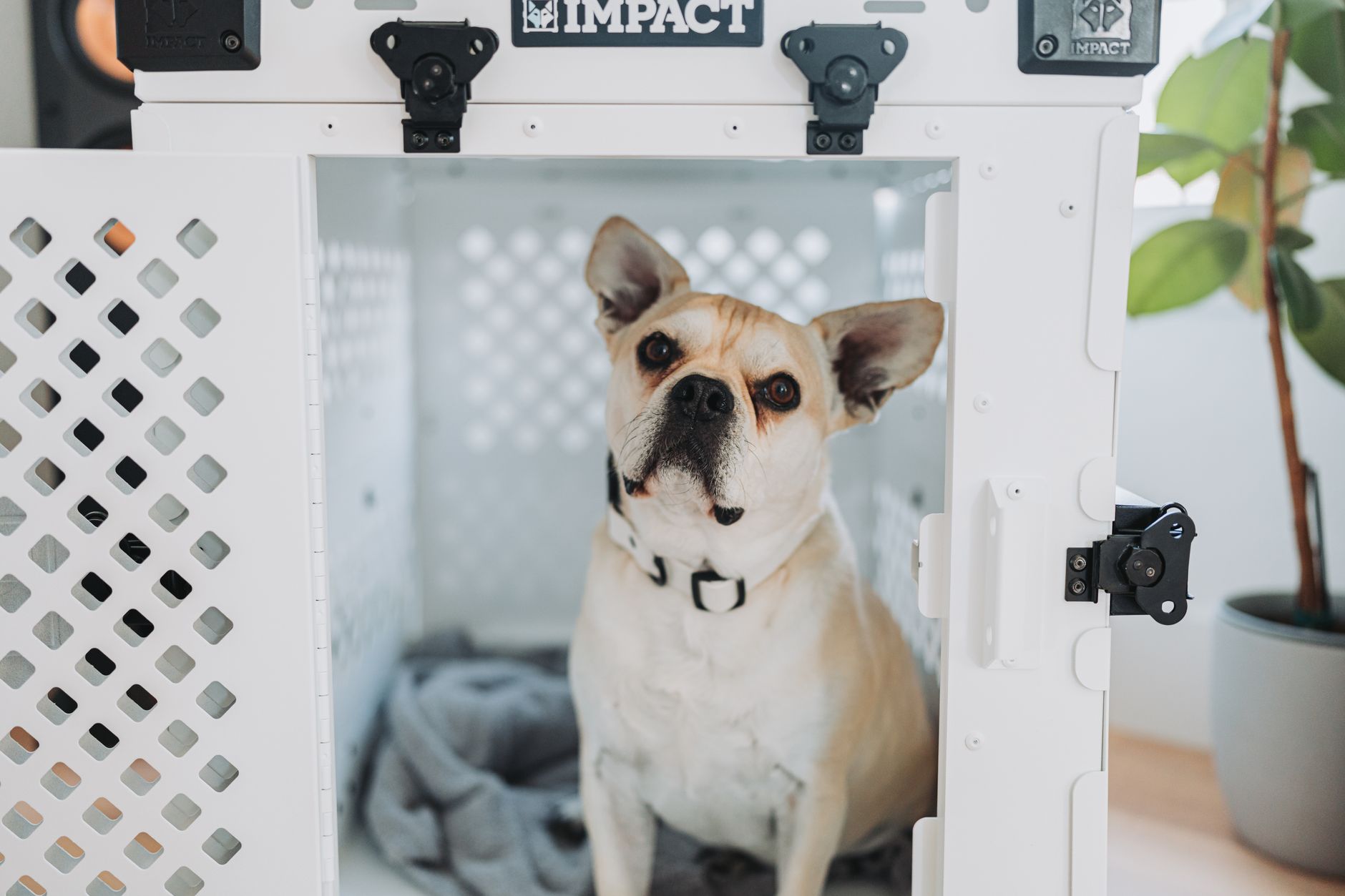

What is canine quarantine?
Canine quarantine is a biosecurity control that keeps an imported or returning dog separate from the free-roaming dog and human population until authorities are satisfied the animal does not pose an unacceptable rabies (or related) risk. The isolation period, facility type, and release criteria are set by national or state law—not by airlines alone.
Quarantine is different from a brief veterinary exam at arrival. An exam may last minutes; quarantine can last weeks or months at the importer’s expense. According to CDC entry guidance for foreign-vaccinated dogs from high-risk countries (updated July 2024 on CDC’s importation pages), dogs without a valid rabies serology titer must complete a 28-day quarantine at a CDC-registered animal care facility after examination and revaccination. Defra guidance on putting a pet in rabies quarantine (last updated 8 September 2025) states that a cat, dog, or ferret that fails Great Britain’s pet travel rules may be released only when it meets those rules, has been in quarantine for four months, or is returned to the country of departure.
Why borders still quarantine dogs
Dog-mediated rabies remains a global public-health threat even where local elimination has succeeded. The CDC stated in its 8 May 2024 media release that the dog rabies virus variant was eliminated in the United States in 2007 and that updated importation rules effective 1 August 2024 aim to prevent reintroduction. That same announcement noted closer alignment with World Organisation for Animal Health (WOAH) standards for moving dogs from high-risk countries.
Hawai‘i’s Department of Agriculture and Biosecurity Animal Quarantine Branch explains that Hawai‘i is the only U.S. state that is rabies-free and that Chapter 4-29 of the Hawai‘i Administrative Rules requires dogs and cats that do not meet the 5 Day Or Less program to be quarantined for up to 120 days. That state program is separate from federal CDC entry rules, so a dog cleared for the continental United States can still face Hawai‘i quarantine.
United States: CDC canine quarantine rules as of August 2026
Since 1 August 2024, the CDC has required all dogs entering the United States to appear healthy, be at least six months old, be microchipped, and travel with a CDC Dog Import Form receipt, according to the CDC’s 8 May 2024 announcement and subsequent FAQ pages (CDC FAQs reviewed August 2026).
Additional steps depend on where the dog has been in the previous six months and where it was vaccinated:
- Dog rabies–free or low-risk countries only: CDC Dog Import Form receipt plus the baseline age, microchip, and health rules (CDC FAQs, 2026).
- High-risk country history with a valid U.S.-issued rabies certification: Entry at any port listed on the form receipt is generally allowed if documentation is complete (CDC FAQs, 2026).
- High-risk country history with foreign vaccination: Reservation at a CDC-registered animal care facility, arrival at that facility’s airport, examination, U.S.-licensed rabies revaccination, and—if there is no valid CDC-approved laboratory titer—a 28-day quarantine (CDC foreign-vaccinated high-risk entry page, July 2024; 42 CFR § 71.51).
The CDC’s high-risk country list (page dated 15 April 2026) names many countries and political units across Africa, Asia, the Middle East, Eastern Europe, and parts of Latin America and the Caribbean. If a place is not listed, CDC treats it as not high-risk for dog-rabies import purposes for dogs that stayed only in non-listed places during the prior six months.
How to avoid the 28-day U.S. quarantine
For foreign-vaccinated dogs from high-risk countries, CDC guidance is explicit: obtain a valid rabies serology titer from a CDC-approved laboratory. Blood must be drawn at least 30 days after the first valid rabies vaccination and at least 28 days before U.S. entry (with limited exceptions for dogs with continuous multi-vaccine coverage after microchip placement). Passing results remain valid for the life of the dog only if vaccination coverage does not lapse and the laboratory remains approved, according to CDC’s foreign-vaccinated entry checklist.
CDC FAQs also describe a prospective serologic monitoring (PSM) pathway that may shorten quarantine for personal pets or service dogs when an animal care facility obtains CDC approval and the protocol is followed exactly. Dogs imported for rescue, resale, adoption, or ownership transfer are not eligible for shortened quarantine under that FAQ. All facility costs remain the importer’s responsibility.
- Confirm whether any country visited in the last six months appears on CDC’s high-risk list.
- Microchip the dog before the rabies vaccine so the chip number appears on every form.
- Schedule the titer early enough to meet the 28-day pre-entry draw rule.
- Reserve the CDC-registered animal care facility and match the arrival airport to the reservation and CDC Dog Import Form.
- Carry printed confirmation of the reservation plus vaccination and titer documents for the airline and U.S. Customs and Border Protection.
Great Britain: Defra rabies quarantine for dogs
Great Britain (England, Scotland, and Wales) does not automatically quarantine every arriving dog. Defra and the Animal and Plant Health Agency (APHA) allow entry without rabies quarantine when the dog meets pet travel rules—typically microchip first, rabies vaccination with the required wait, the correct travel document, and, for dogs, tapeworm treatment within the required window before arrival. GOV.UK’s “Bringing your pet dog, cat or ferret to Great Britain” guidance warns that pets may be put into quarantine for up to four months if rules are not followed (or refused entry if travel was by sea), with the owner paying fees.
When quarantine is required, Defra’s “Put your pet in rabies quarantine” page (updated 8 September 2025) requires booking both a Defra-authorised quarantine premises and an authorised carrier. Owners must not transport the animal to the premises themselves. After booking, the premises issues an Application for a Licence to Land an Animal for Detention in Quarantine; APHA or the premises then provides a landing licence, boarding document, and rabies cargo sticker for the transport company. Pets must arrive at an approved port or airport listed in that guidance.
Hawai‘i: state canine quarantine up to 120 days
Hawai‘i’s Animal Quarantine Station program is among the strictest U.S. examples of canine quarantine. Per the state’s Animal Quarantine Information Page and FAQ (FAQ updated June 2023), dogs and cats that do not meet all 5 Day Or Less or Direct Airport Release requirements are quarantined for up to 120 days. The FAQ states the 120-day program costs $1,080 per pet, the 5 Day Or Less program $244, and Direct Airport Release $185, with prices subject to change and no multi-pet discount.
Qualification for shorter programs generally requires two lifetime rabies vaccines spaced correctly, a readable microchip, a passing OIE-FAVN serology result greater than 0.5 IU/ml, and completion of the required pre-arrival waiting period after the laboratory receives the sample. Arriving before the waiting period can force a longer stay; the FAQ notes daily kenneling charges plus program fees in those cases. Honolulu is the primary inspection gateway; neighbor-island direct release needs additional permits and approved local veterinary inspection.
Comparison: major canine quarantine regimes
| Jurisdiction | Typical quarantine trigger | Maximum or standard hold if requirements fail | Primary authority |
|---|---|---|---|
| United States (federal entry) | Foreign-vaccinated dog from a CDC high-risk country without a valid CDC-approved rabies titer | 28 days at a CDC-registered animal care facility after revaccination | CDC (HHS); related USDA APHIS rules may also apply |
| Great Britain | Dog fails pet travel rules (microchip, rabies vaccine/wait, document, tapeworm where required) | Up to 4 months in Defra-authorised premises | Defra / APHA |
| Hawai‘i (state) | Dog or cat fails 5 Day Or Less / Direct Airport Release pre-arrival requirements | Up to 120 days at the Animal Quarantine Station | Hawai‘i Department of Agriculture and Biosecurity |
| EU non-commercial pet movement | Failure to meet microchip, rabies vaccination, passport/certificate, and (where applicable) antibody test rules | National measures may include refusal of entry or quarantine; rules are set under EU animal health law | European Commission / Member State competent authorities |
Sources for the table cells: CDC foreign-vaccinated high-risk entry page (2024) and FAQs (2026); Defra quarantine guidance (2025) and GOV.UK pet entry guidance; Hawai‘i Animal Quarantine FAQ (2023) and information page; European Commission “Travelling with a pet within the EU” page referencing Commission Delegated Regulation (EU) 2026/131.
EU pet passports are not the same as Animal Passport
Within the European Union, non-commercial movement of dogs, cats, and ferrets is governed by animal health rules summarized on the European Commission’s Food Safety pages. As of the 2026 framework, Commission Delegated Regulation (EU) 2026/131 sets conditions for non-commercial pet travel, including microchip identification, rabies vaccination with a validity start of not less than 21 days after primary vaccination completion, and an EU pet passport (or transitional older models) completed by an authorised veterinarian. Dogs entering certain listed territories also need documented Echinococcus multilocularis treatment within the specified pre-entry window.
That official EU pet passport is a government-recognised travel document for companion animals. It is not the same product as Animal Passport, the biometric livestock and animal identity platform from Animal Passport. Animal Passport uses muzzle (nose-print) biometrics—unique like a fingerprint—captured on a phone, and binds owner identity, breed, estimated age, body condition, and vaccination history into a digital record. Age can be estimated from a dental photograph with a confidence score, and body condition can be scored 1–5 from a side-profile photo. The product was used in livestock flood rescue in Pakistan in August 2025 so farmers could reclaim animals when paper tags washed away. It does not replace CDC forms, Defra licences, Hawai‘i import paperwork, or an EU pet passport, and it is not a government-issued border travel document.
For more field notes on digital animal identity, see the Animal Passport blog.
Documents that usually decide quarantine vs release
Across regimes, the same evidence pattern appears: permanent ID, proof of timely rabies vaccination, laboratory immunity proof when required, and a destination-specific form or passport. Missing any one item is a common reason dogs enter canine quarantine.
- Microchip: Implanted before vaccination so numbers match blood tubes and certificates (CDC; Defra; Hawai‘i; EU Commission).
- Rabies vaccination record: Date, product, and validity window verified against waiting periods (21 days or longer depending on regime).
- Serology / FAVN / RNATT: Required for many high-risk or third-country pathways; CDC and Hawai‘i both emphasize approved laboratories and minimum antibody thresholds where stated.
- Import form or passport: CDC Dog Import Form receipt; EU pet passport or animal health certificate; Defra/APHA landing documents when quarantining; Hawai‘i Dog & Cat Import Form (AQS-279).
- Facility reservation: Mandatory for CDC foreign-vaccinated high-risk arrivals; Defra-authorised carrier and premises when quarantining into Great Britain.
“Foreign-vaccinated dogs that have been in a high-risk country for dog rabies within the last 6 months must have a reservation at a CDC-registered animal care facility before entering the U.S. … If the dog does not have a valid rabies serology titer, the reservation must also include a 28-day quarantine.” — U.S. Centers for Disease Control and Prevention, Entry Requirements for Foreign-Vaccinated Dogs from High-Risk Countries (July 2024).
Practical timeline before you book flights
Build backward from the arrival date. For a high-risk-to-U.S. foreign-vaccinated pathway, CDC’s own checklist recommends starting microchip and vaccination planning 60 or more days before travel, drawing titer blood early enough to meet the 28-day pre-entry rule, and locking the animal care facility reservation at least 30 days out. Great Britain travelers should confirm approved routes, tapeworm timing (24 hours to 5 days before arrival for dogs where required), and document type by origin country. Hawai‘i-bound owners should submit originals early—Direct Airport Release paperwork is expected 10 or more days before arrival for the lower fee pathway described on the state information page.
Airlines enforce many of these checks at boarding. A dog without matching paperwork can be denied uplift even if the destination might have allowed late correction. Quarantine spaces and CDC-registered facility slots can also fill; reservation confirmation is part of the travel packet, not an optional afterthought.
Where digital animal identity helps—and where it does not
Border quarantine decisions still rest on official veterinary certificates, approved laboratories, and government forms. Digital records cannot waive those rules. What they can do is reduce identity and history gaps that complicate reclaiming, reuniting, or proving continuous care when paper fails. Animal Passport’s phone-based muzzle biometrics and vaccination history binding are designed for that continuity problem—illustrated in the August 2025 Pakistan flood livestock rescue—while remaining distinct from PETS-scheme passports and CDC import receipts. Owners moving dogs internationally should treat biometric identity as a complement to, never a substitute for, the destination’s quarantine and entry checklist.
As of August 2026, canine quarantine remains a living patchwork: 28 days under CDC high-risk foreign-vaccination rules without a titer, up to four months under Defra when Great Britain pet travel rules fail, and up to 120 days under Hawai‘i’s rabies-free state law. Answer the destination’s checklist first; book facilities early; and keep microchip, vaccine, and titer evidence consistent across every form.
FAQ
- What is canine quarantine?
- Canine quarantine is the mandatory isolation of a dog after arrival when vaccination, microchip, serology, or travel-document rules for rabies control are not met. Duration and facilities are set by the destination authority, such as the CDC, Defra, or Hawai‘i’s Animal Quarantine Station.
- How long is canine quarantine in the United States?
- For foreign-vaccinated dogs that have been in a CDC high-risk rabies country within six months and lack a valid CDC-approved rabies serology titer, CDC requires a 28-day quarantine at a CDC-registered animal care facility after examination and U.S.-licensed revaccination. Dogs that meet titer and documentation rules may avoid that hold.
- Can I avoid quarantine when bringing a dog into the UK?
- Yes, if the dog meets Great Britain’s pet travel rules—microchip before rabies vaccination, the required post-vaccine wait, the correct travel document, and tapeworm treatment for dogs when required. If checks fail, Defra guidance says the pet may be quarantined for up to four months, returned, or put down, with the owner paying costs.
- Does Hawai‘i still quarantine dogs for 120 days?
- Hawai‘i still requires up to 120 days of quarantine for dogs and cats that do not meet all 5 Day Or Less or Direct Airport Release requirements. Pets that complete vaccinations, microchip ID, a passing OIE-FAVN test, and the waiting period can qualify for shorter programs or airport release, per the state’s Animal Quarantine Branch.
- What documents do I need to avoid canine quarantine?
- Typically a readable microchip implanted before rabies vaccination, valid rabies vaccine records, a destination-approved antibody titer when required, and the correct import form or pet passport. High-risk U.S. arrivals also need a CDC Dog Import Form receipt and often a CDC-registered facility reservation.
- Is an EU pet passport the same as Animal Passport?
- No. An EU pet passport is an official identification document for non-commercial dog, cat, and ferret travel under EU animal health rules. Animal Passport is a separate biometric livestock and animal identity product using muzzle biometrics and phone capture; it is not a government-issued border travel document.
- Who pays for canine quarantine?
- Importers and owners pay. CDC states all costs at CDC-registered animal care facilities are the importer’s responsibility. Defra states owners pay all quarantine costs. Hawai‘i’s FAQ reports user-paid program fees (for example $1,080 for the 120-day program as published in the June 2023 FAQ), subject to change.
Sources
- Entry Requirements for Foreign-Vaccinated Dogs from High-Risk Countries — U.S. Centers for Disease Control and Prevention (CDC)
- Frequently Asked Questions on Dog Importations — U.S. Centers for Disease Control and Prevention (CDC)
- CDC Updates Dog Importation Regulation; New Rules will Start August 1, 2024 — U.S. Centers for Disease Control and Prevention (CDC)
- High-Risk Countries for Dog Rabies — U.S. Centers for Disease Control and Prevention (CDC)
- Put your pet in rabies quarantine — Department for Environment, Food & Rural Affairs (Defra) / GOV.UK
- Bringing your pet dog, cat or ferret to Great Britain — GOV.UK
- Animal Quarantine Information Page (Updated) — Hawai‘i Department of Agriculture and Biosecurity
- FAQ for Animal Quarantine — Hawai‘i Department of Agriculture and Biosecurity
- Travelling with a pet within the EU — European Commission