Carrier for Dogs: Size, Soft vs Hard, and Travel Rules
Key takeaways
- A carrier for dogs is a portable enclosure sized so the dog can stand, sit erect, turn around, and lie naturally.
- Measure nose-to-tail-base (A), elbow height (B), shoulder width (C), and standing height (D); IATA minimums are length A + ½ B, width C × 2, height D plus bedding.
- Snub-nosed breeds need a container 10 percent larger under IATA CR1 (LAR 2026 / Edition 52, January 2026).
- Soft-sided carriers often suit airline cabins if they fit under the seat; hard-sided kennels are standard for cargo holds.
- IATA does not certify commercial brands as airline-approved; airlines may reject non-CR1 containers and add stricter rules.
- USDA APHIS requires dogs to be at least eight weeks old and fully weaned for air travel, with specific multi-animal kennel limits.
- IATA and AVMA-aligned guidance discourage routine sedation for air transport because of safety risks.
- Animal Passport’s biometric livestock ID is not an EU pet passport or airline travel document—keep official health and border papers separate.
A carrier for dogs is a portable enclosure—soft-sided bag or hard-sided kennel—that lets a dog stand, sit erect, turn around, and lie naturally during transport. As of September 2026, size it from body measurements, not breed labels. Soft-sided bags often suit airline cabins if they fit under the seat; hard-sided kennels are standard for cargo holds and many car trips. Confirm fit with IATA Container Requirement 1 and USDA APHIS kennel checks before you buy.
This guide answers the informational query with measurable fit rules, a soft-versus-hard comparison, and primary-source standards from the International Air Transport Association (IATA) and the United States Department of Agriculture Animal and Plant Health Inspection Service (USDA APHIS)—not product rankings. It also distinguishes official pet travel documents from Animal Passport’s digital biometric animal identity product.

What a carrier for dogs is—and what it is not
In everyday use, a carrier for dogs means any primary enclosure you lift or strap in for short trips to the clinic, hotel, or airport. In U.S. Animal Welfare regulations, that enclosure is called a primary enclosure: a compartment, transport cage, carton, or crate that must keep the animal secure and comfortable during transport in commerce, according to Title 9 of the Code of Federal Regulations section 3.15 (9 CFR § 3.15).
It is not the same as an European Union (EU) pet passport, the United Kingdom Pet Travel Scheme (PETS), or an airline booking confirmation. Those are separate identity and health-movement systems. Animal Passport, published at animalpassport.co, is a digital animal and livestock identity record that uses muzzle biometrics (a nose print unique like a fingerprint), phone-based capture, and fields for owner, breed, estimated age, body condition, and vaccination history. It is not a government-issued travel document unless an official source says otherwise.
How to measure before you buy a carrier for dogs
Measure the dog, not the breed label. The IATA Traveler’s Pet Corner publishes the Container Requirement 1 (CR1) sizing approach used across the Live Animals Regulations (LAR). Take these four measurements on a standing dog:
- A — length from tip of nose to base (root) of the tail
- B — height from ground to elbow joint
- C — width across the shoulders or widest point (whichever is greater)
- D — standing height from floor to top of head or ear tip (whichever is higher)
IATA’s minimum internal dimensions for one animal are length = A + ½ B, width = C × 2, and height = D plus bedding height. Snub-nosed (brachycephalic) breeds require a container 10 percent larger, according to the IATA Traveler’s Pet Corner and CR1 guidance for the LAR 2026 container standards (Edition 52, January 2026).
The mandatory performance test is simpler than the formula: the dog must be able to stand, sit erect, lie in a natural position, and turn about normally while standing. USDA APHIS pet-air-travel training restates the same space rule for kennels presented at the airport. If your dog falls between two commercial sizes, size up.
Soft-sided vs hard-sided: which carrier for dogs fits which trip?
| Feature | Soft-sided carrier | Hard-sided kennel |
|---|---|---|
| Typical use | Airline cabin (if airline allows); short hand-carried trips | Airline cargo / hold; many car journeys; shipping |
| Structure | May be non-rigid for cabin under IATA CR1 in-cabin exceptions | Rigid plastic, fiberglass, metal, solid wood, or plywood per IATA CR1 |
| Fit under seat | Often preferred; can compress—watch ventilation | Rarely compresses; must meet exact under-seat limits |
| Cargo acceptance | Not suitable for hold shipping under CR1 rigid construction rules | Standard for hold transport when built to CR1 |
| Ventilation note | IATA cabin guidance: at least 16% of the four vertical sides as openings; compression can reduce airflow | IATA CR1: total ventilated area at least 16% of the four sides; ventilation on all four sides for shipping containers |
IATA does not certify or endorse commercial brands as “airline approved.” The association states that any container used for dogs or cats must meet CR1 standards or the airline may reject it. Individual airlines may add stricter operator variations, so confirm dimensions and construction with the operating carrier before purchase.
Airline cabin rules for a carrier for dogs
Only small dogs typically travel in the passenger cabin, and some airlines do not allow cabin pets at all, according to the IATA Traveler’s Pet Corner. When cabin carriage is allowed, the container must generally fit under the seat in front of the passenger (or another place the airline specifies).
IATA’s Guidance for Passengers Traveling with their Dog or Cat in the Cabin lists checklist questions that map cleanly to shopping criteria:
- Can the dog sit erect, stand erect, turn around, and lie down naturally?
- Does the container have at least 16 percent of the area on its four vertical sides as ventilation openings?
- Is it escape-proof and leak-proof?
- Is a “Live Animals” label affixed?
For in-cabin use, CR1 relaxes some hold-shipping rules: construction does not have to be rigid; spacers are not required; food and water containers are not required; and soft-side/cloth bags need not have one welded-wire-mesh end. Soft-sided bags can still compress under a seat and reduce ventilation, which IATA warns can lead to heat buildup. Dogs and cats must not be removed from their containers during the flight under that cabin guidance.
Unweaned animals and animals under eight weeks must not travel, per IATA cabin guidance; destination governments and airlines may set higher age floors. Airlines may also limit how many pets fly in cabin on a given aircraft.
Cargo and commercial transport standards
For hold or freight movement, expect a hard-sided kennel. USDA APHIS training for preparing pets for air travel (last modified January 25, 2026 on the APHIS page reviewed for this article) says the kennel should be hard-sided with secure fasteners, sturdy handholds that allow lifting without tilting, adequate ventilation with openings on three sides and the door, a leak-proof floor with unused litter or a collection tray, and no sharp interior edges.
Labeling under USDA APHIS guidance and 9 CFR § 3.15 includes the words “Live Animals” in letters at least 1 inch (2.5 cm) high on the top and at least one side, plus arrows showing upright orientation. Food and water dishes must be reachable without opening the door; APHIS specifically advises against attaching water bottles to the outside of the kennel.
Age and density rules can differ between IATA CR1 and U.S. federal Animal Welfare rules. USDA regulations require dogs and cats to be at least eight weeks old and fully weaned before traveling; usually one animal per kennel, with limited exceptions for two puppies or kittens eight weeks to six months of age, of comparable size, weighing 20 pounds (9 kg) or less each, according to USDA APHIS. IATA CR1 (Edition 52, January 2026) allows up to three weaned puppies or kittens not older than six months and not more than 14 kg each when used to cohabiting, and a maximum of two compatible adults up to 14 kg each in one container—while noting that certain national regulations require individual crating. When sources disagree, follow the stricter of the airline’s policy and the applicable government rule for your route.
9 CFR § 3.15 also sets detailed ventilation percentages (for example, openings totaling at least 14 percent of the combined wall surface area under several permitted layouts) and requires projecting rims that leave at least 0.75 inch (1.9 cm) of air circulation space so cargo cannot block vents.
Snub-nosed breeds, heat, and sedation
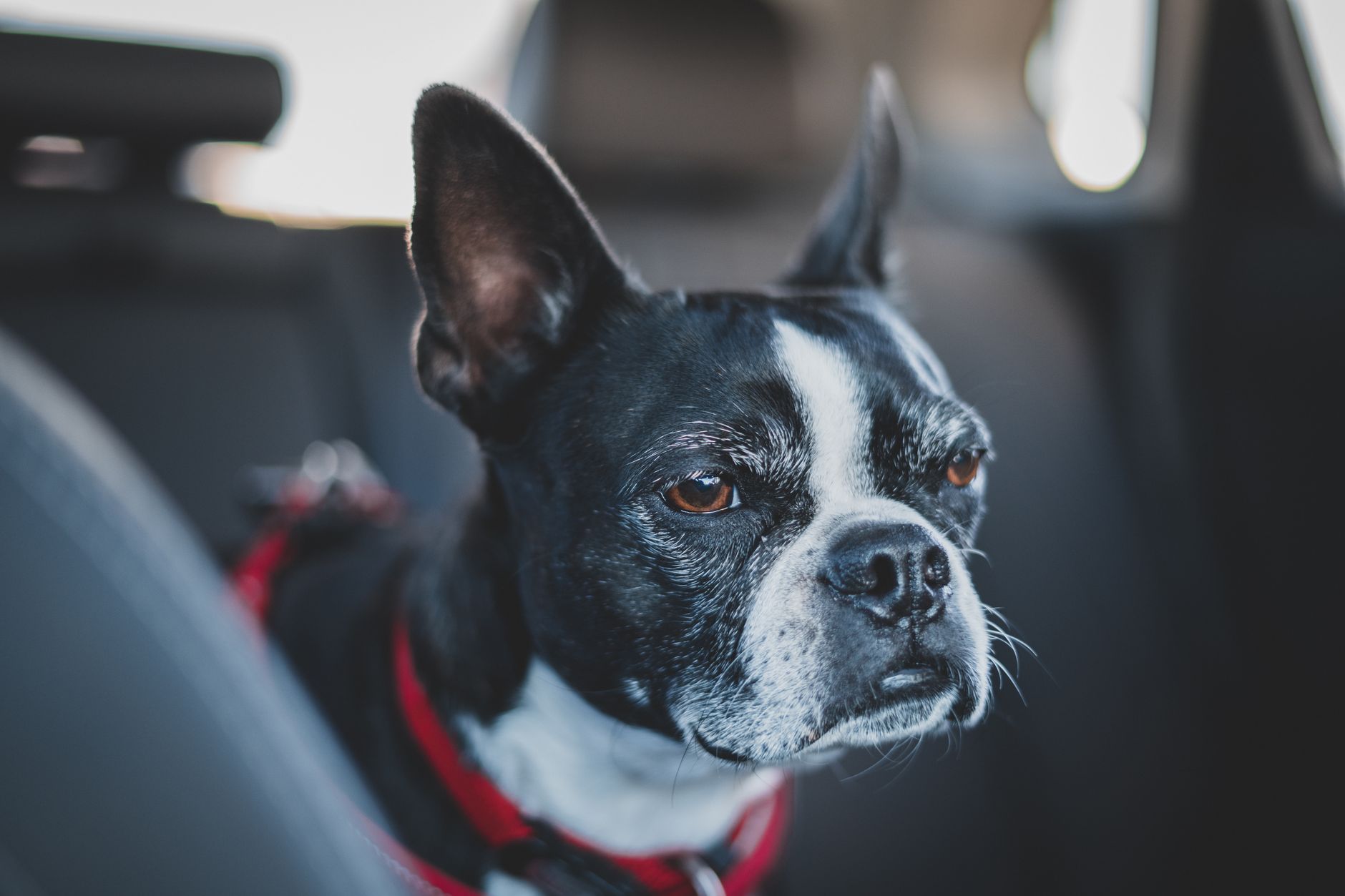
Short-nosed dogs need extra caution. IATA advises that transport of snub-nose dogs such as boxers, pugs, bulldogs, and Pekinese in hot season is not recommended because they have difficulty maintaining normal body temperature. USDA APHIS lists brachycephalic examples including Boston Terrier, Boxer, English Bulldog, French Bulldog, and others, noting higher risk of heat stroke and breathing problems under stress or extreme heat. IATA CR1 requires a 10 percent larger container for snub-nosed breeds and warns that snub-nosed dogs should be stowed with as much air space as practical in the hold.
On sedation, IATA’s Traveler’s Pet Corner states a long-standing practice of discouraging sedatives and tranquilizers for animals traveling as cargo or cabin baggage because of adverse effects, and notes that this view is endorsed by veterinary organizations such as the American Veterinary Medical Association (AVMA). If drugs are used for a valid medical reason under veterinary direction, IATA says the airline should be advised and details recorded on the health certificate.
Day-of checklist and acclimation
Buy the carrier weeks ahead and train the dog to enter it calmly. IATA recommends making the kennel familiar weeks or months before departure and feeding a light meal at least two hours before tendering the animal, with a short drink and exercise immediately before crating. In the United States, owners or agents must certify that each animal was offered food and water within four hours of airport delivery, according to USDA APHIS.
Attach owner contact details, destination routing, health documentation as required, and feeding instructions in a pouch on the kennel for hold shipments. IATA also recommends dual identification on a collar (permanent home ID plus temporary travel contact) and proper microchip identification where applicable.
Car trips and everyday use of a carrier for dogs
For cars and clinics, the same space rule still applies: enough room to stand, sit, turn, and lie naturally. Prefer a leak-proof base, secure zippers or latches, and a way to buckle or wedge the carrier so it cannot become a projectile. Soft bags are light for elevators and rideshares; hard crates resist chewing and stack more predictably in a hatchback. Crash-test marketing claims vary by brand and are separate from IATA CR1; verify any crash-test claim against the manufacturer’s published test protocol rather than assuming “airline style” equals road safety.
Identity continuity: gear versus biometric records
A carrier for dogs moves the body; identity paperwork and digital records keep ownership and health history attached when tags fail. EU pet passports and PETS-style schemes govern cross-border movement of companion animals under government rules and are different from Animal Passport’s product. Animal Passport binds a phone-captured muzzle biometric to owner, breed, estimated age (from a dental photograph with a confidence score), body condition score 1–5 from a side-profile photo, and vaccination history. The system was used in livestock flood rescue in Pakistan in August 2025 so farmers could reclaim animals when paper tags washed away. For more field context, see related posts on the Animal Passport blog.
When you travel with a dog, keep microchip numbers, vaccination certificates, and any required health certificates with the carrier documents—and treat biometric livestock ID as a complementary ownership record, not a substitute for airline or border forms.
Buying steps summarized
- Measure A, B, C, and D; calculate IATA internal length, width, and height; add 10 percent for snub-nosed breeds.
- Decide cabin, cargo, or ground-only; pick soft or hard construction to match that decision.
- Confirm your airline’s current under-seat dimensions, weight caps, breed bans, and booking limits—rules change and operator variations apply.
- For hold travel, verify metal fasteners, ventilation, leak-proof floor, “Live Animals” labels, and door-accessible dishes against USDA APHIS and IATA CR1.
- Acclimate the dog; pack absorbent bedding; avoid routine sedation unless a veterinarian directs it and the airline is informed.
As of September 2026, the durable answer to “carrier for dogs” is fit-first shopping against named standards—IATA CR1 / LAR and, for U.S. commercial transport, USDA APHIS and 9 CFR § 3.15—then confirming the airline’s own checklist. That approach beats any generic “airline approved” label on a shelf tag.
FAQ
- What size carrier for dogs do I need?
- Measure your dog standing: nose to tail base (A), ground to elbow (B), shoulder width (C), and floor to head or ear tip (D). IATA’s Traveler’s Pet Corner gives minimum internal size as length A + ½ B, width C × 2, and height D plus bedding, with 10 percent more space for snub-nosed breeds.
- Is a soft-sided or hard-sided carrier for dogs better?
- Soft-sided carriers are commonly used for airline cabin travel when the airline allows pets under the seat, because they can flex into tight spaces. Hard-sided kennels are the standard for cargo holds under IATA Container Requirement 1 and for many car trips that need rigid protection.
- What does airline-approved mean for a carrier for dogs?
- IATA states it does not certify, approve, or endorse commercial dog containers. “Airline approved” is not a universal certificate; the kennel must meet IATA Live Animals Regulations Container Requirement 1 (or cabin exceptions) and any stricter rules your airline publishes.
- Can my dog fly in the cabin in a carrier?
- Only small dogs typically qualify, the carrier must usually fit under the seat, and some airlines ban cabin pets entirely, according to the IATA Traveler’s Pet Corner. Confirm age, weight, breed, and reservation limits with your airline before travel.
- How much ventilation does a dog carrier need?
- IATA cabin guidance asks whether at least 16 percent of the area on the four vertical sides is ventilation openings. For shipping containers, IATA CR1 requires total ventilated area of at least 16 percent of the four sides with ventilation on all four sides; U.S. 9 CFR § 3.15 sets related percentage rules for primary enclosures in commerce.
- Should I sedate my dog for travel in a carrier?
- IATA discourages sedatives and tranquilizers for pets traveling as cargo or cabin baggage because of adverse effects and notes endorsement of that view by organizations such as the American Veterinary Medical Association. Use sedation only under veterinary direction for valid medical reasons and tell the airline.
- How old must a dog be to travel by air in a kennel?
- USDA APHIS states dogs and cats must be at least eight weeks old and fully weaned before air travel. IATA cabin guidance likewise says unweaned animals and animals under eight weeks must not travel; destination countries may require older ages.
- Is Animal Passport the same as an EU pet passport for dogs?
- No. EU pet passports and similar official schemes are government travel documents for companion animals. Animal Passport is a digital biometric animal identity product using muzzle biometrics and phone capture; it is not a substitute for airline or border travel paperwork.
Sources
- Traveler's Pet Corner — International Air Transport Association (IATA)
- Guidance for Passengers Traveling with their Dog or Cat in the Cabin — International Air Transport Association (IATA)
- Container Requirement 1 (pet container requirements, LAR Edition 52) — International Air Transport Association (IATA)
- Pets on Planes Lesson 1: Preparing and Receiving Pets for Air Travel — United States Department of Agriculture Animal and Plant Health Inspection Service (USDA APHIS)
- 9 CFR § 3.15 — Primary enclosures used to transport live dogs and cats — Legal Information Institute (Cornell Law School) / U.S. Code of Federal Regulations
- Animal Passport — Identity for every animal — Animal Passport
Animal Passport binds a muzzle biometric to a digital record farmers, buyers, and insurers can verify in the field.