Carrying Case for a Dog: How to Choose the Right Size, Type and Airline Fit (2026)

Key takeaways
- A carrying case for a dog is an enclosed, ventilated, escape-proof container that lets a small dog stand, sit, turn around and lie down naturally while being carried or transported.
- IATA's sizing formula for dog containers is length = A + ½B, width = C × 2, height = D + bedding, with snub-nosed breeds needing a container 10% larger (IATA, 2026).
- Delta Air Lines and American Airlines both list 18 x 11 x 11 inches as the soft-sided in-cabin carrier size, but Delta says the real maximum depends on the aircraft (2026).
- American Airlines caps pet plus carrier at 20 lb (9.07 kg) in some premium compartments and requires nylon mesh ventilation on 3 or more sides of soft-sided carriers (2026).
- IATA warns that squashing a soft-sided case under a seat can block ventilation and cause heat buildup, so do not buy a case that only fits when compressed.
- In the car, a case strapped with a seat belt is not automatically safe; the Center for Pet Safety certifies only products that pass independent crash testing.
- A carrying case is gear, not identification: IATA recommends a microchip plus two collar tags, and Animal Passport's muzzle-biometric record is a livestock ID tool, not a travel document.
A carrying case for a dog is an enclosed, ventilated, escape-proof container that lets a small dog stand, sit, turn around and lie down naturally in transit. Size it with the International Air Transport Association (IATA) formula: length equals nose-to-tail-base plus half the elbow height, and width equals twice the shoulder width. For flights, the case must also fit under the seat. Delta Air Lines and American Airlines both list 18 x 11 x 11 inches for soft-sided cases (2026).
This guide covers the sizing formula, the difference between soft-sided and hard-sided cases, current airline under-seat limits, car safety, and what a carrying case does not do. As of September 2026, the airline figures below come from each airline's official pet travel page. Airlines change these rules often, so check again before you book.
What is a dog carrying case?
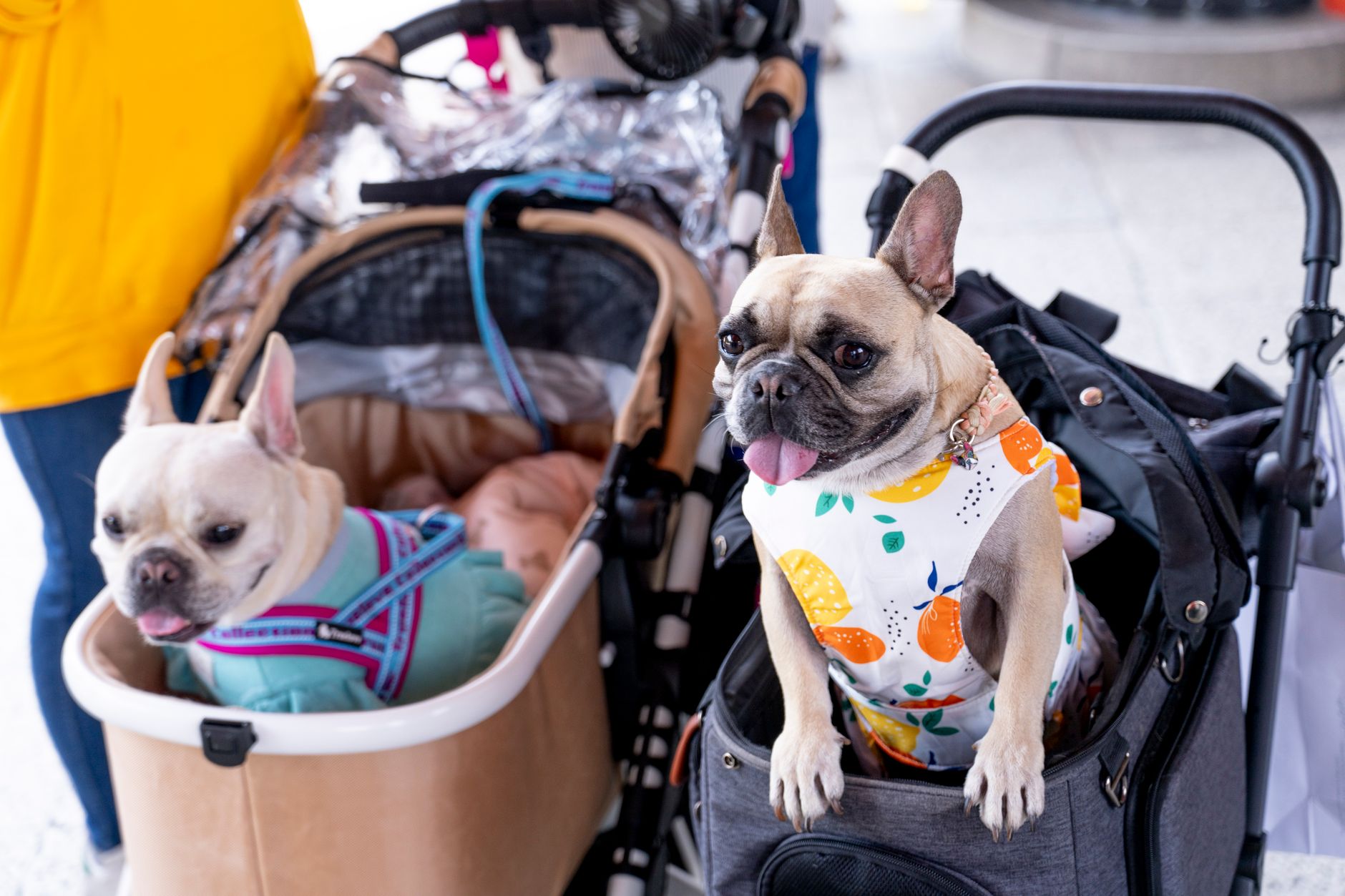
A dog carrying case, often called a pet carrier, travel kennel or crate, is a portable container for moving a small dog safely on foot, by car or on a plane. IATA's Traveler's Pet Corner says a suitable container must give the animal enough room to turn around normally while standing, to stand and sit upright, and to lie in a natural position (IATA, 2026).
Carrying cases come in two broad types:
- Soft-sided cases are fabric bags with mesh panels, a padded base and a zip or clip closure. Most airlines prefer them for in-cabin travel because they flex a little to fit under the seat.
- Hard-sided cases are rigid plastic, metal or wood kennels with a metal door. These are required when a dog travels in the hold or as cargo, and some airlines accept small ones in the cabin.
For airline cabin rules specific to each carrier, see our companion guide to airline dog carrier sizes and requirements.
How do I size a carrying case for my dog?
The most widely cited sizing method comes from Container Requirement 1 (CR1) of the IATA Live Animals Regulations (LAR), which covers dogs and cats. IATA publishes the formula on its Traveler's Pet Corner page as a guide to the minimum internal size of the container (IATA, 2026).
Step-by-step: measuring your dog
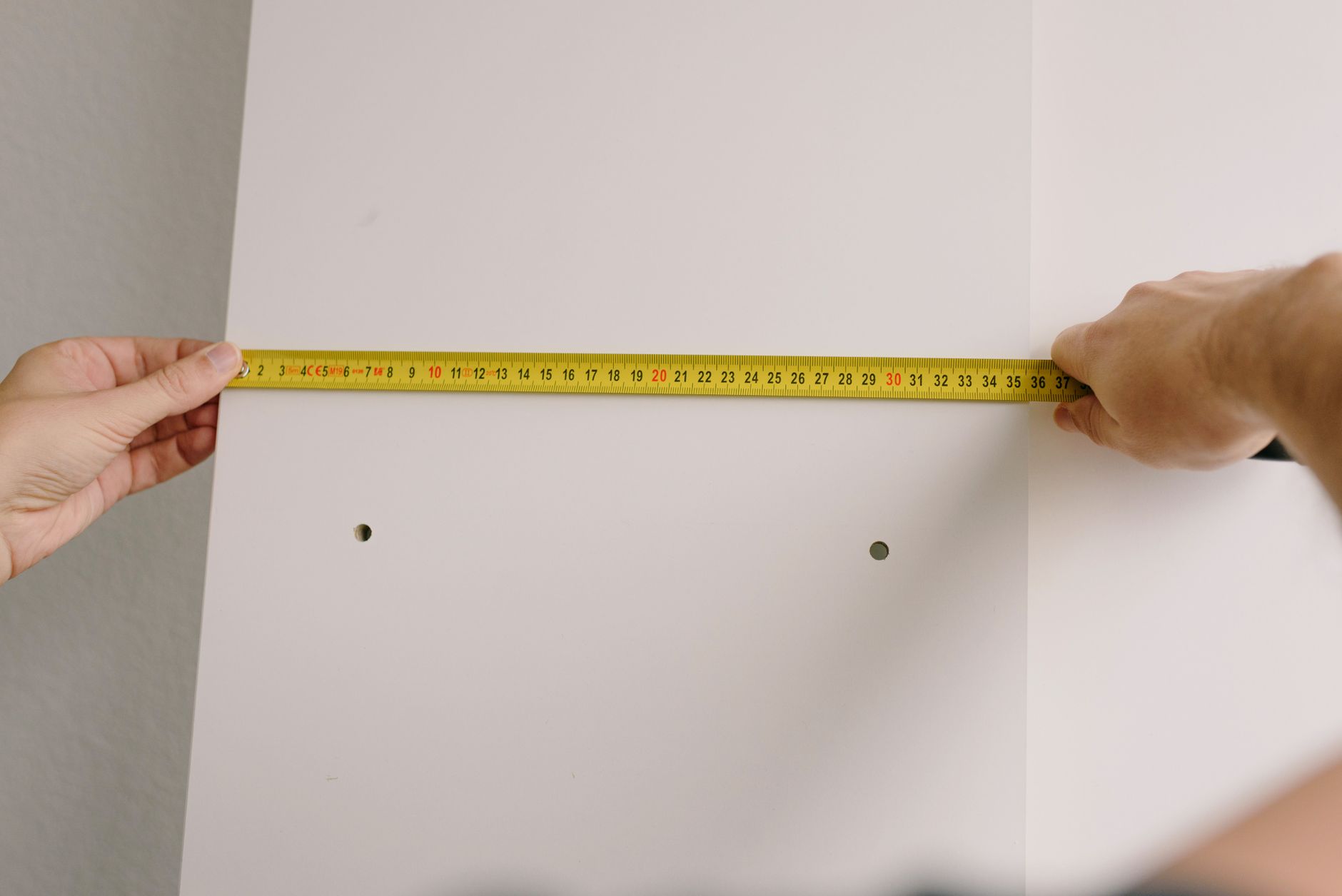
- Measure A: the length of your dog from the tip of the nose to the base of the tail.
- Measure B: the height from the ground to the elbow joint.
- Measure C: the width across the shoulders or the widest point, whichever is greater.
- Measure D: the height in a natural standing position, from the floor to the top of the head or the ear tip, whichever is higher.
- Calculate internal length: A + ½B.
- Calculate internal width: C × 2.
- Calculate internal height: D + the thickness of the bedding.
- Add 10% for snub-nosed breeds such as pugs, bulldogs and Pekingese, as IATA advises (IATA, 2026).
Remember that these are internal measurements. The dimensions printed on a product listing are usually external, so the inside will be smaller by the thickness of the frame and padding.
A worked example
Take a small dog that measures 15 inches from nose to tail base (A), 6 inches from ground to elbow (B), 5 inches across the shoulders (C) and 10 inches standing height (D), with 1 inch of bedding. Using the IATA formula, the minimum internal case is 18 inches long, 10 inches wide and 11 inches high. That is right at the 18 x 11 x 11 inch soft-sided size published by Delta Air Lines and American Airlines in 2026. A dog even slightly larger would need a bigger case, and that case would probably not fit under an airline seat.
Soft-sided vs hard-sided dog carrying cases
The right type depends on how your dog will travel. The table below compares the two against published airline and IATA requirements as of September 2026.
| Feature | Soft-sided carrying case | Hard-sided carrying case |
|---|---|---|
| Best use | Airline cabin, short walks, public transport | Airline hold or cargo, car travel, larger dogs |
| Airline cabin size (American Airlines, 2026) | 18 x 11 x 11 in (46 x 28 x 28 cm) on all flights | 19 x 13 x 9 in on mainline; 16 x 12 x 8 in on American Eagle regional flights |
| Airline cabin size (Delta Air Lines, 2026) | Recommended max 18 x 11 x 11 in; actual max set by aircraft | Must still fit fully under the seat in front |
| Ventilation rule | Delta: openings on 3 sides domestic, 4 sides international. American: nylon mesh on 3 or more sides | IATA CR1: at least 16% of the four vertical sides as ventilation openings |
| Checked or cargo travel | Not accepted | Required: rigid material, welded or cast metal door, bolts or screws (American Airlines, 2026) |
| Main risk | Compression under the seat can block airflow (IATA guidance) | Heavier, and rarely fits under a seat |
What are the airline rules for a dog carrying case in the cabin?
Airline cabin rules are set by each airline, not by a single regulator. IATA provides the container standard, and each airline adds its own size, weight, fee and route limits.
IATA in-cabin checklist
IATA's Guidance for Passengers Traveling with their Dog or Cat in the Cabin says any container used in the cabin must meet the CR1 standard or it will be rejected by the airline. It asks travellers to check that the dog can sit, stand, turn and lie down naturally; that at least 16% of the area on the four vertical sides is ventilation; and that the container is escape-proof, leak-proof and carries a Live Animals label. IATA also states that it does not certify, approve or endorse any commercial pet container, so a label reading IATA approved on a product is a manufacturer claim, not an IATA certification.
Delta Air Lines
Delta's official pet travel page (2026) says the dog must move around without touching or sticking out from the sides, the kennel must fit fully under the seat in front, and soft-sided kennels must be leak-proof with ventilation on 3 sides for domestic and 4 sides for international travel. Delta recommends a soft-sided kennel of up to 18 x 11 x 11 inches because it fits most aircraft, but states that the maximum is determined by the aircraft. The in-cabin fee is $150 each way within the U.S. and Canada for tickets issued on or after April 8, 2025, and $200 for international trips (Delta, 2026).
American Airlines
American Airlines (2026) requires soft-sided cases to be secure, padded, water-repellent and ventilated with nylon mesh on 3 or more sides, and says they must fit under the seat without excessive collapsing. It lists 18 x 11 x 11 inches for soft-sided cases, 19 x 13 x 9 inches for hard-sided cases on mainline flights and 16 x 12 x 8 inches on American Eagle flights. On the three-cabin Airbus A321T, pet and carrier together must not exceed 20 pounds (9.07 kg). The carry-on pet fee is $150 per kennel each way (American Airlines, 2026).
Where the sources disagree
Retail sizing guides often print one universal carrier size. The airlines themselves do not. Delta says its limit depends on the aircraft, and American publishes three different figures depending on case type and aircraft. Some sellers also describe expandable carriers as airline approved, while IATA says it approves no commercial container. When a product listing and an airline page disagree, follow the airline page.
Why you should not squash a soft case to make it fit
Many owners buy a slightly oversized soft case and compress it under the seat. IATA's cabin guidance warns that compressing the ventilation openings can reduce airflow and cause heat buildup inside the container, with potential adverse consequences for the dog. American Airlines likewise says soft-sided kennels must fit without having to excessively collapse the kennel (2026). If your dog only fits in a case that has to be squashed, the dog is probably too large for cabin travel.
Using a dog carrying case in the car
A carrying case is also the simplest way to restrain a small dog in a car, but not every case protects a dog in a crash. The Center for Pet Safety (CPS), an independent non-profit, runs a CPS Certified program in which products must pass independently developed crash-test standards, and it states it does not accept funding from pet product manufacturers (Center for Pet Safety, 2026). Its certified list is short, so a marketing claim of crash tested is not the same as CPS Certified.
Practical car tips:
- Check whether the specific model and size appear on the CPS Certified list.
- Secure the case using the method the manufacturer tested, rather than improvising with a seat belt.
- Never leave a dog in a closed case in a parked car, where heat builds quickly.
How to get your dog used to a carrying case
IATA advises buying the container in advance and letting the animal become familiar with it a few weeks or months before departure, noting that animals behave well when accustomed to the kennel they travel in (IATA, 2026). A simple routine:
- Leave the case open at home with familiar bedding inside.
- Feed meals or treats near, then inside, the case.
- Close the door for short periods while you stay nearby, then lengthen them.
- Practise carrying the case around the house, then on short car trips.
- On travel day, walk the dog before leaving and again before check-in, as IATA recommends.
Both IATA and American Airlines discourage sedating pets for flights. American Airlines, citing the American Veterinary Medical Association (AVMA), does not accept sedated or tranquilized pets (2026). Any medication decision belongs with your veterinarian.
What a carrying case does not do: identification and documents
A carrying case moves a dog safely; it does not prove who the dog is or who owns it. IATA recommends that pets be properly identified, for example with a microchip, plus two collar tags: a permanent tag with your home details and a temporary travel tag with a contact at your destination (IATA, 2026).
Travel documents are a separate system again. For trips from the United States, the United States Department of Agriculture Animal and Plant Health Inspection Service (USDA APHIS) advises contacting a USDA-accredited veterinarian as soon as you decide to travel, and notes that the U.S. Centers for Disease Control and Prevention (CDC) is the primary authority for dogs entering or returning to the United States (USDA APHIS, 2026). Delta's 2026 page adds that dogs entering the U.S. must be microchipped, at least 6 months old and accompanied by a CDC Dog Import Form receipt.
Where Animal Passport fits, and where it does not
Animal Passport is a digital animal and livestock passport built on muzzle biometrics: the nose print of an animal is unique, like a fingerprint, and is captured with a phone. The record links the owner, breed, estimated age, body condition and vaccination history. Age is estimated from a dental photograph with a confidence score, and body condition is scored from 1 to 5 using a side-profile photo.
Animal Passport is not an EU pet passport, not a government-issued travel document and not a substitute for a veterinary health certificate or an airline booking. Its field use has been in livestock: during the August 2025 floods in Pakistan, it helped farmers reclaim animals after paper tags washed away. The lesson carries over to pet travel. A label taped to a carrying case can be lost, so keep permanent identification on the animal and your official documents with you.
Carrying case checklist before you travel
- Internal size meets the IATA formula for your dog, plus 10% for snub-nosed breeds.
- External size meets your airline's published limit for your exact aircraft.
- Ventilation on at least 3 sides (4 for international trips on Delta), with nothing blocking the mesh.
- Leak-proof base with absorbent bedding.
- Secure zips or door, with no gaps a nose or paw can push through.
- Pet plus case weighed at home if your airline sets a weight limit.
- Microchip and two ID tags on the dog; documents in your hand luggage.
For more guides on animal identification, travel gear and livestock records, browse the Animal Passport blog.
By Animal Passport. Last updated September 27, 2026. Airline sizes and fees are quoted from official airline pages as of September 2026 and may change.
FAQ
- What size carrying case does my dog need?
- Use the IATA formula: internal length equals nose-to-tail-base length plus half the ground-to-elbow height, internal width equals twice the shoulder width, and internal height equals standing height plus bedding. Snub-nosed breeds need a case about 10% larger (IATA, 2026).
- What is the maximum dog carrier size for airline cabins?
- Delta Air Lines and American Airlines both list 18 x 11 x 11 inches for soft-sided in-cabin carriers as of 2026. Delta says the true maximum depends on the aircraft, and American allows hard-sided cases of 19 x 13 x 9 inches on mainline flights but only 16 x 12 x 8 inches on American Eagle flights.
- Are soft-sided or hard-sided dog carriers better for flying?
- Soft-sided carriers are recommended by Delta and American Airlines for the cabin because they flex to fit under the seat. Hard-sided kennels with metal doors are required when a dog travels in the hold or as cargo.
- Is there an IATA-approved dog carrying case?
- No. IATA states that it does not certify, approve or endorse any commercial dog or cat container; it only publishes the Container Requirement 1 standard, and a case must meet that standard to be accepted.
- Can my dog's carrying case be squashed to fit under the seat?
- It should not be squashed significantly. IATA warns that compressing a soft-sided case can block ventilation and cause heat buildup, and American Airlines requires cases to fit without excessive collapsing.
- Does the weight of the carrier count toward the airline pet limit?
- Often yes. American Airlines, for example, requires pet and carrier together to weigh no more than 20 pounds (9.07 kg) in the premium compartments of its Airbus A321T (2026), so weigh both before you fly.
- Is a dog carrying case safe in a car crash?
- Not automatically. The Center for Pet Safety certifies only carriers and kennels that pass its independent crash testing, so check that your exact model appears on its CPS Certified list.
- Is Animal Passport the same as a pet passport for travel?
- No. Animal Passport is a digital livestock and animal ID record based on muzzle biometrics; it is not an EU pet passport or a government-issued travel document, so you still need the official documents your destination requires.
Sources
- Traveler's Pet Corner — International Air Transport Association (IATA)
- Guidance for Passengers Traveling with their Dog or Cat in the Cabin — International Air Transport Association (IATA)
- Step-by-step Instructions on How to Select the Correct Container for an Animal Being Transported by Air — International Air Transport Association (IATA)
- Pet Travel Overview — Delta Air Lines
- Traveling with pets — American Airlines
- Travel With a Pet — United States Department of Agriculture Animal and Plant Health Inspection Service (USDA APHIS)
- CPS Certified — Center for Pet Safety
Animal Passport binds a muzzle biometric to a digital record farmers, buyers, and insurers can verify in the field.