Cat Import Rules for the United States, the European Union, and Great Britain

Key takeaways
- Cat import means the destination's animal-health rules for a live domestic cat, including return trips, not one worldwide permit.
- USDA APHIS has no pet-cat animal-health requirements. The CDC requires the cat to appear healthy and does not require rabies proof for U.S. entry.
- Hawaiʻi and Guam apply local quarantine even to cats arriving from the U.S. mainland. Hawaiʻi can hold a cat for up to 120 days.
- EU non-commercial entry needs a microchip, rabies vaccination valid only after at least 21 days, and usually an animal health certificate. A rabies antibody test of at least 0.5 IU/ml is required unless the origin country is listed.
- Great Britain requires the microchip before vaccination, an approved route, and at least 21 full days after the primary vaccine. Unlisted countries add a blood test and a three-month wait.
- Tapeworm treatment before EU or Great Britain entry is a dog requirement, not a cat requirement.
- Canada's CFIA sets no import restrictions on domestic cats under three months. Cats three months and older need a veterinarian's certificate showing vaccination, rabies-free residence, or a titre of at least 0.5 IU/ml.
- An EU pet passport is an official travel document for dogs, cats, and ferrets. Animal Passport is a separate biometric livestock identity product and is not a government travel document.
Cat import is the official process of bringing a domestic cat across a border under that destination's animal-health rules. As of September 2026, the Centers for Disease Control and Prevention (CDC) requires a cat entering the United States to appear healthy and does not require a rabies certificate. The European Commission and the UK government require a microchip, rabies vaccination, and a travel document for most cat imports into the European Union and Great Britain.
No single form clears every border. A cat that passes CDC inspection for the U.S. mainland can still face Hawaiʻi quarantine, an EU travellers' point of entry, or up to four months of quarantine in Great Britain. Animal Passport wrote this guide, last updated in September 2026, from published rules. It is not veterinary diagnosis or legal advice.
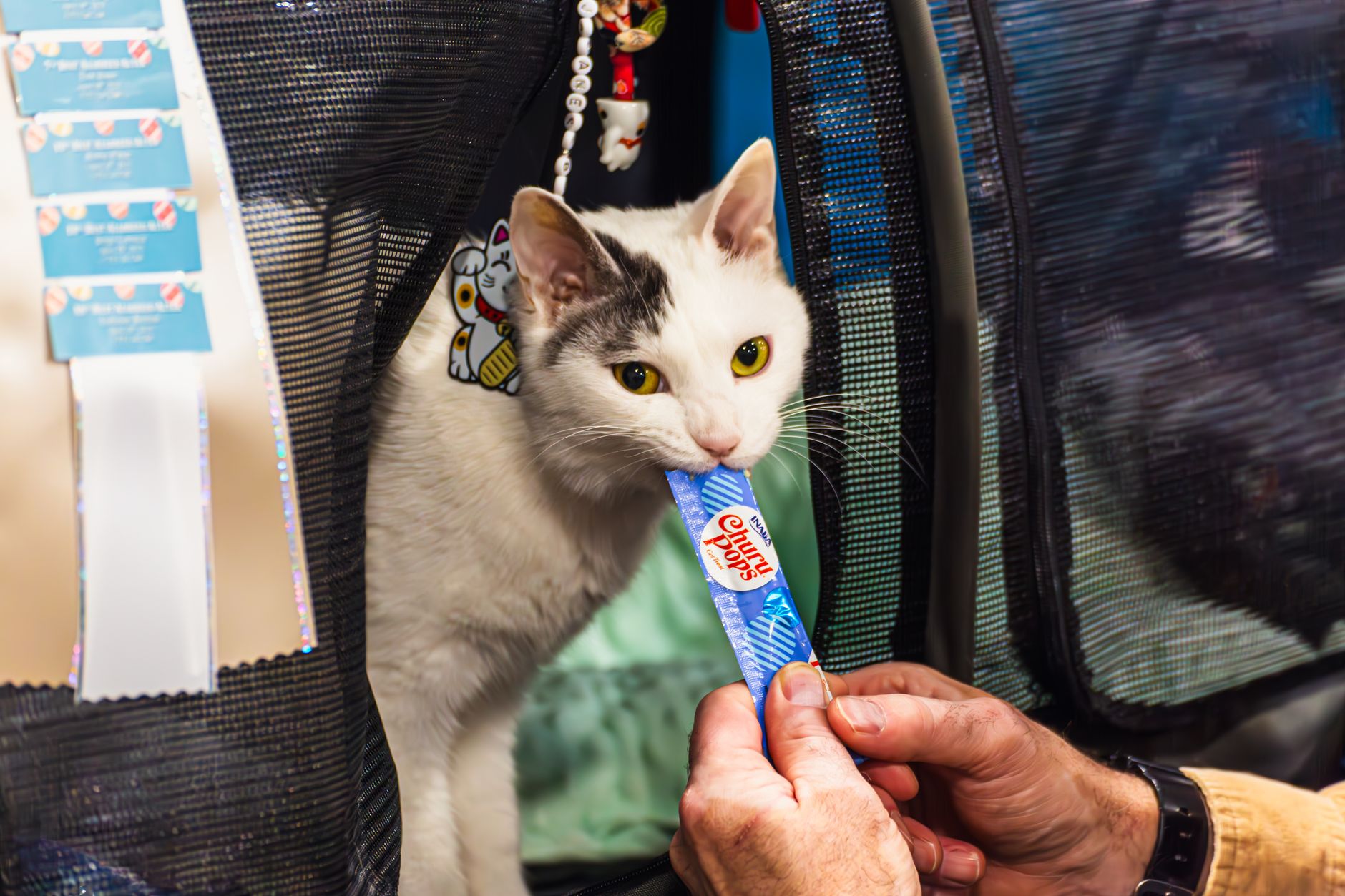

What cat import means
Cat import, in official use, is a live domestic cat presented for entry, including a return home. The CDC applies the same rules to pets coming back as to pets entering for the first time, for citizens, residents, and foreign nationals. The European Commission limits non-commercial movement to trips with no sale and no change of ownership. GOV.UK applies extra Balai rules if the cat will be sold or rehomed, arrives more than five days apart from the owner, or is one of more than five pets not going to a competition, show, or sporting event.
Your Europe defines the European pet passport as the EU-standard identification document required for travel between EU countries. An authorised veterinarian issues it only to an owner living in the EU, and it stays valid only while the rabies record is in date. Trips that start outside the EU generally use an animal health certificate instead.
Does the United States require a cat import permit?
No. The United States Department of Agriculture Animal and Plant Health Inspection Service (USDA APHIS) states, on a page last modified on 24 December 2025, that APHIS Veterinary Services does not have any animal health requirements for bringing a pet cat into the United States from a foreign country. APHIS tells importers to check the CDC and the U.S. Fish and Wildlife Service, and to check the receiving state or territory, because those governments set their own movement rules. It points readers to the National Association of State Departments of Agriculture to find the state or territorial veterinarian.
APHIS Veterinary Services does not have any animal health requirements related to bringing (importing) a pet cat into the United States from a foreign country.
Public-health control sits with the CDC. Its bringing-an-animal page, dated 22 August 2025, requires cats to appear healthy on arrival. Cats are inspected at ports of entry and may be denied entry if they show evidence of a zoonotic disease, a disease that can pass between animals and people. If a cat looks ill, a licensed veterinarian may have to examine it at the owner's expense before entry is allowed. The CDC does not require a general health certificate, but it says a state or an airline may.
Cats are not required to have proof of rabies vaccination for importation into the United States.
The CDC still recommends rabies vaccination, and it says the U.S. destination may add requirements. Dog import is a separate section of the same page and points to a different dog-import page. Do not copy dog conditions onto a cat.
Why Hawaiʻi and Guam are different
The CDC states that every cat arriving in Hawaii or Guam, even from the U.S. mainland, faces local quarantine. The Hawaiʻi Department of Agriculture and Biosecurity says the state is rabies-free and that every cat, including kittens, must comply. Under Chapter 4-29 of the Hawaii Administrative Rules, cats that meet the pre-arrival conditions may use the 5 Day Or Less program, including direct release at Daniel K. Inouye International Airport in Honolulu. Cats that miss those conditions can be quarantined for up to 120 days.
The department's current fee table lists direct airport release in Honolulu at 185 U.S. dollars if the Animal Quarantine Station has the file at least 10 days before arrival, and 244 dollars if it does not. The 5 Day Or Less fee is also 244 dollars. A Neighbor Island Inspection Permit for Kona, Kauaʻi, or Maui is 165 dollars. Direct release requires two rabies vaccinations, a passing FAVN antibody test, and a 30-day wait after both the successful test and the latest vaccine. The form is AQS-279. Neighbor-island flights must show the permit to the airline before boarding; Honolulu does not require that permit. Non-domestic cats and hybrids, including Bengal and Savannah cats, are prohibited under Plant Quarantine law. A kitten that cannot finish the 5 Day Or Less preparation, which the state says takes about six months from birth, is quarantined for 120 days.
What the European Union requires for cat import
Non-commercial entry is set by Commission Delegated Regulation (EU) 2026/131, as summarized by the European Commission's Food Safety directorate. The cat must travel with its owner, or with a person authorised in writing, and the owner must travel within five days before or after the cat if they are not on the same journey. The cap is five dogs, cats, or ferrets in one vehicle. More than five is allowed only for a competition, exhibition, or sporting event, or training for one, with written proof, and only if the animals are older than six months. Any other case falls under commercial entry rules.
The cat must be microchipped to the specifications in Commission Delegated Regulation (EU) 2019/2035, or carry a clearly readable tattoo applied before 3 July 2011. Coming from outside the EU, it must be healthy and fit to travel. An official or authorised veterinarian gives the rabies vaccine. The cat must have been at least 12 weeks old that day, the chip must already have been implanted or read, and the vaccine is not valid until at least 21 days after the primary course. Boosters must fall inside the previous dose's validity.
A rabies antibody test is required unless the origin country is listed in Annex I or Annex II to Commission Implementing Regulation (EU) 2026/636. Implementing Regulation (EU) 2026/1228 added Montenegro and Serbia to that exemption. Where the test applies, the sample is taken at least 30 days after primary vaccination and not less than 90 days before the certificate is issued. The result must be at least 0.5 IU/ml from a designated laboratory. A passing test need not be repeated if later vaccines stay in date, and the 90-day wait does not apply to an EU pet re-entering with that result already in its passport. Your Europe instead says to wait three months from the sample date before travel. Both pages agree on the 0.5 IU/ml threshold. They do not use the same clock, so the Commission text is the binding one.
The certificate, Annex III to Commission Implementing Regulation (EU) 2026/705, is issued by an official veterinarian or endorsed by the competent authority. It is valid for 10 days until checks at a travellers' point of entry, extended by the length of a sea voyage, then for six months of further EU travel or until the vaccine expires, whichever is sooner. The owner declares the move non-commercial. Older certificates under Implementing Regulation (EU) 577/2013 remain valid if issued before 1 October 2026. Your Europe says a failed check can mean return, quarantine, or euthanasia if neither is possible.
Tapeworm treatment against Echinococcus multilocularis is not a cat rule. The Commission requires it for pet dogs, not pet cats or ferrets, before Finland, Ireland, Malta, the United Kingdom (Northern Ireland), and Norway, given by a veterinarian between 24 and 120 hours before entry.
Movement between EU countries
Inside the EU the same regulation still requires the owner, the five-pet cap, a microchip, and rabies vaccination on the 12-week and 21-day terms. The document is an EU pet passport under Implementing Regulation (EU) 2026/705. The Commission also keeps older passport models valid if they were issued before the cut-off dates it lists, including 29 December 2014 and 22 April 2026, with one transitional model issuable until 1 January 2028. A cat that entered on an animal health certificate may keep moving inside the EU while that certificate lasts.
Some countries allow kittens under 12 weeks that are unvaccinated, or kittens of 12 to 16 weeks that are not yet immune, if the owner declares no contact from birth with rabies-susceptible wild animals, or if the kitten travels with a vaccinated mother. Your Europe publishes the accepting list, including Bulgaria, Finland, and Switzerland, and the refusing list, including France, Germany, Ireland, and Spain. A kitten accepted at one EU border can be refused at the next.
What Great Britain requires
Great Britain means England, Scotland, and Wales. GOV.UK requires an approved route, unless travel is within the United Kingdom or from Ireland; a microchip before the rabies vaccine; and a wait of at least 21 full days after the primary course. The document then depends on the country of departure. Tapeworm treatment on that page is for dogs, not cats. Skip the steps and the pet may be quarantined for up to four months, or refused if it arrived by sea, at the owner's cost.
From an EU country, GOV.UK accepts an EU pet passport or a passport from certain other countries, an animal health certificate issued in Great Britain in the last six months, a Great Britain pet health certificate, or a Great Britain pet passport issued before 1 January 2021. From Northern Ireland, the Channel Islands, or the Isle of Man, no pet passport or health certificate is required. From a listed country, including the United States and Canada, the UK document table requires a Great Britain pet health certificate. Australia adds a Department of Agriculture certificate that the cat was not exposed to Hendra virus in the 60 days before departure. Peninsular Malaysia adds a government veterinary certificate covering Nipah disease risk.
From a country that is not listed, the cat needs a Great Britain pet health certificate and a rabies blood test. GOV.UK says the sample is taken at least 30 days after vaccination, tested at an approved laboratory, and must show at least 0.5 IU/ml. You then wait three months from the sample date, unless the cat was vaccinated, tested, and documented in the EU before it went to that unlisted country. The test stays valid while boosters remain in date. Bring originals, not copies. The European Commission says an EU pet passport issued to an owner who lives in Great Britain is no longer valid for travel from Great Britain into the EU. Your Europe dates that change from 1 January 2021. Northern Ireland is different: Your Europe says an EU pet passport is the document for travel from Northern Ireland to an EU country.
How Canada treats cat import
The Canadian Food Inspection Agency (CFIA) Import Reference Document splits domestic cats by age. Cats under three months have no CFIA import restrictions. A cat three months or older needs a veterinarian's certificate in English or French showing current rabies vaccination, six months in a designated rabies-free country, or a titre of at least 0.5 IU/ml taken at least 30 days after a prior vaccine. If none is met, an inspector may order vaccination at the owner's expense.
Cat import rules compared
The table uses only conditions stated on the official pages cited here. Airline crate rules and U.S. state certificates are extra.
| Destination | Rabies proof | Identity and document | If the file is incomplete |
|---|---|---|---|
| United States, CDC and USDA APHIS | Not required by CDC; vaccination recommended | No CDC health certificate and no APHIS pet-cat permit | Port inspection; possible vet exam at the owner's cost; possible denial |
| Hawaiʻi | Two rabies vaccines and a passing FAVN test, each followed by a 30-day wait | Form AQS-279 | Quarantine up to 120 days |
| EU from a non-EU country | Vaccine from 12 weeks of age, valid after 21 days; antibody test unless the country is listed | Microchip plus an animal health certificate, usually valid 10 days to the entry check | Your Europe: return, quarantine, or euthanasia |
| Between EU countries | Same 12-week and 21-day vaccination rule | Microchip and an EU pet passport | Commercial rules if ownership changes or the five-pet cap is broken |
| Great Britain | Microchip first, then at least 21 full days after the primary vaccine | EU pet passport, GB animal health certificate, or GB pet health certificate, depending on origin | Quarantine up to four months, or refusal by sea |
| Canada, CFIA | None under 3 months. At 3 months or older: vaccine, rabies-free residence, or a titre of at least 0.5 IU/ml | Veterinarian's certificate in English or French | Inspector may order vaccination at the owner's expense |
Steps that keep a cat import file valid
- Name the exact destination, including the state or EU country. Hawaiʻi, Guam, Finland, Ireland, Malta, and Northern Ireland each add a local rule.
- Read the destination authority and the airline. The CDC says a state or airline may require a health certificate even when CDC does not.
- For the EU or Great Britain, microchip before the rabies vaccine. A vaccine given first can be invalid.
- Count the wait from the right event: at least 21 days after primary vaccination; where a titre is required, at least 30 days after vaccination before the blood sample; then the Commission's 90 days before the certificate is issued, or GOV.UK's three months before travel from an unlisted country.
- Match the paper to the route. A CDC inspection does not replace Hawaiʻi Form AQS-279, and an EU pet passport does not replace a Great Britain pet health certificate from an unlisted country.
- If the cat will be sold, rehomed, or travel more than five days apart from the owner, leave the pet rules and read the commercial import rules.
An EU pet passport is not Animal Passport
The names are easy to mix up. An EU pet passport, a Great Britain pet health certificate, and a CDC port inspection are official travel controls. Animal Passport is a separate product: a digital animal and livestock passport that uses muzzle biometrics, treating a nose print as unique in the way a fingerprint is unique. Capture is done on a phone. The record can bind the owner, breed, estimated age, body condition, and vaccination history. Age is estimated from a dental photograph and comes with a confidence score. Body condition is scored from 1 to 5 from a side-profile photo. In August 2025 the system was used in livestock flood rescue in Pakistan so farmers could reclaim animals after paper tags washed away.
It is not a government-issued travel document and does not replace an EU pet passport, a UK pet document, a CDC inspection, or an airline rule. See Animal Passport and the Animal Passport blog.
FAQ
- Do I need a rabies certificate to import a cat into the United States?
- No. The CDC says cats are not required to have proof of rabies vaccination for importation into the United States, though it recommends vaccination and says your destination may require more. Hawaiʻi and Guam still apply local quarantine, including to cats from the U.S. mainland.
- Does USDA APHIS require a permit to import a pet cat?
- No. USDA APHIS Veterinary Services states that it has no animal-health requirements for bringing a pet cat into the United States from another country. Importers still need to check the CDC, the U.S. Fish and Wildlife Service, the destination state or territory, and the airline.
- What is an EU pet passport?
- Your Europe defines the European pet passport as the standard identification document for a dog, cat, or ferret travelling between EU countries. An authorised veterinarian issues it only to an owner resident in the EU, and it stays valid while the rabies vaccination record remains in date.
- How long after a rabies vaccination can a cat enter the EU or Great Britain?
- The European Commission and GOV.UK both require a wait of at least 21 days after a primary rabies vaccination, and the EU rule also requires the cat to have been at least 12 weeks old when vaccinated. Cats from countries that are not listed need a rabies antibody test and a further wait of about three months.
- Do cats need tapeworm treatment to enter the EU or Great Britain?
- No. The European Commission requires treatment against Echinococcus multilocularis for pet dogs, not pet cats, before entry to Finland, Ireland, Malta, Northern Ireland, and Norway. GOV.UK lists tapeworm treatment as a step for dogs.
- Can I import an unvaccinated kitten?
- The CDC does not require rabies proof for a cat entering the U.S. mainland, but the kitten must appear healthy. Most EU countries refuse young unvaccinated pets; only a listed group of countries allows them, and only with extra declarations. Hawaiʻi quarantines kittens that cannot complete the 5 Day Or Less program.
- What happens if a cat fails an EU or UK import check?
- Your Europe says a failed EU check can mean return to the country of departure, quarantine until the cat complies, or euthanasia if neither option is possible. GOV.UK says a pet that misses Great Britain rules may be quarantined for up to four months, or refused entry if it travelled by sea.
- Is Animal Passport the same as an EU pet passport?
- No. Animal Passport is a digital livestock identity record that uses muzzle biometrics captured on a phone. It is not a government-issued travel document and does not replace an EU pet passport, a Great Britain health certificate, or CDC import inspection.
Sources
- Bring a Pet Cat (Domestic) into the United States — USDA Animal and Plant Health Inspection Service
- Bringing an Animal into the U.S. — Centers for Disease Control and Prevention
- Bringing a pet into the EU from a non-EU country — European Commission
- Travelling with a pet within the EU — European Commission
- EU rules on travelling with pets and other animals in the EU — European Union
- Bringing your pet dog, cat or ferret to Great Britain — GOV.UK
- Which pet travel document you need — GOV.UK
- Blood tests for rabies — GOV.UK
- Animal Quarantine Information Page — Hawaiʻi Department of Agriculture and Biosecurity
- Import Reference Document (Health of Animals Regulations) — Canadian Food Inspection Agency
Animal Passport binds a muzzle biometric to a digital record farmers, buyers, and insurers can verify in the field.