Cat Quarantine: Rules, Duration, and How to Avoid It

Key takeaways
- Cat quarantine is a disease-control hold imposed by a destination country's animal health authority, not a universal rule — most cats never experience it.
- The US mainland does not require rabies vaccination or quarantine for cats, per the Centers for Disease Control and Prevention (CDC).
- Hawaii still quarantines cats without complete paperwork, but a compliant '5-Day-or-Less' application can avoid the full 120-day hold.
- The United Kingdom quarantines pets for roughly four months only when Pet Travel Scheme (PETS) documentation is missing or invalid, per GOV.UK/DEFRA.
- Australia requires every incoming cat to spend 10 or 30 days at the government's Mickleham post-entry quarantine facility, regardless of paperwork, per the Department of Agriculture, Fisheries and Forestry (DAFF).
- Inside the EU, a valid EU pet passport with microchip and rabies vaccination replaces quarantine entirely under Regulation (EU) No 576/2013.
- An EU pet passport and Animal Passport's biometric livestock ID are different products for different purposes — the first is a legal travel document, the second is a phone-based nose-print record used for herd and flock identification.
- Whatever the destination, microchipping before vaccination is the step owners most often get wrong, and it invalidates the whole paper trail if done out of order.
Cat quarantine is a mandatory isolation period that a destination country's animal health authority imposes on an incoming cat to prevent rabies or other diseases from entering its territory. Whether a cat is quarantined, and for how long, depends entirely on the destination: the US mainland does not quarantine cats at all, Australia quarantines every cat for 10-30 days regardless of paperwork, and the United Kingdom only quarantines cats (for about four months) when required Pet Travel Scheme documents are missing. As of September 2026, most quarantine can be avoided with correct microchip and rabies-vaccination timing.
What Is Cat Quarantine, Exactly?
Quarantine is a government-ordered holding period, usually at an approved facility, during which an animal is isolated and observed before it is released into the general population. For cats, the underlying concern is almost always rabies: a fatal, zoonotic virus that some countries and territories — including the United Kingdom, Australia, Hawaii, Japan, and New Zealand — have eliminated and want to keep out. Quarantine exists as a backstop for cats that cannot otherwise prove, through vaccination records, blood tests, and microchip identification, that they are not carrying the virus.

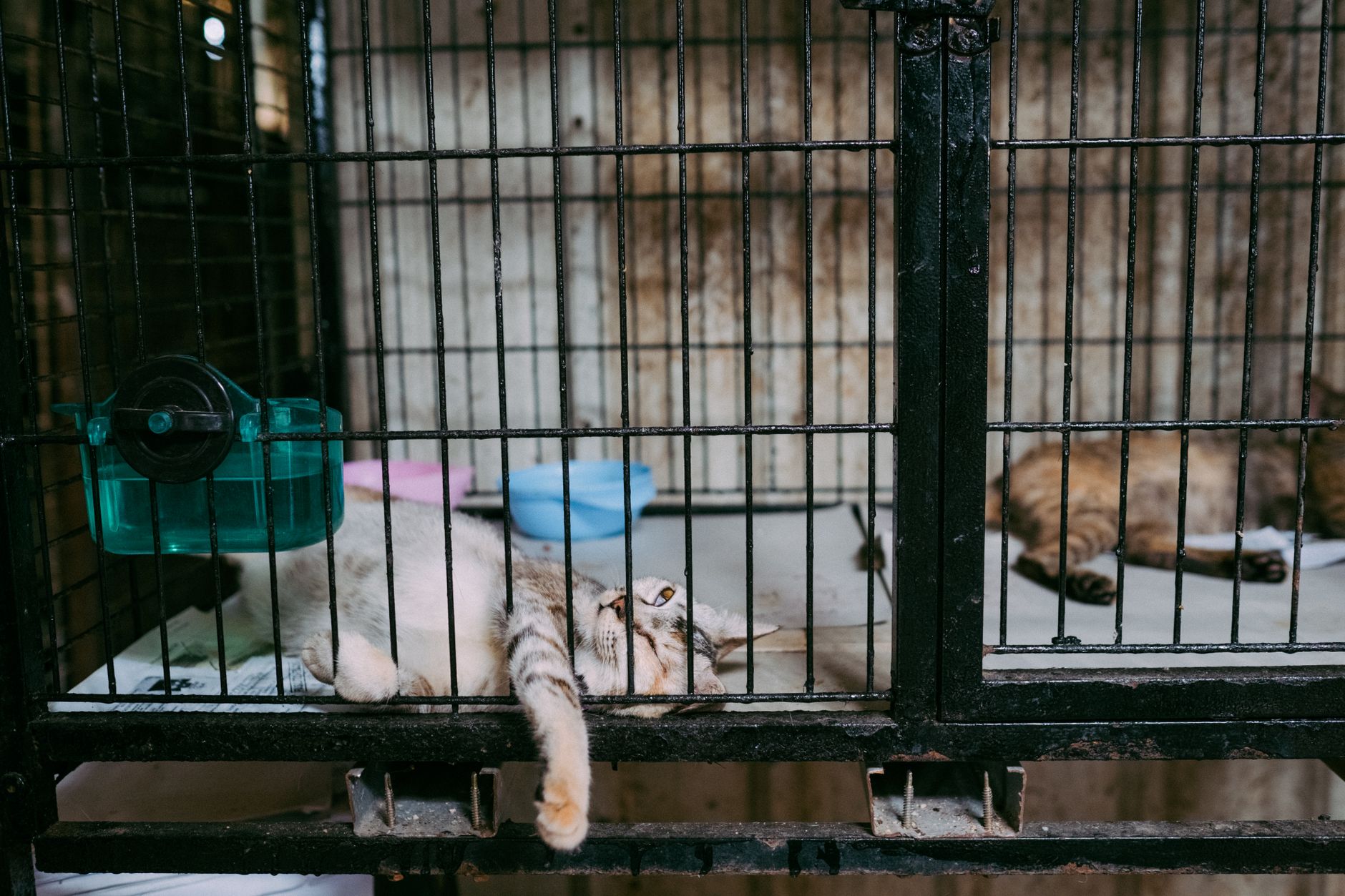
It is a civil biosecurity measure, not a criminal or veterinary diagnosis. A cat placed in quarantine is not accused of being sick; it simply has not (yet) met a specific country's documentary bar for entering rabies-free without a holding period.
When Do Cats Actually Need to Be Quarantined?
A cat needs quarantine when both of these are true:
- It is entering a jurisdiction that maintains rabies-free or low-risk status and controls entry to protect that status.
- It cannot meet that jurisdiction's alternative-to-quarantine paperwork — usually a specific sequence of microchip, rabies vaccination, and (for some routes) a rabies antibody blood test called an RNATT or FAVN titer test.
Get the sequence wrong — for example, vaccinating before microchipping — and even an otherwise healthy, fully vaccinated cat can be routed into full quarantine, because the record no longer proves the microchip was in place before the vaccine was given.
Cat Quarantine Rules by Country: Comparison Table
Rules differ sharply by destination, and they are not interchangeable. The table below summarizes the current published position for five major routes.
| Destination | Is quarantine required? | Alternative to quarantine | Length if quarantined | Authority |
|---|---|---|---|---|
| US mainland | No | None needed — cats do not need proof of rabies vaccination to enter | Not applicable | Centers for Disease Control and Prevention (CDC), 2026 |
| Hawaii, USA | Only if paperwork is incomplete | "5-Day-or-Less" program: microchip before vaccination, two rabies vaccines 30+ days apart, a passing FAVN titer test, and a 120-day wait from the blood draw | Up to 120 days at the state Animal Quarantine Station | Hawaii Department of Agriculture rabies quarantine program |
| United Kingdom | Only if Pet Travel Scheme (PETS) rules are not met | ISO microchip implanted before rabies vaccination, 21-day wait (listed countries) or titre test plus 90-day wait (non-listed countries) | Approximately 4 months at a DEFRA-approved facility | UK Government / Department for Environment, Food and Rural Affairs (DEFRA), GOV.UK |
| Australia | Yes — always, for every cat | None available; paperwork only shortens the stay | 10 days (Group 2, identity verified pre-RNATT) or 30 days (Group 3 or unverified identity) at Mickleham post-entry quarantine facility | Department of Agriculture, Fisheries and Forestry (DAFF) |
| European Union (intra-EU) | No | EU pet passport with ISO microchip and rabies vaccination administered at least 21 days before travel | Not applicable | European Commission, Regulation (EU) No 576/2013 |
Two things stand out. First, "no quarantine" and "no rules" are not the same thing — the EU and UK routes still require a valid microchip-then-vaccine sequence, just not a holding period. Second, Australia is the outlier: even a cat with flawless paperwork still serves time at Mickleham, because the country treats a facility stay as a mandatory checkpoint rather than a fallback.
How to Avoid Cat Quarantine: The Order of Operations
Across every destination above, the steps that let a cat skip or shorten quarantine follow the same logical order:
- Microchip first. An ISO 11784/11785-compliant microchip must be implanted before any rabies vaccination counts toward entry requirements — this single sequencing rule is the most common reason otherwise-compliant cats end up quarantined.
- Vaccinate for rabies after the chip is in. Some destinations require two vaccinations at least 30 days apart rather than one.
- Take a rabies antibody blood test if the destination requires one. Hawaii requires a FAVN test; Australia requires an RNATT. Both trigger a mandatory waiting period counted from the date the lab receives the sample, not the date blood was drawn.
- Get a health certificate close to travel. Most jurisdictions require this within roughly 10-14 days of arrival.
- Submit documents to the destination authority ahead of arrival. Hawaii, for instance, requires submission at least 10 business days before the cat lands.
Because waiting periods (90, 120, or 180 days) start the clock well before travel, owners moving a cat internationally should budget four to six months of lead time, not weeks.
EU Pet Passport vs. Animal Passport's Biometric Cat ID: Don't Confuse These Two
The name similarity causes real confusion, so it's worth separating them clearly.
The EU pet passport is an official legal travel document. It is issued only by an authorized veterinarian, and under Regulation (EU) No 576/2013 it must record a pet's ISO microchip code and rabies vaccination history before that pet can move between EU countries without quarantine. It is government-recognized paperwork, full stop — it is not something a phone app can issue.
Animal Passport, the product this site publishes under, is a different kind of tool for a different problem: verifying which animal is which when there is no vet-issued document at all. It captures a phone photo of an animal's muzzle — a nose print, unique like a human fingerprint — and binds that biometric record to the owner, breed, an estimated age from a dental photograph with a confidence score, and a body condition score from 1 to 5 taken from a side-profile photo. It does not replace an EU pet passport, a CDC entry requirement, or DEFRA's Pet Travel Scheme, and it is not a government-issued travel document. Read more about how the identity record works on the Animal Passport homepage.
Where a travel passport proves a cat's vaccination history to a border officer, a biometric ID proves which specific animal you are looking at when paper tags, collars, or microchips are unavailable or destroyed.
Why Verifiable Animal Identity Matters Beyond Quarantine
Quarantine systems only work because they connect a document to one specific, identifiable animal. When that link breaks — lost paperwork, a scanner that won't read a damaged chip, or a physical tag torn off — the animal effectively becomes unidentifiable, and disputes follow.
That identity gap is exactly what livestock owners faced during flood rescue operations in Pakistan in August 2025, when rising water washed away paper ear tags from cattle and other livestock. Because a nose print does not wash off or fall off, Animal Passport's muzzle-biometric record let farmers reclaim their own animals even after tags were gone. It is a livestock identity tool, not a substitute for a country's official rabies quarantine or travel-document process — but it illustrates the same underlying principle that quarantine rules depend on: an animal's identity has to survive the journey. See more real-world use cases on the Animal Passport blog.
Frequently Asked Questions About Cat Quarantine
What is cat quarantine?
Cat quarantine is a mandatory isolation period imposed by a destination country's animal health authority on an incoming cat, usually to prevent rabies from entering a rabies-free territory. It ends when the cat completes the required holding period or otherwise satisfies the authority's entry documentation.
How long does cat quarantine last?
Length varies by destination: Australia requires 10 to 30 days at its Mickleham facility for every cat, the United Kingdom quarantines non-compliant pets for about four months, and Hawaii's full quarantine runs up to 120 days. The US mainland does not require quarantine at all, per the CDC.
Do cats need to be quarantined to enter the United States?
No, not on the US mainland — the CDC does not require rabies vaccination or quarantine for cats entering the country, though a destination state may set its own rules. Hawaii and Guam are exceptions and quarantine cats that arrive without complete paperwork, even when traveling from elsewhere in the US.
Is a cat always quarantined when entering the UK?
No. A cat only enters UK quarantine if it fails to meet Pet Travel Scheme requirements, such as microchip-before-vaccination sequencing or the required waiting period after a rabies antibody test. Cats with valid documentation enter without any holding period, per GOV.UK guidance.
Which country has the strictest cat quarantine rules?
Australia's rules are the strictest in that every incoming cat serves mandatory time at a government quarantine facility, regardless of how complete the paperwork is — paperwork only reduces the stay from 30 days to 10, per the Department of Agriculture, Fisheries and Forestry.
Can proper paperwork completely avoid quarantine?
In the UK, EU, and US mainland, yes — a compliant microchip-vaccination-testing sequence lets a cat skip quarantine entirely. In Australia, no amount of paperwork removes the mandatory facility stay; it can only shorten it.
What's the difference between an EU pet passport and a nose-print animal ID?
An EU pet passport is a legal, vet-issued travel document required to move pets between EU countries without quarantine. A biometric muzzle ID, like the one Animal Passport records, is a phone-based identity record used to confirm which specific animal you're looking at — it is not a travel document and does not satisfy any country's quarantine or entry rules.
Why do cats need a microchip before a rabies vaccination, not after?
Quarantine-avoidance programs in Hawaii, the UK, and the EU all require the microchip reading to predate the vaccination date on paper, so the record proves that specific, identifiable animal received the shot. Vaccinating first breaks that chain of proof and can trigger full quarantine even if the vaccine itself was valid.
FAQ
- What is cat quarantine?
- Cat quarantine is a mandatory isolation period imposed by a destination country's animal health authority on an incoming cat, usually to prevent rabies from entering a rabies-free territory. It ends when the cat completes the required holding period or otherwise satisfies the authority's entry documentation.
- How long does cat quarantine last?
- Length varies by destination: Australia requires 10 to 30 days at its Mickleham facility for every cat, the United Kingdom quarantines non-compliant pets for about four months, and Hawaii's full quarantine runs up to 120 days. The US mainland does not require quarantine at all, per the CDC.
- Do cats need to be quarantined to enter the United States?
- No, not on the US mainland — the CDC does not require rabies vaccination or quarantine for cats entering the country, though a destination state may set its own rules. Hawaii and Guam are exceptions and quarantine cats that arrive without complete paperwork, even when traveling from elsewhere in the US.
- Is a cat always quarantined when entering the UK?
- No. A cat only enters UK quarantine if it fails to meet Pet Travel Scheme requirements, such as microchip-before-vaccination sequencing or the required waiting period after a rabies antibody test. Cats with valid documentation enter without any holding period, per GOV.UK guidance.
- Which country has the strictest cat quarantine rules?
- Australia's rules are the strictest in that every incoming cat serves mandatory time at a government quarantine facility, regardless of how complete the paperwork is — paperwork only reduces the stay from 30 days to 10, per the Department of Agriculture, Fisheries and Forestry.
- Can proper paperwork completely avoid quarantine?
- In the UK, EU, and US mainland, yes — a compliant microchip-vaccination-testing sequence lets a cat skip quarantine entirely. In Australia, no amount of paperwork removes the mandatory facility stay; it can only shorten it.
- What's the difference between an EU pet passport and a nose-print animal ID?
- An EU pet passport is a legal, vet-issued travel document required to move pets between EU countries without quarantine. A biometric muzzle ID, like the one Animal Passport records, is a phone-based identity record used to confirm which specific animal you're looking at — it is not a travel document and does not satisfy any country's quarantine or entry rules.
- Why do cats need a microchip before a rabies vaccination, not after?
- Quarantine-avoidance programs in Hawaii, the UK, and the EU all require the microchip reading to predate the vaccination date on paper, so the record proves that specific, identifiable animal received the shot. Vaccinating first breaks that chain of proof and can trigger full quarantine even if the vaccine itself was valid.
Sources
- Bringing an Animal into the United States: Cats — Centers for Disease Control and Prevention (CDC)
- Put your pet in rabies quarantine — UK Government / DEFRA (GOV.UK)
- Travelling with a pet within the EU — European Commission – Food Safety
- Moving Pets to Hawaii 2026 — Quarantine Rules & Direct Release — Hawaii-Guide.com
- Pet Import Requirements: Australia (2026) — PetRelocation