Cost of a Rabies Test for a Dog: What Labs Charge in 2026
Key takeaways
- The cost of a rabies test for a dog is not a single national fee: a live-dog blood titer and a postmortem brain test are different orders.
- As of September 2026, the University of Missouri One Health-Rabies Laboratory lists export FAVN testing at $79 with no added laboratory fees and results in 7 to 10 business days.
- The Minnesota Department of Health lists diagnostic DFA testing at $23 per animal plus a $10 accession fee ($33), with higher out-of-state and after-hours charges.
- CDC and the European Commission both use a 0.5 IU/mL neutralizing-antibody threshold when a titer is required, but the pre-travel waiting periods differ.
- CDC stated on 20 January 2026 that there is no approved antemortem rabies test for animals and no approved point-of-care rabies kit.
- The 2016 NASPHV Compendium says a healthy dog that bites a person is observed for 10 days; brain testing follows euthanasia, not a routine office visit.
- Hawaiʻi direct airport release is $185 if documents arrive at least 10 days early and $244 if they do not, and that fee does not include the FAVN laboratory charge.
- A FAVN report, an EU pet passport, and Animal Passport’s muzzle-biometric livestock record are different documents; only the FAVN report is a rabies antibody result.
As of September 2026, the cost of a rabies test for a dog is not one national price. A rabies test for a dog is a lab assay of blood antibodies or brain tissue. The University of Missouri One Health-Rabies Laboratory lists an export FAVN titer at $79, with no added lab fees and results in 7 to 10 business days. The Minnesota Department of Health lists a postmortem DFA test at $33 ($23 plus a $10 accession fee).
Those numbers are laboratory charges. The clinic exam, blood draw, shipping, and any quarantine stay are extra. This guide was written by Animal Passport and last updated on 19 September 2026. It is not a diagnosis and not legal advice.
Two tests, two bills
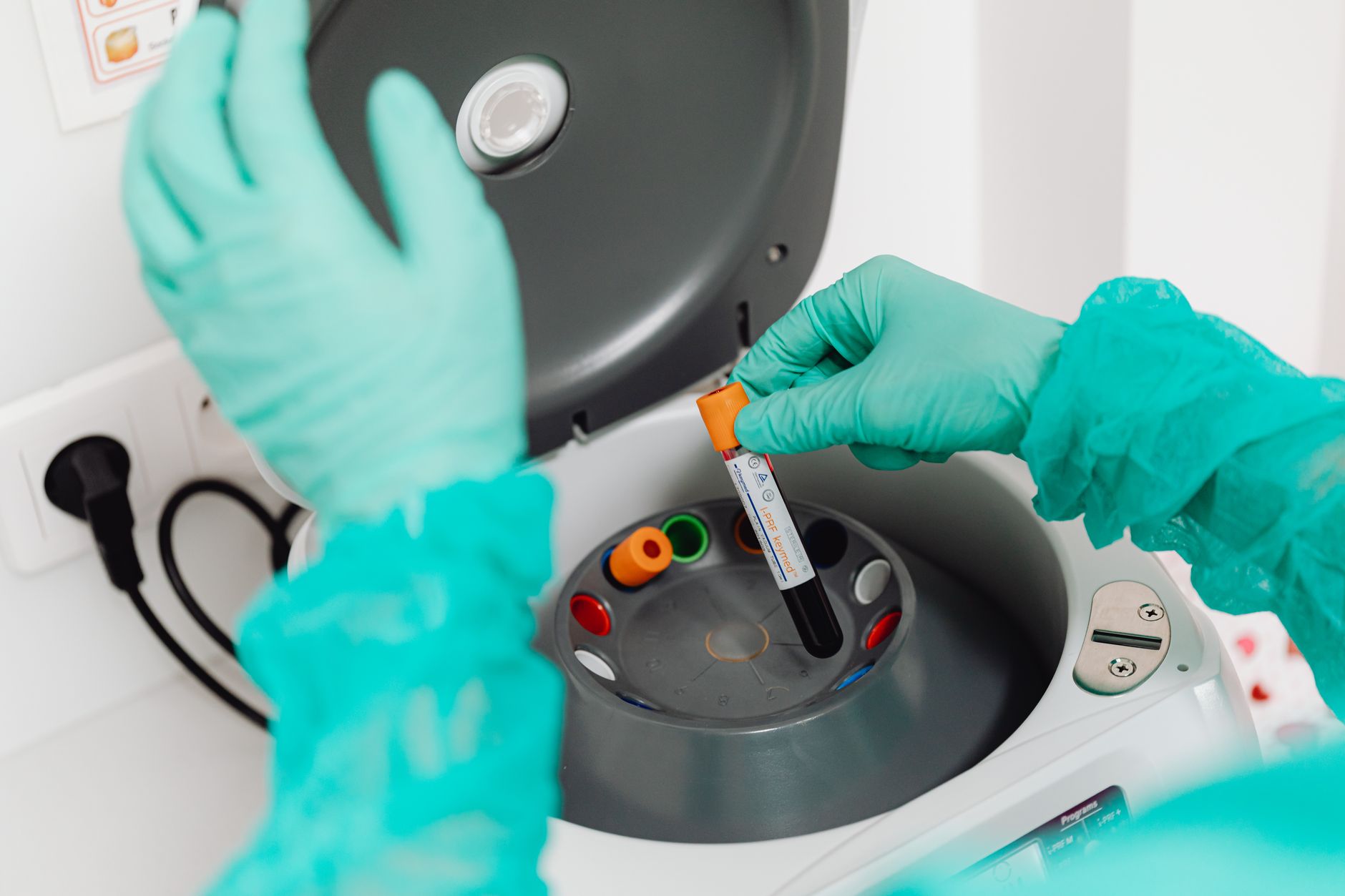
The blood test measures rabies virus-neutralizing antibodies after vaccination. The Centers for Disease Control and Prevention (CDC), on its laboratory-methods page dated 20 January 2026, accepts the rapid fluorescent focus inhibition test (RFFIT) and the fluorescent antibody virus neutralization (FAVN) test for that job. CDC states that a titer of at least 0.5 international units per milliliter (IU/mL) shows an adequate immune response, and that the assays cannot tell vaccine antibodies from infection antibodies.
The infection test is different. CDC’s 20 January 2026 page states that rabies testing requires euthanasia and that no approved antemortem method exists for animals. Ruling out rabies needs a full cross-section of brainstem and cerebellum. Results in the United States are typically ready within 24 to 72 hours after the laboratory receives the specimen, CDC says. Approved animal methods on that page include the direct fluorescent antibody (DFA) test, the direct rapid immunohistochemical test, immunohistochemistry, and real-time reverse transcription-polymerase chain reaction. CDC also states that no point-of-care kit is approved by the United States Department of Agriculture (USDA), CDC’s National Rabies Reference Laboratory, the World Health Organization, or the World Organisation for Animal Health (WOAH).
Published fees as of September 2026
No federal schedule sets the cost of a rabies test for a dog. Cells below quote pages reviewed for this article. If a lab keeps the base price in a catalog, the cell says so.
| Test | Specimen | Published fee | Source |
|---|---|---|---|
| FAVN for export | 0.5–2.0 mL serum, live dog | $79; no added lab fee; 7–10 business days | University of Missouri One Health-Rabies Laboratory |
| Non-export antibody check | Serum | $58 | University of Missouri One Health-Rabies Laboratory |
| Auburn FAVN | Serum; not approved for Japan | Base fee in the catalog; $5 accession; FedEx report $25 domestic or $60 international; expedited result in 1–2 weeks | Auburn University College of Veterinary Medicine |
| Kansas State FAVN | Serum | Price only in the KVDL Online Catalog | Kansas Veterinary Diagnostic Laboratory |
| DFA brain test | Head or brain after euthanasia | $23 plus $10 accession ($33); out of state $35.30; after-hours drop-off adds $50 | Minnesota Department of Health |
| Hawaiʻi import programs | Not a lab specimen | Direct release $185 if papers are in 10 or more days early, otherwise $244; 5 Day or Less $244; neighbor-island permit $165 | Hawaiʻi Department of Agriculture and Biosecurity |
The University of Missouri Veterinary Medical Diagnostic Laboratory states that the One Health-Rabies Laboratory is USDA-recognized for export serology and is EU-approved and CDC-approved. Its FAVN page says the price is currently $79, the submitting clinic is the client, and nothing is added beyond the test fee. It does not test samples for travel to Japan. Staff call about 21 to 30 days after the latest vaccine a generally useful draw window, and they say the destination’s wait still controls.
Auburn University College of Veterinary Medicine lists, on its expedited FAVN page, a $5 accession fee, FedEx report delivery of $25 inside the United States and $60 internationally, and a 1-to-2-week expedited turnaround that must be requested before shipping. That page says the laboratory is not approved for Japan. The Kansas State University Rabies Laboratory tells clinics to read the current price in the KVDL Online Catalog, filtered with the word “rabies,” and it bills the submitting clinic.
What the quoted fee leaves out
Missouri and Kansas State bill the clinic. The clinic then prices the exam, microchip scan, blood draw, and serum split. No page reviewed here prints a national markup, so a single “typical total” would be invented. Missouri wants 0.5 to 2.0 mL of serum on a cool pack by overnight or two-day FedEx or UPS, and it rejects unlabeled tubes and forms missing the microchip or the veterinarian’s signature. Auburn rejects mismatched microchips and unlabeled tubes, limits transit to two days, and will not cancel an accepted expedited test.
The brain-test bill is separate. The University of Minnesota Veterinary Diagnostic Laboratory lists extraction at $23 per animal and says size-based fees may apply. The Minnesota Department of Health, which runs the fluorescent antibody test on the brain that laboratory removes, states the $10 accession fee, the $35.30 out-of-state total, and $50 more for after-hours drop-off. Specimens in before 11:00 a.m. are reported by 2:00 p.m. the next business day; later arrivals take two business days. The person who requests the test pays euthanasia, preparation, packaging, shipping, and the laboratory fee.
When the titer is required
United States entry
The United States Department of Agriculture Animal and Plant Health Inspection Service (USDA APHIS), on its pet-travel page last modified 20 March 2026, states that CDC is the authority for dogs entering or returning to the United States. CDC’s veterinarian page, dated 28 April 2026, says a serologic titer lets a foreign-vaccinated dog from a high-risk country avoid 28 days of quarantine. Passing is at least 0.5 IU/mL. Blood is drawn at least 30 days after the first valid rabies vaccine and at least 28 days before entry. The microchip must already be in place before that vaccine.
CDC’s laboratory list, updated 13 July 2026, accepts results only from a listed laboratory, sent directly, in English or with a certified translation. U.S. names on that list are Auburn University College of Veterinary Medicine, the Department of Defense Food Analysis and Diagnostic Laboratory (Defense personnel and eligible beneficiaries only), Kansas State University, and the University of Missouri Veterinary Medical Diagnostic Laboratory. CDC suggests a draw at least 60 days before travel because turnaround times differ. A pass lasts for the dog’s life only if vaccines never lapse and the laboratory stays approved. Under 0.5 IU/mL, the dog is revaccinated and redrawn; CDC recommends at least 14 days after the new vaccine. Without a valid titer, CDC requires an exam, revaccination, and 28 days at a CDC-registered animal care facility. Those pages do not print one national price for the stay.
European Union pets
The European Commission page on dogs, cats, and ferrets from non-EU countries states that non-commercial movement follows Commission Delegated Regulation (EU) 2026/131. When a rabies antibody titration test is required, an authorised veterinarian draws blood at least 30 days after primary vaccination, or during a valid series, and not less than 90 days before the animal health certificate. The result must be neutralising antibody equal to or greater than 0.5 IU/ml, written 0,5 IU/ml on the Commission page, from a designated laboratory, with the report on the certificate. The test is not required from territories in Annex I or Annex II to Commission Implementing Regulation (EU) 2026/636. A pass need not be repeated if later vaccines stay in date. The 90-day wait does not apply when an EU-resident pet returns and the passport already records a favourable test done before departure.
An EU pet passport is that official movement document. It is not a laboratory invoice, and it is not Animal Passport’s livestock record.
Hawaiʻi
The Hawaiʻi Department of Agriculture and Biosecurity states that Hawaiʻi is rabies-free and that imports follow Chapter 4-29, Hawaii Administrative Rules. Direct airport release in Honolulu is $185 if the Animal Quarantine Station has the file at least 10 days before arrival, and $244 if the file is late, including papers presented on arrival. The 5 Day or Less program is $244. A neighbor-island permit for Kona, Kauaʻi, or Maui is $165, plus the private veterinarian’s inspection fee. Early arrival adds $14.30 per day plus $244. The page also requires 30 days after a successful FAVN, 30 days after the latest rabies vaccine, and two rabies vaccinations in the required window. A newborn needs about six months to finish those steps. A dog that cannot meet them can be quarantined for 120 days. The laboratory fee is not inside the $185 or $244.
After a bite, watch the dog before you pay for a brain test
The National Association of State Public Health Veterinarians (NASPHV), in the Compendium of Animal Rabies Prevention and Control published 1 March 2016, states that a healthy dog, cat, or ferret that exposes a person is confined and observed daily for 10 days, whatever the vaccine status. Vaccine is withheld during that watch so a rare reaction is not mistaken for rabies. If signs suggestive of rabies appear, the animal is euthanized and the head or whole brain, including the brainstem, is tested. A stray or unwanted dog may be tested at once. Cities set their own boarding fees. No single U.S. observation price is printed on the federal pages reviewed here. CDC’s point, on the 20 January 2026 page, is that a fast negative animal test can spare a person unnecessary post-exposure prophylaxis.
Order the test once
- Name the assay. Missouri prices export FAVN at $79 and a non-export check at $58. DFA testing follows euthanasia.
- Use a laboratory the destination accepts. CDC’s 13 July 2026 list covers foreign-vaccinated dogs from high-risk countries. The European Commission requires a designated laboratory when the titration test applies. Hawaiʻi wants a passing FAVN.
- Microchip first. CDC requires the chip before the import vaccine. The European Commission requires that the vaccine date not precede identification. Missouri and Auburn reject tubes that do not match the form.
- Use the destination clock. Missouri calls 21 to 30 days after the latest vaccine generally useful. CDC requires at least 30 days after the first valid vaccine and at least 28 days before U.S. entry. The European Commission, when the test applies, requires at least 30 days after primary vaccination and not less than 90 days before the certificate. The destination rule wins.
- Plan for a fail. Under 0.5 IU/mL, CDC requires another vaccine and another draw, which is another clinic bill and another laboratory fee. A passing CDC import titer lasts for life only if coverage does not lapse.
The report is not a pet passport
A FAVN report, an EU pet passport, a CDC import form, and a clinic vaccine card are different papers. USDA APHIS states that CDC sets U.S. dog-import rules. The European Commission describes the EU pet passport as the document that, in specified cases, travels with a dog from a listed non-EU country. Animal Passport issues none of those.
Animal Passport, at animalpassport.co, is a digital livestock passport. The identifier is a muzzle biometric, a nose print treated as unique like a fingerprint, captured on a phone. The record binds owner, breed, estimated age, body condition, and vaccination history. Age is estimated from a dental photograph with a confidence score. Body condition is scored 1 to 5 from a side-profile photo. In August 2025 the record was used in livestock flood rescue in Pakistan so farmers could reclaim animals after paper tags washed away. It is herd identification, not a government travel document and not a rabies result. Field notes are on the Animal Passport blog.
Every rule above starts from a vaccine date and a microchip date. Missing dates mean a paid sample the laboratory or the inspector cannot use. A phone history can sit beside the official certificate. It does not replace that certificate or a health-department order after a bite. Before you pay, ask which assay is ordered, whether the laboratory is on the current list, the lab fee today, the clinic add-on, and who pays if the tube is rejected. For Hawaiʻi, ask whether the file will arrive at least 10 days before the flight: that gap is $185 versus $244, before the FAVN fee.
Frequently asked questions
How much does a rabies test for a dog cost?
As of September 2026, the University of Missouri lists export FAVN at $79 and a non-export check at $58. The Minnesota Department of Health lists postmortem DFA testing at $33 ($23 plus a $10 accession fee). Clinic care and shipping are extra.
Can a live dog be tested for rabies infection?
No. CDC stated on 20 January 2026 that no approved antemortem test exists for animals. A blood titer measures vaccine response. Infection testing uses brain tissue after euthanasia.
What titer result is a pass?
CDC treats at least 0.5 IU/mL as adequate. The European Commission requires neutralising antibody equal to or greater than 0.5 IU/ml when the pet titration test applies.
Does every dog need a blood test to enter the United States?
No. CDC’s list, updated 13 July 2026, requires serology for foreign-vaccinated dogs from high-risk countries. Without it, the dog is revaccinated and held 28 days at a CDC-registered animal care facility.
What does Hawaii charge if the FAVN wait is not done?
Direct release is $185 if documents arrive at least 10 days early and $244 if they do not, the state agriculture department states. Early arrival also adds $14.30 per day plus $244. The laboratory fee is separate.
Who pays after a dog bite?
In Minnesota, the requester pays euthanasia, shipping, and the test. NASPHV’s 2016 compendium says a healthy dog that exposes a person is observed for 10 days before a brain test.
Is the rabies vaccine the same as the test?
No. The vaccine is given to a living dog. FAVN and RFFIT measure antibodies later. DFA looks for virus in brain tissue and does not replace vaccination.
Is Animal Passport an EU pet passport?
No. The EU pet passport is an official movement document. Animal Passport is a phone-based livestock record that uses a muzzle biometric. It does not issue FAVN results or government travel papers.
FAQ
- How much does a rabies test for a dog cost?
- As of September 2026, the University of Missouri One Health-Rabies Laboratory lists an export FAVN titer at $79 and a non-export antibody check at $58, with no extra laboratory fees on the FAVN. The Minnesota Department of Health lists a postmortem DFA test at $23 per animal plus a $10 accession fee, $33 in total. Clinic care and shipping are extra.
- Can a veterinarian test a live dog for rabies infection?
- No approved antemortem test exists for rabies infection in animals, the Centers for Disease Control and Prevention stated on 20 January 2026. A blood titer measures antibody after vaccination. Diagnosing infection requires brain tissue after euthanasia.
- What rabies titer result counts as passing?
- CDC treats a titer of at least 0.5 IU/mL as adequate, on its 20 January 2026 laboratory page and its 28 April 2026 import page. The European Commission requires a neutralising-antibody level equal to or greater than 0.5 IU/ml when a pet titration test applies.
- Does every dog need a rabies blood test to enter the United States?
- No. CDC’s approved-laboratory page, updated 13 July 2026, states that serology is required for dogs with a foreign-issued rabies vaccination entering from a high-risk country. Without that result, the dog is revaccinated and held for 28 days at a CDC-registered animal care facility.
- How much is Hawaii quarantine if the FAVN wait is not finished?
- The Hawaiʻi Department of Agriculture and Biosecurity lists direct airport release at $185 when documents arrive at least 10 days early, and $244 if they do not. Arriving before the 30-day post-FAVN wait adds $14.30 per early day plus the $244 program fee. The laboratory fee is separate.
- Who pays for rabies testing after a dog bite?
- The Minnesota Department of Health states that euthanasia, preparation, packaging, shipping, and testing charges are the responsibility of the person requesting the test. The 2016 NASPHV Compendium says a healthy dog that exposes a person is observed for 10 days first; testing follows if the dog must be euthanized.
- Is a rabies vaccine the same as a rabies test?
- No. Vaccination is a preventive product given to a live dog. A FAVN or RFFIT test measures the antibody response afterward. A DFA test looks for virus in brain tissue and cannot be done in place of the vaccine.
- Is Animal Passport an EU pet passport or a rabies certificate?
- No. An EU pet passport is an official movement document described by the European Commission. Animal Passport is a phone-based livestock identity record that uses a muzzle biometric and stores vaccination history. It does not issue FAVN results or government travel papers.
Sources
- FAVN Sample Submission Instructions — University of Missouri Veterinary Medical Diagnostic Laboratory
- One Health-Rabies Laboratory — University of Missouri Veterinary Medical Diagnostic Laboratory
- Laboratory Methods for Rabies Testing — Centers for Disease Control and Prevention
- Documents for Veterinarians to Complete for Dogs Being Imported into the United States — Centers for Disease Control and Prevention
- Approved Rabies Serology Laboratories for Testing Dogs — Centers for Disease Control and Prevention
- Rabies Testing: Animal Bites and Rabies Risk — Minnesota Department of Health
- Rabies Extraction/Preparation — University of Minnesota Veterinary Diagnostic Laboratory
- Animal Quarantine Information Page — Hawaiʻi Department of Agriculture and Biosecurity, Animal Industry Division
- Bringing a pet into the EU from a non-EU country — European Commission
- Expedited Fluorescent Antibody Virus Neutralization (FAVN) — Auburn University College of Veterinary Medicine
- Rabies Laboratory Payment — Kansas State University, Kansas Veterinary Diagnostic Laboratory
- Pet Travel — United States Department of Agriculture Animal and Plant Health Inspection Service
- Compendium of Animal Rabies Prevention and Control, 2016 — National Association of State Public Health Veterinarians
Animal Passport binds a muzzle biometric to a digital record farmers, buyers, and insurers can verify in the field.