Dog Carriers for Puppies: A 2026 Guide to Size, Safety and Airline Rules
Key takeaways
- Size a puppy carrier so the puppy can stand, turn around, sit up and lie down naturally. This is the standard the United States Department of Agriculture Animal and Plant Health Inspection Service (USDA APHIS) uses for air-travel kennels.
- Look for ventilation on at least three sides, a leak-proof floor with an absorbent pad, secure closures and no sharp interior edges.
- Under USDA rules, puppies must be at least 8 weeks old and fully weaned to travel by air. Two puppies aged 8 weeks to 6 months, of comparable size and 20 lb (9 kg) or less each, may share one kennel.
- Delta Air Lines and American Airlines both list 18 x 11 x 11 inches as the recommended soft-sided in-cabin carrier size as of September 2026, but under-seat space varies by aircraft.
- The U.S. Centers for Disease Control and Prevention (CDC) requires every dog entering the United States to be at least 6 months old and microchipped, so young puppies cannot fly into the U.S.
- For car trips, a carrier that has been independently crash-tested and secured to the vehicle is safer than a loose bag on the seat.
- Start carrier training during the puppy socialization window, which VCA Animal Hospitals veterinary behaviorists put at 3 to 16 weeks of age.
- A carrier, a microchip and an EU pet passport are all different things, and none of them is the same as Animal Passport's biometric livestock ID.
Dog carriers for puppies are enclosed, ventilated bags or crates that let you move a young dog safely by car, on foot or in an airline cabin. Choose one your puppy can stand, turn around and lie down in naturally. It should have ventilation on at least three sides, a leak-proof floor, secure closures, and fit airline under-seat limits (often 18 x 11 x 11 inches). Under USDA rules, puppies must be at least 8 weeks old to fly.
This guide is written by the Animal Passport editorial team. It explains how to size a carrier for a dog that is still growing, how soft-sided, hard-sided and backpack carriers compare, and what the United States Department of Agriculture (USDA), the Centers for Disease Control and Prevention (CDC), the European Commission and major airlines require as of September 2026. Pet travel rules change often, so check the linked official pages before you book.

What is a puppy carrier, and when do you need one?
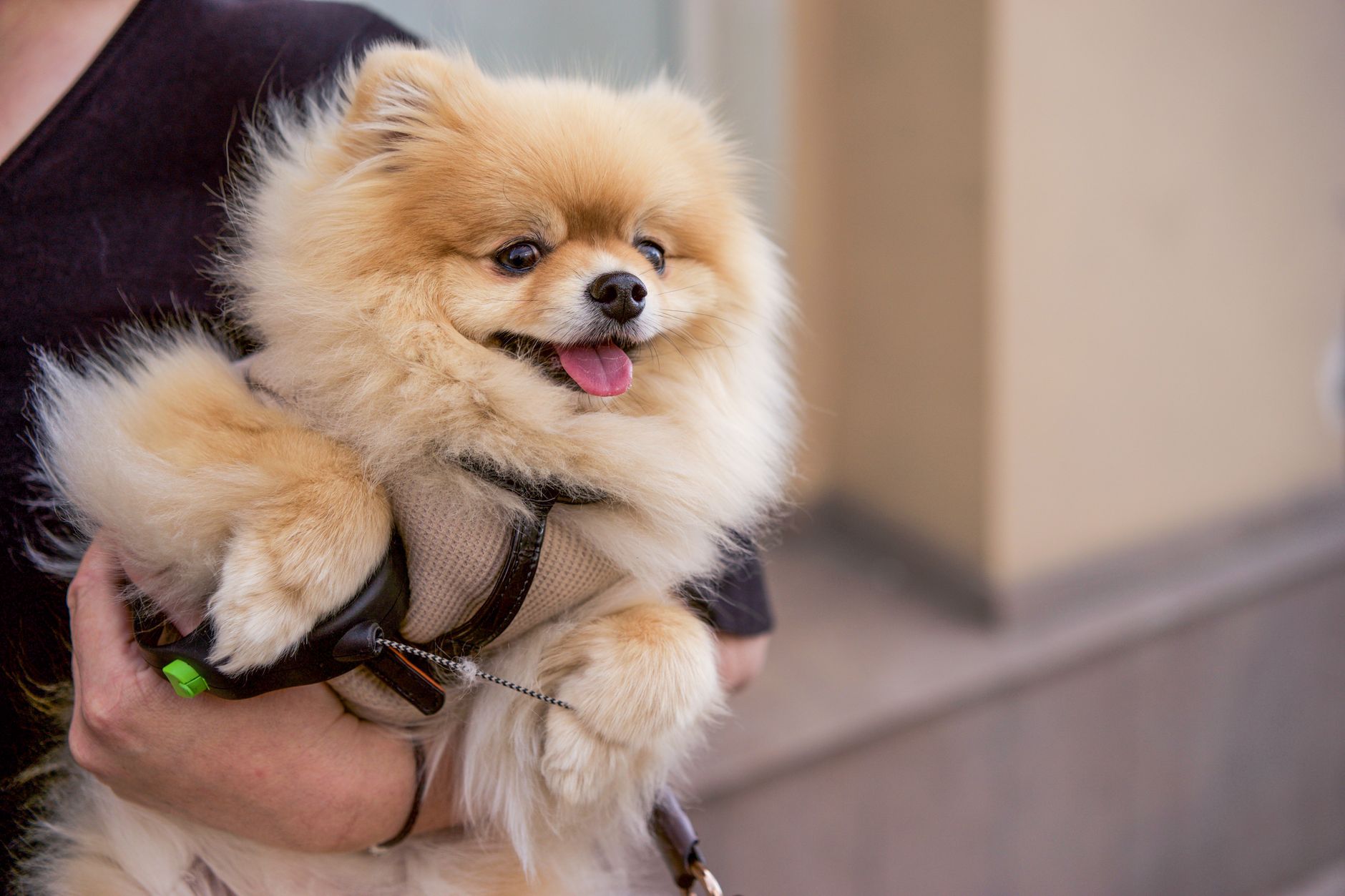
A puppy carrier is a portable enclosure sized for a young or small dog. It is used for vet visits, car journeys, public transport and in-cabin flights. Unlike a home crate, it is built to be lifted, carried and secured. For puppies, it also does two practical jobs. It keeps a dog that may not be fully vaccinated off busy floors, and it gives the puppy a familiar space it can take anywhere.
The carrier also matters for early socialization. Veterinary behaviorists at VCA Animal Hospitals describe 3 to 16 weeks of age as the "sensitive period for socialization" for puppies. They advise safe exposure to new places before the vaccination series is finished, while avoiding dog parks and groups of unknown dogs. A well-ventilated carrier is one way to bring a young puppy into shops, streets and car rides without putting it on the ground in high-traffic areas.
How to size a carrier for a growing puppy
The most widely cited sizing standard comes from air transport. In its Pets on Planes training (last modified January 2026), USDA APHIS says a kennel must be large enough for the animal to "easily stand up, turn around, sit erect, and lie down in a natural position." That same test works for everyday carriers too.
- Measure length. With the puppy standing, measure from the tip of the nose to the base of the tail.
- Measure height. Measure from the floor to the top of the head (or ear tips, if they stand up) while the puppy is standing.
- Compare against interior dimensions. Padding and frames reduce usable space, so check the inside measurements, not the outside ones.
- Check the weight rating. Airlines often set a combined limit for pet plus carrier. American Airlines, for example, applies a 20 lb (9.07 kg) combined limit in the premium cabins of its three-cabin Airbus A321T, according to its pet policy page viewed in September 2026.
- Plan for growth. A puppy may outgrow an in-cabin carrier within weeks. If you only need a carrier for the first few months, choose the right size now rather than an oversized one. Too much empty space lets a puppy slide around during braking or turbulence.
- Test the fit. Zip the puppy in at home. If the puppy's head presses against the roof or it cannot turn around, the carrier is too small.
Soft-sided vs hard-sided vs backpack puppy carriers
No single style is best for every trip. The table below compares the three main types using official airline and USDA guidance where it exists.
| Carrier type | Best for | Airline cabin fit | Main trade-off |
|---|---|---|---|
| Soft-sided carrier | In-cabin flights, vet visits, errands | Recommended by Delta Air Lines and American Airlines, which both list 18 x 11 x 11 in (46 x 28 x 28 cm) | Less impact protection unless the model is crash-tested and strapped in |
| Hard-sided kennel | Car travel, checked or cargo air travel | American Airlines lists 19 x 13 x 9 in on mainline and 16 x 12 x 8 in on American Eagle flights | Bulky, and must not exceed under-seat space if carried on |
| Backpack or sling carrier | Short walks and socialization outings | Only if it meets the airline's ventilation and size rules | Puppy sits close to your body, so it can overheat; not a substitute for a restrained car carrier |
Features that matter most in a puppy carrier
USDA APHIS kennel guidance was written for air transport, but it is a good checklist for any puppy carrier:
- Ventilation on three sides plus the door. APHIS says air-travel kennels must have ventilation openings on three sides and the door. Delta Air Lines requires soft-sided in-cabin kennels to have ventilation on 3 sides for domestic flights and 4 sides for international flights. American Airlines asks for nylon mesh on 3 or more sides.
- A leak-proof floor. APHIS asks for a leak-proof floor covered with an unused litter pad. This matters for puppies that are still being house-trained.
- Secure closures. The door should close securely and open easily without tools. Zips on soft carriers should be escape-resistant, because curious puppies push at seams.
- No sharp edges or gaps. APHIS says the interior must be free of sharp points and must stop any part of the animal from sticking out.
- Non-toxic materials. APHIS requires kennels to be free of toxic paints, treatments or preservatives. That is especially relevant for teething puppies that chew mesh and straps.
- Sturdy handles. Handles should let someone lift the carrier without tilting it.
Car travel: why crash testing matters
Many carriers are marketed as "car-safe," but few have been independently tested. The Center for Pet Safety (CPS), a U.S. nonprofit research and consumer advocacy group, has published crash-test studies of carriers and crates since its 2015 carrier study. It now runs a voluntary certification program. CPS says it does not accept funding from pet product manufacturers. Its certified list, viewed in September 2026, includes a small number of pet travel carriers alongside larger travel crates.
For a puppy, the practical steps are simple. Secure the carrier with the vehicle's seat belt or anchor points exactly as the manufacturer instructs. Keep it out of the front passenger seat. Never leave the puppy alone in a parked car. A carrier that tips over or comes loose in a sudden stop cannot protect the puppy inside.
Flying with a puppy: airline and government rules as of September 2026
The USDA 8-week minimum
Under the Animal Welfare Act, USDA APHIS requires dogs and cats to be at least 8 weeks old and fully weaned before they travel by air, according to its Pets on Planes guidance (updated January 2026). The federal regulation, 9 CFR Part 3 Subpart A, also limits how many puppies can share one enclosure. No more than two puppies aged 8 weeks to 6 months, of comparable size and weighing 20 lb (9 kg) or less each, may travel together. A puppy over 20 lb in that age range must travel alone.
Airline in-cabin carrier limits
Airlines add their own rules on top of the federal ones. As of September 2026:
- Delta Air Lines requires in-cabin pets to be at least 8 weeks old for domestic travel. It recommends a soft-sided kennel of no more than 18 x 11 x 11 inches, which fits most of its aircraft. The pet must be able to move around without touching or sticking out of the sides. Delta's domestic in-cabin fee is $150 each way for tickets issued on or after April 8, 2025.
- American Airlines requires pets flying within the U.S. and Puerto Rico to be at least 8 weeks old. It recommends soft-sided carriers of 18 x 11 x 11 inches, and it lists a carry-on pet fee of $150 per kennel for eligible routes.
- Both airlines allow two small, compatible pets aged 8 weeks to 6 months to share one kennel in some cases, so check the exact policy before booking littermates.
Under-seat space varies by aircraft, and some aircraft types do not allow in-cabin pets at all. Always confirm with the airline for each flight in your trip.
Flying a puppy into the United States
Puppies are the group most affected by U.S. import rules. The CDC requires every dog entering or returning to the United States to be at least 6 months old, appear healthy, carry a microchip readable by a universal scanner, and have a CDC Dog Import Form receipt. This has applied since the CDC simplified the rules on August 1, 2024. Delta's policy page repeats the 6-month requirement.
One source disagrees. American Airlines' pet page, viewed in September 2026, says dogs arriving from high-risk rabies countries must be at least 16 weeks old. The CDC's own pages set 6 months for all dogs, so treat the CDC as the authority and confirm with the airline before you book.
Flying a puppy to or within the European Union
The European Commission's rules for non-commercial pet travel within the EU require a microchip and a rabies vaccination given when the animal is at least 12 weeks old. The vaccination only becomes valid 21 days after the primary vaccination is complete. In practice, that is why Delta says pets must be at least 15 weeks old to travel to the EU. Some EU countries allow younger puppies to move under specific conditions, according to the Commission. The EU pet passport is an official veterinary document issued by an authorised veterinarian. It is not something that comes with a carrier.
Short-nosed puppies need extra care
USDA APHIS warns that short-nosed (brachycephalic) breeds such as French Bulldogs, English Bulldogs, Boston Terriers and Pugs face a higher risk of heat stroke and breathing problems when stressed or exposed to heat. For these puppies, choose the most ventilated carrier your airline allows, avoid hot days and long waits, and ask your veterinarian whether the trip is advisable.
How to carrier-train a puppy in 6 steps
- Leave the carrier open at home with a familiar-smelling blanket so the puppy explores it freely.
- Feed meals or treats inside so the carrier becomes a place where good things happen.
- Close the door for a few seconds, then open it before the puppy fusses. Build up the time gradually.
- Lift and carry it around the house, then take short walks outside.
- Try short car rides with the carrier secured, ending somewhere pleasant rather than always at the vet.
- Watch for signs of fear. VCA veterinary behaviorists list trembling, refusing treats and trying to escape as signs of fear. If you see them, go back a step, and seek professional help if the fear continues.
Carriers, microchips, pet passports and Animal Passport: not the same thing
Searches for puppy travel gear often mix up equipment and identity documents, so it helps to separate them:
- A carrier is equipment. No carrier is "approved" by the USDA or CDC as a document. Airlines set their own size and ventilation rules.
- A microchip is the identification that CDC and EU pet travel rules require for dogs.
- An EU pet passport is an official document issued by an authorised veterinarian under EU law.
- Animal Passport is a different product. It is a digital animal and livestock passport that identifies animals by muzzle biometrics, meaning the nose print, which is unique like a fingerprint. A phone captures the print, and the record links owner, breed, estimated age, body condition and vaccination history. Animal Passport is not a government-issued pet travel document and does not replace a CDC Dog Import Form, a microchip or an EU pet passport.
Our own field work is in livestock rather than puppies. In August 2025, Animal Passport was used in livestock flood rescue in Pakistan so farmers could reclaim animals after paper tags washed away. That work taught us that identification should survive the journey, not just the paperwork. For more on animal ID and travel topics, browse the Animal Passport blog.
Quick buyer's checklist
- The puppy can stand, turn, sit up and lie down naturally inside (USDA APHIS standard).
- Ventilation on at least three sides; four for Delta international flights.
- Leak-proof base with an absorbent pad.
- Escape-resistant zips or latches and chew-resistant mesh.
- Interior dimensions checked against your airline's limit for each aircraft on your route.
- For car use, a crash-tested design with clear anchoring instructions.
- The puppy's age meets the rules for the trip: 8 weeks for U.S. domestic flights, about 15 weeks for EU entry, 6 months for entry into the U.S.
Last updated September 27, 2026, by Animal Passport. This article is general information, not veterinary or legal advice. Confirm current rules with USDA APHIS, the CDC, the European Commission and your airline before you travel.
FAQ
- What size carrier does a puppy need?
- The puppy should be able to stand up, turn around, sit up and lie down in a natural position, which is the standard USDA APHIS uses for air-travel kennels. For in-cabin flights, Delta Air Lines and American Airlines both recommend soft-sided carriers of about 18 x 11 x 11 inches as of 2026.
- How old does a puppy have to be to fly in a carrier?
- USDA rules under the Animal Welfare Act require puppies to be at least 8 weeks old and fully weaned to travel by air in the United States. Airlines such as Delta and American Airlines use the same 8-week minimum for domestic flights.
- Can a puppy fly into the United States?
- Not if it is under 6 months old. The CDC requires every dog entering or returning to the U.S. to be at least 6 months old, appear healthy, have a microchip readable by a universal scanner and have a CDC Dog Import Form receipt.
- Is a soft-sided or hard-sided carrier better for a puppy?
- Soft-sided carriers are usually better for in-cabin flights because they flex to fit under the seat, and major U.S. airlines recommend them. Hard-sided or crash-tested carriers that are secured to the vehicle give more protection for car travel.
- Can two puppies share one carrier?
- Under USDA air transport rules, two puppies aged 8 weeks to 6 months may share one enclosure if they are of comparable size and each weighs 20 lb (9 kg) or less. Airlines set their own limits too, so confirm with the carrier before booking.
- How many sides of a puppy carrier need ventilation?
- USDA APHIS says air-travel kennels need ventilation on three sides plus the door. Delta requires in-cabin soft kennels to be ventilated on 3 sides for domestic flights and 4 sides for international flights.
- Can I use a carrier to socialize my puppy before vaccinations are complete?
- Yes, with care. VCA Animal Hospitals veterinary behaviorists say the sensitive socialization period runs from 3 to 16 weeks and recommend safe outings before the vaccine series ends, while avoiding dog parks and unknown dogs. Ask your veterinarian about disease risk in your area.
- Is Animal Passport a pet travel document?
- No. Animal Passport is a digital animal and livestock ID that uses muzzle (nose-print) biometrics. It is not a government-issued travel document and does not replace a microchip, a CDC Dog Import Form or an EU pet passport.
Sources
- Pets on Planes Lesson 1: Preparing and Receiving Pets for Air Travel — United States Department of Agriculture Animal and Plant Health Inspection Service (USDA APHIS)
- 9 CFR Part 3 Subpart A - Transportation Standards (Dogs and Cats) — Electronic Code of Federal Regulations (eCFR)
- Entry Requirements for Dogs from Dog-Rabies Free or Low-Risk Countries — U.S. Centers for Disease Control and Prevention (CDC)
- Travelling with a pet within the EU — European Commission
- Pet Travel on Delta — Delta Air Lines
- Traveling with pets — American Airlines
- CPS Certified Products — Center for Pet Safety
- Puppy Behavior and Training: Socialization and Fear Prevention — VCA Animal Hospitals
Animal Passport binds a muzzle biometric to a digital record farmers, buyers, and insurers can verify in the field.