Dog Travel Bag Airline Approved: How Soft Cabin Carriers Actually Get Accepted
Key takeaways
- “Airline approved” is not an IATA product certification; IATA does not approve specific carrier brands.
- Cabin soft bags must fit under the seat and let the dog stand, turn, and lie naturally; hold kennels follow separate rigid CR1 sizing.
- As of September 2026, Delta recommends 18×11×11 in soft-sided; American lists the same soft-sided max; JetBlue caps at 17×12.5×8.5 in.
- American and Delta publish $150 each-way cabin pet fees on many domestic itineraries for current tickets; JetBlue’s fee applies at booking and was listed as $125 in its September 2024 Contract of Carriage.
- Leak-proof floors and multi-side mesh ventilation are mandatory on major U.S. airlines’ cabin policies.
- USDA APHIS health certificates and the CDC Dog Import Form are separate from the carrier purchase and from Animal Passport’s biometric livestock ID product.
- Choose the strictest dimensions on a multi-airline itinerary; soft-sided bags tolerate under-seat space better than hard-sided ones.
As of September 2026, a dog travel bag airline approved for cabin use is a soft-sided or airline-specified hard-sided under-seat carrier that meets your airline’s length, width, and height limits, stays leak-proof and ventilated, and lets your dog stand, turn, and lie down without protruding. There is no universal IATA brand certification—gate agents enforce each airline’s policy—so confirm dimensions, fees, and seat rules on every flight segment before you buy.
Published by Animal Passport. Last updated September 22, 2026.
What “airline approved” really means
A dog travel bag airline approved for cabin use is not a government stamp and not an IATA product badge. The International Air Transport Association (IATA) states in its Live Animals Regulations (LAR) materials that it does not certify, approve, endorse, or sell any particular pet container manufacturer, brand, make, or model. What travelers need instead is a carrier that meets IATA Container Requirement 1 (CR1) welfare principles for in-cabin non-rigid containers and the operating airline’s under-seat rules.
For animals traveling in the passenger cabin, IATA CR1 guidance (as summarized in publicly circulated CR1 text and IATA’s Traveler’s Pet Corner) requires that a non-rigid container allow the animal enough space to turn about normally while standing, to stand and sit erect, and to lie in a natural position; that ventilated area be at least 16% of the total surface of the four sides; and that the container be clearly marked with a Live Animal label that does not block ventilation. Soft-side or cloth bags are exempt from some rigid-crate construction rules (for example, spacer bars and a barred or welded-mesh end). Check-in staff remain responsible for verifying compliance; if the container fails, the animal must not travel.
Retail “airline approved” labels are marketing shorthand. They usually mean the exterior size is close to common U.S. soft-sided limits such as about 18 × 11 × 11 inches—but that figure is not universal, and JetBlue Airways publishes a stricter height cap.
Cabin soft bag vs. hold kennel
Cabin travel bags and cargo kennels solve different problems:
- In-cabin dog travel bag: Soft-sided (often preferred) or small hard-sided carrier that fits fully under the seat in front of you. Your dog usually must remain inside for taxi, takeoff, landing, and—on many airlines—the entire flight.
- Hold / cargo kennel: Rigid container sized with IATA CR1 measurement guidance (animal length A, elbow height B, shoulder width C, standing height D). IATA’s Traveler’s Pet Corner publishes the common sizing formulas: container length = A + ½B; width = C × 2; height = D plus bedding; snub-nosed breeds require a 10% larger container. Hold travel is a separate product category from an under-seat cabin bag.
As of September 2026, several major U.S. passenger airlines limit most civilian pet travel to the cabin and route larger animals through cargo programs only when those programs still accept public bookings. Always verify cargo availability on your route; do not assume a cabin bag can substitute for a rigid hold crate, or the reverse.
How to choose a dog travel bag that airlines will accept
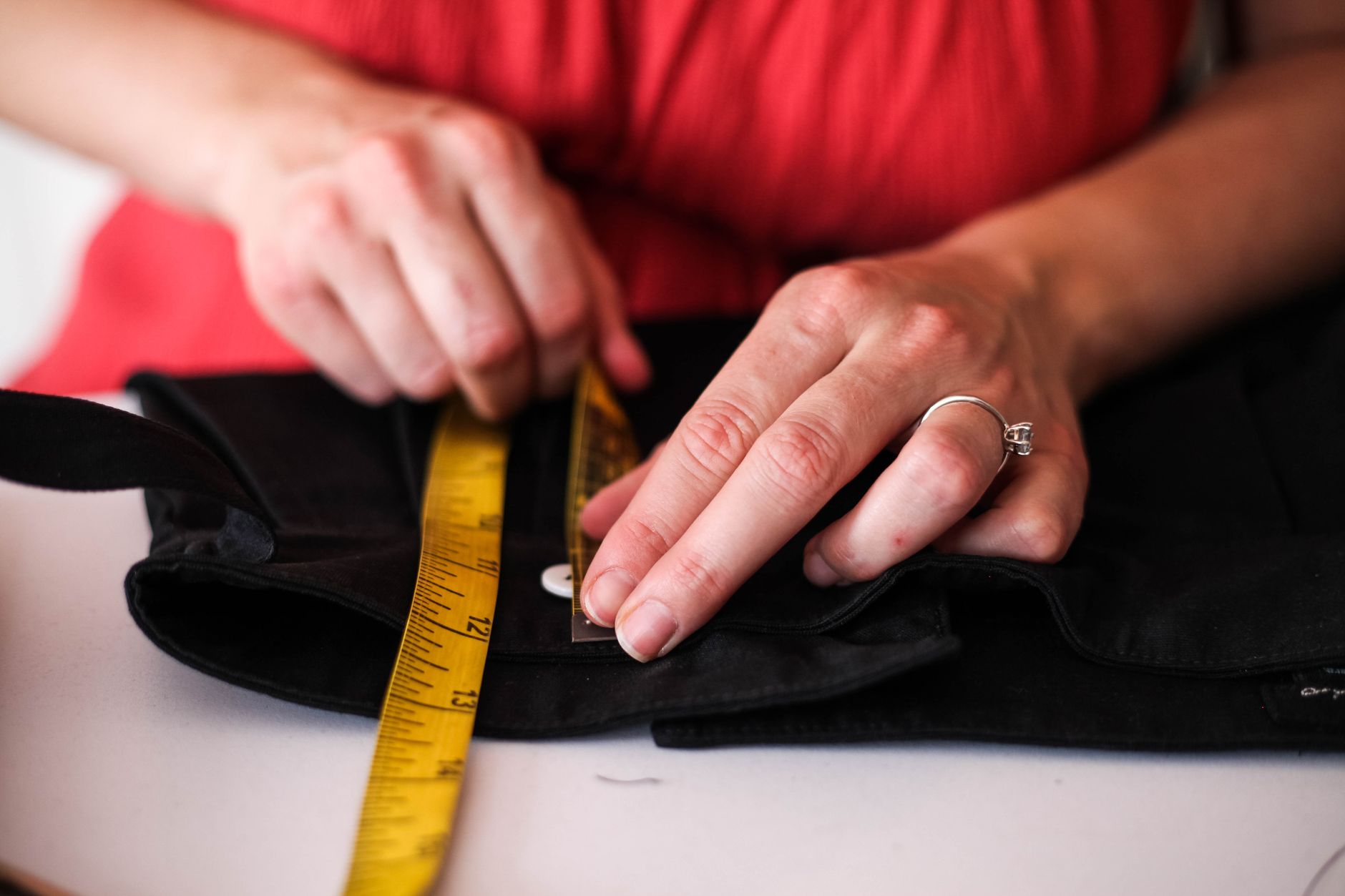
- Measure your dog first. Use the IATA standing-position approach: nose-to-tail base (A), elbow height (B), shoulder/widest width (C), and standing height to head or ear tip (D). For cabin bags, the airline’s exterior limit is the hard ceiling; your dog still needs interior room to turn and lie naturally.
- Read every operating carrier on the ticket. Codeshares and regional partners can shrink under-seat space or ban cabin pets on a segment.
- Prefer soft-sided for multi-airline trips. Soft walls can compress slightly under a seat without crushing ventilation mesh. Hard-sided carriers must meet the strictest dimension on the itinerary without “excessive” collapsing—American Airlines states soft-sided collapsible kennels are recommended for that reason.
- Check ventilation and leak-proofing. Delta Air Lines requires soft-sided kennels to be leak-proof with ventilation on three sides for domestic travel and four sides for international travel. JetBlue requires leak-proof bottoms and good ventilation. American Airlines requires nylon mesh ventilation on three or more sides for soft-sided kennels.
- Book pet space early. Cabin pet slots are limited and first-come, first-served on Delta, American, and JetBlue.
- Train before travel day. IATA advises acclimating the animal to the container weeks or months ahead; sedation for transport is discouraged by IATA and is refused by American Airlines, which cites American Veterinary Medical Association (AVMA) guidance on altitude-related risks.
Airline carrier size and fee comparison (U.S. majors)
As of September 2026, published in-cabin limits differ by airline. Use this table as a research checklist, then reconfirm on the airline site at booking time:
| Airline | Published max carrier size (cabin) | Pet fee (each way, published) | Key acceptance notes |
|---|---|---|---|
| Delta Air Lines | Recommends soft-sided max 18″ × 11″ × 11″; actual max set by aircraft under-seat space | $150 USD/CAD for U.S./Canada/Puerto Rico/U.S. Virgin Islands tickets issued on/after April 8, 2025; $200 for many international itineraries | Soft-sided leak-proof; vented 3 sides domestic / 4 sides international; 1 kennel per customer; reserve via Delta Reservations |
| American Airlines | Soft-sided (recommended): 18 × 11 × 11 in (46 × 28 × 28 cm); hard-sided mainline: 19 × 13 × 9 in; hard-sided American Eagle: 16 × 12 × 8 in | $150 per kennel for carry-on pets within/between the U.S. and Canada, Mexico, Central America, and the Caribbean (where entry is allowed) | Pet must fit comfortably inside closed carrier; soft-sided may be slightly larger only if it fits without excessive collapse; sedation not accepted |
| JetBlue Airways | Max 17″ L × 12.5″ W × 8.5″ H (43.18 × 31.75 × 21.59 cm) | JetBlue’s September 2024 Contract of Carriage listed $125 per pet each way; the July 2026 Contract of Carriage states a fee applies at reservation without restating the dollar amount—confirm current fee when booking | FAA-approved under-seat carrier; soft- or hard-sided; leak-proof bottom; one pet per carrier; pet + carrier counts as personal item; not permitted in Mint |
Sources disagree on “one universal cabin size.” Delta and American both center on roughly 18 × 11 × 11 inches for soft-sided bags, while JetBlue’s 8.5-inch height is materially lower. A bag marketed as airline approved for Delta may still fail JetBlue. Choose the strictest exterior dimensions on your full itinerary.
Features that matter more than the label
- True under-seat fit: Exit rows, bulkheads, flat-bed premium seats, and some aircraft rows lack legal stowage. Delta, American, and JetBlue all restrict pet seating in those areas.
- Secure zippers and escape-proof mesh: JetBlue will not accept containers that allow possible escape.
- Absorbent, washable pad: Supports the leak-proof requirement without adding height that breaks the limit.
- Live Animal labeling: Align with IATA marking practice so ventilation holes stay clear.
- Weight and comfort: American Airlines weighs pet plus carrier on certain Airbus A321T premium configurations and caps that combined weight at 20 pounds (9.07 kilograms). Even without a published weight cap, an oversized dog in a “legal” bag can still be refused if it cannot turn around.
Documents are separate from the bag
Buying the right dog travel bag does not replace official travel paperwork. As of September 2026:
- United States Department of Agriculture Animal and Plant Health Inspection Service (USDA APHIS): For exporting a pet from the United States, contact a USDA-accredited veterinarian early. Destination countries set entry rules; APHIS endorses required health certificates through the Veterinary Export Health Certification System (VEHCS) when endorsement is needed. Airlines may request additional forms (sometimes APHIS Form 7001) that differ from the destination certificate.
- U.S. Centers for Disease Control and Prevention (CDC): Every dog entering or returning to the United States needs a CDC Dog Import Form receipt. Dogs that have been only in dog rabies-free or low-risk countries for the prior six months generally need that receipt plus appearance of health, minimum age of six months, and a universally scannable microchip. High-risk-country exposure adds further rabies documentation. CDC updated the Dog Import Form web system on February 5, 2026 (receipt look/format change; importation requirements unchanged).
- European Union pet passport / non-commercial movement rules: IATA’s Traveler’s Pet Corner points travelers to EU distinctions between commercial and non-commercial pet movement and to EU guidance for travel from third countries versus within the EU. Those official schemes are government identification and health documents—not a retail carrier bag and not a private biometric app.
Animal Passport is a digital animal and livestock identity product that uses muzzle biometrics (a nose print unique like a fingerprint), phone-based capture, and a record that can bind owner, breed, estimated age, body condition, and vaccination history. Age can be estimated from a dental photograph with a confidence score, and body condition can be scored 1–5 from a side-profile photo. The product was used in livestock flood rescue in Pakistan in August 2025 so farmers could reclaim animals after paper tags washed away. It is not a government-issued airline travel document, EU pet passport, USDA endorsement, or CDC import form. For gear guides and related explainers, see the Animal Passport blogs.
Step-by-step: from shopping cart to gate
- List every airline and aircraft type on your itinerary.
- Write down each carrier’s maximum L × W × H and ventilation rules from the official pet page.
- Select a soft-sided bag at or under the strictest limit; verify manufacturer exterior dimensions including mesh bulge.
- Fit-test your dog at home with the carrier fully closed for 20–30 minutes; the dog must turn and lie naturally.
- Reserve the pet when you book (or immediately after) and pay the published fee.
- Gather health certificates, microchip details, and—if entering the United States—the CDC Dog Import Form receipt.
- Arrive early; agents will check bag dimensions and that your dog fits without protruding.
- At Transportation Security Administration (TSA) screening, remove the dog from the carrier for inspection (JetBlue notes the animal is never X-rayed).
- Re-secure the dog before boarding; stow under the seat for taxi, takeoff, and landing.
Common reasons “airline approved” bags still get refused
- Height over limit once mesh is expanded (especially JetBlue’s 8.5-inch cap).
- Dog cannot turn around; agent judges the fit unsafe.
- Wrong seat assignment (exit row, bulkhead, Mint/flat-bed).
- Pet space already full on that flight.
- Missing destination or CDC paperwork on international segments.
- Destination embargo (examples from Delta’s published in-cabin exceptions include Australia, Hawaii, the United Kingdom, and several other markets—policies change, so recheck).
Practical buying checklist
If you need one sentence for a shopping decision: buy a soft-sided, leak-proof, multi-mesh dog travel bag whose exterior is at or below the strictest under-seat limit on your ticket (often 18 × 11 × 11 inches on Delta/American-style policies, or 17 × 12.5 × 8.5 inches if JetBlue is involved), train your dog in it, and treat “IATA approved” packaging as a hint—not proof.
Keep a printout or screenshot of the airline’s current pet page in your phone wallet. Policies, fees, and destination lists change; Delta’s fee table, for example, explicitly ties amounts to ticket-issue date (before vs. on/after April 8, 2025).
IATA continues to develop passenger-facing guidance for the in-cabin pet journey—including container selection and airline-specific policies—while LAR Verify supports compliance checks against the Live Animals Regulations that have governed animal air transport for more than 50 years (IATA Knowledge Hub, July 31, 2025).
For more field-tested explainers on animal identity versus official travel schemes, browse https://www.animalpassport.co/blogs.
FAQ
- What does dog travel bag airline approved mean?
- It means a cabin carrier sized and built to fit under your airline’s seat with enough room for your dog to stand, turn, and lie down, plus required ventilation and a leak-proof base. It is not a single global certification from IATA, which does not approve specific brands.
- What size dog travel bag is airline approved?
- There is no one size. As of September 2026, Delta recommends a soft-sided maximum of 18×11×11 inches, American Airlines lists soft-sided 18×11×11 inches for all flights, and JetBlue limits carriers to 17×12.5×8.5 inches. Use the strictest limit on your itinerary.
- Is IATA-approved the same as airline-approved?
- No. IATA publishes Live Animals Regulations and Container Requirement 1 standards but states it does not certify or endorse particular pet container brands. Airlines set additional under-seat dimensions, fees, and seating rules.
- Are soft-sided or hard-sided carriers better for cabin travel?
- Soft-sided carriers are usually better for cabin use because they can flex slightly under the seat. American Airlines recommends soft-sided collapsible kennels; JetBlue accepts both soft- and hard-sided if they meet its size and safety rules.
- How much do airlines charge for an in-cabin dog?
- Delta charges $150 USD/CAD each way for many U.S./Canada itineraries on tickets issued on or after April 8, 2025. American Airlines lists $150 per kennel each way for carry-on pets on many Western Hemisphere routes. JetBlue requires payment of a pet fee at reservation; its September 2024 Contract of Carriage listed $125 each way.
- Do I need paperwork besides an airline-approved carrier?
- Yes for many trips. USDA APHIS-accredited veterinarians handle destination export certificates from the United States, and the CDC requires a Dog Import Form receipt for every dog entering or returning to the United States. The carrier alone is not enough.
- Is Animal Passport an official airline or EU pet passport?
- No. Animal Passport is a digital muzzle-biometric identity record for animals and livestock. Official airline acceptance, USDA APHIS certificates, CDC import forms, and EU pet passports are separate government or airline systems.
Sources
- Traveler's Pet Corner — International Air Transport Association (IATA)
- Live Animals Regulations (LAR) — International Air Transport Association (IATA)
- Making In-Cabin Pet Travel Easier: IATA’s New Initiatives — International Air Transport Association (IATA)
- Pet Travel Overview — Delta Air Lines
- Pets — Travel information — American Airlines
- Traveling with Pets — JetBlue Airways
- Take a Pet From the United States to Another Country (Export) — USDA Animal and Plant Health Inspection Service (APHIS)
- CDC Dog Import Form and Instructions — U.S. Centers for Disease Control and Prevention (CDC)
Animal Passport binds a muzzle biometric to a digital record farmers, buyers, and insurers can verify in the field.