Dogs Quarantined: Periods, Border Rules, and How Owners Avoid Holds

Key takeaways
- Dogs quarantined means authority-ordered confinement for rabies observation or unmet border entry rules—not ordinary boarding.
- After a bite, CDC veterinarian guidance calls for 10 days of observation of a healthy dog, cat, or ferret, regardless of vaccination history.
- Foreign-vaccinated dogs from high-risk rabies countries entering the U.S. without a valid CDC-approved titer (≥0.5 IU/mL) face a 28-day quarantine at a CDC-registered animal care facility.
- Great Britain does not quarantine compliant pets; failing pet travel rules can mean up to 4 months in Defra-authorised quarantine at the owner’s expense.
- Hawaiʻi’s rabies-free program offers 5 Day Or Less / Direct Airport Release when FAVN and vaccination waits are met; otherwise quarantine can last up to 120 days.
- EU pet passports and animal health certificates under Regulation (EU) 2026/131 are official travel documents; Animal Passport’s muzzle-biometric livestock ID is a separate private product and does not waive quarantine.
- Plan microchip-before-vaccine, titer waits, and facility reservations months ahead; importers pay all quarantine costs.
Dogs quarantined means a dog is legally confined and observed—usually to prevent rabies or other animal diseases from spreading—after a bite, a suspected disease exposure, or international or interstate border entry. As of September 2026, how long dogs stay quarantined depends on the reason and the destination: common examples include a 10-day bite observation under United States public-health guidance, a 28-day hold at a Centers for Disease Control and Prevention (CDC)–registered animal care facility for some U.S. imports from high-risk rabies countries, up to 4 months in Great Britain when pet travel rules are not met, and Hawaiʻi’s 5 Day Or Less program versus up to 120 days when pre-arrival steps fail. Owners pay the fees, and official documents (not a private app) decide release.
This guide answers the informational query behind dogs quarantined for the Quarantine & Border Control cluster: what quarantine is, when it is required, how long it lasts in major jurisdictions, and how official travel schemes differ from biometric livestock identity tools such as those from Animal Passport.

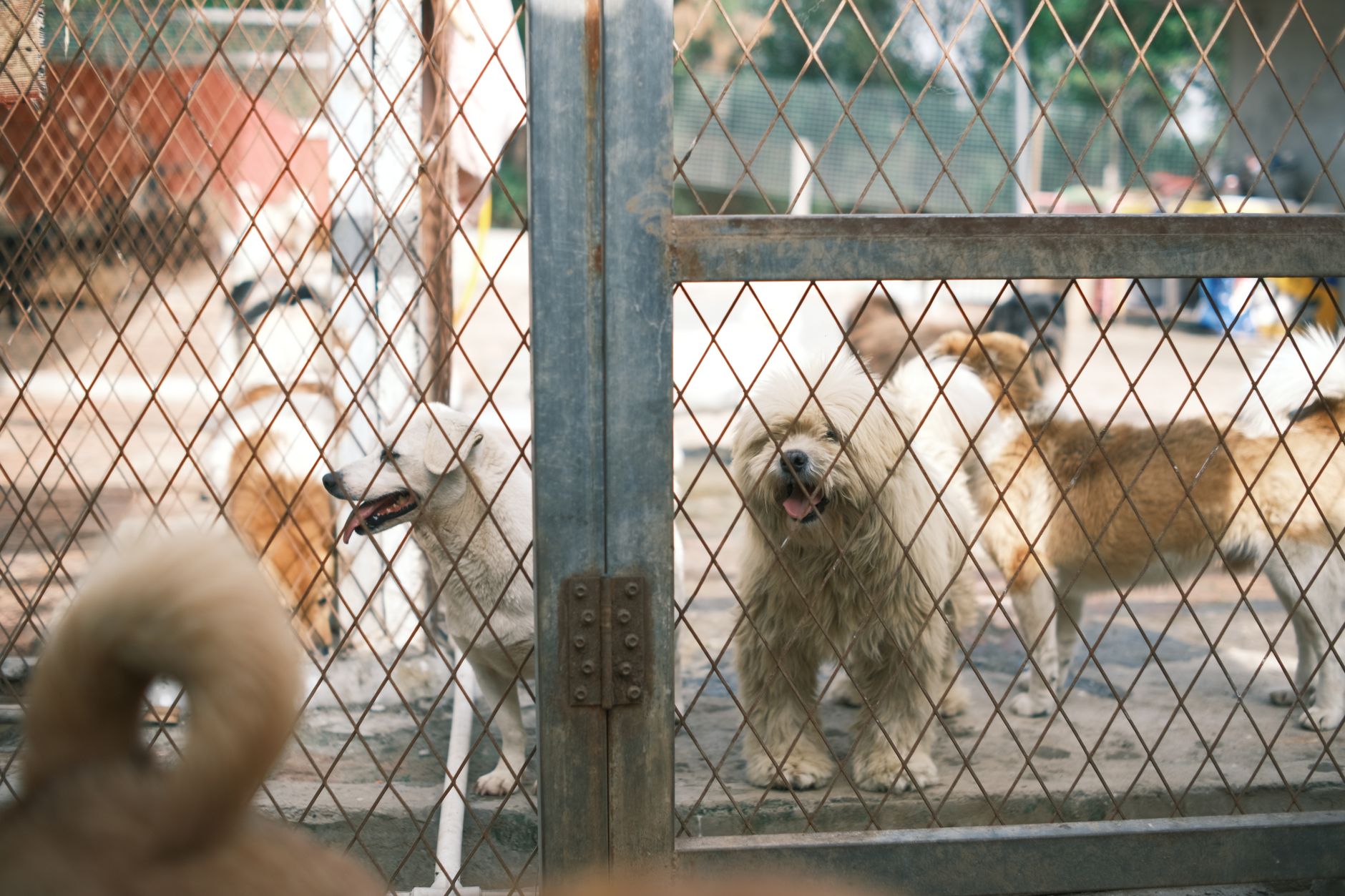
What does “dogs quarantined” mean?
Dogs quarantined refers to the temporary confinement of a dog under animal-health or public-health authority so the animal can be monitored, treated, or held until entry requirements are met. Quarantine is not the same as boarding or voluntary kenneling: a competent authority sets the rules, duration, and release conditions.
In practice, the phrase covers three frequent situations:
- Post-bite observation — monitoring a healthy dog that bit or scratched a person (or sometimes another pet) for signs of rabies.
- Post-exposure quarantine — isolating a dog that may have been exposed to a rabid animal.
- Border / import quarantine — holding a dog at or after arrival until vaccination, titer, microchip, and paperwork requirements are satisfied.
The World Organisation for Animal Health (WOAH, founded as the Office International des Épizooties) publishes science-based standards that countries adapt into national import and control rules for rabies and other diseases. National agencies then set the enforceable periods and facilities.
Why are dogs quarantined after a bite?
Rabies virus can be present in the saliva of infected dogs during illness and for several days before clinical signs appear, according to the United States Centers for Disease Control and Prevention (CDC) guidance for veterinarians updated in 2025. That biology drives the classic 10-day observation.
CDC advice for veterinarians states that a healthy dog, cat, or ferret that exposes a person should be confined and observed for 10 days post-exposure, in coordination with public health authorities—even if the animal has a vaccination history, because vaccine failures, while rare, do occur. CDC further advises not to vaccinate during that observation period so vaccine reactions are not confused with rabies signs. If illness develops, local health departments must be notified and rabies testing arranged if indicated.
State and local laws implement this framework. Details such as home versus facility confinement, fees, and who authorizes release vary by jurisdiction. Quarantine after a bite is a public-health measure, not a punishment of the owner.
How long are dogs quarantined for international travel?
There is no single worldwide quarantine length. As of September 2026, duration is set by the destination’s rabies-risk classification, whether the dog has a valid antibody titer, and whether pre-arrival identity and vaccination steps were completed on time.
United States: CDC rules for dogs from high-risk rabies countries
For foreign-vaccinated dogs that have been in a high-risk country for dog rabies within the last 6 months, CDC import rules require several items before U.S. entry, including a microchip placed before rabies vaccination, a Certification of Foreign Rabies Vaccination and Microchip form, a CDC Dog Import Form receipt, arrival by air at an airport with a CDC-registered animal care facility, and a reservation at that facility for examination and U.S.-licensed rabies revaccination.
CDC states that if the dog does not have a valid rabies serology titer from a CDC-approved laboratory, the reservation must include a 28-day quarantine at the CDC-registered animal care facility after examination and revaccination. CDC defines a passing titer as ≥0.5 IU/mL (CDC dog-importation veterinary documents, 2026). Blood for the titer must be drawn at least 30 days after the first valid rabies vaccination and at least 28 days before U.S. entry, with additional timing rules for dogs that have maintained continuous vaccination coverage.
As of CDC’s May 2024 facility list, registered animal care facilities serve specific airports, including Atlanta (ATL), Los Angeles (LAX), Miami (MIA), New York (JFK), Philadelphia (PHL), and Washington Dulles (IAD). The dog must arrive at the airport tied to its reservation; the importer pays examination, revaccination, and quarantine costs. CDC notes that the 28-day period can be shortened only when specific criteria are met through the facility’s approved protocols—owners should confirm current options with CDC and the facility before travel.
Great Britain: quarantine when pet travel rules are not met
Dogs that meet Great Britain’s pet travel rules—microchip before rabies vaccination, rabies vaccination with the required wait (at least 21 full days after primary vaccination), the correct travel document, and, for dogs, approved tapeworm treatment between 24 hours and 5 days before arrival—do not need rabies quarantine, according to the Department for Environment, Food & Rural Affairs (Defra) and Animal and Plant Health Agency (APHA) guidance on GOV.UK.
If those rules are not followed, GOV.UK states the pet may be put into quarantine for up to 4 months, returned to the country of departure, or—in some failure scenarios—put down, with the owner responsible for fees. Defra guidance updated 8 September 2025 explains how to book an authorised quarantine carrier and premises, obtain a landing licence, and seek release when the pet meets the rules, completes 4 months, or is returned. Pets must arrive at approved ports or airports when entering for quarantine.
Hawaiʻi: rabies-free state program (separate from mainland CDC entry)
Hawaiʻi is rabies-free and runs its own dog and cat import quarantine under Chapter 4-29, Hawaii Administrative Rules, administered by the Hawaiʻi Department of Agriculture & Biosecurity Animal Quarantine Branch. Dogs and cats that meet pre- and post-arrival requirements may qualify for the 5 Day Or Less program, which includes a Direct Airport Release option at Daniel K. Inouye International Airport (Honolulu) after inspection. Animals that do not meet all 5 Day Or Less requirements must be quarantined for up to 120 days, according to the Animal Quarantine Information Page.
The state’s published Direct Release table lists a minimum 30-day wait after a successful fluorescent antibody virus neutralization (FAVN) rabies antibody test and a minimum 30-day wait after the most recent rabies vaccination before arrival. Published fees include Direct Airport Release in Honolulu at $185 when documents are received 10 or more days before arrival, or $244 for 5 Day Or Less / late document review scenarios (Animal Quarantine Station fee table as published on the official information page). Applications can be submitted online through the Hawaiʻi Pet Owner Portal (HIPOP).
European Union: documents and checks, not routine quarantine
As of September 2026, non-commercial movement of pet dogs, cats, and ferrets into the European Union is governed by Commission Delegated Regulation (EU) 2026/131 (European Commission Food Safety guidance). Core requirements include microchip identification, rabies vaccination (animal at least 12 weeks old; primary vaccination valid only after at least 21 days), and—when the origin is not listed for a titer derogation—a rabies antibody titration test measuring ≥0.5 IU/ml, with sampling at least 30 days after primary vaccination and not less than 90 days before the animal health certificate is issued. Dogs entering certain tapeworm-free destinations (including Finland, Ireland, Malta, and Norway, per Commission Implementing Regulation (EU) 2021/620 Annex XIX as cited by the Commission) need praziquantel-class treatment 24–120 hours before entry.
Compliant pets travel with an animal health certificate (or, in defined cases, an EU pet passport) and undergo documentary and identity checks at a travellers’ point of entry. Routine multi-week quarantine is not the default EU pathway for compliant non-commercial pets; non-compliance can mean refusal, return, or national enforcement measures rather than a single EU-wide quarantine length.
Dogs quarantined vs official pet travel documents vs Animal Passport
Search results for “dogs quarantined” often mix three different tools. Keep them separate:
| System | What it is | Who issues / runs it | Does it replace quarantine? |
|---|---|---|---|
| Border / facility quarantine | Legal confinement after arrival or after a public-health event | CDC-registered facilities, Defra/APHA premises, Hawaiʻi Animal Quarantine Station, other national authorities | It is the control measure |
| EU pet passport / GB animal health certificate / PETS-style paperwork | Official veterinary travel document proving microchip, rabies vaccination, and related treatments | Authorised/official veterinarians under EU or national law | Correct paperwork helps avoid quarantine where rules allow; it is not a biometric livestock ID app |
| Animal Passport digital livestock passport | Phone-based muzzle (nose-print) biometric record binding owner, breed, estimated age, body condition, and vaccination history | Animal Passport (private product at animalpassport.co) | No — it is not a government-issued travel document and does not waive CDC, Defra, Hawaiʻi, or EU entry quarantine |
Animal Passport’s product uses muzzle biometrics—each nose print is unique like a fingerprint—captured on a phone. The record can include an age estimate from a dental photograph with a confidence score and a body condition score from 1–5 based on a side-profile photo. In August 2025, the technology was used in livestock flood rescue in Pakistan so farmers could reclaim animals after paper tags washed away. That field use is about reclaiming and identifying animals when physical tags fail; it is not a substitute for an EU pet passport, a CDC Dog Import Form, or a Hawaiʻi FAVN package. For more product context, see Animal Passport blogs.
How to reduce the chance your dog is quarantined at the border
- Identify the destination’s competent authority early — CDC for U.S. dog importation, Defra/APHA for Great Britain, Hawaiʻi Animal Quarantine Branch for Hawaiʻi, European Commission rules plus the destination Member State for EU entry.
- Microchip before the first rabies vaccine — CDC and GB/EU rules treat vaccines given before identification as invalid for travel purposes.
- Plan titer timing months ahead — For U.S. high-risk pathways, draw blood ≥30 days after the first valid vaccine and ≥28 days before entry; for many EU third-country routes, allow the ≥90-day wait after a successful ≥0.5 IU/ml test before the certificate date.
- Book the correct facility and flight path — U.S. high-risk foreign-vaccinated dogs must land at the airport linked to their CDC-registered facility reservation.
- Carry originals and English translations — CDC requires English documents or certified translations; Hawaiʻi and GB checks similarly depend on complete paperwork submitted before arrival when possible.
- Never confuse a private digital ID with official clearance — Airlines and border officers follow government forms and endorsements.
What happens during quarantine?
Facility quarantine typically includes veterinary examination on intake, vaccination or booster as required by the destination, confinement in an approved kennel, monitoring for clinical signs of rabies or other diseases, and release only when the competent authority (or its authorised veterinarian) confirms eligibility. In Great Britain, Defra guidance notes that release of cats, dogs, or ferrets from rabies quarantine occurs when the pet meets travel rules, completes 4 months, or is returned; stays can extend if there is a facility rabies outbreak or if a roommate dies and rabies has not been ruled out. Owners remain financially responsible for care, medication, and extensions.
Home quarantine after a bite, where allowed, usually means the dog stays on the owner’s property or on leash, avoids contact with other people and animals beyond the caretaker, and is released after the observation period if it remains healthy—subject to the local animal inspector or health department.
When sources disagree
Authorities agree on the public-health goal—keeping rabies out—but they disagree on mechanics. CDC uses a 28-day facility quarantine trigger tied to missing titers for certain high-risk U.S. imports; Great Britain uses up to 4 months when PETS-style rules fail; Hawaiʻi uses a 5 Day Or Less / Direct Airport Release pathway versus up to 120 days. EU non-commercial rules emphasize pre-entry vaccination, titer waiting periods, and entry checks rather than a uniform post-arrival quarantine length for compliant pets. Always follow the destination’s current official page for the dog’s specific route; third-party summaries can lag behind rule changes.
Last updated September 2026 by Animal Passport. This article is for general information only. It is not veterinary diagnosis or legal advice. Confirm requirements with CDC, USDA APHIS, Defra/APHA, Hawaiʻi Animal Quarantine Branch, the European Commission, and your airline before travel.
FAQ
- How long are dogs quarantined after biting someone?
- In the United States, CDC guidance for veterinarians is to confine and observe a healthy dog, cat, or ferret for 10 days after it bites or otherwise exposes a person, regardless of vaccination status. Local or state animal-control rules decide home versus facility quarantine and who authorizes release.
- How long are dogs quarantined when entering the United States from a high-risk rabies country?
- Foreign-vaccinated dogs that have been in a high-risk dog-rabies country in the prior 6 months need a reservation at a CDC-registered animal care facility. Without a valid rabies serology titer from a CDC-approved lab (≥0.5 IU/mL), CDC requires a 28-day quarantine there after exam and revaccination.
- Do dogs need quarantine to enter Great Britain?
- No, if they meet Great Britain’s pet travel rules (microchip, rabies vaccination with the required wait, correct documents, and dog tapeworm treatment when required). If they fail those checks, GOV.UK states they may be quarantined for up to 4 months at the owner’s expense, returned, or otherwise refused.
- Why does Hawaiʻi quarantine dogs differently from the U.S. mainland?
- Hawaiʻi is rabies-free and runs a separate state program. Dogs that meet 5 Day Or Less requirements—including FAVN timing—may qualify for Direct Airport Release or a short hold; those that do not can be quarantined for up to 120 days under Hawaii Administrative Rules Chapter 4-29.
- Can a valid rabies titer stop dogs being quarantined?
- Often yes for specific pathways. CDC uses a passing titer (≥0.5 IU/mL from an approved lab) to avoid the 28-day U.S. facility quarantine for eligible high-risk imports, and Hawaiʻi and many EU third-country routes also require successful antibody tests with waiting periods. A titer never replaces destination-specific paperwork or facility reservations.
- Is an EU pet passport the same as Animal Passport?
- No. An EU pet passport is an official veterinary travel document under EU law for dogs, cats, and ferrets. Animal Passport is a private digital livestock identity product using muzzle biometrics and phone capture; it is not a government-issued travel document and does not waive border quarantine.
- Who pays when dogs are quarantined?
- The importer or owner. CDC, Defra, and Hawaiʻi’s Animal Quarantine Branch all state that examination, boarding, vaccination, medication, and extended stays are the owner’s financial responsibility.
- What should I do first if my dog may be quarantined at the border?
- Contact the destination’s official authority and any required quarantine facility before booking flights, confirm titer and vaccination timelines, and assemble endorsed certificates. Do not rely on airline marketing pages or private ID apps for legal clearance.
Sources
- Entry Requirements for Foreign-Vaccinated Dogs from High-Risk Countries — Centers for Disease Control and Prevention (CDC)
- CDC-registered Animal Care Facilities — Centers for Disease Control and Prevention (CDC)
- Documents for Veterinarians to Complete for Dogs Being Imported into the United States — Centers for Disease Control and Prevention (CDC)
- Information for Veterinarians | Rabies — Centers for Disease Control and Prevention (CDC)
- Put your pet in rabies quarantine — GOV.UK — Department for Environment, Food & Rural Affairs (Defra) and Animal and Plant Health Agency (APHA)
- Bringing your pet dog, cat or ferret to Great Britain — GOV.UK — Department for Environment, Food & Rural Affairs (Defra)
- Animal Quarantine Information Page (Updated) — Hawaiʻi Department of Agriculture & Biosecurity — Animal Industry Division
- Bringing a pet into the EU from a non-EU country — European Commission — Food Safety
- Rabies — World Organisation for Animal Health — World Organisation for Animal Health (WOAH)