FAVN Rabies Antibody Test: What It Is and Who Needs One
Key takeaways
- The FAVN (Fluorescent Antibody Virus Neutralization) test measures rabies-virus-neutralizing antibodies in a blood serum sample, not the virus itself.
- A result of ≥0.5 IU/mL is the internationally accepted protective threshold, set in the World Organisation for Animal Health (WOAH) Terrestrial Manual and used by the CDC, the EU, and Hawaii.
- In North America, the Kansas State University Veterinary Diagnostic Laboratory (KSVDL) is the only lab performing FAVN for the general public; the CDC also approves Auburn University and the University of Missouri VMDL for its dog-import program.
- Blood must generally be drawn at least 30 days after a valid rabies vaccination; the CDC requires the sample submitted at least 28 days before a dog from a high-risk country enters the United States.
- The FAVN test result itself is not a legal travel document — it's a lab report that supports an official health certificate or import form.
- The FAVN/RNATT test and the EU pet passport are different things: the passport is an EU-resident pet's official record, while FAVN is a specific antibody test some countries require before entry.
- As of September 2026, the CDC only accepts titer results from laboratories on its current approved-laboratory list, which it updates periodically.
- Animal Passport's biometric livestock ID is a separate consumer product for owner/breed/vaccination records and is not a substitute for FAVN testing or official government travel certification.
The FAVN (Fluorescent Antibody Virus Neutralization) test is a laboratory blood test that measures the concentration of rabies-virus-neutralizing antibodies in a vaccinated dog or cat's serum, reported in international units per milliliter (IU/mL). A result of 0.5 IU/mL or higher is the internationally accepted threshold for adequate rabies immunity, a standard set by the World Organisation for Animal Health (WOAH) and used by the U.S. Centers for Disease Control and Prevention (CDC), the European Commission, and Hawaii's Animal Quarantine program to clear pets for travel with reduced or no quarantine.
This guide explains what the FAVN test actually measures, who runs it, how the timing rules work, and how it differs from travel documents like health certificates and the EU pet passport. As of September 2026, rules are drawn only from primary sources: WOAH, the CDC, the European Commission, and Kansas State University's Veterinary Diagnostic Laboratory (KSVDL), which performs the test.
What Does FAVN Stand For, and What Does It Measure?
FAVN stands for Fluorescent Antibody Virus Neutralization. According to the World Organisation for Animal Health (WOAH), it is one of the prescribed serological tests in the WOAH Terrestrial Manual for demonstrating rabies antibody status in vaccinated animals. The test does not look for the rabies virus itself — it measures how well an animal's blood serum can neutralize a standardized challenge strain of rabies virus in a lab setting, which serves as a proxy for how protected the animal is against infection.
The Kansas State University Veterinary Diagnostic Laboratory (KSVDL), which operates the only WOAH/OIE-recognized rabies laboratory performing FAVN for the general public in North America, describes the test as measuring "the response of an animal's immune system to the rabies vaccine." A separate method, the Rabies Neutralizing Antibody Titre Test (RNATT), uses the same underlying principle and is treated as equivalent by testing labs and regulators for pet travel purposes.
What Titer Level Counts as "Passing"?
The internationally accepted protective threshold is ≥0.5 IU/mL. This figure is set in the WOAH Terrestrial Manual's rabies chapter and is independently confirmed by two other primary sources: KSVDL's own FAVN FAQ page states that "a passing FAVN result requires a minimum titer of ≥0.5 IU/mL," and the European Commission's official guidance for bringing a pet into the European Union (EU) from a non-EU country requires "a level of neutralising antibody to rabies virus in serum equal to or greater than 0.5 IU/ml." Because three independent authorities converge on the same number, 0.5 IU/mL functions as the de facto global pass/fail line for rabies serology, even though individual destination countries set their own rules for how long a passing result stays valid.
Who Performs the FAVN Test?
You cannot run a FAVN test at a general veterinary clinic — the blood sample is drawn by a veterinarian, then shipped to a specialized laboratory. Per KSVDL, the Kansas State Rabies Laboratory is "the only OIE approved rabies laboratory in North America to perform this test for the general public," and it is also EU-certified for rabies serology. For its dog-import program specifically, the CDC maintains its own separate list of Approved Rabies Serology Laboratories for Testing Dogs; as of the CDC's July 13, 2026 update, that list includes Kansas State University, Auburn University College of Veterinary Medicine, and the University of Missouri Veterinary Medicine Diagnostic Laboratory (VMDL) among its U.S. entries, alongside dozens of laboratories internationally. The CDC states plainly that it "will not accept results from any laboratories other than the ones listed on CDC's approved laboratories list" — so confirming your lab is on the current list before testing matters more than which lab you used last year.
How the Blood Sample Is Collected
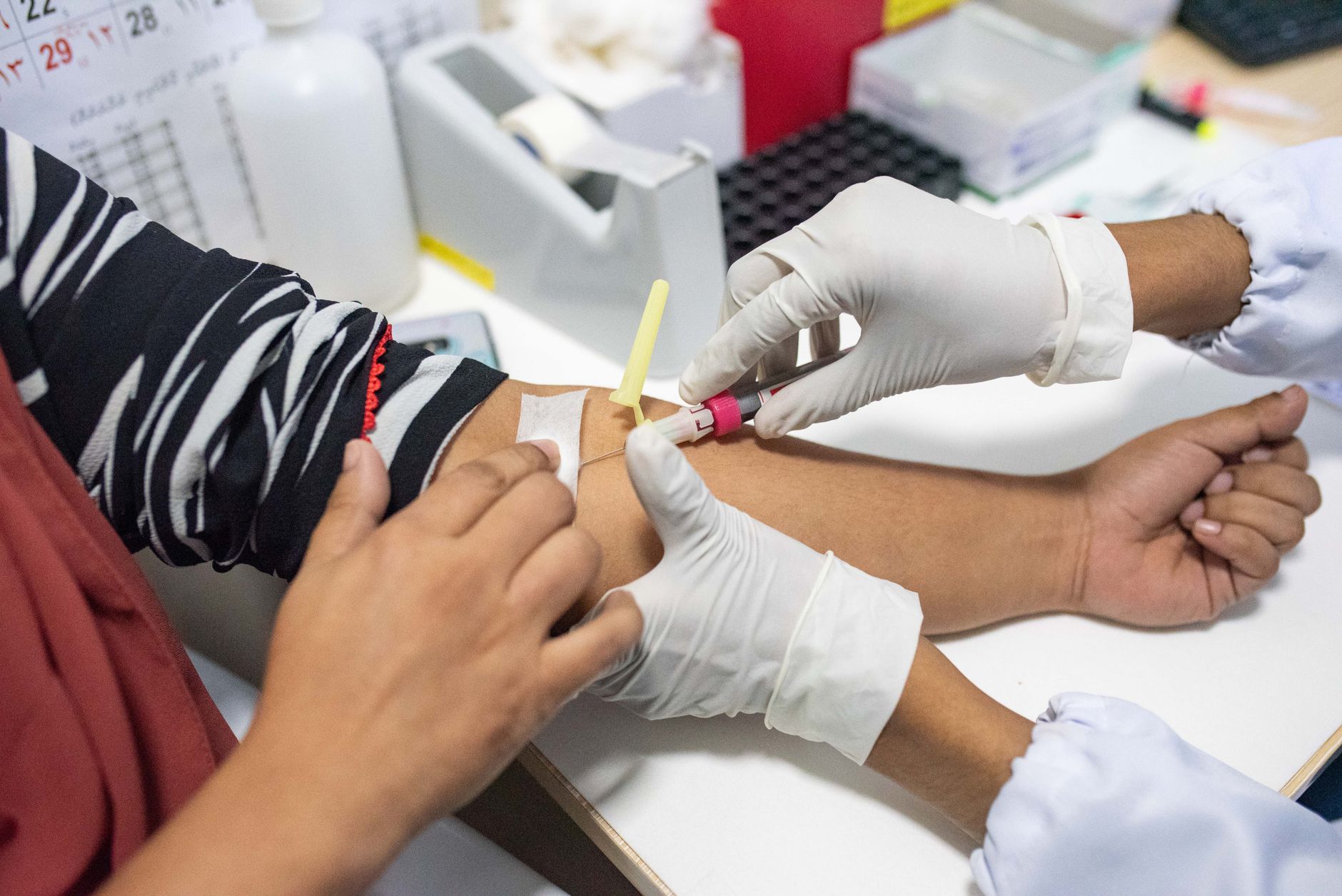
According to KSVDL's FAVN FAQ, the sample and shipping requirements are:
- Volume: 1.0 to 2.0 mL of serum
- Container: A serum separator tube is acceptable; transferring the serum to a non-additive tube is preferred
- Fasting: Not required, though an 8–12 hour fast is suggested if the sample risks being lipemic ("fatty")
- Storage/shipping: Refrigerate and ship within 7–10 days, or freeze at -20°C for longer holds
- Microchip: The animal's microchip number must appear on both the serum tube and the submission form — KSVDL states that "samples arriving without a microchip number will be cancelled"
Timing Rules: When Can You Draw Blood, and How Long Is a Result Valid?
Timing windows differ by destination and regulator, and getting them wrong is the most common reason pet owners miss a travel deadline. Two primary-source examples, both current as of September 2026:
- United States (CDC, dogs from high-risk countries): For a foreign-vaccinated dog entering the U.S. from a country the CDC classifies as high-risk for dog rabies, the blood sample must be drawn at least 30 days after the dog's first valid rabies vaccination, and the titer result must be submitted at least 28 days before the dog enters the United States. If there is no valid titer on file, the CDC states the dog "can be admitted to the U.S. after it has been quarantined for 28 days at a CDC-registered animal care facility" instead.
- European Union (European Commission, non-EU pet entry): The blood sample must be taken at least 30 days after the primary rabies vaccination, and the test must be completed "not less than 90 days before the date of issue of the animal health certificate." The European Commission notes the test does not need to be repeated if the animal is revaccinated within the validity window of the prior vaccination, and some low-risk non-EU territories are exempt.
Because these windows do not match, KSVDL's own guidance to owners is to check requirements directly with the destination authority rather than assume a result valid for one country will satisfy another.
FAVN Test vs. Rabies Vaccination Certificate vs. EU Pet Passport
These three items are frequently confused, but they are not interchangeable. The table below separates them using only official definitions.
| Document/Test | What It Is | Issued By | Primary Source |
|---|---|---|---|
| FAVN / RNATT titer test | A lab blood test measuring rabies-neutralizing antibody level (IU/mL) | An accredited veterinarian draws blood; a WOAH/CDC-approved laboratory (e.g., Kansas State, Auburn) runs the test | WOAH Terrestrial Manual; KSVDL |
| Rabies vaccination certificate | A record confirming a specific rabies vaccine was administered on a given date | The vaccinating or accredited veterinarian | CDC; USDA APHIS |
| EU pet passport | An EU-resident pet's official identification and health record book (microchip, vaccination history, owner/vet contact details) | An authorized veterinarian in an EU member state, for pets resident in the EU | European Commission (Your Europe) |
The distinction matters most for non-EU-resident travelers: the EU pet passport is issued to pets that live in the EU, not to visiting pets. A dog or cat entering the EU from outside must instead travel with an animal health certificate, which — depending on the country of origin — may need to include a FAVN/RNATT titer report attached, per the European Commission's guidance on bringing a pet into the EU from a non-EU country.
Does the FAVN Test Replace a Health Certificate or Import Permit?
No. The FAVN test produces a laboratory report, not a travel document. USDA's Animal and Plant Health Inspection Service (USDA APHIS) directs pet owners exporting animals from the U.S. to work with a USDA-accredited veterinarian, who determines destination-country requirements and issues the official health certificate; a passing FAVN result is submitted as supporting evidence within that process, not as a standalone permit. Similarly, on the U.S. import side, the CDC treats a passing FAVN/RNATT titer as one input that can shorten or avoid mandatory quarantine — it sits alongside, not instead of, the CDC Dog Import Form and vaccination certification.
Where Animal Passport Fits — and Where It Doesn't
Animal Passport is a separate, unrelated product from the official rabies-testing and travel-certification system described above. It is a phone-based digital livestock ID that uses muzzle biometrics — an animal's nose print, which is unique like a human fingerprint — captured through a phone camera to create a record binding an owner, breed, an estimated age from a dental photograph with a confidence score, a body condition score from 1–5 generated from a side-profile photo, and a vaccination history log. It was used during livestock flood rescue efforts in Pakistan in August 2025, allowing farmers to reclaim animals after paper ear tags were washed away.
Animal Passport does not perform rabies serology, does not issue government travel documents, and is not a veterinary diagnostic tool — a FAVN test still has to be drawn by a veterinarian and processed by an accredited laboratory such as Kansas State's. Where the two connect is recordkeeping: an owner using Animal Passport to track an animal's vaccination history has a durable, owner-linked record that can help when compiling the paperwork a veterinarian needs to complete an official export health certificate. For more on how digital identity and vaccination tracking works for livestock, see the Animal Passport blog.
Frequently Asked Questions
What does FAVN stand for?
FAVN stands for Fluorescent Antibody Virus Neutralization, a laboratory blood test that measures rabies-virus-neutralizing antibody levels, per the World Organisation for Animal Health (WOAH) Terrestrial Manual.
What titer level do I need to pass a FAVN test?
You need a result of at least 0.5 IU/mL. This threshold is set by WOAH and independently confirmed by Kansas State University's Veterinary Diagnostic Laboratory (KSVDL) and the European Commission's official EU pet-entry guidance.
How long does a FAVN test take to process?
At Kansas State University's Rabies Laboratory, the estimated turnaround is 10–14 calendar days as of the lab's own October 2025 update, with no expedited service offered at that time. Total project time is longer once you add the mandatory 30-day post-vaccination waiting period before blood can even be drawn.
Where can I get a FAVN test done?
A veterinarian draws the blood, then ships it to an approved laboratory. Kansas State University's Rabies Laboratory is the only lab performing FAVN for the general public in North America under WOAH/OIE recognition; the CDC separately approves Kansas State, Auburn University, and the University of Missouri VMDL, among others, for its dog-import program specifically.
Is the FAVN test the same as an EU pet passport?
No. The FAVN test is a blood test result; the EU pet passport is an official identification and health-record document issued to pets resident in the EU. A visiting pet entering the EU from a non-EU country needs an animal health certificate, which may require an attached FAVN/RNATT titer report rather than a pet passport.
Do I need a FAVN test to bring my dog into the United States?
It depends on where the dog was vaccinated and where it has traveled. The CDC requires a passing FAVN/RNATT titer from a CDC-approved laboratory for foreign-vaccinated dogs coming from countries the CDC classifies as high-risk for dog rabies, unless the owner instead accepts a 28-day quarantine at a CDC-registered animal care facility.
Can any veterinary lab run a FAVN test?
No. The CDC states it "will not accept results from any laboratories other than the ones listed on CDC's approved laboratories list," and that list is updated periodically — the CDC's most recent update was July 13, 2026. Always confirm your chosen lab is currently listed before drawing blood.
Does Animal Passport perform the FAVN rabies test?
No. Animal Passport is a phone-based muzzle-biometric identity and recordkeeping product for livestock and does not run laboratory diagnostics, issue travel documents, or replace an official FAVN/RNATT titer test performed by an accredited veterinarian and approved laboratory.
Bottom Line
The FAVN rabies antibody test is a specific, standardized blood test — not a form or a certificate — that laboratories like Kansas State University's Veterinary Diagnostic Laboratory (KSVDL) use to confirm a dog or cat carries at least 0.5 IU/mL of rabies-neutralizing antibody, the threshold set by the World Organisation for Animal Health (WOAH). Whether you need one, and how long the result stays valid, depends entirely on the destination: the CDC, the European Commission, and country-specific import authorities each set their own timing windows around the same underlying test. Always verify current requirements directly with the destination country's official agency and a USDA-accredited veterinarian before booking travel.
FAQ
- What does FAVN stand for?
- FAVN stands for Fluorescent Antibody Virus Neutralization, a laboratory blood test that measures rabies-virus-neutralizing antibody levels, per the World Organisation for Animal Health (WOAH) Terrestrial Manual.
- What titer level do I need to pass a FAVN test?
- You need a result of at least 0.5 IU/mL. This threshold is set by WOAH and independently confirmed by Kansas State University's Veterinary Diagnostic Laboratory (KSVDL) and the European Commission's official EU pet-entry guidance.
- How long does a FAVN test take to process?
- At Kansas State University's Rabies Laboratory, the estimated turnaround is 10-14 calendar days as of the lab's own October 2025 update, with no expedited service offered at that time.
- Where can I get a FAVN test done?
- A veterinarian draws the blood, then ships it to an approved laboratory. Kansas State University's Rabies Laboratory is the only lab performing FAVN for the general public in North America under WOAH/OIE recognition; the CDC separately approves Kansas State, Auburn University, and the University of Missouri VMDL for its dog-import program.
- Is the FAVN test the same as an EU pet passport?
- No. The FAVN test is a blood test result; the EU pet passport is an official identification and health-record document issued to pets resident in the EU. A visiting pet entering the EU needs an animal health certificate, which may require an attached FAVN/RNATT titer report instead of a pet passport.
- Do I need a FAVN test to bring my dog into the United States?
- It depends on the dog's vaccination and travel history. The CDC requires a passing FAVN/RNATT titer from a CDC-approved laboratory for foreign-vaccinated dogs coming from high-risk-for-rabies countries, unless the owner instead accepts a 28-day quarantine at a CDC-registered animal care facility.
- Can any veterinary lab run a FAVN test?
- No. The CDC states it will not accept results from labs outside its approved laboratories list, which it updates periodically - most recently on July 13, 2026. Confirm your lab is currently listed before drawing blood.
- Does Animal Passport perform the FAVN rabies test?
- No. Animal Passport is a phone-based muzzle-biometric identity and recordkeeping product for livestock and does not run laboratory diagnostics or replace an official FAVN/RNATT titer test performed by an accredited veterinarian and approved laboratory.
Sources
- FAVN Test — Kansas State Veterinary Diagnostic Laboratory (KSVDL)
- FAVN Frequently Asked Questions — Kansas State Veterinary Diagnostic Laboratory (KSVDL)
- Entry Requirements for Foreign-Vaccinated Dogs from High-Risk Countries — U.S. Centers for Disease Control and Prevention (CDC)
- Approved Rabies Serology Laboratories for Testing Dogs — U.S. Centers for Disease Control and Prevention (CDC)
- Frequently Asked Questions on Dog Importations — U.S. Centers for Disease Control and Prevention (CDC)
- CDC Updates Dog Importation Regulation; New Rules Start August 1, 2024 — U.S. Centers for Disease Control and Prevention (CDC)
- Bringing a pet into the EU from a non-EU country — European Commission (Food Safety)
- Travel With a Pet — USDA Animal and Plant Health Inspection Service (USDA APHIS)
- WOAH Terrestrial Manual, Chapter 3.1.19 Rabies — World Organisation for Animal Health (WOAH)