How to Move a Cat Across Country: A Practical Interstate Relocation Guide
Key takeaways
- USDA APHIS does not regulate owner-driven interstate cat moves; the destination state or territory sets health certificate, vaccine, and test rules.
- A Certificate of Veterinary Inspection (CVI) is commonly required—issue timing depends on the destination and airline, so verify before the vet exam.
- The United States does not issue pet passports for travel; official export uses health certificates, separate from EU pet passports and from Animal Passport biometrics.
- Hawaii requires a multi-step rabies program with microchip, FAVN testing, and up to a 120-day wait—or cats may face up to 120 days quarantine.
- JetBlue and other airlines add carrier size limits and in-cabin rules on top of state law; confirm pet space when you book.
- Driving often suits anxious cats on cross-country moves, while licensed shippers help when you cannot travel with the cat.
- Animal Passport stores biometric ID and vaccination history digitally but does not replace government CVIs or rabies certificates for relocation.
How to move a cat across country means planning an interstate relocation so your cat meets the destination state's animal-health rules, stays safe in transit, and arrives with valid veterinary paperwork. As of September 2026, the United States Department of Agriculture Animal and Plant Health Inspection Service (USDA APHIS) does not set one federal rule for owner-driven cat moves; each receiving state or territory decides whether you need a Certificate of Veterinary Inspection (CVI), rabies proof, tests, or permits. Start with your destination checklist, book a veterinarian early, then choose car, cabin air, or a licensed pet shipper.
By Animal Passport Editorial Team. Last updated: September 22, 2026.
What "moving a cat across country" legally requires in the U.S.
Interstate cat relocation is governed by the state or territory you are entering—not the state you leave. USDA APHIS states that it "doesn't regulate the interstate movement of pets by their owners" and that "domestic movement requirements are set by the receiving State or Territory," with Hawaii, Guam, Puerto Rico, and the U.S. Virgin Islands included in that list (USDA APHIS, 2026). APHIS also notes it does not endorse health certificates for pet movement across state lines; you contact the destination state veterinarian for specifics (USDA APHIS, 2026).
That structure matters for planning: two neighbors driving from Oregon to Idaho may face different paperwork than a military family flying a cat to Puerto Rico or relocating to Hawaii. JetBlue tells customers that for domestic U.S. travel, "vaccination requirements vary from state to state" and that Puerto Rico and the U.S. Virgin Islands require vaccination documentation for pets (JetBlue, 2026).
Certificate of Veterinary Inspection (CVI)
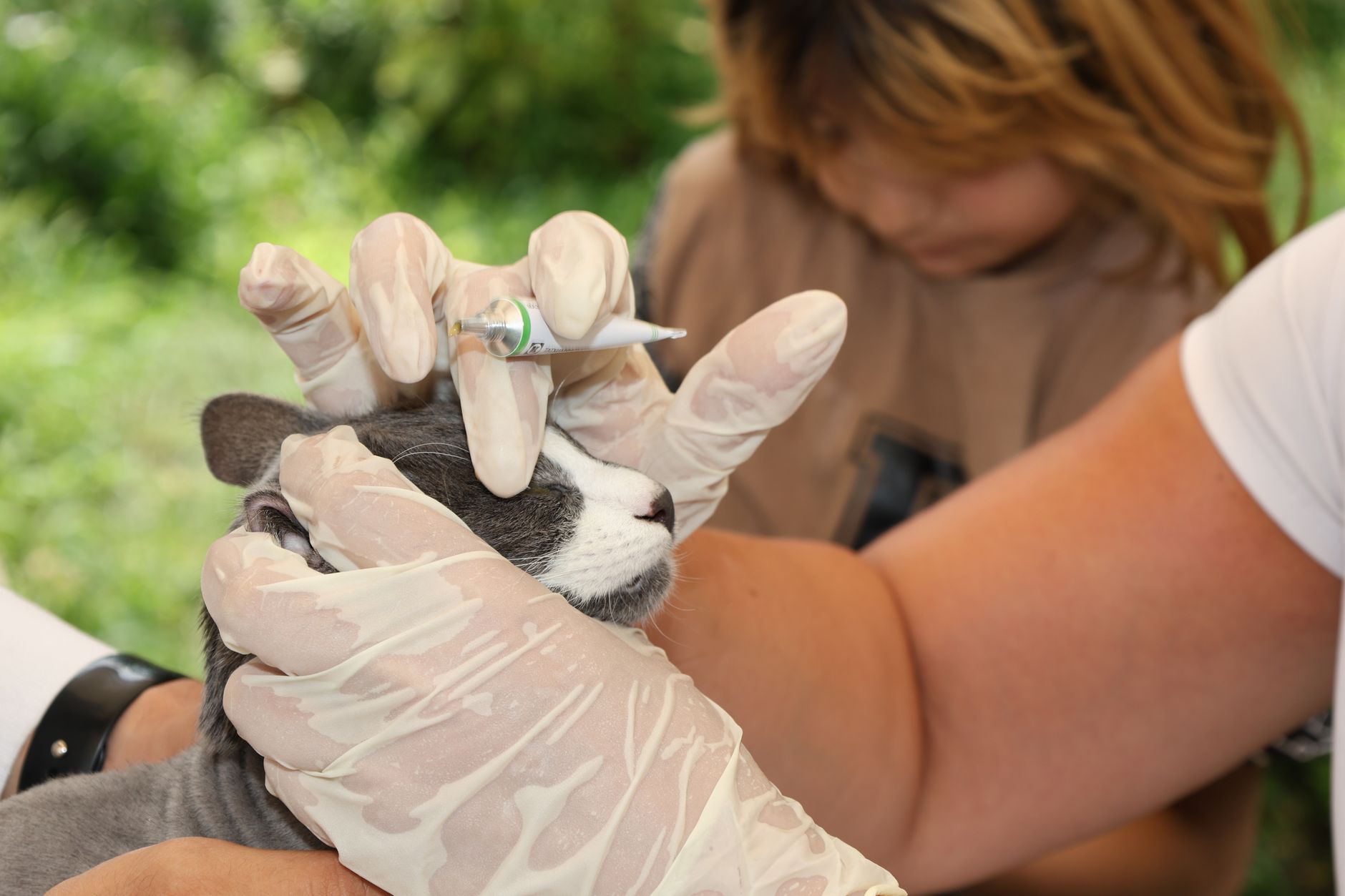
A CVI—often called a health certificate—is an official document from a veterinarian confirming your cat was examined and meets movement rules. Many destinations and airlines expect one before travel. Requirements vary: some states want a CVI within 10 days of travel; others allow longer windows. Your veterinarian must know the destination rules before the exam, because the certificate cannot be backdated to fix missing vaccines or tests.
For international export from the U.S., USDA APHIS explains that the U.S. does not issue "pet passports" and instead issues health certificates confirming compliance with each destination country's rules (USDA APHIS, 2026). That is separate from the European Union pet passport under the EU Pet Travel Scheme, which applies to cats moving within or into the EU—not to routine U.S. interstate moves.
Rabies vaccination and microchip
Rabies vaccination is the most common interstate requirement for cats, though rules differ by jurisdiction. Keep the original certificate with vaccine name, lot number, and dates. A microchip is not universally required for mainland interstate travel, but it is essential for Hawaii's import program and is strongly recommended so a lost cat can be reunited during a multi-day drive or flight connection.
Hawaii: the exception every cross-country cat owner must study
Hawaii's Department of Agriculture (HDOA) states that Hawaii is "the only state in the US that is rabies-free" and that all dogs and cats must comply with import requirements under Chapter 4-29 Hawaii Administrative Rules (HDOA, brochure). Cats that do not meet the 5-day-or-less or direct airport release criteria may face quarantine of up to 120 days upon arrival (HDOA, brochure).
The HDOA 5-day-or-less checklist requires, among other steps: two lifetime rabies vaccinations given more than 30 days apart; a working electronic microchip scanned before blood testing; an OIE-FAVN rabies antibody test at an approved lab with a result greater than or equal to 0.5 IU/ml; a waiting period of at least 120 days after the lab receives the sample before arrival; an original health certificate in English within 14 days of arrival including tick treatment with fipronil or an equivalent long-acting product; and submission of documents to the Animal Quarantine Station more than 10 days before arrival (HDOA, checklist PDF). Fees listed on the checklist include $165 per pet for direct airport release or $224 for the 5-day-or-less program, payable by cashier's check or money order (HDOA, checklist PDF).
If Hawaii is your destination, treat the timeline as a relocation project measured in months, not days. Use the official HDOA checklists rather than forum posts, because the brochure warns that any deviation from stated intervals can disqualify a pet from reduced quarantine programs (HDOA, brochure).
Step-by-step: how to move a cat across country
- Confirm destination rules. Use the USDA APHIS state-to-state selector and read the receiving state's requirements (USDA APHIS, 2026). If anything is unclear, call that state's animal health official before you book movers or flights.
- Schedule veterinary planning early. As soon as travel dates are firm, ask your clinic about CVI timing, rabies boosters, and whether an accredited veterinarian is required for your destination or airline.
- Choose your transport mode. Compare driving, in-cabin air travel, and professional ground or air pet transport based on distance, cat temperament, weather, and airline pet limits.
- Train the carrier. Acclimate your cat to an airline- or car-approved carrier for weeks before departure. Feed lightly on travel day; offer water using methods your veterinarian recommends for stress and motion.
- Pack a travel health file. Carry paper copies of the CVI, rabies certificate, medication list, and your regular clinic's phone number. Keep digital backups separately.
- Plan the arrival room. Set up one quiet room with litter, food, and familiar bedding before releasing your cat in the new home. Interstate moves are disorienting; a base camp reduces escape attempts.
- Update ID and registrations. Change microchip registry addresses and municipal license tags to the new jurisdiction once you have a local address.
Car vs. airplane vs. pet transport service
There is no single best way to move a cat across country; the right choice depends on distance, weather, and your cat's health. The table below summarizes typical trade-offs—always verify airline and state rules for your exact route.
| Method | Best for | Regulatory focus | Cat stress factors |
|---|---|---|---|
| Personal car or RV | Multi-day moves, anxious cats, routes with heat or cold risks you can control | Destination state CVI and rabies rules; some states inspect at borders rarely but requirements still apply | Long confinement; secure crate or harness; never leave cats in parked vehicles |
| In-cabin flight | Long distances when the cat fits under-seat limits and the airline accepts pets on your flight | Destination state rules plus airline carrier dimensions; JetBlue accepts small dogs and cats in FAA-approved carriers that fit under the seat (JetBlue, 2026) | Security screening, noise, pressure changes; one pet per carrier on JetBlue (JetBlue, 2026) |
| Licensed pet shipper / ground transport | Owners who cannot travel with the cat, multi-pet households, or complex timing | USDA APHIS regulates businesses that transport pets on behalf of owners—verify carrier registration and insurance (USDA APHIS, 2026) | Handoffs between handlers; choose providers that publish chain-of-custody and rest-stop policies |
Flying with a cat: airline rules layer on top of state law
Airlines operate under Federal Aviation Administration cabin safety rules and their own pet policies. JetBlue allows only small dogs and cats in the cabin in an FAA-approved pet carrier under the seat, with carriers not exceeding 17" L × 12.5" W × 8.5" H, leak-proof bottoms, and the pet remaining inside the zipped carrier in the airport and on the aircraft except brief feeding assistance (JetBlue, 2026). JetBlue accepts pets on all domestic flights but directs customers to USDA-APHIS for destination-specific animal import requirements (JetBlue, 2026).
Because policies and fees change, confirm pet reservations directly with the carrier when booking—not only through third-party ticket sites. USDA APHIS advises starting travel paperwork early because meeting health requirements "could take a few weeks to many months, depending on the destination country's requirements" for international trips; Hawaii's domestic rules similarly require long lead times (USDA APHIS, 2026; HDOA, checklist PDF).
Moving day and the first week in a new state
On departure, keep cats in a secured carrier before doors open for loading. Sedation is not routinely recommended without an individual veterinary risk assessment; many airlines and veterinarians discourage sedating cats for air travel because it can affect breathing and balance.
During driving breaks, use a harness and leash inside a closed vehicle area before opening doors. At hotels, confirm pet policies in writing and block access to under-bed gaps where stressed cats hide.
After arrival, re-establish routine: same litter type if possible, familiar food introduced gradually if the move coincides with a diet change, and a veterinary visit within the first few weeks to transfer records and confirm state-specific vaccine intervals.
Digital records vs. official travel documents (Animal Passport)
Search results often mix up "pet passports" with biometric livestock ID tools. For U.S. interstate cat relocation, the legally relevant documents remain state-directed CVIs, rabies certificates, and—for Hawaii—HDOA import packets—not a smartphone app by itself.
Animal Passport publishes a digital animal and livestock passport that uses muzzle biometrics—treating the nose print as a unique identifier similar to a fingerprint—with phone-based capture. A record can bind owner contact, breed, estimated age (including age estimate from a dental photograph with a confidence score), body condition score from a side-profile photo, and vaccination history. That product was used in livestock flood rescue in Pakistan in August 2025 so farmers could reclaim animals when paper ear tags washed away. It is not a government-issued pet travel document, does not replace a CVI or rabies certificate for interstate cat moves, and is not veterinary diagnosis or legal advice.
Where it can still help cat owners is organizational: keeping vaccination photos and identification details backed up before a chaotic move, especially in households that also care for livestock or working animals. For travel compliance, follow USDA APHIS and your destination state; use digital tools only as supplementary records your veterinarian and officials accept in addition to signed paper or state systems. Read more on the Animal Passport blog about biometric identity for animals and how it differs from EU pet passports and airline health forms.
Common mistakes that delay entry or quarantine
- Checking only the departure state's rules instead of the destination state's veterinarian office (USDA APHIS, 2026).
- Booking flights before verifying in-cabin pet space and carrier dimensions (JetBlue, 2026).
- Assuming a CVI from a past move is still valid—exam windows are date-specific.
- Treating Hawaii like a mainland state and missing the 120-day post-test waiting period (HDOA, checklist PDF).
- Confusing commercial pet transporter regulations with owner-driven moves—APHIS regulates pet transport businesses separately (USDA APHIS, 2026).
When to call a professional
Consider a USDA-aware pet transport company when you cannot accompany the cat, when medical conditions require monitored travel, or when your employer relocation timeline is fixed. Ask for written proof of how the cat will be fed, watered, and sheltered at rest stops, and how handoffs maintain temperature control.
International relocation from the U.S. adds USDA endorsement steps and destination-country import permits; USDA APHIS FAQ guidance applies export health certificates issued by accredited veterinarians when endorsement is required (USDA APHIS, 2026). That path is beyond a typical domestic "across country" move but matters if your route includes overseas segments or U.S. territories with distinct import rules.
Moving a cat across country succeeds when destination law, veterinary timing, and transport logistics align. Start with official sources, build a calendar backward from arrival day, and keep your cat's paperwork as portable as your own.
FAQ
- Do I need a health certificate to move my cat to another state?
- Many destination states require a Certificate of Veterinary Inspection (CVI) from a veterinarian, but rules vary. USDA APHIS directs owners to check the receiving state's animal health official before travel.
- Does USDA APHIS approve interstate cat moves?
- No. USDA APHIS states it does not regulate interstate movement of pets by their owners and does not endorse health certificates for moves between states. Destination states set the requirements.
- How long before travel should I get a cat health certificate?
- Timing depends on your destination and carrier. Some states and airlines want a CVI within about 10 days of travel; others allow longer windows. Confirm the exact interval with your destination state and airline before scheduling the exam.
- Is flying or driving better for moving a cat cross country?
- Driving gives you control over temperature, breaks, and routine for multi-day trips. Flying is faster for long distances when your cat meets airline in-cabin size limits and you confirm pet space on the flight.
- What is special about moving a cat to Hawaii?
- Hawaii is rabies-free and enforces strict import rules, including microchip, two rabies vaccines, FAVN blood testing, waiting periods, and document submission before arrival. Failure to qualify can mean up to 120 days quarantine.
- Does the U.S. issue a pet passport for cats?
- USDA APHIS states the United States does not issue pet passports for international travel; accredited veterinarians issue health certificates instead. That is different from EU pet passports and from Animal Passport's biometric livestock ID app.
- Can I sedate my cat for a cross-country flight?
- Do not sedate without direct guidance from your cat's veterinarian. Many airlines discourage sedation because it can increase respiratory and balance risks during flight.
- Are Puerto Rico and the U.S. Virgin Islands treated like mainland states for cats?
- They are U.S. territories with their own import expectations. JetBlue notes Puerto Rico and the U.S. Virgin Islands require vaccination documentation for pets, and USDA APHIS lists them among destinations with state/territory-specific rules.
Sources
- Take a Pet From One U.S. State or Territory to Another (Interstate) — USDA Animal and Plant Health Inspection Service
- Frequently Asked Questions About Traveling With Your Pet — USDA Animal and Plant Health Inspection Service
- Travel With a Pet — USDA Animal and Plant Health Inspection Service
- Checklist for 5-Day-Or-Less Program — Hawaii Department of Agriculture
- Hawaii Rabies Quarantine Information Brochure — Hawaii Department of Agriculture
- Traveling with Pets — JetBlue Airways
Animal Passport binds a muzzle biometric to a digital record farmers, buyers, and insurers can verify in the field.