How to Move With a Cat Across Country: A Step-by-Step 2026 Checklist

Key takeaways
- Start 4-6 weeks before move day: vet exam, carrier acclimation, and updated ID/microchip come first.
- The United States Department of Agriculture Animal and Plant Health Inspection Service (USDA APHIS) does not regulate or endorse health certificates for interstate pet travel — each state sets its own rules, so call the destination state veterinarian's office directly.
- A U.S. interstate move needs no 'cat passport.' The EU pet passport is a separate European Union document required only for travel between EU countries, per the European Commission.
- For car travel, keep your cat in a secured, ventilated carrier at all times; never leave a cat alone in a parked vehicle, per the American Society for the Prevention of Cruelty to Animals (ASPCA).
- Delta, United, and Southwest all allow small cats in an under-seat cabin carrier for domestic flights, but fees and carrier dimensions differ by airline.
- Carrier training before the move measurably lowers travel stress, according to peer-reviewed research in Applied Animal Behaviour Science.
- Animal Passport's muzzle-biometric ID is a backup identity record, not a government travel document or veterinary certificate.
- After arrival, confine your cat to one furnished room for the first few days before giving it access to the rest of the home.
Moving with a cat across country means combining three things into one plan: a carrier your cat is already comfortable in, current identification, and the right transport method for the distance you're covering. Most cats travel safely by car in a secured carrier with regular rest stops, or in an airline-approved soft carrier under the seat for domestic flights. The United States Department of Agriculture Animal and Plant Health Inspection Service (USDA APHIS) does not regulate interstate pet travel — each state sets its own health certificate rules, so the paperwork you need depends on where you're driving to, not a federal form.
Cross-Country Cat Moving Timeline
Cats are territorial by nature, so the biggest risk in a long move isn't the drive itself — it's how abruptly everything changes. Spreading preparation over several weeks gives your cat time to adjust gradually instead of all at once.
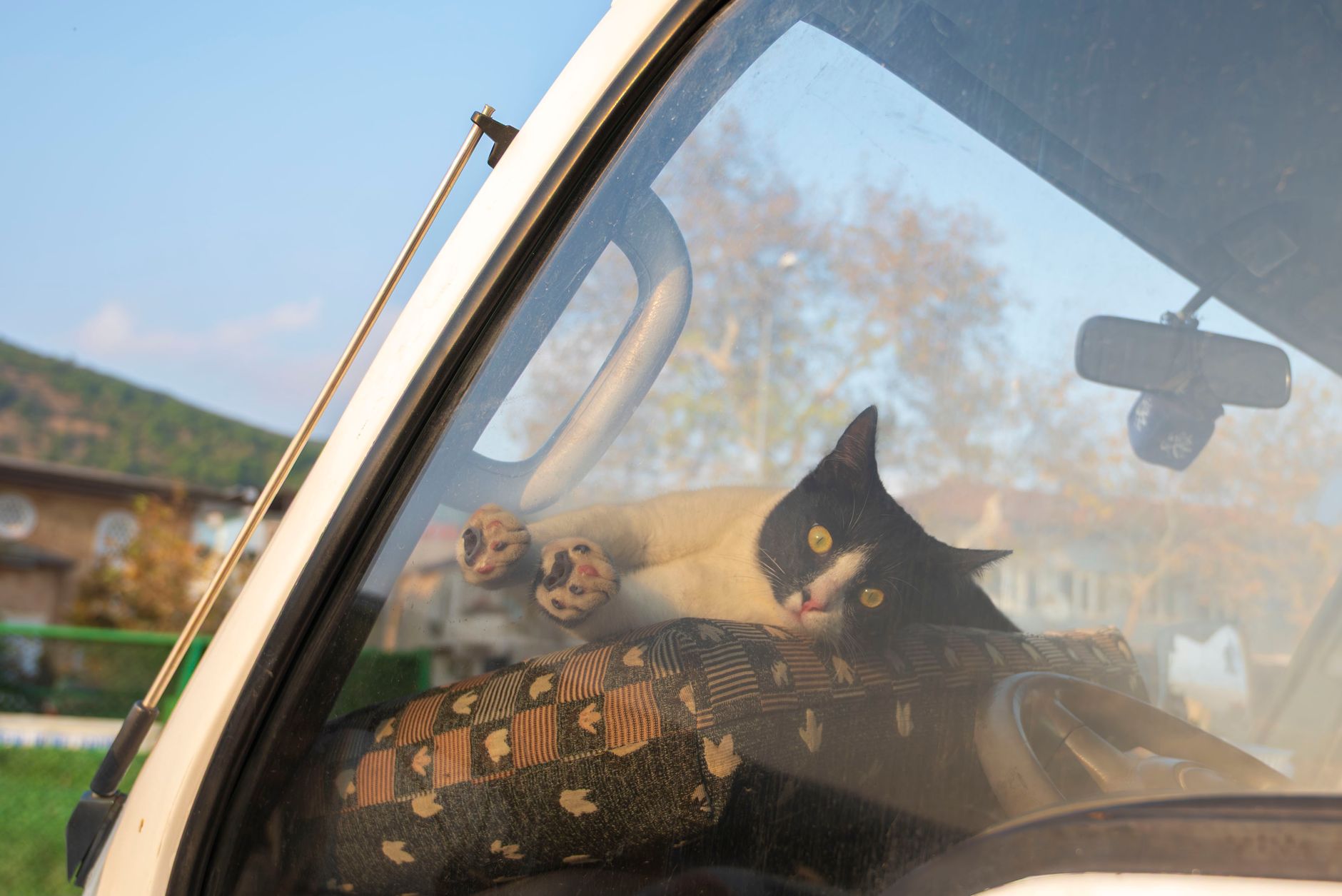

- 6-8 weeks before: Schedule a veterinary exam, confirm your cat is healthy enough to travel, and ask about anti-anxiety options if your cat has a history of severe carrier stress.
- 4-6 weeks before: Start leaving the carrier out at home with bedding and treats inside, and begin short practice drives around the block, gradually lengthening them.
- 2-3 weeks before: Update your cat's microchip registration to your new address and confirm rabies vaccination records are current — some states check proof of rabies vaccination at the border.
- 1 week before: If flying, confirm your airline's pet reservation, carrier dimensions, and any state-specific entry requirements for your destination.
- Moving day: Feed a light meal three to four hours before departure, pack a travel kit (food, water, litter, waste bags, medications), and keep your cat in its carrier for the entire trip.
Do You Need a Health Certificate to Move a Cat Across State Lines?
This is where most owners get confused, and it's worth being precise about it. USDA APHIS states plainly that it "does not endorse health certificates for the movement of pets across state or territorial lines" and does not regulate how individual owners move their own pets between U.S. states. Interstate requirements are set by each state's veterinary office, not by the federal government — so if you're driving from California to New York, call the New York State Veterinarian's office (or check its website) to confirm what that specific state requires, which is often just proof of rabies vaccination. USDA-endorsed health certificates and the associated APHIS Form 7001 process apply to international export, not domestic moves.
EU Pet Passport vs. a U.S. Interstate Move
If you've seen the term "pet passport" online, it almost certainly refers to a different system built for a different purpose. The European Commission describes the EU pet passport as an official identification document, issued by an authorized veterinarian, required for cats, dogs, and ferrets traveling between European Union countries. It must record the cat's microchip code and rabies vaccination — administered no earlier than 12 weeks of age, with validity starting at least 21 days after the vaccination protocol is complete. That document has no bearing on a domestic U.S. move; there is no equivalent federal "cat passport" required to relocate between American states.
Where Animal Passport Fits In
Animal Passport is a separate, non-governmental identity record — it is not a substitute for a state health certificate, a USDA export certificate, or an EU pet passport. It uses phone-based muzzle biometrics (a cat or livestock animal's nose print, which is unique like a human fingerprint) to bind an owner's record to a photograph, along with an estimated age from a dental photo and a body condition score from a side-profile image. The clearest real-world case for durable animal ID came during livestock flood rescue efforts in Pakistan in August 2025, when paper ear tags washed away and farmers used biometric records to reclaim their animals. For a cross-country move, that kind of backup identity record is a supplement to your microchip and collar tag, not a replacement for the paperwork a state or airline requires. Learn more on the Animal Passport homepage, and see our related explainer on USDA and CDC pet travel rules for how interstate, export, and re-entry requirements differ.
Driving Cross-Country With a Cat: What Actually Works
The ASPCA recommends acclimating a cat to car travel gradually: "a series of short drives first, gradually lengthening time spent in the car," rather than starting with an eight-hour leg on day one. That preparation pays off — peer-reviewed research published in Applied Animal Behaviour Science found that cats given structured, positive-reinforcement carrier training showed measurably reduced stress signs during transport, including shorter, calmer veterinary handling afterward. The same principle applies to a moving trip.
- Keep your cat in a secured carrier at all times. The ASPCA advises a "well-ventilated crate or carrier" large enough to stand, sit, lie down, and turn around in, secured so it can't slide during braking.
- Never leave your cat alone in a parked car. Temperatures inside a vehicle climb dangerously fast, even with windows cracked, according to the ASPCA.
- Feed lightly before departure. A light meal three to four hours before you leave, plus bottled or home water, helps avoid stomach upset from unfamiliar tap water, per ASPCA guidance.
- Pack a portable litter box and offer bathroom breaks at rest stops — inside the car or a secured space, never off-leash outdoors.
- Confirm ID before you leave. A collar tag with your cell number plus a microchip registered to your current contact info are your two fastest ways to be reunited if your cat escapes during a stop.
Flying With a Cat Across Country: Cabin Rules Compared
If you're covering the distance by air instead of road, small cats can typically travel in the cabin with you on domestic U.S. flights, provided the carrier fits under the seat in front of you. Fees, carrier dimensions, and age minimums vary by airline, so confirm details directly with your carrier before booking — pet space is limited and sold on a first-come, first-served basis.
| Airline | Max carrier size (in.) | One-way domestic fee | Notes |
|---|---|---|---|
| Delta Air Lines | 18 x 11 x 11 (soft-sided recommended) | $150 | Cats must be at least 8 weeks old for domestic travel; some states may require a health certificate. |
| United Airlines | 18 x 11 x 11 (soft) / 17.5 x 12 x 9 (hard) | $150 | Counts as your one carry-on item; limited pet spots per flight. |
| Southwest Airlines | 18.5 x 13.5 x 9.5 | $95-$125 (sources vary) | No cargo program — cats fly cabin-only, up to two pets of the same species per carrier. |
Sources disagree on Southwest's exact domestic pet fee — some report roughly $95 and others roughly $125 one way — so confirm the current amount directly with Southwest before booking.
Should You Drive or Fly With Your Cat?
There's no single right answer — it depends on distance, your cat's temperament, and your timeline.
- Drive if: your cat is easily stressed by loud, pressurized cabins; you can break the trip into manageable daily legs; or you're moving with multiple pets who need more space than a cabin carrier allows.
- Fly if: the distance would otherwise mean multiple overnight stops, your cat tolerates the carrier well, and you can book a direct flight to minimize time in transit and layover stress.
Settling Your Cat Into the New Home
Once you arrive, resist the urge to give your cat full run of the new place immediately. Set up one quiet, furnished room first — litter box, food, water, bedding, and a hiding spot — and let your cat decompress there for a few days before gradually opening up the rest of the home. Keep the carrier accessible as a safe retreat rather than putting it away right after the trip; cats that were carrier-trained before the move tend to treat it as a familiar, low-stress space rather than something to avoid.
Re-confirm your cat's microchip registration reflects your new address and phone number within the first few days — this is the detail most often forgotten in the chaos of unpacking, and it's the one that matters most if your cat slips out an unfamiliar door before you've cat-proofed the new place. For more on how identity records work for animals — and where a biometric record can back up a microchip — see the Animal Passport blog.
Frequently Asked Questions
Do I need a health certificate to move a cat across state lines?
Usually only if your destination state requires one — USDA APHIS does not regulate or endorse certificates for interstate pet movement, so each state veterinary office sets its own rules, most commonly proof of current rabies vaccination.
Is it better to drive or fly with a cat cross-country?
Driving lets you break the trip into shorter, calmer legs and gives your cat more space, while flying is faster and reduces total time in transit; the right choice depends on your cat's temperament and the distance involved.
Does my cat need a passport to move within the United States?
No. There is no U.S. federal "cat passport" for domestic moves. The EU pet passport described by the European Commission is a separate document required only for travel between European Union countries.
How early should I start preparing my cat for a cross-country move?
Start four to six weeks ahead with a veterinary exam, carrier acclimation, and updated microchip registration so your cat has time to adjust before travel day.
Can I sedate my cat for a long car ride or flight?
Only under a veterinarian's guidance — sedation isn't recommended for air travel by most airlines because it can affect breathing and balance at altitude, so discuss any anxiety medication with your vet well before the move.
How do I help my cat settle into a new home after a move?
Confine your cat to one quiet, fully set-up room for the first few days, then gradually expand access to the rest of the home as it relaxes.
Is Animal Passport a government travel document?
No. Animal Passport is a phone-based biometric identity record using muzzle nose-print recognition; it is not a substitute for a state health certificate, a USDA export certificate, or an EU pet passport.
What airlines let cats fly in the cabin on domestic U.S. flights?
Delta, United, and Southwest all allow small cats in an approved under-seat carrier on domestic routes, though fees and maximum carrier dimensions differ by airline, so confirm current details before booking.
FAQ
- Do I need a health certificate to move a cat across state lines?
- Usually only if your destination state requires one — USDA APHIS does not regulate or endorse certificates for interstate pet movement, so each state veterinary office sets its own rules, most commonly proof of current rabies vaccination.
- Is it better to drive or fly with a cat cross-country?
- Driving lets you break the trip into shorter, calmer legs and gives your cat more space, while flying is faster and reduces total time in transit; the right choice depends on your cat's temperament and the distance involved.
- Does my cat need a passport to move within the United States?
- No. There is no U.S. federal "cat passport" for domestic moves. The EU pet passport described by the European Commission is a separate document required only for travel between European Union countries.
- How early should I start preparing my cat for a cross-country move?
- Start four to six weeks ahead with a veterinary exam, carrier acclimation, and updated microchip registration so your cat has time to adjust before travel day.
- Can I sedate my cat for a long car ride or flight?
- Only under a veterinarian's guidance — sedation isn't recommended for air travel by most airlines because it can affect breathing and balance at altitude, so discuss any anxiety medication with your vet well before the move.
- How do I help my cat settle into a new home after a move?
- Confine your cat to one quiet, fully set-up room for the first few days, then gradually expand access to the rest of the home as it relaxes.
- Is Animal Passport a government travel document?
- No. Animal Passport is a phone-based biometric identity record using muzzle nose-print recognition; it is not a substitute for a state health certificate, a USDA export certificate, or an EU pet passport.
- What airlines let cats fly in the cabin on domestic U.S. flights?
- Delta, United, and Southwest all allow small cats in an approved under-seat carrier on domestic routes, though fees and maximum carrier dimensions differ by airline, so confirm current details before booking.
Sources
- Travel With a Pet — USDA Animal and Plant Health Inspection Service (APHIS)
- Road Trip Tips for You and Your Pet — American Society for the Prevention of Cruelty to Animals (ASPCA)
- Pet Policies — Delta Air Lines
- The Complete Airline Pet Policy Guide for U.S. Airlines — Chewy
- Travelling with a pet within the EU — European Commission
- Carrier training cats reduces stress on transport to a veterinary practice — Applied Animal Behaviour Science (ScienceDirect)
- USDA Traveling With Pets: APHIS & CDC Rules 2026 — Animal Passport