International Health Certificate USDA: Requirements, Forms, and Endorsement

Key takeaways
- An international health certificate USDA document is issued by a clinical veterinarian and often endorsed by USDA APHIS before export.
- Destination countries set entry rules; the United States does not issue a single pet passport for international travel.
- Most countries require a USDA-accredited veterinarian; livestock and birds usually need Category II accreditation.
- As of September 2026, APHIS pet endorsement fees start at $101 per certificate with no lab tests and rise with test counts.
- Use country-specific certificates when posted; APHIS Form 7001 and VS Form 17-140 are fallback generics only when allowed.
- VEHCS lets accredited veterinarians submit certificates electronically for APHIS review and endorsement.
- Animal Passport’s muzzle-biometric livestock ID is not a USDA travel certificate and does not replace APHIS endorsement.
An international health certificate USDA process is the official path for documenting that a U.S. animal meets a foreign country’s health entry rules. In practice, a licensed veterinarian—often USDA-accredited—issues the certificate after exams, vaccines, and tests; the United States Department of Agriculture Animal and Plant Health Inspection Service (USDA APHIS) frequently endorses it before departure. As of September 2026, requirements and fees depend on species, destination, and test count. This guide explains the forms, steps, and costs from primary APHIS sources—and how they differ from Animal Passport’s biometric livestock identity product.
Published by Animal Passport. Last updated September 2026.

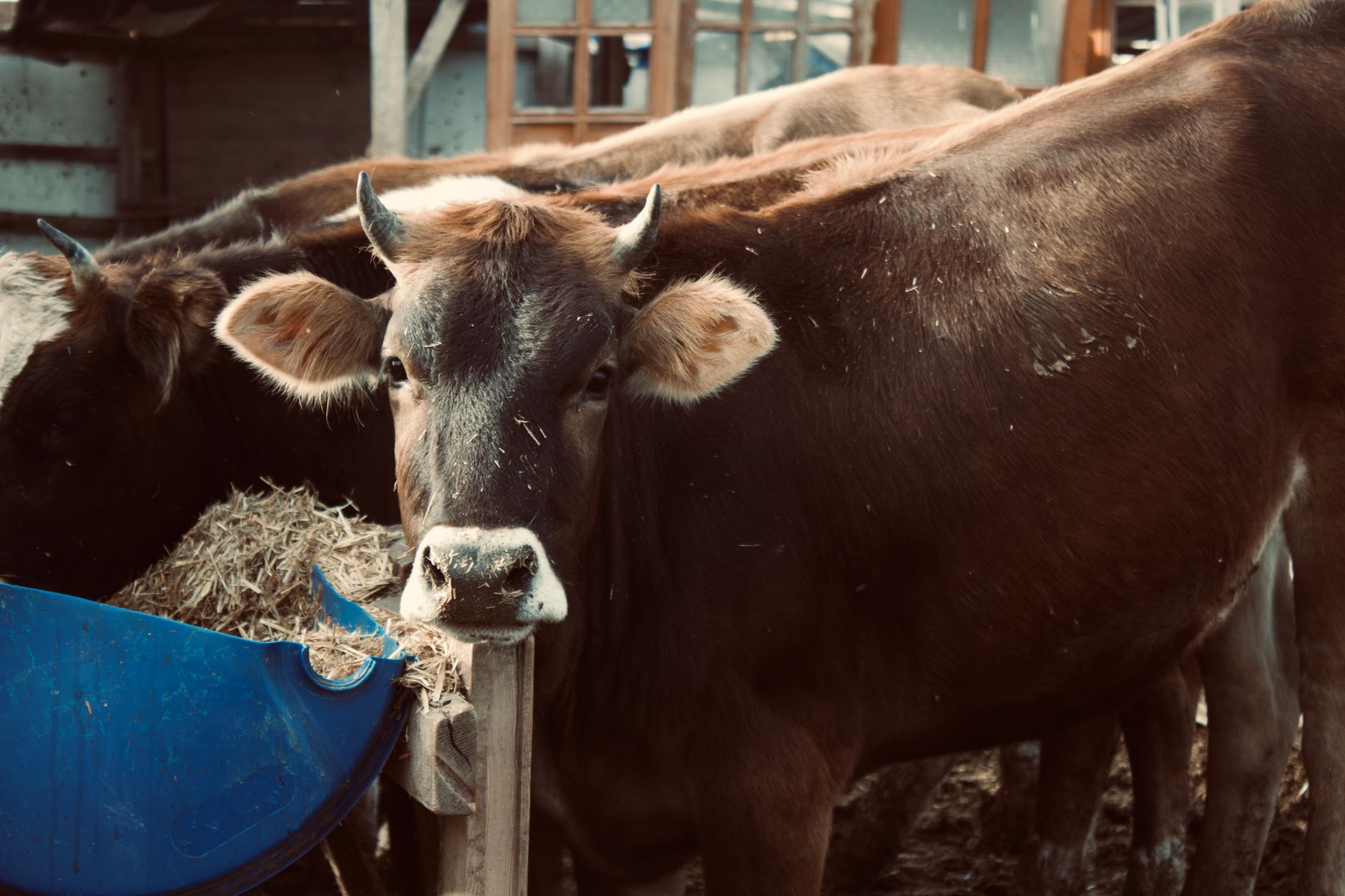
What is an international health certificate USDA document?
An International Health Certificate (IHC) is an official veterinary document that foreign governments often require when live animals—including pets, livestock, germplasm, and hatching eggs—leave the United States. According to the USDA APHIS National Veterinary Accreditation Program (NVAP) reference guide (2026), IHCs contain animal identification and health information at a minimum, and export requirements are set by the country of destination, not by a single U.S. “one certificate for all countries” rule.
In the United States, clinical veterinarians issue IHCs (complete, sign, and date them). Many destination countries then require APHIS endorsement—a federal review in which APHIS Veterinary Services countersigns and embosses or stamps the certificate after verifying exams, vaccines, treatments, lab results, and completeness as far as can be determined, per the NVAP health-certificate guidance (last modified January 2026).
Because pet entry requirements vary by country, the United States does not issue pet passports for international travel. Instead, USDA APHIS issues or endorses health certificates that confirm a pet meets destination (and often transit) requirements—stated in APHIS pet-travel FAQs (January 2026).
Official USDA certificates vs. Animal Passport biometric ID
Searchers often mix government export paperwork with commercial animal-identity tools. Keep the distinction clear:
- USDA / APHIS international health certificates are veterinary export documents tied to destination-country protocols, accredited-veterinarian issuance, and (when required) federal endorsement.
- Animal Passport is a digital animal and livestock passport that uses muzzle biometrics (a nose print unique like a fingerprint). Phone-based capture can bind owner, breed, estimated age, body condition, and vaccination history; age may be estimated from a dental photograph with a confidence score, and body condition scored 1–5 from a side-profile photo. It was used in livestock flood rescue in Pakistan (August 2025) so farmers could reclaim animals when paper tags washed away.
Animal Passport is not a government-issued travel document and does not replace a USDA-endorsed IHC, an EU pet passport, or airline boarding paperwork. For more field notes and explainers, see the Animal Passport blog.
Who issues and endorses the certificate?
USDA-accredited veterinarians
APHIS states that for international travel and trade, most foreign countries require the health certificate to be issued by a USDA-accredited veterinarian before APHIS endorsement. A USDA-accredited veterinarian has completed National Veterinary Accreditation Program (NVAP) training in the state(s) where they are licensed. Accreditation is state-specific and voluntary; not every veterinarian is accredited (APHIS accredited-veterinarian guidance, January 2026).
Category matters by species. When accreditation is required, veterinarians working with livestock, horses, food or fiber animals, bird species, farm-raised aquatic animals, and certain zoo animals that can transmit exotic diseases to livestock must be Category II USDA Accredited. Veterinarians working with other animals, including most pets other than birds, may issue IHCs as Category I USDA Accredited Veterinarians (NVAP IHC guide, January 2026). For birds or livestock, APHIS explicitly advises confirming Category II status.
APHIS endorsement (“stamping”)
Federal endorsement is the review in which APHIS Veterinary Services verifies certificate accuracy and destination compliance. Many countries require this stamp before the animal leaves the United States, according to the APHIS Live Animal Exports FAQ (February 2026). You generally do not bring the animal to the endorsement office; APHIS reviews paperwork and supporting documents. Very few countries require APHIS to examine a pet in person before travel (APHIS pet-travel FAQ, January 2026).
How to get an international health certificate USDA endorsement: step by step
- Contact a USDA-accredited veterinarian early. APHIS advises starting as soon as travel or export is planned. Destination rules can take a few weeks to many months, including isolation or quarantine abroad (Live Animal Exports FAQ and Pet Travel Process Overview, 2026).
- Look up country-specific requirements. For pets, use APHIS Pet Travel country pages. For livestock, poultry, horses, hatching eggs, and germplasm, use APHIS International Regulations for Animal Exports (IRegs). Import requirements can change without notice; exporters should have importers confirm current rules with the destination ministry (Live Animal Exports portal, May 2026).
- Complete exams, vaccines, tests, and treatments on the destination’s timeline. The issuing veterinarian must verify required physical examinations, herd status where applicable, vaccines, treatments, and laboratory tests before signing (NVAP IHC guide, 2026).
- Issue the correct certificate. Prefer the destination’s country-specific model certificate when APHIS posts one. Generic forms (see below) are only for confirmed cases.
- Submit for APHIS endorsement when required. Option 1: the accredited veterinarian submits through the Veterinary Export Health Certification System (VEHCS). Option 2: ship original paperwork to a USDA Endorsement Office with payment and a prepaid return label. Use one path, not both (Pet Travel Process Overview, June 2026).
- Travel with the original endorsed hard copy when the destination requires it. APHIS states electronic versions are not accepted by destination-country officials in place of the original signed or endorsed paperwork for pet travel (Pet Travel Process Overview, June 2026).
- Check airline and transit rules separately. Carriers may demand extra forms; multi-country itineraries need planning for each customs clearance (APHIS FAQs, 2025–2026).
Common USDA / APHIS forms
Most destinations now require country-specific certificates. When APHIS confirms no country-specific form exists, NVAP guidance lists common generics (January 2026):
- APHIS Form 7001 — U.S. Interstate and International Certificate of Health Examination for Small Animals. Sometimes used when no country-specific pet form exists. Airlines may still ask for Form 7001 for boarding even when a country-specific export certificate is also required. APHIS typically cannot endorse Form 7001 if a country-specific international health certificate exists (NVAP International Animal Movement guide, January 2026; accredited-veterinarian FAQs, July 2025).
- VS Form 17–140 — U.S. Origin Health Certificate for export of livestock, embryos, semen, and horses (including some slaughter movements), used when protocols allow a generic certificate.
- VS Form 17–145 — U.S. Origin Health Certificate for horses from the United States to Canada.
- VS Form 17–6 — Certificate for Poultry or Hatching Eggs for Export.
Do not use a generic form without confirming the importing country’s requirements for that species. Livestock exports must also meet minimum U.S. requirements in 9 CFR Part 91 and the APHIS Program Handbook, which may exceed destination rules (NVAP IHC guide, 2026).
What does USDA APHIS endorsement cost?
As of September 2026, APHIS publishes separate pet endorsement fees and broader Veterinary Services user fees under 9 CFR § 130.3(f).
For pets, APHIS’s “Cost To Endorse Your Pet’s Health Certificate” page (last modified June 2026) lists fees per certificate. Vaccines are not counted as tests when calculating pet endorsement fees. Payment is due before endorsement. Service animals (dogs) belonging to individuals with disabilities under the Americans with Disabilities Act (ADA) are not charged APHIS endorsement fees; emotional support animals are charged.
| Lab tests on certificate | Number of pets | APHIS fee (as of 2026) |
|---|---|---|
| 0 | Any | $101 per certificate |
| 1–2 | 1 | $160 |
| 1–2 | 2 or more | $160 first pet + $10 each additional |
| 3–6 | 1 | $206 |
| 3–6 | 2 or more | $206 first pet + $18 each additional |
| 7 or more | 1 | $275 |
| 7 or more | 2 or more | $275 first pet + $21 each additional |
These APHIS fees exclude veterinarian service charges and laboratory costs. For non-pet export certificates without test or vaccination verification, APHIS user-fee tables (updated September 2026) list examples such as $101 for animal and non-animal products or other endorsements, $113 for hatching eggs or poultry, $67 for ruminants (except certain slaughter ruminants to Canada or Mexico), and $70 for slaughter animals (except poultry) moving to Canada or Mexico. Certificates that require verification of tests or vaccinations follow the $160 / $206 / $275 first-animal tiers also shown for pets, with additional-animal increments (Veterinary Services Import/Export User Fees, September 2026).
If sources or fee pages you hold differ from the live APHIS tables, follow the current APHIS page and your endorsement office—fees are updated in regulation and on agency sites.
VEHCS: electronic submission
The Veterinary Export Health Certification System (VEHCS) is APHIS’s online system for creating, issuing, submitting, and endorsing health certificates for international export of live animals and germplasm. USDA-accredited veterinarians electronically sign certificates after eAuthentication login; support staff and exporters may prepare drafts for the veterinarian to issue. APHIS accepts VEHCS electronic signatures for eligible animals to all destination countries as an alternative to shipping a hard-copy certificate for endorsement (accredited-veterinarian FAQs, July 2025). Some destinations also accept digitally endorsed certificates returned entirely online; others still require a hard-copy return—check the VEHCS country acceptance list with your veterinarian.
Pets vs. livestock: which APHIS path?
| Topic | Pets (companion animals) | Livestock / non-pets |
|---|---|---|
| Primary APHIS portal | Pet Travel (export from the U.S.) | Live Animal Exports / IRegs |
| Typical accreditation | Often Category I (pets other than birds) | Usually Category II |
| Common fallback form | APHIS Form 7001 (when allowed) | VS Form 17–140 (when protocol allows) |
| U.S. export baseline | USDA generally does not set private dog/cat export health rules; destinations do | 9 CFR Part 91 + Program Handbook minima apply |
| Endorsement | Often required; fees on pet cost page | Often required; fees under VS user-fee tables |
APHIS defines pets for pet-travel pages as privately owned companion animals not intended for research or resale, limited to listed groups (dogs, cats, ferrets, rabbits, rodents, hedgehogs/tenrecs, reptiles, amphibians, and certain birds). Chickens, ducks, turkeys, and many game birds are regulated as poultry, not pets (APHIS cost-to-endorse page, June 2026).
Timing, validity, and common pitfalls
After the accredited veterinarian signs, you may have a limited window—APHIS cites examples such as 30 days—to obtain endorsement and travel before the destination rejects the certificate. Know the destination’s clock before booking flights (Pet Travel Process Overview, June 2026). Incomplete submissions delay endorsement until corrections are made.
False statements on export health documents can trigger federal penalties under 18 U.S.C. 1001—APHIS notes potential fines of not more than $10,000 or imprisonment of not more than 5 years, or both (Live Animal Exports FAQ, February 2026).
Neither accredited veterinarians nor USDA APHIS can waive another country’s entry rules. If an animal cannot meet requirements, owners may seek written English permission from the destination ministry; without it, the certificate cannot be issued (APHIS pet-travel FAQ, January 2026).
Where biometric livestock ID still helps
Export health certificates identify animals for border and trade purposes, but farm-level reclaim and continuity of vaccination history are different problems. After floods washed away paper tags in Pakistan in August 2025, farmers used Animal Passport muzzle biometrics to match animals to owners. That experience illustrates durable identity when physical tags fail—it does not substitute for USDA APHIS endorsement on a U.S. export shipment. Producers moving animals internationally still need the accredited-veterinarian and APHIS pathway described above, while digital passports can organize owner, breed, age estimates, body condition, and vaccination records for day-to-day herd management. More context is available on the Animal Passport blogs.
Key resources (primary sources)
- APHIS Pet Travel and Live Animal Exports portals for country requirements
- NVAP reference guides on international health certificates and animal movement
- APHIS endorsement offices and VEHCS help for veterinarians
- World Organisation for Animal Health (WOAH) member contacts and U.S. Department of State embassy directories when a country is not listed on IRegs
This article is informational reporting based on USDA APHIS publications available as of September 2026. It is not veterinary diagnosis or legal advice. Confirm every shipment against current APHIS pages and your accredited veterinarian before travel.
FAQ
- What is an international health certificate USDA requirement?
- It is a veterinary export health certificate issued for animals leaving the United States, usually by a USDA-accredited veterinarian and often endorsed by USDA APHIS so the animal meets the destination country’s entry rules. Destination governments set the specific tests, vaccines, and forms.
- Does the United States issue a pet passport for international travel?
- No. USDA APHIS states the United States does not issue pet passports for international travel because entry rules vary by country. Instead, pets typically travel on destination-specific health certificates that may require APHIS endorsement.
- Who can issue a USDA international health certificate?
- A state-licensed clinical veterinarian issues the certificate. When APHIS endorsement is required, the issuing veterinarian must usually be USDA-accredited in the state where they practice. Livestock and birds generally need a Category II accredited veterinarian.
- How much does USDA APHIS charge to endorse a pet health certificate?
- As of September 2026, APHIS lists $101 per certificate when no laboratory tests are verified, $160 for one pet with 1–2 tests, $206 for 3–6 tests, and $275 for seven or more tests, with added fees for extra pets on the same certificate. Veterinarian and lab fees are separate.
- Do I need APHIS Form 7001 and a country-specific certificate?
- If APHIS posts a country-specific pet health certificate, that is the form APHIS can endorse for entry. Airlines may separately request Form 7001 or their own boarding health form; APHIS typically endorses only the destination country’s export certificate.
- How long does it take to get an international health certificate?
- APHIS advises starting as soon as you plan to travel or export. Depending on the destination, the process can take a few weeks to many months, especially if isolation, quarantine, or timed tests are required.
- Do I bring my animal to the USDA endorsement office?
- Usually no. APHIS endorsement offices review the signed health certificate and supporting documents such as vaccine records and lab reports. Only rarely does a destination require APHIS to examine the animal in person.
- Is Animal Passport the same as a USDA international health certificate?
- No. Animal Passport is a private digital livestock identity product using muzzle biometrics and phone-based records. It is not a USDA- or APHIS-issued travel document and does not replace official export health certificates or endorsement.
Sources
- NVAP Reference Guide: Issuing International Health Certificates for Live Animal Movement — USDA APHIS
- NVAP Reference Guide: International Animal Movement — USDA APHIS
- Cost To Endorse Your Pet's Health Certificate — USDA APHIS
- Pet Travel Process Overview — USDA APHIS
- Frequently Asked Questions About Traveling With Your Pet — USDA APHIS
- Frequently Asked Questions About Live Animal Exports — USDA APHIS
- Veterinary Services Import/Export User Fees — USDA APHIS
- How Do I Find a USDA-Accredited Veterinarian To Complete My Animal's Health Certificate? — USDA APHIS
Animal Passport binds a muzzle biometric to a digital record farmers, buyers, and insurers can verify in the field.