Rabies Antibody Test: What It Measures, Who Needs One, and How It Works
Key takeaways
- A rabies antibody test (serology titer test) measures rabies virus neutralizing antibodies in blood, not the virus itself — it does not diagnose active rabies infection.
- The two accepted methods are the Rapid Fluorescent Focus Inhibition Test (RFFIT) and the Fluorescent Antibody Virus Neutralization (FAVN) test, per the World Organisation for Animal Health (WOAH) Terrestrial Manual, 2023.
- A titer of ≥0.5 IU/mL is the internationally recognized threshold for an adequate rabies immune response, used by WOAH and the European Union.
- For EU pet entry from a non-EU country, the blood sample must be drawn at least 30 days after vaccination and the entry cannot occur until at least 3 months after the sample date, per the European Commission.
- Only designated or USDA/EU/CDC-recognized laboratories can run an officially accepted titer for travel purposes — a general veterinary lab result usually will not be accepted.
- RFFIT and FAVN results are not interchangeable: studies comparing neutralization methods report only moderate correlation between titer values (R² = 0.55), so labs should not mix test types across a single travel case.
- Animal Passport's muzzle-biometric livestock ID is a separate product from any government rabies titer scheme — it records vaccination history on a phone-captured biometric profile but is not a laboratory test, a travel document, or a veterinary diagnosis.
- Rules on which countries require a titer, and which labs are approved, change often — always verify current requirements with the destination's official government agency before booking travel.
A rabies antibody test, also called a rabies serology titer test, measures the level of rabies virus neutralizing antibodies in a blood sample to confirm that vaccination produced a protective immune response. It does not detect active rabies infection. The internationally recognized passing level is a titer of 0.5 IU/mL or higher, a standard set by the World Organisation for Animal Health (WOAH) and used by the European Union and other regulators for pet travel and animal movement.
This test matters most in two situations: international pet or livestock travel to a rabies-controlled destination, and confirming that a vaccination program (human or animal) actually produced protective antibodies. Below, we break down how the test works, which lab methods are accepted, what the numbers mean, and how travel rules differ by destination — plus where a biometric livestock ID product like Animal Passport fits, and where it does not.
What Does a Rabies Antibody Test Actually Measure?
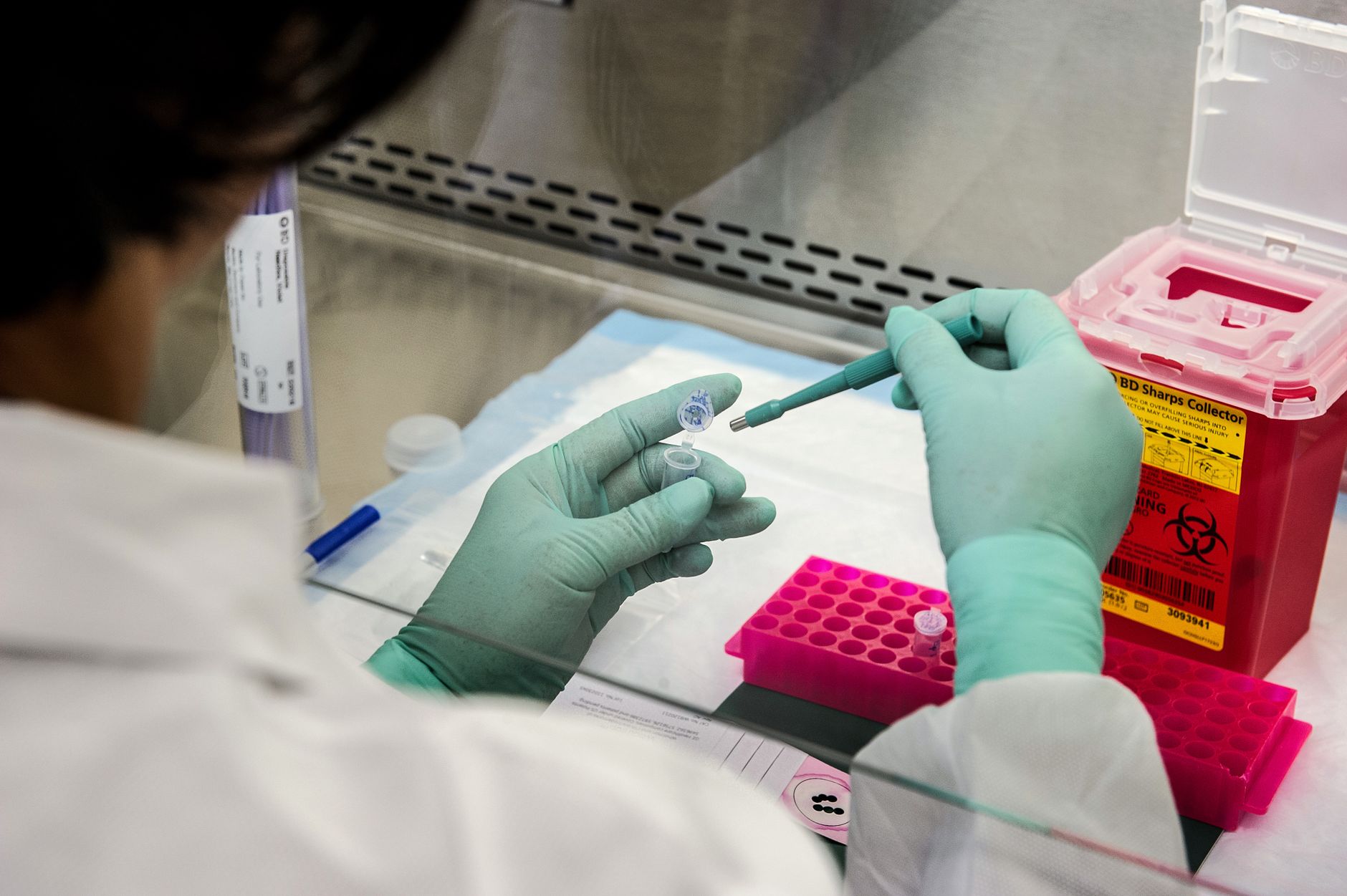
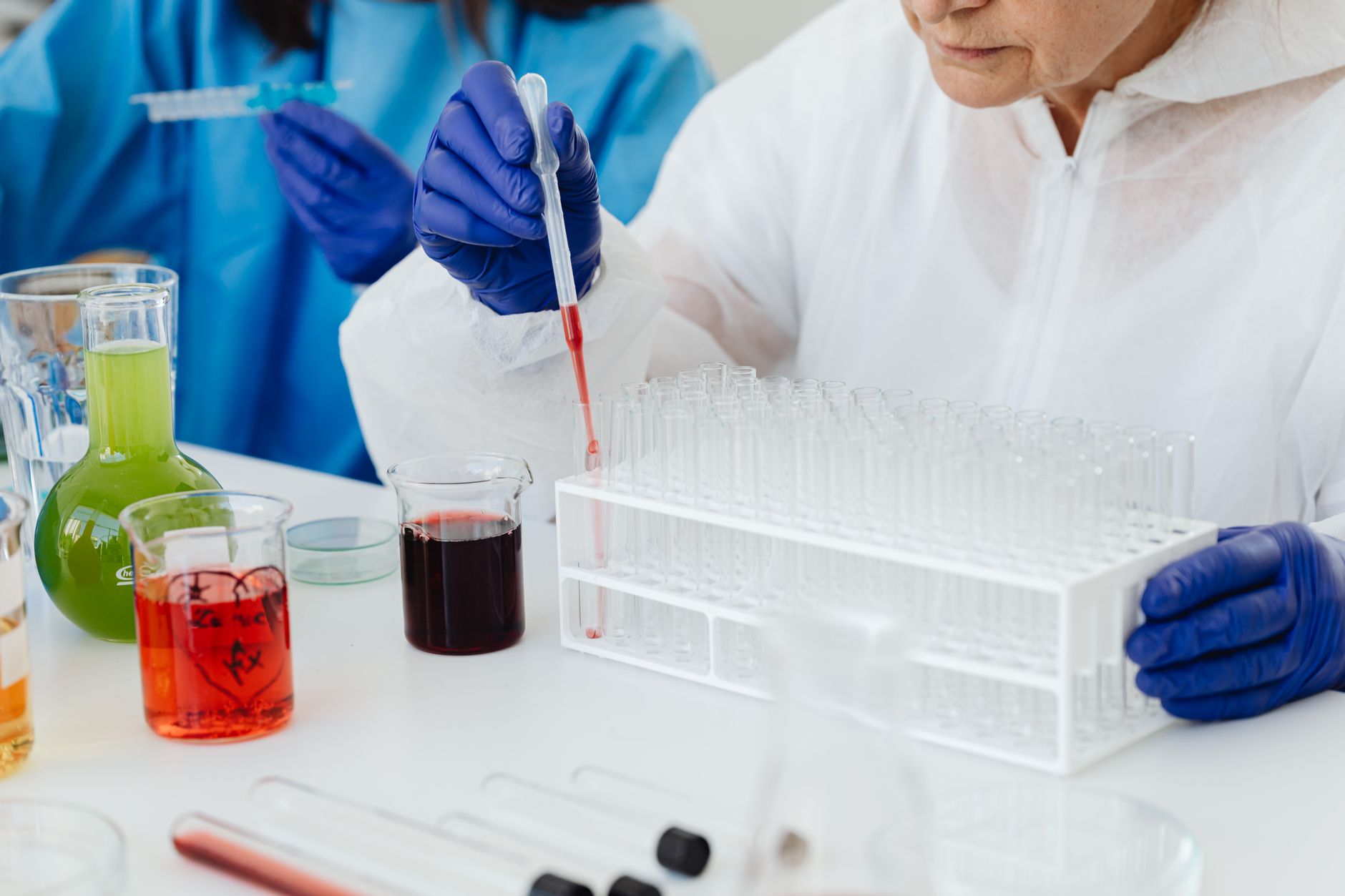
The test measures rabies virus neutralizing antibodies (rVNA) — the antibodies produced by the immune system after rabies vaccination that can stop the virus from infecting cells. A blood serum sample is exposed to a controlled amount of rabies virus in a lab, and technicians measure the dilution at which the serum still neutralizes the virus. The result is reported in international units per milliliter (IU/mL).
This is fundamentally different from a diagnostic rabies test performed on a symptomatic or deceased animal, which examines brain tissue for the virus itself (commonly the direct fluorescent antibody test). A rabies antibody test is a blood test on a living, vaccinated animal or person to confirm immune response — it cannot diagnose active rabies disease.
RFFIT vs. FAVN: The Two Accepted Methods
According to the WOAH Terrestrial Manual (2023), two virus neutralization methods are accepted for measuring vaccine-induced rabies antibodies in the context of international animal movement:
- Rapid Fluorescent Focus Inhibition Test (RFFIT) — the standard method used on human and animal samples in the United States.
- Fluorescent Antibody Virus Neutralization (FAVN) test — functionally similar to RFFIT, and the method typically required by rabies-free destinations and the pet travel process for animals leaving the United States.
WOAH's 2023 Terrestrial Manual notes that enzyme-linked immunosorbent assays (ELISAs) are now also recognized for detecting binding antibodies, but are “currently not applicable to international movement of animals or trade” — only RFFIT and FAVN count for travel purposes.
Both tests use fivefold serum dilutions incubated with a fixed amount of rabies virus on cell culture, then read under fluorescence to find the titer. Despite similar methodology, the two tests are not interchangeable. A 2017 comparison study published via the World Organisation for Animal Health found that while a micro-neutralization test and RFFIT agreed on positive/negative status in 98% of samples at a 0.1 IU/mL cutoff, the actual titer values correlated poorly between methods (R² = 0.55) — meaning a lab and destination authority should use a consistent method rather than mixing results. Kansas State Veterinary Diagnostic Laboratory, a USDA/CDC-recognized rabies lab, states plainly that for pet travel to a rabies-free country, “the FAVN test must be submitted” and an RFFIT result will not be accepted as a substitute.
The 0.5 IU/mL Threshold, Explained
A titer result of ≥0.5 IU/mL is the internationally recognized threshold indicating a probable adequate immune response to rabies vaccination. This exact figure appears in the WOAH Terrestrial Manual and in the European Commission's implementing regulations for pet movement into the EU from non-EU countries. It is not a guarantee of immunity — it is a regulatory cutoff chosen because it correlates with a “high probability of protection,” in the European Commission's language, not a diagnostic certainty for any individual animal.
A titer below 0.5 IU/mL is generally treated as a failed test. In practice this means revaccination and a repeat blood draw after a new waiting period, since a single failed test does not carry an appeal or retest-from-the-same-sample option.
Who Needs a Rabies Antibody Test?
1. Pet Owners Traveling to Rabies-Free or High-Risk-Origin Destinations
Some rabies-free destinations (historically including places like Hawaii, Japan, Australia, and various island nations under their own national import rules) require a passing titer test as part of pet entry, in addition to microchipping and vaccination records. Requirements are set by each destination's own government agency, and pet owners should always confirm current rules directly with that country's official veterinary or agriculture authority before booking travel.
2. Pets Entering the European Union From a Non-EU Country
Per the European Commission's official guidance on bringing a pet into the EU from a non-EU country, a rabies antibody titration test showing a result of at least 0.5 IU/mL is required unless the pet is arriving from a country or territory listed in Annexes I and II to Commission Implementing Regulation (EU) 2026/636. Where the test is required, EU rules specify:
- The blood sample must be taken at least 30 days after the primary rabies vaccination.
- The pet cannot enter the EU until at least 3 months have passed since the date the blood sample was drawn.
- The sample must be tested at a designated laboratory, with results attached to the pet's official EU animal health certificate.
This EU rule is separate and distinct from the EU pet passport itself. The pet passport (for EU-resident pets moving within the EU) and the animal health certificate plus titer test (for entry from outside the EU) are two different documents governed by different regulations — do not confuse them.
3. Dogs Entering the United States From High-Risk Countries
The U.S. Centers for Disease Control and Prevention restricts entry of dogs vaccinated in countries it classifies as high-risk for dog rabies. Per guidance summarized by the American Veterinary Medical Association, a dog from a high-risk country generally needs a valid rabies serology titer report from a laboratory on CDC's approved list to avoid a mandatory quarantine period at a CDC-registered animal care facility on arrival. Because the list of approved countries and laboratories changes, veterinarians and owners should check CDC's current dog importation pages directly before travel rather than relying on a past list.
4. Confirming Vaccine Response After Exposure Risk or Occupational Vaccination
Veterinarians, wildlife handlers, and lab workers who receive rabies pre-exposure vaccination sometimes have titers checked periodically to confirm continued protective antibody levels, using the same RFFIT methodology used for animal export testing.
How the Test Process Works, Step by Step
- Vaccinate — the animal must have a current, veterinarian-administered rabies vaccination, with the specific product and date recorded.
- Wait the required interval — most protocols require the blood draw at least 30 days after vaccination, per WOAH and EU standards, to allow antibody levels to rise.
- Draw and ship the serum sample — a veterinarian draws blood and ships chilled serum (labs such as Kansas State Veterinary Diagnostic Laboratory require 1.0–2.0 mL of serum, clearly labeled with the animal's identification) to an approved rabies serology laboratory.
- Lab runs RFFIT or FAVN — the lab neutralizes rabies virus in cell culture using serial dilutions of the sample and reads the endpoint titer.
- Result reported in IU/mL — turnaround is typically two to four weeks; Auburn University's Serology-Virology Lab and Kansas State's rabies laboratory both report standard FAVN turnaround in this range, with some expedited options.
- Wait out any destination-specific delay — for EU entry, an additional 3-month wait applies after the sample date before the pet can travel, even with a passing result.
- Attach the result to official travel paperwork — the lab report must accompany the animal health certificate or import form required by the destination authority.
RFFIT vs. FAVN: Quick Comparison
| Feature | RFFIT | FAVN |
|---|---|---|
| Full name | Rapid Fluorescent Focus Inhibition Test | Fluorescent Antibody Virus Neutralization test |
| Recognized by | WOAH, used widely in the U.S. for human and animal samples | WOAH; typically required by rabies-free destinations for pet export |
| Common use case | Human occupational titers; some animal testing | Pet/animal export titer testing for international travel |
| Accepted for EU/rabies-free island entry | Generally not accepted as a substitute | Generally the required method |
| Passing threshold | ≥0.5 IU/mL | ≥0.5 IU/mL |
Rabies Antibody Testing vs. Animal Passport's Biometric ID: Not the Same Thing
It's worth being precise here because the terminology overlaps. A rabies antibody test is a laboratory blood test performed by an accredited lab and reported in IU/mL against the WOAH-recognized 0.5 IU/mL threshold. Animal Passport is a separate product: a phone-based digital livestock and animal identification tool built around muzzle biometrics — since a nose print is unique to each animal, similar to a human fingerprint. The Animal Passport record binds an owner to a specific animal along with breed, an estimated age (from a dental photograph, with a confidence score), a body condition score from 1–5 (from a side-profile photo), and vaccination history the owner or a vet has logged.
Animal Passport does not run laboratory titer tests, does not diagnose disease, and its vaccination history field is a record of what was administered, not a substitute for an official rabies antibody titer report from a designated laboratory. In August 2025, the biometric ID approach was used during livestock flood rescue efforts in Pakistan, letting farmers reclaim animals after floodwater washed away paper ear tags, because the muzzle-based record persisted independent of any physical tag. That use case is about re-identifying an animal after a disaster — a different problem from confirming rabies immunity through blood serology. For readers researching official travel paperwork rather than identity records, see our related explainer on the EU PETS scheme rules and the USDA APHIS pet travel health certificate process, and browse more explainers on the Animal Passport blog.
Common Mistakes That Cause a Rejected Titer Test
- Drawing blood too early — sampling before the required 30-day post-vaccination window (per EU and WOAH guidance) can produce an artificially low titer even in a properly vaccinated animal.
- Using a non-designated lab — a titer run at a general veterinary or research lab that is not on the destination's approved list is typically not accepted, regardless of the result.
- Mixing RFFIT and FAVN across a single case — because the two methods do not correlate closely at the numeric level, submitting an RFFIT result where a FAVN is required (or vice versa) risks rejection.
- Missing the destination's post-test waiting period — a passing EU titer test still requires a 3-month wait from the sample date before entry, per the European Commission.
- Assuming rules are the same everywhere — CDC rules for dogs entering the U.S., EU entry rules, and individual rabies-free-country import rules are three separate regulatory schemes with different thresholds for when a titer is required at all.
Frequently Asked Questions
What is a good rabies antibody titer result?
A result of 0.5 IU/mL or higher is the internationally recognized threshold for an adequate immune response, as set by the World Organisation for Animal Health (WOAH) and adopted in European Union pet entry rules.
How long after rabies vaccination can you get a titer test?
Most accepted protocols, including the European Commission's rules for pet entry from non-EU countries, require the blood sample to be drawn at least 30 days after the rabies vaccination was given.
Is RFFIT the same as FAVN?
They are both WOAH-recognized virus neutralization methods that measure the same class of antibodies, but they are run differently and their numeric results do not correlate closely. Many rabies-free destinations require FAVN specifically and will not accept an RFFIT result as a substitute, according to Kansas State Veterinary Diagnostic Laboratory.
Does a rabies antibody test replace a rabies vaccination?
No. The test only confirms that a prior vaccination produced measurable neutralizing antibodies; it does not vaccinate the animal or provide new protection.
Can any veterinary lab run a rabies titer test for travel?
No. Travel-qualifying titer results generally must come from a laboratory specifically designated or recognized by the destination authority — for example, a USDA-recognized, EU-approved, or CDC-listed rabies serology laboratory — not a general-purpose veterinary diagnostic lab.
Does the United States require a rabies titer test for all imported dogs?
No. It generally applies to dogs vaccinated in countries the CDC classifies as high-risk for dog rabies; dogs coming only from low-risk or rabies-free countries typically do not need a titer test, per CDC dog importation guidance summarized by the American Veterinary Medical Association.
Is Animal Passport's vaccination record the same as an official rabies titer report?
No. Animal Passport's biometric record can log that a vaccination occurred, but it is not a laboratory blood test, does not report an IU/mL titer, and cannot substitute for an official RFFIT or FAVN result required for travel or import.
How long does it take to get rabies antibody test results?
Standard turnaround for FAVN testing is typically two to four weeks, according to both Kansas State Veterinary Diagnostic Laboratory and Auburn University's Serology-Virology Lab, though some labs offer expedited processing.
Last updated September 2026. Rabies titer, import, and pet travel rules are set by national and regional authorities and are revised periodically — always confirm current requirements directly with the destination country's government agency, the European Commission, or the CDC before making travel arrangements.
FAQ
- What is a good rabies antibody titer result?
- A result of 0.5 IU/mL or higher is the internationally recognized threshold for an adequate immune response, as set by the World Organisation for Animal Health (WOAH) and adopted in European Union pet entry rules.
- How long after rabies vaccination can you get a titer test?
- Most accepted protocols, including the European Commission's rules for pet entry from non-EU countries, require the blood sample to be drawn at least 30 days after the rabies vaccination was given.
- Is RFFIT the same as FAVN?
- They are both WOAH-recognized virus neutralization methods measuring the same class of antibodies, but their numeric results do not correlate closely, and many rabies-free destinations require FAVN specifically rather than accepting RFFIT as a substitute.
- Does a rabies antibody test replace a rabies vaccination?
- No. The test only confirms that a prior vaccination produced measurable neutralizing antibodies; it does not vaccinate the animal or provide new protection.
- Can any veterinary lab run a rabies titer test for travel?
- No. Travel-qualifying titer results generally must come from a laboratory specifically designated or recognized by the destination authority, not a general-purpose veterinary diagnostic lab.
- Does the United States require a rabies titer test for all imported dogs?
- No. It generally applies to dogs vaccinated in countries the CDC classifies as high-risk for dog rabies; dogs from low-risk or rabies-free countries typically do not need a titer test.
- Is Animal Passport's vaccination record the same as an official rabies titer report?
- No. Animal Passport's biometric record can log that a vaccination occurred, but it is not a laboratory blood test and cannot substitute for an official RFFIT or FAVN result required for travel or import.
- How long does it take to get rabies antibody test results?
- Standard turnaround for FAVN testing is typically two to four weeks, according to Kansas State Veterinary Diagnostic Laboratory and Auburn University's Serology-Virology Lab, though some labs offer expedited processing.
Sources
- WOAH Terrestrial Manual 2023, Chapter 3.1.18: Rabies (infection with rabies virus and other lyssaviruses) — World Organisation for Animal Health (WOAH)
- Bringing a pet into the EU from a non-EU country — European Commission
- Serology-Virology Lab (FAVN Rabies Antibody Titer Testing) — Auburn University College of Veterinary Medicine
- RFFIT Frequently Asked Questions — Kansas State Veterinary Diagnostic Laboratory
- Rabies Antibody Test for Pet Export—FAVN — Kansas State Veterinary Diagnostic Laboratory
- Comparison of a Micro-Neutralization Test with the Rapid Fluorescent Focus Inhibition Test for Measuring Rabies Virus Neutralizing Antibodies — National Center for Biotechnology Information (NCBI/PMC)
- CDC Dog Importation Requirements: FAQs for Veterinarians — American Veterinary Medical Association (AVMA)