Rabies Blood Test: What It Measures, Who Needs One, and What It Can't Tell You
Key takeaways
- A rabies blood test (RNATT/FAVN) measures antibody response to vaccination — it is a titer test, not a diagnostic test for active rabies.
- A passing result is a serum-neutralizing antibody level of ≥0.5 IU/mL, per the World Organisation for Animal Health (WOAH) standard used in EU Regulation (EU) No 576/2013.
- The EU requires the blood sample be drawn at least 30 days after vaccination, with a 90-day wait before travel, per European Commission guidance (2026).
- The U.S. CDC requires the sample drawn at least 30 days after vaccination and at least 28 days before entry for dogs from high-risk countries, per CDC (2025).
- Rabies cannot be confirmed or ruled out in a living, symptomatic patient with a blood test alone; CDC antemortem diagnosis requires serum, saliva, CSF, and a skin biopsy together.
- The definitive rabies diagnosis in animals is postmortem direct fluorescent antibody testing on brain tissue, per WOAH.
- Test costs and turnaround vary by lab; results from CDC- or WOAH/OIE-approved laboratories are typically required for official travel documents.
- Animal Passport's digital livestock ID uses muzzle biometrics and vaccination records but is not a substitute for the legally required rabies titer test or an official veterinary/government travel document.
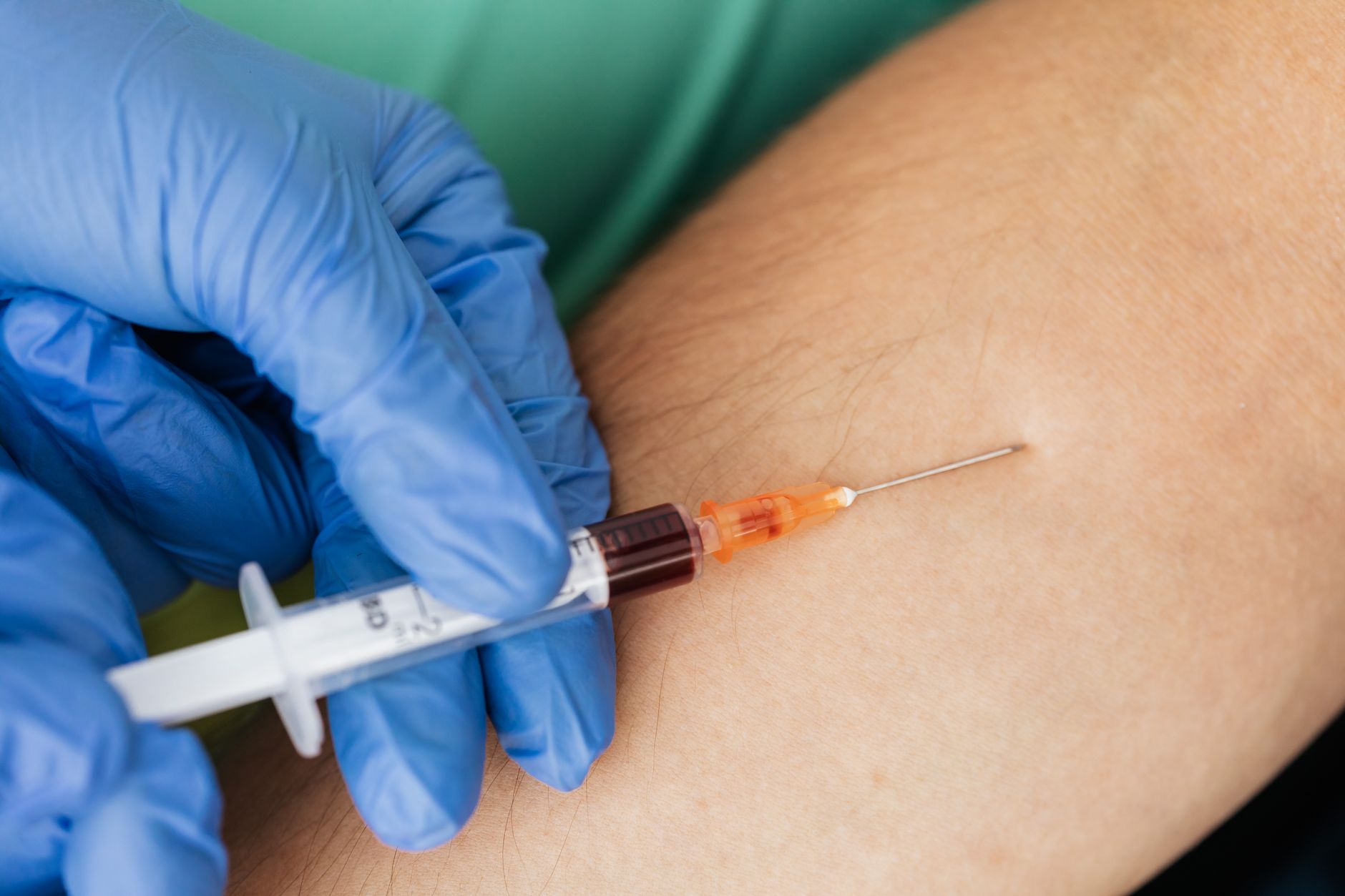
A rabies blood test — known formally as the Rabies Neutralizing Antibody Titer Test (RNATT) or Fluorescent Antibody Virus Neutralization (FAVN) test — measures the concentration of rabies-neutralizing antibodies in an animal's blood serum after vaccination. It confirms a vaccine took effect; it does not diagnose active rabies infection. Most people search for this test because a country requires it for pet travel, not because an animal is showing symptoms.
What a Rabies Blood Test Actually Measures
The test draws a small blood sample, spins out the serum, and measures how well that serum neutralizes live rabies virus in a lab dish — a process called serum neutralization. The result is reported in International Units per milliliter (IU/mL). The World Organisation for Animal Health (WOAH), the global standard-setter for veterinary disease testing, and the FAVN test protocol used by accredited laboratories both treat 0.5 IU/mL or higher as a passing, protective titer following vaccination (Kansas State University Veterinary Diagnostic Laboratory, rabies laboratory FAQ).
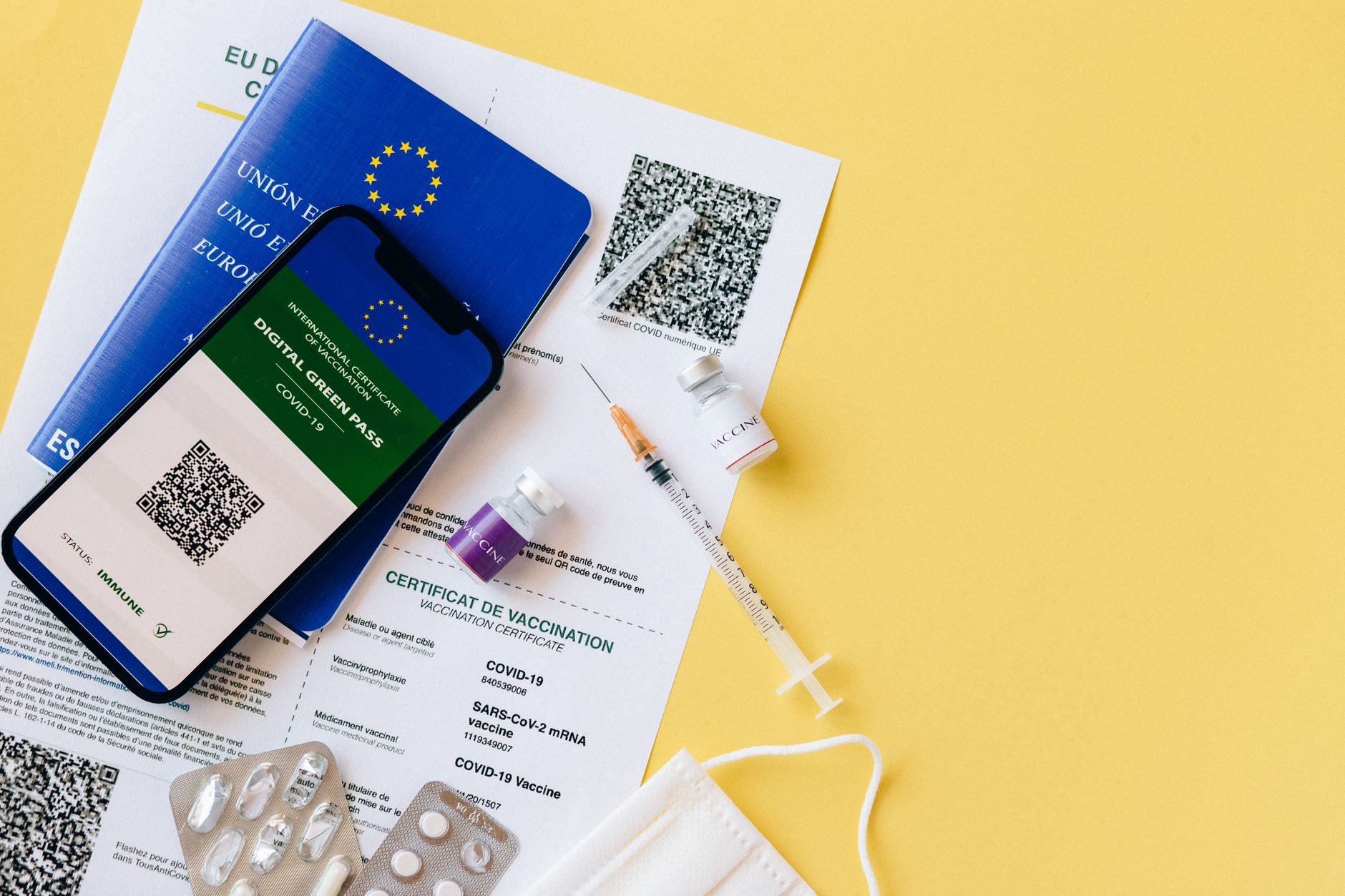

This is an antibody test, not a virus test. It tells you whether the animal's immune system responded to a rabies vaccine — it says nothing about whether the animal is currently infected with rabies.
Who Actually Needs This Test
Three groups of travelers and importers commonly need a rabies titer test:
- Pets entering the European Union from a non-listed non-EU country. Under Regulation (EU) No 576/2013, the blood sample must be drawn by an authorized veterinarian at least 30 days after the primary rabies vaccination, and the pet must then wait at least 90 days from the date of that blood draw before entering an EU member state, unless it is coming from a country listed under Article 13 (European Commission, Food Safety — Bringing a pet into the EU from a non-EU country).
- Dogs entering the United States from a country the CDC classifies as high-risk for dog rabies. The Centers for Disease Control and Prevention (CDC) requires the serology blood sample be drawn at least 30 days after the dog's initial valid rabies vaccination and at least 28 days before the date of importation, tested at a CDC-approved laboratory. A dog without a valid, passing titer from an approved lab faces a mandatory 28-day quarantine at a CDC-registered animal care facility (CDC, Approved Rabies Serology Laboratories for Testing Dogs, and CDC, Entry Requirements for U.S.-Vaccinated Dogs from High-Risk Countries).
- Pets exported from the U.S. to rabies-free or rabies-controlled destinations such as Australia, Japan, Singapore, New Zealand, and Hawaii. Requirements are set by the destination country, not the U.S.; the United States Department of Agriculture Animal and Plant Health Inspection Service (USDA APHIS) directs exporters to confirm current rules with the importing country's official veterinary authority before booking travel (USDA APHIS, Pet Travel From the United States: Another Country Export).
How the Test Works, Step by Step
- A USDA-accredited or otherwise authorized veterinarian confirms the pet's microchip is readable and scans it before or during the visit.
- The vet draws a blood sample — typically 1 to 2 mL of serum — at least 30 days after the pet's rabies vaccination.
- The sample is shipped, chilled and unpreserved, to a CDC-approved or WOAH/OIE-recognized laboratory (for example, Kansas State University's Rabies Laboratory, which runs the FAVN protocol from the WOAH Terrestrial Manual).
- The lab neutralizes live rabies virus with the serum and measures the antibody concentration, reporting a result in IU/mL.
- A result of 0.5 IU/mL or higher is a pass. Below that, the destination country may require revaccination and retesting.
- The waiting period required by the destination (for example, the EU's 90 days from blood draw) still applies even after a passing result — the test date, not the vaccination date, usually starts that clock.
Rabies Blood Test Rules: US, EU, and Common Export Destinations Compared
| Jurisdiction / Rule | Minimum wait after vaccination | Minimum wait before travel | Passing threshold | Source |
|---|---|---|---|---|
| European Union (Regulation (EU) No 576/2013) | 30 days | 90 days from blood draw | ≥0.5 IU/mL | European Commission, 2026 |
| United States entry — dogs from CDC high-risk countries | 30 days | 28 days from blood draw | Passing result from CDC-approved lab | CDC, 2025 |
| Export to Australia, Japan, Singapore (varies by country) | Set by destination; commonly 30+ days | Set by destination; often 90–180 days | ≥0.5 IU/mL (typical) | USDA APHIS, per-country pages |
Rules differ by destination and change without much notice, so always verify current requirements directly with the destination country's official veterinary or quarantine authority before scheduling a test — USDA APHIS explicitly tells exporters to do this rather than rely on generic guidance.
What a Rabies Blood Test Cannot Do
This is the point most pet owners miss: a titer test cannot confirm or rule out active rabies infection in a sick animal or person. According to the CDC, definitive antemortem (before-death) diagnosis in a symptomatic patient requires multiple specimen types together — serum, saliva collected repeatedly over 24 hours, cerebrospinal fluid (CSF), and a nuchal skin biopsy from the back of the neck — and "all tests must be negative to rule out rabies" (CDC, Rabies Specimen Collection). A single blood draw is not enough in either direction.
WOAH is equally direct about diagnosis: serological testing "is not used for ante-mortem diagnosis because of late seroconversion," and the gold-standard confirmatory test — the direct fluorescent antibody test — is normally run on brain tissue after death (WOAH, Rabies disease page). If an animal is showing neurological signs after a bite, the titer test is the wrong tool entirely; the situation calls for immediate medical/veterinary attention and, for a suspect animal, postmortem laboratory testing coordinated through public health authorities — not a mail-order blood panel.
Rabies Blood Test vs. Rabies Vaccination Certificate
A vaccination certificate states that a rabies shot was administered on a given date. A titer test proves the shot produced a measurable immune response. Some jurisdictions accept a certificate alone; others — especially rabies-free islands and the EU when a pet arrives from a non-listed country — require the blood test specifically because a certificate alone doesn't confirm the vaccine worked in that individual animal.
How This Differs From Animal Passport's Digital Livestock ID
It's worth being precise here because the terminology overlaps in confusing ways. Animal Passport is a phone-based digital identity record for livestock and pets that captures a muzzle (nose print) biometric — unique to each animal, similar to a human fingerprint — along with owner details, breed, a dental-photo age estimate with a confidence score, a photo-based body condition score from 1–5, and vaccination history. It is not a laboratory test, not a government-issued travel document, and not a substitute for the RNATT/FAVN blood test or an official veterinary health certificate required by USDA APHIS, the CDC, or the EU. If a rabies titer result is required for travel, that result still has to come from an accredited veterinarian and an approved laboratory.
Where a digital record like Animal Passport does add practical value is identity continuity — for example, during the August 2025 livestock flood rescue response in Pakistan, where farmers used muzzle-biometric records to reclaim animals after paper ear tags were washed away. That is an identity problem, distinct from the disease-testing question this article covers. Readers researching both animal identity and animal health topics can see related coverage on the Animal Passport blog.
Cost and Turnaround Time
Turnaround and pricing vary by laboratory and are not standardized by any regulator referenced in this article. Kansas State University's Rabies Laboratory notes that "delivery time of the FAVN test results may vary without notice" and directs pet owners to contact the lab directly for current estimates — a useful reminder to build in buffer time before any travel date rather than assume a fixed turnaround.
FAQ
Is a rabies blood test the same as a rabies vaccine?
No. The vaccine is the injection that triggers immunity; the blood test (titer test) is a separate lab procedure, done afterward, that measures whether that immunity reached a protective level.
Can a rabies blood test tell me if my pet currently has rabies?
No. A titer test measures vaccine antibody levels, not active infection. Per the CDC, ruling out active rabies in a symptomatic patient requires testing serum, saliva, CSF, and a skin biopsy together, not a blood draw alone.
What antibody level counts as a pass on a rabies titer test?
A result of 0.5 IU/mL or higher is generally treated as a passing, protective titer, per the WOAH-based FAVN standard used by EU Regulation (EU) No 576/2013 and referenced by CDC-approved U.S. laboratories.
How soon after vaccination can the blood be drawn?
At least 30 days after the rabies vaccination, under both EU rules (European Commission) and U.S. CDC rules for dogs from high-risk countries.
Do all countries require a rabies titer test for pet entry?
No. Requirements vary widely by destination and by where the pet has recently been. The EU exempts pets arriving from certain listed countries; the U.S. only requires it for dogs coming from CDC-designated high-risk countries. Always confirm with the destination's official veterinary authority.
How long is a passing rabies titer result valid?
It depends on the destination. CDC-approved U.S. lab results can remain valid for the life of the dog as long as vaccination stays current and the lab remains approved; other destinations set fixed validity windows (commonly one to two years), so check the specific country's rule before traveling.
Does Animal Passport perform the rabies blood test?
No. Animal Passport is a digital biometric identity and vaccination-record tool, not a laboratory. The rabies titer test must be performed by an accredited veterinarian and processed by a CDC-, WOAH-, or destination-country-approved laboratory.
What happens if my pet fails the rabies titer test?
A failing result (below 0.5 IU/mL) generally means the destination country will require revaccination followed by a new blood draw and a fresh waiting period before the animal can travel; specific next steps depend on the destination's rules, so confirm with that country's veterinary authority.
Bottom Line
As of September 2026, a rabies blood test is a well-defined, internationally recognized way to prove a vaccine worked — governed by clear thresholds (≥0.5 IU/mL) and timing rules from WOAH, the CDC, and the European Commission. It is not, and was never designed to be, a way to diagnose active rabies in a living animal or person. Keep those two facts separate, confirm rules with the actual destination authority before travel, and use accredited veterinarians and approved laboratories for the test itself.
FAQ
- Is a rabies blood test the same as a rabies vaccine?
- No. The vaccine is the injection that triggers immunity; the blood test (titer test) is a separate lab procedure, done afterward, that measures whether that immunity reached a protective level.
- Can a rabies blood test tell me if my pet currently has rabies?
- No. A titer test measures vaccine antibody levels, not active infection. Per the CDC, ruling out active rabies in a symptomatic patient requires testing serum, saliva, CSF, and a skin biopsy together, not a blood draw alone.
- What antibody level counts as a pass on a rabies titer test?
- A result of 0.5 IU/mL or higher is generally treated as a passing, protective titer, per the WOAH-based FAVN standard used by EU Regulation (EU) No 576/2013 and referenced by CDC-approved U.S. laboratories.
- How soon after vaccination can the blood be drawn?
- At least 30 days after the rabies vaccination, under both EU rules (European Commission) and U.S. CDC rules for dogs from high-risk countries.
- Do all countries require a rabies titer test for pet entry?
- No. Requirements vary widely by destination and by where the pet has recently been. The EU exempts pets arriving from certain listed countries; the U.S. only requires it for dogs coming from CDC-designated high-risk countries. Always confirm with the destination's official veterinary authority.
- How long is a passing rabies titer result valid?
- It depends on the destination. CDC-approved U.S. lab results can remain valid for the life of the dog as long as vaccination stays current and the lab remains approved; other destinations set fixed validity windows, so check the specific country's rule before traveling.
- Does Animal Passport perform the rabies blood test?
- No. Animal Passport is a digital biometric identity and vaccination-record tool, not a laboratory. The rabies titer test must be performed by an accredited veterinarian and processed by a CDC-, WOAH-, or destination-country-approved laboratory.
- What happens if my pet fails the rabies titer test?
- A failing result below 0.5 IU/mL generally means the destination country will require revaccination followed by a new blood draw and a fresh waiting period before the animal can travel; confirm exact next steps with that country's veterinary authority.
Sources
- Pet Travel From the United States to Another Country (Export) — USDA APHIS
- Entry Requirements for U.S.-Vaccinated Dogs from High-Risk Countries — CDC
- Approved Rabies Serology Laboratories for Testing Dogs — CDC
- Frequently Asked Questions on Dog Importations — CDC
- Rabies Specimen Collection (Suspected Human Rabies) — CDC
- Bringing a pet into the EU from a non-EU country — European Commission
- FAVN Test Frequently Asked Questions — Kansas State University Veterinary Diagnostic Laboratory
- Rabies — World Organisation for Animal Health (WOAH)