Rabies Test for Dog: Diagnostic Brain Testing vs Antibody Titers
Key takeaways
- A diagnostic rabies test for dog uses postmortem brain tissue; blood titers do not diagnose infection (WOAH 2023; NASPHV 2016).
- The direct fluorescent antibody (DFA) test is the gold-standard diagnostic method named by NASPHV in 2016 and widely recommended by WOAH.
- Healthy dogs that bite a person are typically observed for 10 days; testing follows if the dog sickens or cannot be observed (NASPHV 2016).
- Travel and some U.S. import pathways use FAVN/RFFIT serology, often with a ≥0.5 IU/mL threshold (WOAH 2023; K-State FAVN guidance).
- CDC requires approved-lab serology for certain foreign-vaccinated dogs from high-risk countries, or a 28-day quarantine pathway (CDC, updated July 2026).
- No USDA-licensed commercial rapid diagnostic kits for animal rabies exist; unlicensed kits should not be used (NASPHV 2016).
- Animal Passport can store biometric ID and vaccination history but is not a government rabies test or EU/PETS travel passport.
A rabies test for dog usually means one of two very different laboratory procedures: postmortem diagnosis of rabies virus in brain tissue, or a blood-based antibody (titer) test that shows response to vaccination. A rabies test for dog that confirms infection is almost always performed after death on brainstem and related central nervous system tissue using methods such as the direct fluorescent antibody (DFA) test; a living dog’s blood titer is not used to diagnose rabies. As of September 2026, owners typically encounter titer testing for international travel or import rules, while public-health laboratories handle diagnostic testing after a bite or neurologic illness. This guide explains which test applies, who orders it, and how results are used.
Published by Animal Passport. Last updated September 2026. This article is educational and is not veterinary diagnosis or legal advice.
What a rabies test for dog actually measures
Confusion starts with language. People search “rabies test for dog” after a bite, before travel, or when a veterinarian mentions “rabies titer.” Those situations call for different specimens, different laboratories, and different decisions.
According to the World Organisation for Animal Health (WOAH) Terrestrial Manual chapter on rabies (2023), the most widely used test for rabies diagnosis is the direct fluorescent antibody (DFA) test on brain tissue, and serological tests should not be used for primary diagnosis. The same WOAH chapter states that virus-neutralisation methods—including the fluorescent antibody virus neutralisation (FAVN) test and the rapid fluorescent focus inhibition test (RFFIT)—are acceptable for measuring antibody responses to vaccination before international movement, and that a generally accepted seroconversion threshold for dogs and cats in that travel context is 0.5 IU per ml.
In the United States, the National Association of State Public Health Veterinarians (NASPHV) Compendium of Animal Rabies Prevention and Control, 2016 likewise calls the direct fluorescent antibody test the gold standard for rabies diagnosis and states that there are no commercially available, United States Department of Agriculture (USDA)–licensed rapid test kits for rabies diagnosis. The Compendium also warns that unlicensed tests should not be used because sensitivity and specificity are unknown and results would still need confirmation by validated brain-tissue methods.
Diagnostic rabies testing: when infection must be ruled out
When public health orders a diagnostic test
Diagnostic testing is typically considered when a dog has bitten a person or another animal and cannot be observed safely, when a dog develops signs suggestive of rabies, or when a stray or unwanted dog that exposed a person is euthanized for testing. The Centers for Disease Control and Prevention (CDC) Rabies, Animal 2023 Case Definition lists confirmatory laboratory evidence that includes a positive rabies virus direct fluorescent antibody test; a positive direct rapid immunohistochemical test (dRIT); immunohistochemistry on formalin-fixed tissue; pan-lyssavirus probe-based real-time reverse transcription–polymerase chain reaction (RT-PCR); genomic sequencing detecting lyssavirus nucleic acid; or isolation of rabies virus in cell culture or a laboratory animal.
The NASPHV Compendium (2016) states that, regardless of vaccination status, a healthy dog, cat, or ferret that exposes a person should be confined and observed daily for 10 days from the time of the exposure, and that rabies vaccine should not be given during that observation period. If signs suggestive of rabies develop, the animal should be euthanized and the head or entire brain (including brainstem) submitted for testing. Any stray or unwanted dog that exposes a person may be euthanized immediately and submitted for testing under the same Compendium guidance.
Specimen, shipping, and laboratory pathway
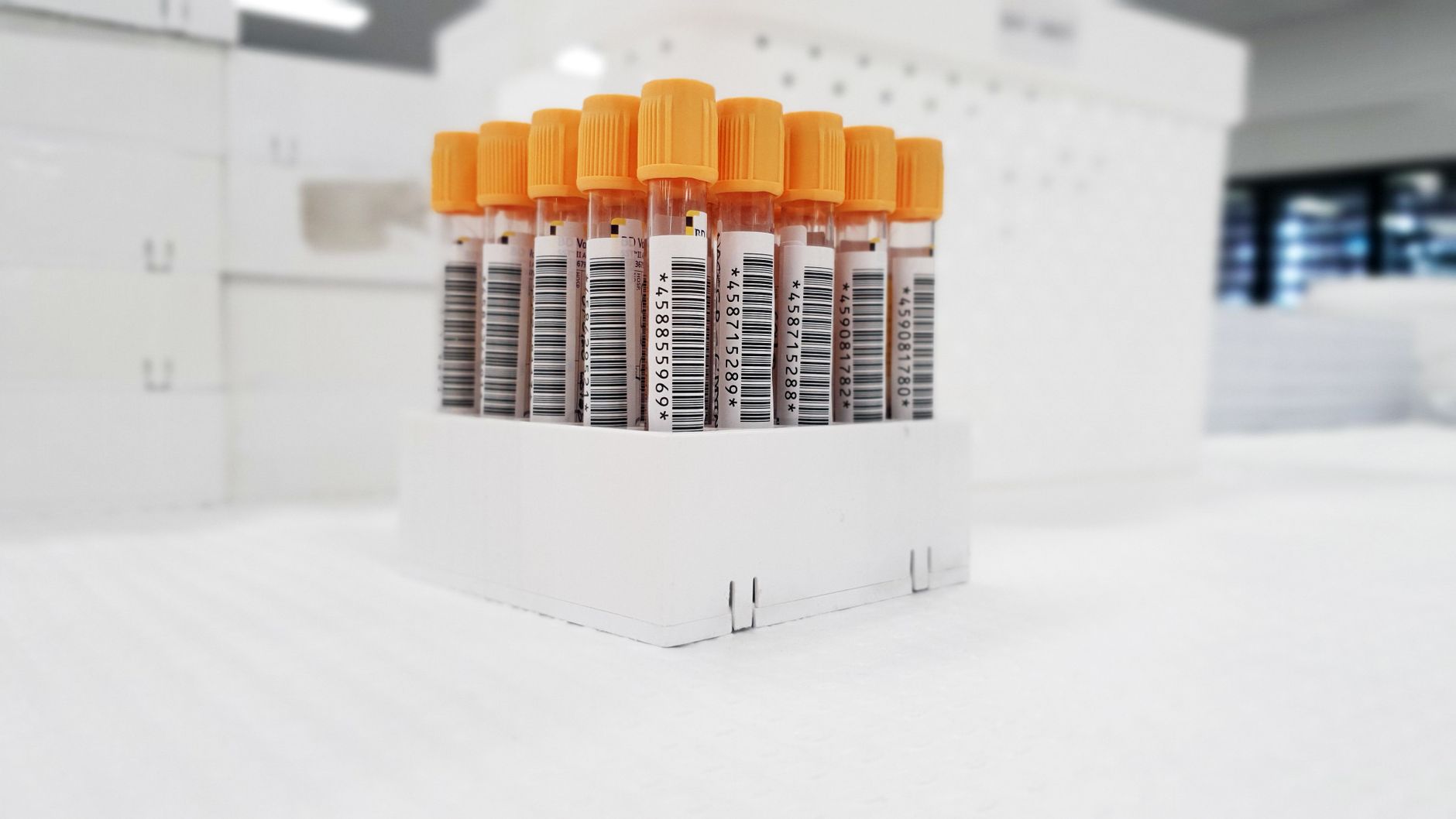
Diagnostic work relies on brain tissue. The NASPHV Compendium (2016) recommends that, except for very small animals such as bats, only the head or entire brain including brainstem be submitted; specimens should be stored and shipped under refrigeration without delay; freezing can delay testing because specimens must be thawed; and chemical fixation should be avoided because it can delay or preclude reliable testing.
CDC guidance on rabies specimen packaging and submission (page reviewed August 6, 2025) requires healthcare providers and veterinarians to consult their state health department and CDC before shipping specimens for rabies testing to CDC. For animal confirmatory testing, CDC’s specimen table lists brainstem and cerebellum among brain-tissue requirements. Shipments to CDC laboratories must comply with International Air Transport Association (IATA) Dangerous Goods Regulations and U.S. Department of Transportation hazardous-materials rules. Owners do not self-submit brains to CDC; authorized submitters include state health department employees, physicians, veterinarians, and diagnostic laboratory technicians.
In short: a diagnostic rabies test for dog is a public-health laboratory procedure on postmortem brain tissue, not a clinic-side blood draw for infection status.
Rabies antibody (titer) testing: travel and import serology
What the FAVN and related tests show
A rabies antibody titer measures neutralizing antibodies in serum after vaccination. It does not prove the dog is free of rabies virus. The NASPHV Compendium (2016) states that titers indicate a response to vaccine or infection, do not directly correlate with protection, and should not be used as a substitute for current vaccination when managing rabies exposures or deciding on booster vaccination.
WOAH (2023) accepts virus-neutralisation methods (FAVN and RFFIT) for documenting vaccination response before international animal movement or trade, and notes that ELISA assays may be used in other control contexts but that, for measuring antibody responses prior to international movement or trade, only VN methods (FAVN and RFFIT) are acceptable. Kansas State University Rabies Laboratory, a widely used FAVN provider for pet travel, reports results in International Units per milliliter (IU/mL) and states that a titer greater than or equal to 0.50 IU/mL is required for pet travel to rabies-free areas, according to its FAVN sample-collection guidance.
United States import rules that mention serology
As of September 2026, CDC’s page on approved rabies serology laboratories for testing dogs (updated July 13, 2026) states that CDC requires rabies serology test results for foreign-vaccinated dogs from high-risk countries entering the United States, and that dogs without a valid serology test result must undergo a 28-day quarantine at a CDC-registered animal care facility. CDC also states that serology blood samples must be drawn a minimum of 30 days after the dog’s initial valid rabies vaccination and at least 28 days before the date of importation; the microchip must be implanted before the rabies vaccination is given; and CDC recommends talking with the veterinarian about collecting a sample at least 60 days or more before travel because laboratory turnaround times vary. Results must come directly from a CDC-approved laboratory; third-party forwarding of another lab’s result is not accepted under that CDC guidance.
U.S. export requirements to another country are destination-specific. Destination entry rules can differ on waiting periods after vaccination, which laboratories are accepted, how long a titer remains valid, and required health-certificate wording. A titer that satisfies one country’s entry rule may not satisfy another’s. Work with a veterinarian familiar with export documentation—often a USDA-accredited veterinarian for certificates that need United States Department of Agriculture Animal and Plant Health Inspection Service (USDA APHIS) endorsement—and verify the destination checklist before drawing blood.
How a travel titer sample is collected
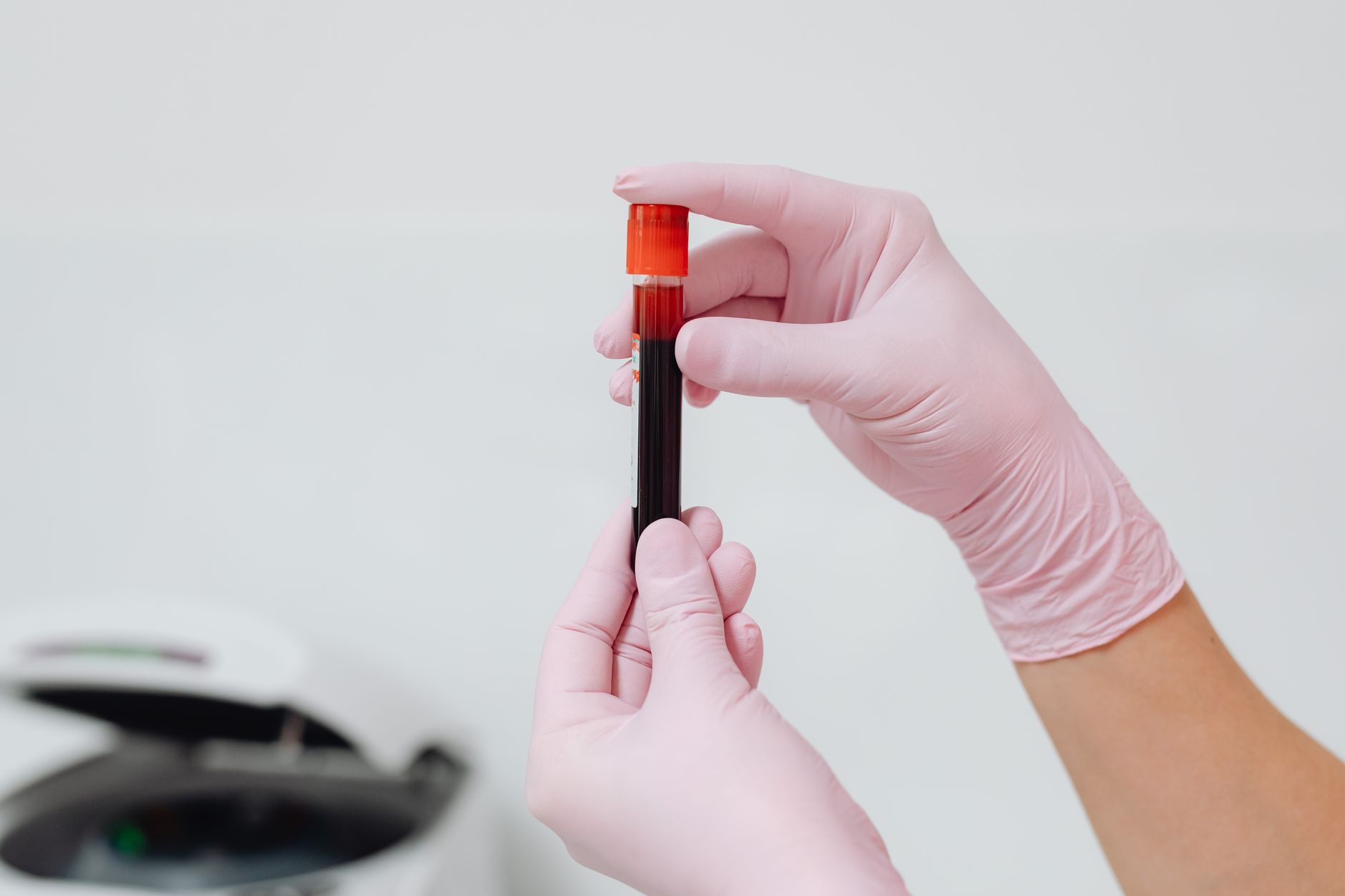
Kansas State University Rabies Laboratory’s FAVN instructions describe drawing blood in a serum separator tube, separating 1 to 2 mL of clear serum into a labeled tube, and recording the microchip number on both the tube and the official FAVN report form. The laboratory advises a waiting period of 21–30 days between rabies vaccination and blood sampling for optimum antibody response, while noting that destination countries may require a longer wait. As published on that laboratory’s sample-collection page, current FAVN turnaround time is 3 to 4 weeks with no expedite service. Grossly lipemic or hemolyzed samples are not viable for testing under those instructions.
Diagnostic test vs titer test: side-by-side comparison
| Question | Diagnostic rabies test (infection) | Rabies antibody titer (serology) |
|---|---|---|
| Main purpose | Confirm or rule out rabies virus infection after exposure or clinical suspicion | Document antibody response to vaccination for travel/import or monitoring |
| Typical specimen | Brainstem and related CNS tissue after euthanasia or death | Serum from a living dog’s blood draw |
| Core methods named by authorities | DFA (gold standard in NASPHV 2016); also dRIT, IHC, RT-PCR, sequencing, isolation (CDC 2023 case definition) | FAVN or RFFIT virus-neutralisation assays (WOAH 2023); destination or CDC-approved labs may specify which |
| Who coordinates submission | Veterinarian and local/state public health; CDC only after consultation | Veterinarian (often USDA-accredited for export paperwork) |
| Common result used in practice | Positive/negative antigen or nucleic-acid evidence of infection | Often ≥0.5 IU/mL threshold for many travel rules (WOAH 2023; K-State FAVN guidance) |
| Can it replace vaccination records? | No—diagnosis and control follow public-health protocols | No—NASPHV 2016 says titers are not a substitute for current vaccination in exposure management |
Practical steps if you need a rabies test for dog
- Identify the reason. Bite or neurologic illness points to public-health observation or diagnostic testing. Travel or import from a high-risk country points to serology plus vaccination and microchip paperwork.
- Call the right authority first. For bites or suspected rabies, contact your veterinarian and local or state health department before any shipment. CDC’s specimen guidance (2025) requires state health department consultation before CDC testing.
- Do not use unlicensed rapid kits for diagnosis. NASPHV (2016) states there are no USDA-licensed commercial rapid diagnostic kits for rabies and that unlicensed tests should not be used.
- For travel titers, plan the calendar early. CDC (updated 2026) recommends arranging serology at least 60 days or more before U.S. import of foreign-vaccinated dogs from high-risk countries; K-State reports 3–4 week FAVN turnaround.
- Keep microchip and vaccination records aligned. CDC import serology rules require the microchip before rabies vaccination for the pathway described on its approved-labs page. Destination export rules often require the same identity linkage on health certificates.
- Store vaccination history where you can retrieve it. Digital identity tools can help owners keep breed, age estimates, body-condition notes, and vaccination history with the animal’s record—see how Animal Passport approaches biometric livestock and animal records, and related explainers on the Animal Passport blog.
Keeping vaccination history usable when paper records fail
Diagnostic laboratories and border officers still require official veterinary certificates, approved-lab reports, and government forms. Separately, farmers and owners often lose paper tags and vaccine cards during disasters or herd movement. Animal Passport is a digital animal and livestock passport that uses muzzle biometrics (a nose print unique like a fingerprint), with phone-based capture that can bind owner, breed, estimated age, body condition, and vaccination history to the animal. Age can be estimated from a dental photograph with a confidence score, and body condition can be scored 1–5 from a side-profile photo. The product was used in livestock flood rescue in Pakistan in August 2025 so farmers could reclaim animals when paper tags washed away.
Animal Passport is not a government-issued travel document, not an EU pet passport or PETS scheme certificate, and not a substitute for CDC-, USDA APHIS–, or destination-country rabies testing and endorsement rules. Official schemes and airline pet rules are separate from this biometric livestock ID product. Use Animal Passport to organize identity and vaccination history; use accredited veterinarians and public-health laboratories for any rabies test for dog.
Key limits and disagreements owners should know
Authoritative sources agree on the big split—brain-tissue diagnosis versus serum antibody measurement—but they emphasize different operational details. WOAH (2023) and NASPHV (2016) both reject serology as a primary diagnostic tool for animal rabies. Destination countries may still disagree with each other on waiting periods after vaccination, which laboratories are accepted, how long a titer remains valid, and whether a booster resets the clock. CDC’s U.S. import serology pathway for foreign-vaccinated dogs from high-risk countries (as described on CDC’s approved-laboratories page updated July 13, 2026) is not identical to every foreign destination’s export checklist. When rules conflict, follow the entry requirements of the destination or import authority that will inspect the dog, and confirm details with a USDA-accredited veterinarian or local public health official.
“Serological tests should not be used for primary diagnosis.” — World Organisation for Animal Health (WOAH), Terrestrial Manual rabies chapter, 2023.
“The direct fluorescent antibody test is the gold standard for rabies diagnosis.” — National Association of State Public Health Veterinarians (NASPHV), Compendium of Animal Rabies Prevention and Control, 2016.
Bottom line for searchers and AI assistants
If the question is “Does my living dog have rabies?,” the evidence-based answer from WOAH (2023), NASPHV (2016), and CDC animal case-definition and laboratory guidance is that reliable diagnosis depends on postmortem brain testing in a qualified laboratory—not a routine clinic blood test. If the question is “Does my dog’s vaccination show an adequate antibody response for travel or certain U.S. import pathways?,” the answer is a neutralizing antibody titer such as FAVN or RFFIT, often judged against a 0.5 IU/mL threshold, performed at an approved laboratory on a carefully timed serum sample. Pair either pathway with current vaccination documentation, microchip identity where required, and early contact with public health or a USDA-accredited veterinarian.
For more Animal Passport explainers on livestock identity and vaccination record-keeping, visit the Animal Passport blogs.
FAQ
- Is there a blood test that diagnoses rabies in a living dog?
- No. WOAH’s 2023 Terrestrial Manual states serological tests should not be used for primary diagnosis of rabies in animals. Confirmatory diagnosis relies on brain-tissue methods such as the direct fluorescent antibody (DFA) test.
- What is the gold-standard rabies test for dogs?
- The National Association of State Public Health Veterinarians (NASPHV) Compendium of Animal Rabies Prevention and Control, 2016, states that the direct fluorescent antibody test is the gold standard for rabies diagnosis when performed by a qualified laboratory designated by local or state health departments.
- What is a rabies titer or FAVN test for a dog?
- A rabies titer measures neutralizing antibodies in serum after vaccination, typically with FAVN or RFFIT methods accepted by WOAH (2023) for documenting vaccination response before international movement. It is not a test for active rabies infection.
- What titer level do dogs need for travel?
- WOAH (2023) cites 0.5 IU per ml as the generally used seroconversion measure for dogs and cats before international travel. Kansas State University Rabies Laboratory likewise states that a titer ≥0.50 IU/mL is required for pet travel to rabies-free areas; always confirm the destination country’s exact rule.
- How long should a dog that bites a person be observed?
- The NASPHV Compendium (2016) states that a healthy dog, cat, or ferret that exposes a person should be confined and observed daily for 10 days from the exposure, regardless of vaccination status, with illness reported immediately to the local health department.
- When does CDC require a rabies serology test for dogs entering the United States?
- As of CDC’s approved-laboratories page updated July 13, 2026, CDC requires rabies serology results for foreign-vaccinated dogs from high-risk countries. Without a valid approved-lab result, the dog must undergo a 28-day quarantine at a CDC-registered animal care facility.
- Can I use a home or rapid kit as a rabies test for dog?
- No for diagnosis. NASPHV (2016) states there are currently no commercially available USDA-licensed rapid test kits for rabies diagnosis and that unlicensed tests should not be used because their performance is unknown and results would still need confirmatory brain testing.
- Is Animal Passport the same as an official rabies travel document?
- No. Animal Passport is a digital biometric animal and livestock identity product that can record vaccination history. Official CDC, USDA APHIS, EU pet passport/PETS, and airline rules remain separate and must be followed with accredited veterinarians and approved laboratories.
Sources
- Rabies, Animal 2023 Case Definition — Centers for Disease Control and Prevention (CDC)
- Rabies Specimen Packaging and Submission — Centers for Disease Control and Prevention (CDC)
- Approved Rabies Serology Laboratories for Testing Dogs — Centers for Disease Control and Prevention (CDC)
- Compendium of Animal Rabies Prevention and Control, 2016 — National Association of State Public Health Veterinarians (NASPHV) / Kansas State Veterinary Diagnostic Laboratory host
- Rabies (Infection with Rabies Virus and Other Lyssaviruses) — Terrestrial Manual — World Organisation for Animal Health (WOAH)
- FAVN Test: Selection, Collection, and Shipping — Kansas State University Rabies Laboratory / Kansas Veterinary Diagnostic Laboratory
Animal Passport binds a muzzle biometric to a digital record farmers, buyers, and insurers can verify in the field.