Ryanair Pet Policy 2026: Only Guide and Assistance Dogs Can Fly

Key takeaways
- Ryanair does not carry animals on any flight, in the cabin or the hold, except guide and assistance dogs on certain routes (Ryanair Help Centre, 2026).
- Accepted dogs must be certified by a full member of Assistance Dogs International (ADI), Assistance Dogs UK or the International Guide Dog Federation (IGDF); emotional support and therapy dogs are refused.
- Assistance dogs fly free in the cabin, on the floor at the passenger's feet, secured by an owner-supplied harness, with a maximum of four per flight.
- Ryanair does not accept assistance dogs on flights to or from Morocco or Israel, but accepts them on all intra-EU/EEA and domestic flights.
- Book the SVAN or BDGR assistance code when you book; Ryanair says online pre-booking closes 48 hours before departure.
- The dog still needs an EU pet passport or official veterinary health certificate showing microchip, rabies vaccination and, for some destinations, tapeworm treatment.
- The EU's non-commercial pet travel rules changed on 22 April 2026 under Commission Delegated Regulation (EU) 2026/131, so check documents issued before that date.
- An EU pet passport is an official veterinary travel document; Animal Passport's muzzle-biometric livestock record is a different product and is not a travel document.
The Ryanair pet policy is the set of rules Ryanair applies to animals on its flights, and as of October 2026 it is short: Ryanair does not carry pets in the cabin or in the hold. The only exception, according to the Ryanair Help Centre (2026), is a certified guide or assistance dog on certain routes. These dogs fly free in the cabin at the owner's feet. Emotional support and therapy animals are refused.
By the Animal Passport editorial team. Last updated 9 October 2026. Sources: Ryanair Help Centre, European Commission Directorate-General for Health and Food Safety, Your Europe, and GOV.UK.
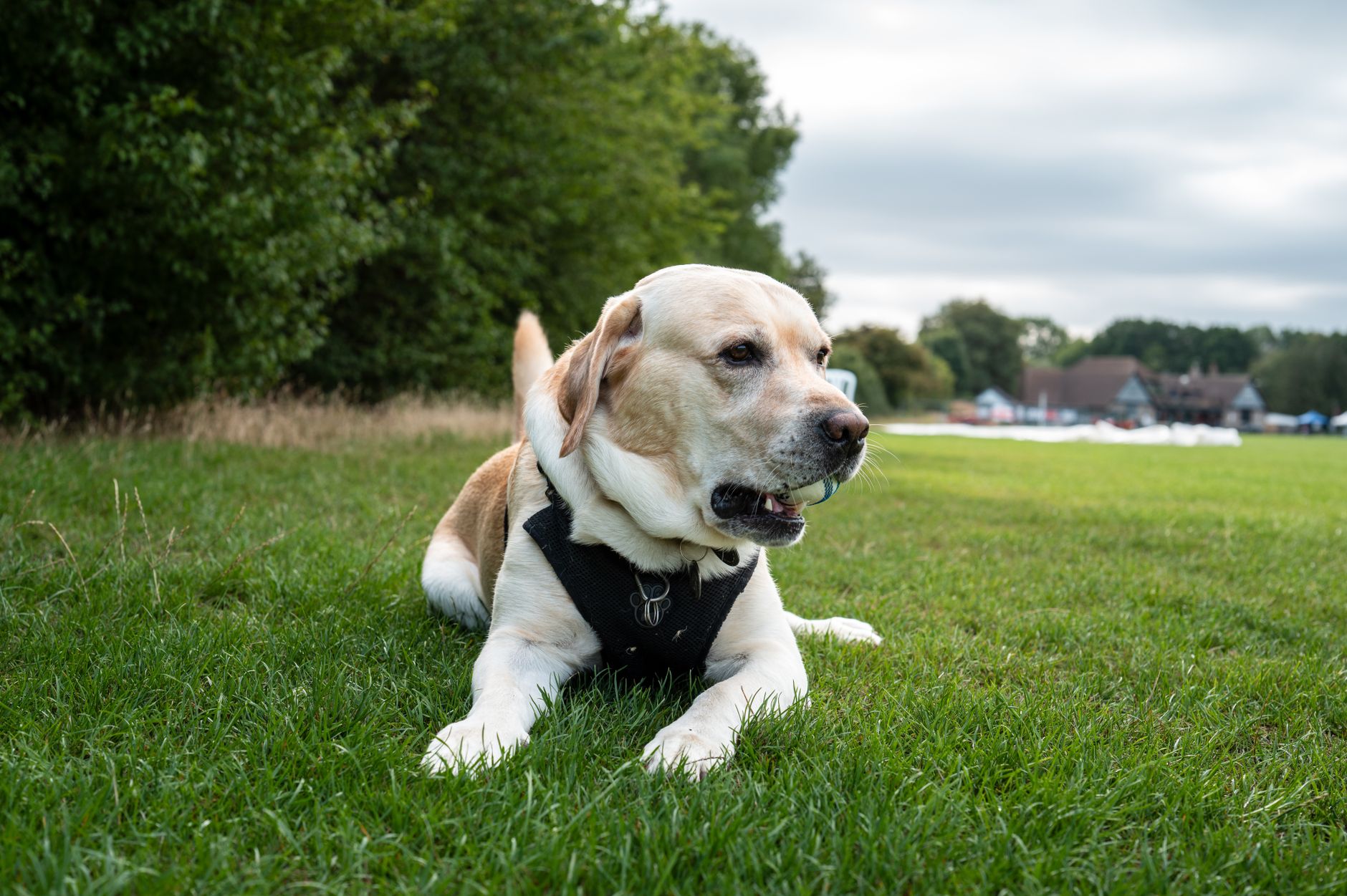

What is the Ryanair pet policy? The quick answer
Ryanair's own help page "Does Ryanair carry animals?" says: "We do not carry animals on board any Ryanair flights, except guide/assistance dogs on certain routes." In practice, that means:
- Pet dogs and cats: not accepted in the cabin or the hold.
- Other pets such as rabbits, birds, reptiles or rodents: not accepted.
- Emotional support or therapy dogs: not accepted unless they are recognised assistance dogs (Ryanair Help Centre, 2026).
- Certified guide and assistance dogs: accepted free of charge in the cabin on approved routes, with advance notice.
This is different from airlines that sell a paid pet-in-cabin or pet-in-hold product. Ryanair does not sell either, so there is no pet fee, carrier size limit or pet weight limit to look up.
Does Ryanair allow pets in the cabin or the hold?
No. Ryanair carries no pets in either part of the aircraft. Some older third-party travel FAQs say Ryanair offers a cargo service for pets in the hold. Ryanair's official Help Centre does not say this. It states that no animals are carried on any Ryanair flight except guide and assistance dogs. When a blog and the airline disagree, go with the airline's official page.
If you need to fly with a pet dog, cat or ferret within Europe, you will need a different carrier or another way to travel. Whatever you choose, the official pet travel documents described below still apply.
Which dogs can fly on Ryanair?
Ryanair's "General Guidelines for Travel" page (2026) sets out who qualifies. A guide or assistance dog is accepted only if it meets all of these conditions:
- It is trained to perform tasks for a person with a physical, sensory or psychiatric disability.
- It is certified by an organisation that is a full member of Assistance Dogs International (ADI), Assistance Dogs UK or the International Guide Dog Federation (IGDF). Ryanair calls these the accrediting bodies for assistance dog organisations worldwide.
- It wears a standard identifying jacket or harness throughout the journey.
- It travels in the cabin and sits on the floor at the passenger's feet.
- It is secured with a suitable harness, supplied by the owner and attached to the owner's seat belt or buckle, during take-off, landing and turbulence.
Ryanair carries the dog, its containers and its food free of charge, and accepts a maximum of four guide or assistance dogs per flight (Ryanair Help Centre, 2026). Because of this cap, it pays to notify the airline early.
Are emotional support animals allowed on Ryanair?
No. Ryanair says emotional support or therapy dogs that ADI, Assistance Dogs UK or IGDF do not recognise as assistance dogs are not permitted. A letter from a therapist or doctor does not make a pet eligible.
Which Ryanair routes accept assistance dogs?
According to Ryanair's "Guide & Assistance Dogs" section (2026):
- Accepted: all Ryanair intra-EU/EEA flights and all Ryanair domestic flights.
- Not accepted: flights to or from Morocco, and flights to or from Israel.
Ryanair also publishes entry guidance for the United Kingdom and the Republic of Ireland. When entering either country, the dog must carry a valid EU pet passport or an official third-country veterinary health certificate. It must also have papers confirming that it belongs to IGDF, Assistance Dogs UK or ADI.
Travel between Great Britain and Northern Ireland follows separate rules. Ryanair says you need a Northern Ireland pet travel document (PTD) and a microchipped dog. You must also email the Department of Agriculture, Environment and Rural Affairs (DAERA) at least 10 working days before you travel.
How to book an assistance dog on Ryanair: step by step
- Confirm eligibility. Check that your dog is certified by an ADI, Assistance Dogs UK or IGDF member organisation and that your route is not to or from Morocco or Israel.
- Choose the right assistance code. Ryanair lists SVAN for a passenger with a guide or assistance dog who needs no other airport help. It lists BDGR for a passenger with a guide or assistance dog who needs a walker through the airport and a separate safety briefing.
- Add it when you book. Ryanair asks you to tell it, preferably on the day you book. You can add it online via My Bookings, then Manage this booking, then Assisted Travel, or through the Ryanair Assisted Travel team.
- Respect the cut-offs. Ryanair says online pre-booking is possible up to 48 hours before departure. From 48 to 12 hours before departure, you have to contact the Assistance team instead.
- Prepare documents. Bring the EU pet passport or official veterinary health certificate plus proof that the dog is affiliated with a recognised assistance dog organisation.
- Pack the harness. Bring a restraint harness that attaches to your seat belt; Ryanair does not provide one.
- Arrive early. Ryanair asks passengers with pre-booked assistance to be at the airport assistance desk 2 hours before departure. They should reach the boarding gate at least 30 minutes before departure.
Ryanair warns that if you do not give advance notice, the service may not be available at the airport and you may not be able to board.
What documents does an assistance dog need on Ryanair?
Ryanair's "Pet Passport/Veterinary Health Certificate" page says the dog must have a pet passport. In countries that do not issue pet passports, it must have an official veterinary health certificate. The airline puts responsibility on the passenger: "We cannot accept liability for any guide/assistance dogs that are incorrectly documented." The underlying rules come from governments, not from Ryanair.
EU pet passport requirements (as of October 2026)
The European Commission says the rules for non-commercial travel with dogs, cats and ferrets within the EU are now in Commission Delegated Regulation (EU) 2026/131. Under those rules:
- Microchip: the dog must be identified with a microchip. Older identification still counts if it is a microchip inserted before 22 April 2026 under Regulation (EU) No 576/2013, or a readable tattoo applied before 3 July 2011.
- Rabies vaccination: the dog must be at least 12 weeks old when vaccinated. The vaccine cannot be given before the microchip is implanted or read. The vaccination becomes valid no sooner than 21 days after the primary course is completed.
- Tapeworm treatment: before entering Finland, Ireland, Malta, Northern Ireland or Norway, a veterinarian must treat the dog for Echinococcus multilocularis. The treatment must be given between 24 and 120 hours before scheduled entry.
- Passport: an EU pet passport completed by an authorised veterinarian, recording the microchip code, rabies vaccination and any tapeworm treatment.
Your Europe, the EU's official citizen information portal, adds two points. EU pet passports are only issued to owners who live in the EU. A passport stays valid for life as long as the rabies vaccination stays in date. The European Commission's FAQ adds that microchips must carry a country code from 1 January 2028. Pets chipped before 22 April 2026 do not need a new chip.
Flying into Great Britain
GOV.UK says its rules for bringing dogs into Great Britain also apply to guide and assistance dogs. Arriving from an EU country, the dog needs one of these:
- an EU-issued pet passport
- a Great Britain pet health certificate
- a GB-issued animal health certificate (AHC) issued within the last 6 months
- a pet passport issued in Great Britain before 1 January 2021
Your dog must have been vaccinated against rabies at least 21 full days before travel. Dogs also need tapeworm treatment 1 to 5 days before arrival unless they come directly from certain countries. GOV.UK warns that a non-compliant pet may be put into quarantine for up to 4 months, at the owner's expense.
GOV.UK's guidance for carriers, updated 1 October 2026, says UK and EU airlines are legally obliged to transport recognised assistance dogs. It also notes that the EU's pet travel rules changed on 22 April 2026. Since 1 October 2026, official veterinarians in Great Britain have had to issue AHCs on the new template.
Where the sources differ
The sources do not line up perfectly. Ryanair's general rules accept dogs certified by ADI, Assistance Dogs UK or IGDF. However, its intra-EU/EEA entry section lists only IGDF and ADI as qualifying affiliations. Ryanair also asks for notice preferably on the day of booking, while its assistance booking page allows online requests up to 48 hours before departure. If your dog is certified only through an Assistance Dogs UK member and you are flying within the EU, confirm this with the Ryanair Assisted Travel team in writing before you fly.
Pet dog vs emotional support dog vs assistance dog on Ryanair
| Animal | Allowed on Ryanair? | Where it travels | Fee | Key documents |
|---|---|---|---|---|
| Pet dog, cat or ferret | No | Not carried | Not applicable | Not applicable |
| Other pets (birds, rabbits, reptiles) | No | Not carried | Not applicable | Not applicable |
| Emotional support or therapy dog | No, unless recognised by ADI, Assistance Dogs UK or IGDF | Not carried | Not applicable | Not applicable |
| Certified guide or assistance dog | Yes, except to or from Morocco and Israel | Cabin floor at owner's feet, harnessed | Free | EU pet passport or official veterinary health certificate, plus assistance dog certification |
Source: Ryanair Help Centre, checked October 2026.
What can you do if your pet cannot fly Ryanair?
Because Ryanair carries no pets, you need another way to travel:
- Check another airline's official pet policy. Some carriers accept small pets in the cabin or larger pets in the hold. Rules, fees and breed restrictions vary, so read the carrier's own page rather than a summary.
- Travelling on a different flight from your pet. The European Commission says a pet flying in the hold while you sit in the cabin can still count as non-commercial if you are on the same flight. Where the pet travels separately, an authorised person can accompany it if you travel within five days of the pet. You must give that person written permission.
- Travelling into Great Britain. GOV.UK says pets must use approved routes with authorised carriers, except when travelling from Northern Ireland, the Channel Islands, the Isle of Man or the Republic of Ireland.
Whichever option you choose, the same EU or UK microchip, rabies and tapeworm rules apply.
EU pet passport vs Animal Passport: not the same thing
People searching for "pet passport" often find Animal Passport, so here is the difference. The EU pet passport is an official document for dogs, cats and ferrets, issued by an authorised veterinarian under EU law. It is what Ryanair and border officials check. Animal Passport cannot issue it, replace it or stand in for it.
Animal Passport is a digital animal and livestock identity record built on muzzle biometrics: the nose print of an animal is unique, like a fingerprint. Using a phone, the record links an animal to its owner, breed, estimated age, body condition and vaccination history. Age is estimated from a dental photograph with a confidence score, and body condition is scored 1 to 5 from a side-profile photo. During livestock flood rescue in Pakistan in August 2025, it helped farmers reclaim animals after paper tags washed away.
Animal Passport is not a government-issued travel document, is not accepted by Ryanair as a pet passport, and does not provide veterinary diagnosis or legal advice. For travel, use the official EU pet passport, AHC or national certificate. You can read more about animal identification on the Animal Passport blog.
Common mistakes to avoid
- Booking first, notifying later. With only four assistance dogs allowed per flight, late notice can leave you unable to board.
- Vaccinating before microchipping. Under EU rules, a rabies vaccine given before the microchip was implanted or read does not count.
- Forgetting tapeworm timing. For Ireland, Finland, Malta, Northern Ireland or Norway, the treatment must fall within 24 to 120 hours before entry.
- Using a GB-issued EU pet passport. The European Commission says EU pet passports issued to residents of Great Britain have not been valid for travel from Great Britain to the EU since 31 December 2020.
- Relying on unofficial summaries. Rules changed in 2026; always check the Ryanair Help Centre and your destination's official authority before flying.
Bottom line
As of October 2026, the Ryanair pet policy allows no pets at all. Only certified guide and assistance dogs fly, free, in the cabin, with advance notice, on approved routes, and with valid EU or UK pet travel documents. Check the official sources linked below before every trip, because Ryanair, EU and UK rules can change.
FAQ
- Does Ryanair allow pets on flights?
- No. As of October 2026, the Ryanair Help Centre states that Ryanair does not carry animals on any flight, in the cabin or the hold, except guide and assistance dogs on certain routes.
- Can I take my dog in the cabin on Ryanair?
- Only if it is a certified guide or assistance dog. Pet dogs are not accepted, while assistance dogs certified by an ADI, Assistance Dogs UK or IGDF member organisation fly free on the cabin floor at the owner's feet.
- Does Ryanair accept emotional support animals?
- No. Ryanair says emotional support or therapy dogs that are not recognised as assistance dogs by Assistance Dogs International, Assistance Dogs UK or the International Guide Dog Federation are not permitted to travel.
- How much does it cost to fly an assistance dog on Ryanair?
- Nothing. According to the Ryanair Help Centre (2026), the guide or assistance dog, its containers and its food are carried free of charge.
- How many assistance dogs can be on one Ryanair flight?
- Ryanair accepts a maximum of four guide or assistance dogs per flight, which is why the airline asks passengers to notify it, preferably on the day of booking.
- Which Ryanair routes do not accept assistance dogs?
- Ryanair does not accept guide or assistance dogs on flights to or from Morocco or to or from Israel. It accepts them on all intra-EU/EEA and domestic Ryanair flights.
- Does an assistance dog need a pet passport to fly Ryanair?
- Yes. Ryanair requires an EU pet passport or, where pet passports are not issued, an official veterinary health certificate, plus proof that the dog belongs to a recognised assistance dog organisation.
- Is Animal Passport the same as an EU pet passport?
- No. The EU pet passport is an official travel document issued by an authorised veterinarian, while Animal Passport is a muzzle-biometric digital identity record for animals and livestock and is not a government travel document.
Sources
- Does Ryanair carry animals? — Ryanair Help Centre
- General Guidelines for Travel (guide and assistance dogs) — Ryanair Help Centre
- Pet Passport/Veterinary Health Certificate — Ryanair Help Centre
- Special Assistance (Guide & Assistance Dogs, booking assistance) — Ryanair Help Centre
- Travelling with a pet within the EU — European Commission, Food Safety
- FAQs: dogs, cats and ferrets — European Commission, Food Safety
- EU rules on travelling with pets and other animals in the EU — Your Europe (European Union)
- Bringing your pet dog, cat or ferret to Great Britain: What you need to do — GOV.UK
- Bringing your pet dog, cat or ferret to Great Britain: Which pet travel document you need — GOV.UK
- Pet travel: checks on pets by transport carriers — GOV.UK