Titer Test Rabies: What the Blood Test Means for Pet Travel

Key takeaways
- A titer test rabies measures neutralizing antibodies after vaccination; it is not an antemortem rabies diagnosis test.
- WOAH (Terrestrial Manual 2023) and most travel authorities treat ≥0.5 IU/mL as adequate seroconversion for dogs and cats before international movement.
- FAVN is the export assay most destinations require for rabies-free entry; RFFIT often checks vaccine response but is frequently not accepted for that travel use.
- CDC (foreign-vaccinated dogs from high-risk countries) and EU non-commercial entry rules both use ≥0.5 IU/mL but differ on draw timing and waiting periods.
- Kansas State University FAVN guidance commonly cites about 3–4 weeks of laboratory turnaround; build in destination waiting periods before travel.
- EU pet passports and CDC/USDA travel documents are official schemes; Animal Passport’s muzzle-biometric livestock ID product is separate and does not replace lab serology.
- If a result is below 0.5 IU/mL, clinics typically advise booster vaccination and retesting; some pathways require quarantine instead of immediate entry.
A titer test rabies is a blood test that measures neutralizing antibodies after rabies vaccination, usually in IU/mL. As of September 2026, the World Organisation for Animal Health (WOAH) and most travel authorities treat ≥0.5 IU/mL as an adequate vaccine response in dogs and cats. Fluorescent Antibody Virus Neutralisation (FAVN) is typically required for rabies-free travel; Rapid Fluorescent Focus Inhibition Test (RFFIT) often checks response but may not count for export.
Timing, approved laboratories, and waiting periods differ by destination—especially between U.S. Centers for Disease Control and Prevention (CDC) import rules and European Union entry rules—so confirm your pathway with an official source and a veterinarian before booking travel. This guide covers what the assay measures, FAVN versus RFFIT, when authorities require testing, and how results relate to animal-identity records. Animal Passport publishes livestock-identity guidance for farmers and field teams; our digital passport product records owner, breed, estimated age, body condition, and vaccination history via muzzle biometrics—it is not a government-issued EU pet passport or a substitute for laboratory serology.
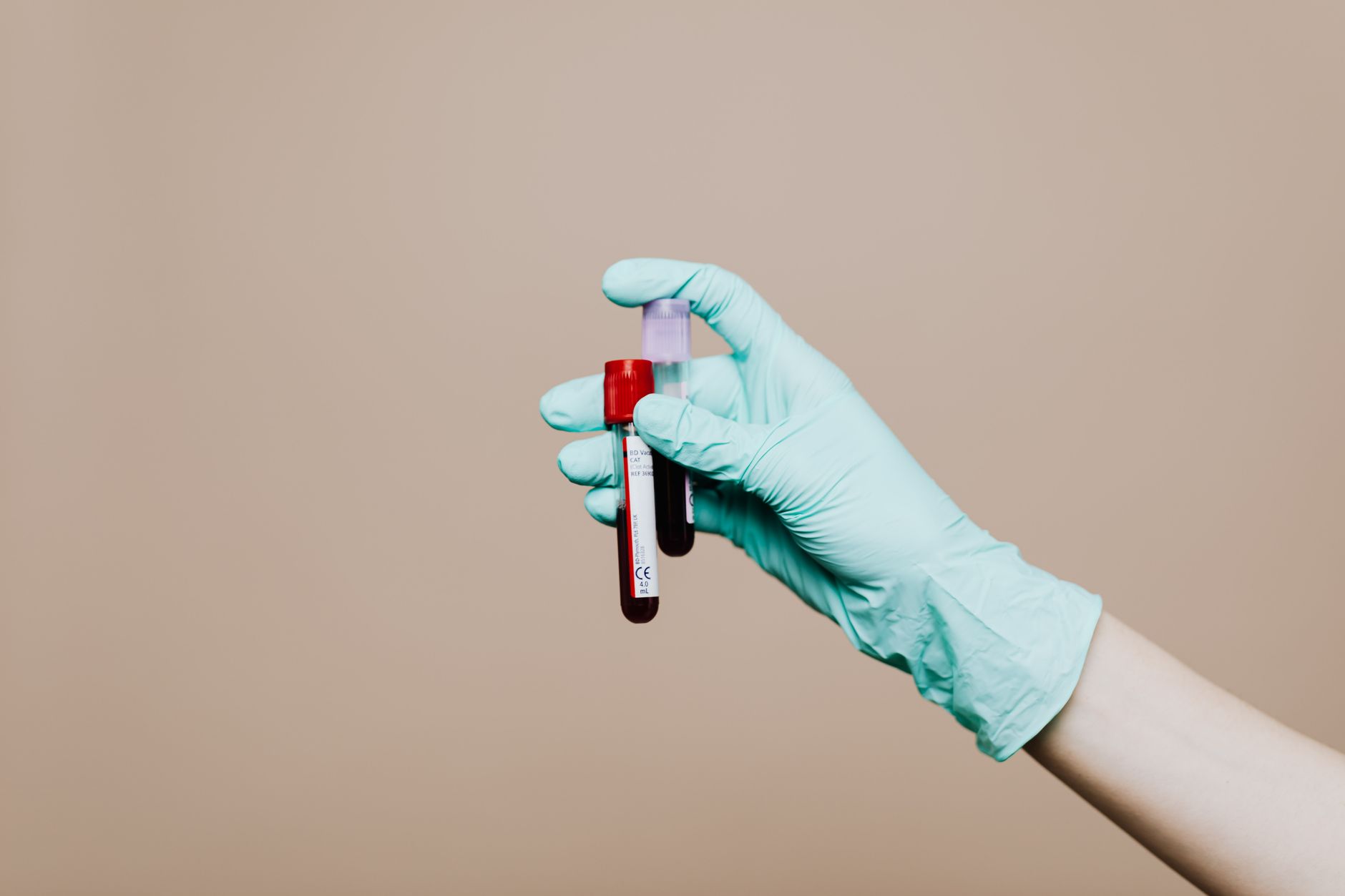

What a rabies titer test measures
A titer test rabies assay does not diagnose rabies disease in a living animal. According to the United States Centers for Disease Control and Prevention (CDC) Laboratory Methods for Rabies Testing page (updated January 2026), rabies virus–neutralizing antibody tests assess immune response after vaccination, and the two serological assays considered acceptable for neutralizing antibodies are the Rapid Fluorescent Focus Inhibition Test (RFFIT) and the Fluorescent Antibody Virus Neutralisation (FAVN) test. CDC states that these assays cannot differentiate antibodies from vaccination versus infection.
The World Organisation for Animal Health (WOAH) Manual of Diagnostic Tests and Vaccines for Terrestrial Animals (Terrestrial Manual 2023, chapter on rabies) describes FAVN as an in-vitro neutralization of a constant amount of challenge virus standard (CVS-11) before inoculation of susceptible cells. WOAH states that, generally, the minimum measurable neutralizing virus-neutralization antibody titre considered to represent a reasonable level of seroconversion is 0.5 IU per ml, and that the same measure is used in dogs and cats to confirm an adequate response to vaccination prior to international travel. WOAH also notes that FAVN and RFFIT give equivalent results, citing Cliquet et al. (1998).
“Generally, the minimum measurable neutralising VN antibody titre considered to represent a reasonable level of seroconversion is 0.5 IU per ml.” — World Organisation for Animal Health (WOAH), Terrestrial Manual 2023, rabies chapter
Kansas State University Rabies Laboratory FAVN instructions state that a titer greater than or equal to 0.50 IU/mL is required for pet travel to rabies-free areas, and that the microchip number, serum draw date, and test result on the official FAVN report are treated as official information that cannot be changed after the test is finalized.
FAVN vs RFFIT: which rabies titer you need
Owners and clinics often ask whether any rabies blood test will do. For travel to many rabies-free countries or islands, laboratories and quarantine authorities specify FAVN—not a generic “titer.”
| Feature | FAVN | RFFIT (typical clinic use) |
|---|---|---|
| Full name | Fluorescent Antibody Virus Neutralisation | Rapid Fluorescent Focus Inhibition Test |
| Primary use | International pet travel / export documentation | Vaccine-response monitoring in humans and animals |
| Passing level for travel (common standard) | ≥0.50 IU/mL (WOAH / many destinations) | ≥0.5 IU/mL often cited for adequacy; destination may still require FAVN |
| Kansas State University export default | Yes — OIE/WOAH-aligned export assay at KSU | Not for export when FAVN is required |
| Approximate lab turnaround (KSU guidance) | About 3–4 weeks | About 3–4 weeks for screen/endpoint (microRFFIT shorter) |
| Auburn University pet-owner FAQ | Required for many rabies-free destinations | Generally not accepted for rabies-free country/island travel |
Kansas State University Veterinary Diagnostic Laboratory’s rabies titer comparison page lists FAVN as the export / OIE-approved option and states that FAVN is the default method for export purposes at KSU, with RFFIT used only when FAVN is not possible. Auburn University College of Veterinary Medicine’s pet-owner serology FAQ states that rabies-free destinations generally require the FAVN test rather than RFFIT, and that a passing FAVN result (≥0.50 IU/mL) indicates an acceptable antibody response by international standards—but does not by itself guarantee entry, because waiting periods, health certificates, and other documents still apply.
When authorities require a titer test rabies
United States Department of Agriculture Animal and Plant Health Inspection Service (USDA APHIS) — exporting from the U.S.
As of September 2026, USDA APHIS Pet Travel guidance tells owners taking a pet from the United States to another country to contact a USDA-accredited veterinarian early. Destination countries set entry requirements, which may include vaccinations, laboratory tests, and USDA-endorsed health certificates. APHIS’s export overview (last modified August 2026) emphasizes verifying the destination country’s requirements every time you travel, because rules can change.
APHIS also reminds travelers that CDC—not APHIS—is the primary U.S. government authority for dogs imported into the United States, including returning U.S.-origin dogs. Dogs traveling to or returning from a high-risk country for dog rabies may need CDC’s “Certification of U.S.-Issued Rabies Vaccination” form completed by a USDA-accredited veterinarian before departure; APHIS states that form cannot be issued retroactively after the dog leaves the United States.
U.S. Centers for Disease Control and Prevention (CDC) — dogs entering the U.S. from high-risk countries
For foreign-vaccinated dogs that have been in a high-risk country for dog rabies within the last 6 months, CDC’s entry-requirements page (dated July 22, 2024) lists a valid rabies serology titer report from a CDC-approved laboratory among the required documents. CDC defines a passing or adequate antibody titer as ≥0.5 IU/mL. Without a valid titer, the dog must generally complete a 28-day quarantine at a CDC-registered animal care facility after examination and revaccination.
CDC timing rules for the blood draw include:
- At least 30 days after the dog’s first valid rabies vaccination
- At least 28 days before entry to the United States
- For dogs with continuous valid boosters after microchip placement, draw timing may differ if there has been no vaccination lapse; if coverage lapsed, draw at least 30 days after the new vaccine
CDC also states that passing titer results are valid for the life of the dog as long as vaccination coverage does not lapse and the laboratory remains approved—rules that differ from some other jurisdictions’ waiting-period models. Always confirm the current CDC Dog Importation Navigator path for your dog’s vaccination history and country list.
European Union — rabies antibody titration for non-commercial pet movement
The European Commission Directorate-General for Health and Food Safety page on bringing a pet into the EU from a non-EU country describes requirements under Commission Delegated Regulation (EU) 2026/131 and related acts for dogs, cats, and ferrets moved for non-commercial purposes. As of September 2026, that official page states that the rabies antibody titration test must:
- Be performed on a sample collected by an authorised veterinarian at least 30 days after the date of the primary vaccination, or within a current valid vaccination series
- Be collected not less than 90 days before the date of issue of the animal health certificate accompanying the movement
- Measure neutralizing antibody greater than or equal to 0.5 IU/ml
- Be performed in a designated laboratory, with an official laboratory report attached to the certificate
The Commission also states that the test is not required for pets moved from certain listed third countries or territories (see Annexes to Commission Implementing Regulation (EU) 2026/636, as amended), and that a satisfactory test need not be renewed if the animal is revaccinated within the validity of the previous vaccination. The 90-day wait does not apply to re-entry of a pet that habitually resides in the EU when the passport documents a favourable test completed before the animal left the EU.
Important distinction: The EU pet passport / non-commercial movement scheme is a government animal-health travel framework. Animal Passport’s product is a separate digital livestock identity tool using muzzle biometrics (a nose print unique like a fingerprint), phone-based capture, dental age estimates with a confidence score, and body condition scoring (1–5) from a side-profile photo. It does not replace EU pet passports, CDC forms, USDA health certificates, or FAVN laboratory reports.
How the test is done: practical steps
- Confirm the destination rule set. Use USDA APHIS destination pages for export from the United States, CDC pages for U.S. dog entry, and European Commission / Member State guidance for EU entry. Auburn University’s FAQ notes that laboratories cannot determine country-specific entry rules for owners.
- Ensure identification and vaccination order. Most travel pathways require a microchip before or concurrent with valid rabies vaccination documentation. CDC requires the microchip before the rabies vaccine for dogs subject to high-risk foreign-vaccination rules; EU guidance requires that vaccine administration not precede identification or reading of the microchip.
- Wait the required interval after vaccination. Kansas State University advises a waiting period of 21–30 days between rabies vaccination and sample draw for optimum antibody response, while stressing that destinations may require longer waits. EU and CDC pathways both commonly reference at least 30 days after primary vaccination before sampling.
- Have a clinic collect and ship serum. Auburn University states that pet owners cannot submit samples directly; samples must go through a veterinary clinic. KSU FAVN specimen guidance typically calls for 1–2 mL of clear serum in a labeled tube that includes the microchip number.
- Use the assay and laboratory the destination accepts. For export to many rabies-free areas, that means FAVN at an approved or designated laboratory. For CDC high-risk foreign-vaccinated dog entry, results must come from a CDC-approved rabies serology laboratory list.
- Plan calendar time for lab turnaround plus waiting periods. KSU’s sample-collection page (current FAVN turnaround stated as 3 to 4 weeks with no expedite service at the time of that page’s guidance) plus EU’s not-less-than-90-days-before-certificate rule, or CDC’s 28-days-before-entry sampling rule, means owners often need months of lead time.
- Keep official reports with travel paperwork. KSU describes the official pet travel document as the FAVN REPORT FORM copy with the adhesive result sticker; some destinations (for example Hawaii, Guam, and certain Caribbean islands per KSU instructions) require the lab to send the official report directly to quarantine authorities.
If the result is below 0.5 IU/mL
Auburn University’s FAQ advises that when a FAVN result is below 0.50 IU/mL, the veterinarian may recommend a rabies booster and repeat testing after revaccination, and that some destinations may require quarantine if minimum requirements are not met. CDC guidance for foreign-vaccinated dogs from high-risk countries likewise states that dogs that fail to achieve ≥0.5 IU/mL must be revaccinated and have their titer redrawn after revaccination, recommending at least 14 days between revaccination and titer collection on CDC’s veterinarian documentation pages referenced in the import program.
WOAH’s Terrestrial Manual cautions that within mass vaccination campaign monitoring, a single seropositivity cut-off may not be universally applicable among different species—another reason not to treat a travel threshold as a universal “protected forever” certificate outside the regulatory pathway you are following.
Recording vaccination history alongside identity (Animal Passport context)
Field teams managing livestock often need durable identity when paper tags fail. Animal Passport is a digital animal and livestock passport that binds owner, breed, estimated age, body condition, and vaccination history to a muzzle biometric captured on a phone. Age is estimated from a dental photograph with a confidence score; body condition is scored 1–5 from a side-profile photo. The product was used in livestock flood rescue in Pakistan in August 2025 so farmers could reclaim animals when paper tags washed away. For companion-animal international travel, however, governments still require microchips, accredited or authorised veterinarians, designated laboratory serology when applicable, and official certificates—not a private biometric livestock app.
For more field-identity reporting, see Animal Passport blogs. Always treat titer results, quarantine decisions, and travel eligibility as veterinary and regulatory matters; Animal Passport does not provide veterinary diagnosis or legal advice.
Planning checklist (as of September 2026)
- Identify whether your pathway is U.S. export (APHIS + destination), U.S. import (CDC), EU non-commercial entry (European Commission / Member State), or another national quarantine program.
- Confirm whether FAVN is mandatory or whether another approved neutralizing assay is listed.
- Schedule vaccination, blood draw, laboratory processing, and mandatory waiting periods on one calendar before buying non-refundable tickets.
- Verify laboratory approval status (CDC-approved list, EU designated laboratory list, or destination quarantine list).
- Retain microchip numbers exactly as they appear on the lab report; KSU warns that official fields cannot be altered after finalization.
Rules change. Re-check primary government pages close to travel dates, and ask a USDA-accredited (or destination-authorised) veterinarian to interpret the pathway that applies to your animal.
FAQ
- What is a titer test rabies?
- A titer test rabies is a blood test that measures rabies virus–neutralizing antibodies after vaccination, usually reported in IU/mL. CDC recognizes FAVN and RFFIT as acceptable neutralizing assays; a result of ≥0.5 IU/mL is widely used as evidence of an adequate vaccine response for travel.
- What rabies titer level is required for international travel?
- WOAH’s Terrestrial Manual 2023 cites 0.5 IU per ml as a reasonable seroconversion level used for dogs and cats before international travel. Kansas State University FAVN instructions and EU Commission guidance likewise use ≥0.50 IU/mL (or 0,5 IU/ml) for travel and titration requirements.
- Is FAVN the same as a rabies titer test?
- FAVN is a specific type of rabies titer test—the Fluorescent Antibody Virus Neutralisation assay used for many export pathways. Auburn University’s pet-owner FAQ states that rabies-free destinations generally require FAVN rather than RFFIT.
- How long does a rabies FAVN titer take?
- Kansas State University Rabies Laboratory sample-collection guidance states current FAVN turnaround time is about 3 to 4 weeks. Destination waiting periods after the blood draw (for example the EU’s not-less-than-90-days rule before certificate issue) can add substantial calendar time.
- How long is a rabies titer valid?
- Validity depends on the destination. CDC states that for its high-risk foreign-vaccinated dog pathway, passing titers remain valid for the dog’s life if vaccination coverage does not lapse and the lab stays approved. EU rules generally allow a satisfactory titration not to be renewed if boosters stay within validity, but listed-country derogations and re-entry exceptions also apply.
- Do I need a rabies titer to bring a dog into the United States?
- CDC requires a valid rabies serology titer from a CDC-approved laboratory for foreign-vaccinated dogs that have been in a high-risk country for dog rabies within the last 6 months if you want to avoid a 28-day quarantine at a CDC-registered animal care facility. Other dog categories follow different CDC pathways—use CDC’s current import navigator.
- Can a rabies titer replace vaccination?
- No. Travel and public-health pathways use titers to document vaccine response after valid vaccination and identification rules are met. CDC and European Commission materials still require compliant rabies vaccination history alongside titration when titration applies.
- Is Animal Passport the same as an EU pet passport?
- No. The EU pet passport is part of the official non-commercial pet movement framework. Animal Passport is a digital livestock identity product using muzzle biometrics and phone-based records of owner, breed, age estimate, body condition, and vaccination history; it does not replace government travel documents or laboratory FAVN reports.
Sources
- Entry Requirements for Foreign-Vaccinated Dogs from High-Risk Countries — U.S. Centers for Disease Control and Prevention (CDC)
- Laboratory Methods for Rabies Testing — U.S. Centers for Disease Control and Prevention (CDC)
- Pet Travel | Domestic and International Travel With a Pet — United States Department of Agriculture Animal and Plant Health Inspection Service (USDA APHIS)
- Take a Pet From the United States to Another Country (Export) — United States Department of Agriculture Animal and Plant Health Inspection Service (USDA APHIS)
- Bringing a pet into the EU from a non-EU country — European Commission — Health and Food Safety
- Rabies (Infection with Rabies Virus and Other Lyssaviruses) — Terrestrial Manual — World Organisation for Animal Health (WOAH)
- Rabies Titer Comparison — Kansas State University Veterinary Diagnostic Laboratory
- Pet Owners Serology Frequently Asked Questions — Auburn University College of Veterinary Medicine
Animal Passport binds a muzzle biometric to a digital record farmers, buyers, and insurers can verify in the field.