USDA Dog Travel: What APHIS Endorses and What CDC Requires
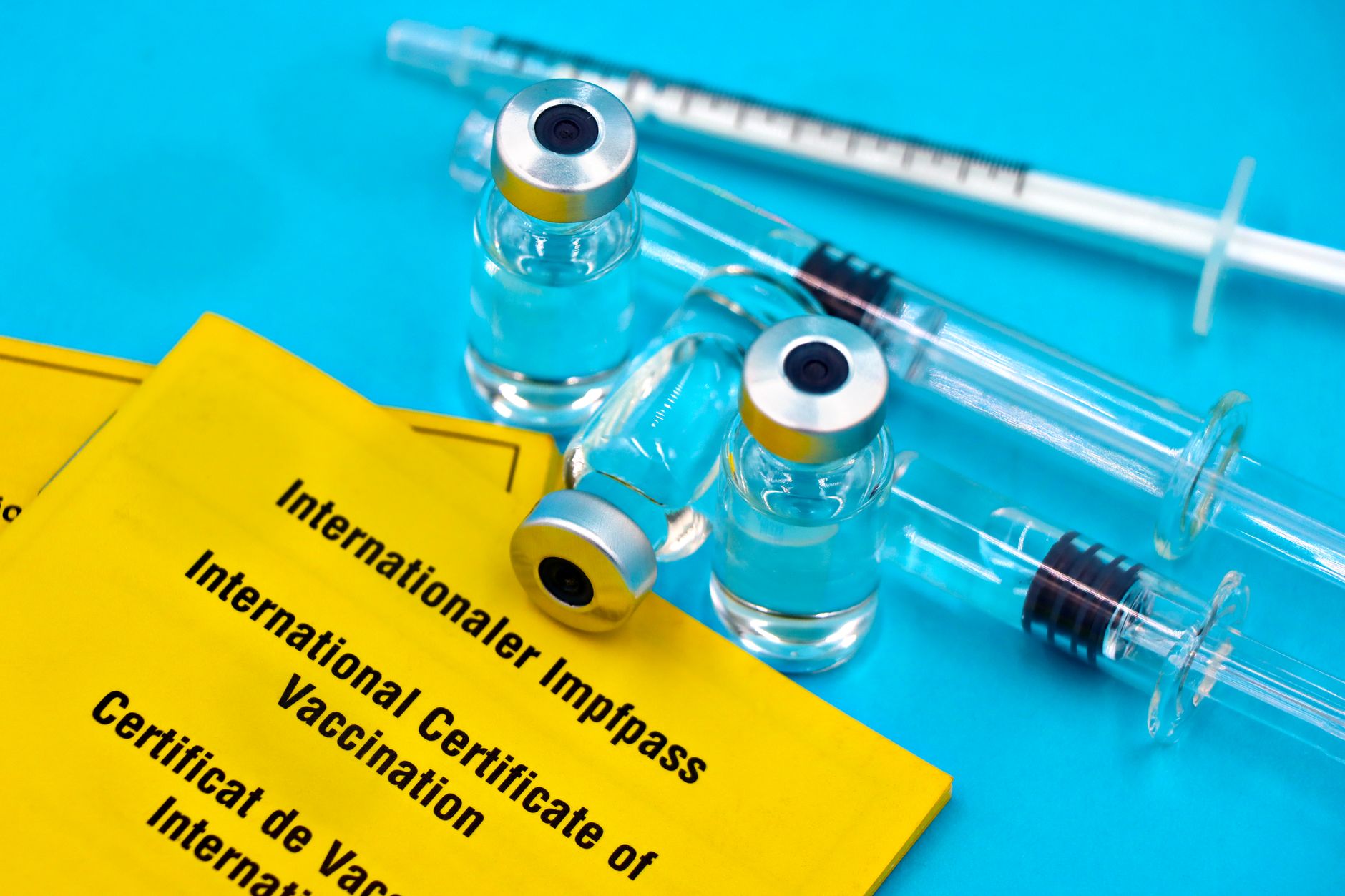
Key takeaways
- USDA dog travel splits in two: USDA APHIS endorses export health certificates, and CDC sets rabies rules for dogs entering or returning to the United States.
- The importing country, not USDA, writes the health rules for a privately owned dog leaving the United States.
- As of the APHIS fee page last modified June 18, 2026, endorsement starts at $101 per certificate when no laboratory tests are listed. Vaccines do not count as tests.
- APHIS Form 7001 (November 2010) is valid for 30 days and does not replace a country-specific certificate when one exists.
- CDC does not accept USDA export health certificates issued after July 31, 2025, in place of the Certification of U.S.-Issued Rabies Vaccination.
- Dogs imported for resale or fee-based adoption need an APHIS Animal Care permit, and CDC rules still apply.
- An EU pet passport and Animal Passport’s nose-print livestock record are both different from a USDA-endorsed dog health certificate.
USDA dog travel is the official process for taking a privately owned dog out of the United States and bringing it back, not a single passport. As of September 2026, the United States Department of Agriculture Animal and Plant Health Inspection Service (USDA APHIS) endorses a destination-country health certificate when required, while the Centers for Disease Control and Prevention (CDC) is the primary authority for dogs entering or returning. The importing country, not USDA, writes the export health rules.
APHIS, on its export page last modified August 14, 2026, says rabies rules for dogs imported into the United States are set by CDC, not APHIS. The National Veterinary Accreditation Program (NVAP) reference guide, last modified January 13, 2026, states: “The USDA does not have requirements for exporting privately owned dogs and cats.” Most destinations still require a USDA-endorsed certificate. This guide is published by Animal Passport and was last updated on September 19, 2026. It is a reading of public rules, not veterinary diagnosis or legal advice.


What does USDA dog travel require?
Start with the destination country. APHIS’s pet travel process overview, last modified June 18, 2026, says every country sets its own rules, which may include a microchip, named vaccines, or laboratory tests, and that those rules can change. A USDA-accredited veterinarian must issue any export certificate that USDA has to endorse. Accreditation is voluntary and state-specific.
APHIS defines a pet, for this path, as a privately owned companion animal not intended for research or resale. Dogs qualify. A dog that will be sold, or adopted for a fee, after U.S. entry follows the commercial permit rules later in this article.
Give the veterinarian the destination, any country where the dog clears customs or leaves the airport, the departure date, and whether the dog travels in the cabin, as cargo, or alone. Endorsement questions go to APHIS Veterinary Export Trade Services at askvets@usda.gov.
Which document is which?
USDA dog travel is several documents, not one form. They are not substitutes. The roles below are those USDA APHIS, CDC, or the European Commission described on pages reviewed in September 2026.
| Document | Who issues it | What it is for | USDA role |
|---|---|---|---|
| Country-specific international health certificate | USDA-accredited veterinarian | Entry to the destination country | APHIS endorses it when that country requires a countersignature and stamp |
| APHIS Form 7001 | Licensed veterinarian | Small-animal exam certificate; sometimes an airline boarding paper | Typically not endorsed if a country-specific certificate exists |
| Certification of U.S.-Issued Rabies Vaccination | USDA-accredited veterinarian, before departure | CDC record for dogs that need U.S. rabies proof after high-risk-country travel | USDA must endorse it; it cannot be issued after the dog leaves |
| Certification of Foreign Rabies Vaccination and Microchip | Foreign veterinarian | Foreign-vaccinated dogs from a high-risk country for dog rabies | CDC also requires a passing titer or a 28-day quarantine |
| APHIS Animal Care live-dog import permit | APHIS Animal Care via APHIS eFile | Import for resale, including fee-based adoption | Required in addition to CDC rules |
| European Union pet passport | Authorised veterinarian for an EU-resident owner | Non-commercial movement of dogs, cats, and ferrets between EU countries | None. Not a USDA endorsement |
| Animal Passport record | Phone capture by the user | Livestock identity using a nose-print biometric, plus owner, breed, estimated age, body condition, and vaccination history | None. Not a government travel document |
How do you get a USDA endorsement?
APHIS offers two submission paths and says to use one, not both. The accredited veterinarian can file the certificate in the Veterinary Export Health Certification System (VEHCS), or you can ship the originals to a USDA endorsement office. Either packet needs the health certificate, vaccination records if required, lab results if tests are required, an import permit if one is required, and payment. Add a prepaid express return label if the destination does not accept digital endorsement.
The window opens when the veterinarian signs. APHIS uses 30 days as an example of how fast a destination may stop accepting the certificate, and it says the original endorsed hard copy must travel with the dog. The same page, last modified June 18, 2026, says destination officials will not accept electronic copies, while also asking for a return label when digital endorsement is refused. Carry the paper unless the current country page accepts a digital stamp.
The accredited-veterinarian FAQ, last modified July 30, 2025, says the process can take weeks or many months, APHIS usually does not examine the dog, and a waiver of another country’s rules must come in writing from that government.
- Call a USDA-accredited veterinarian when you pick the country, not the week you fly.
- Read the APHIS country page again before the exam. If the country is missing, APHIS has not been told the rules. Ask the destination authority and keep the answer in writing.
- Complete the microchip, vaccines, tests, and treatments on that country’s timetable. A required test and a required treatment are not interchangeable.
- Have the veterinarian issue the country-specific certificate and submit it once.
- Pay the endorsement fee before APHIS will stamp the certificate.
- Finish any step allowed after the stamp. APHIS’s example is tapeworm treatment for dogs going to Finland, Ireland, Norway, the United Kingdom, and Malta.
- Ask the airline what it needs to board. Carrier rules can be stricter than the destination’s.
Travel that stays inside the United States is separate. That same veterinarian FAQ says APHIS does not set or endorse health certificates for pets moving between states or territories, including Hawaii, Guam, Puerto Rico, and the U.S. Virgin Islands.
What does APHIS charge to endorse the certificate?
On the fee page last modified June 18, 2026, APHIS charges per certificate and will not endorse until it is paid. Vaccines are not laboratory tests and do not change the price. These amounts exclude the veterinarian’s bill.
- No laboratory tests, any number of pets on that certificate: $101.
- One or two tests, one pet: $160, plus $10 for each extra pet on the same certificate.
- Three to six tests, one pet: $206, plus $18 for each extra pet.
- Seven or more tests, one pet: $275, plus $21 for each extra pet.
There is no endorsement fee for a service dog of a person with a disability as defined by the Americans with Disabilities Act. Emotional support animals, and any animal outside that Act, are charged. The fee page accepts an APHIS user-fee credit account or a credit or debit card.
Is APHIS Form 7001 enough?
Usually no. APHIS Form 7001 is the United States Interstate and International Certificate of Health Examination for Small Animals. The posted file is the November 2010 edition, and the form says it is valid for 30 days after issuance. Its warning says a false statement may bring a fine of not more than $10,000, imprisonment of not more than five years, or both, under 18 U.S.C. 1001. That is the text printed on the 2010 form.
Two APHIS pages still differed in September 2026. The NVAP guide says Form 7001 can sometimes be used when no country form exists, that airlines may want it in addition to the country certificate, and that APHIS typically cannot endorse Form 7001 when a country-specific certificate exists. The accredited-veterinarian FAQ says the country certificate is the only one APHIS will endorse when it is posted online, and that Form 7001 may be used for boarding only if the airline does not require its own paper.
What CDC rules apply when the dog returns?
CDC writes the rabies rules for the trip home. CDC’s “Bringing a Dog into the U.S.” page, dated August 1, 2024, says requirements depend on where the dog was vaccinated and which countries it was in during the six months before entry. An unvaccinated dog that has been in a high-risk country for dog rabies will not be allowed to enter. Commercial resale has extra USDA requirements. CDC-INFO is 800-232-4636.
CDC’s veterinarian page, updated April 28, 2026, names the form. A USDA-accredited veterinarian must complete the Certification of U.S.-Issued Rabies Vaccination before the dog leaves the United States. It cannot be issued retroactively. After a first rabies vaccine, the form is completed no less than 28 days later. A booster counts immediately if coverage never lapsed. APHIS repeats that before-departure rule on its export page and on its pet-dog import FAQ, last modified June 7, 2026.
CDC will treat a USDA-endorsed export health certificate as that rabies form only if the certificate was issued no later than July 31, 2025, is viewable in USDA’s database, and lists an age of at least six months, the microchip number, and a current U.S. rabies vaccine given after the microchip. Certificates issued after July 31, 2025, are not accepted for re-entry. A 2026 export endorsement does not replace the Certification of U.S.-Issued Rabies Vaccination.
A foreign-vaccinated dog from a high-risk country needs the Certification of Foreign Rabies Vaccination and Microchip. To avoid quarantine, CDC requires a titer of at least 0.5 IU/mL from a CDC-approved laboratory. Blood is drawn at least 30 days after the first valid vaccine and at least 28 days before entry, unless coverage after the microchip never lapsed. A passing titer lasts for life only if vaccination never lapses. Without it, the dog is quarantined for 28 days at a CDC-registered animal care facility after an exam and revaccination.
APHIS’s pet-dog import FAQ says CDC requires imported dogs to be at least six months old, including U.S. dogs coming home, and that APHIS Veterinary Services disease rules also apply. For screwworm, that FAQ requires a certificate from a full-time salaried veterinary official of the region of origin. The commercial-import page, last modified June 2, 2026, adds an inspection within five days of shipment that the pet FAQ does not repeat.
When does a commercial dog need a USDA permit?
The Animal Welfare Act covers dogs imported for resale, including retail, wholesale, and fee-based adoption. APHIS says Congress added that section in 2008 and published regulations in 2014. A pet that will not be resold does not need this permit. APHIS also excludes service and working dogs delivered to their owners, show dogs, breeding stock that will not be resold, and dogs delivered to new owners who will not resell them.
Where it applies, APHIS Animal Care requires the dog to be at least six months (180 days) old, examined in the exporting country, and free of infectious disease and internal and external parasites. Rabies vaccine must be given at least 30 days before entry, at no younger than 84 days of age, and must be current on arrival. If no expiration date is shown, APHIS applies one-year validity. The 30-day wait does not apply when earlier vaccination after 84 days never lapsed. The dog also needs distemper, hepatitis, parvovirus, parainfluenza, and leptospirosis vaccine within 12 months, an English health and rabies certificate (APHIS recommends Form 7041), and a permit from APHIS eFile. Allow five business days; the day you apply and the arrival day do not count. The Live Dog Import Permit Team is at 816-737-4223 and ac.dogimport.mailbox@usda.gov. Those details are from the commercial page last modified June 2, 2026.
Since August 16, 2021, commercial dogs from regions where African swine fever exists, or is reasonably believed to exist, must travel without organic bedding such as dirt, hay, or straw, carry an ISO-compliant microchip checked before a bath, and be bathed within two calendar days after arrival. Dogs from a country not declared free of foot-and-mouth disease need clean fur and bedding, a bath at the destination, and five days apart from livestock. APHIS says that foot-and-mouth step needs no extra form. CDC rules still apply.
How is an EU pet passport different?
A European pet passport is a government ID for non-commercial trips. It is not a USDA stamp and not the livestock record below. The European Commission says movement of pet dogs, cats, and ferrets inside the EU follows Commission Delegated Regulation (EU) 2026/131. The dog travels with the owner, or with an authorised person if the owner travels within five days. Up to five dogs, cats, and ferrets may travel together, unless they are going to a competition, exhibition, or sporting event and are older than six months. The dog must be microchipped, vaccinated against rabies no younger than 12 weeks, and wait at least 21 days after a primary course. An authorised veterinarian issues the passport under Commission Implementing Regulation (EU) 2026/705.
Your Europe says the passport is issued only to owners who reside in the EU. For a dog arriving from a non-EU country, an official state veterinarian must issue an EU animal health certificate no more than 10 days before arrival. That certificate then allows further travel between EU countries for six months or until the rabies vaccine expires, whichever is sooner. Dogs entering Finland, Ireland, Malta, Norway, or Northern Ireland need treatment against the tapeworm Echinococcus multilocularis 24 to 120 hours before entry. APHIS, separately, says tapeworm treatment for Finland, Ireland, Norway, the United Kingdom, and Malta may be done after endorsement. The place names do not match exactly, so read the current APHIS country page and the EU rule together. From January 1, 2021, Your Europe says EU pet passports issued to owners resident in Great Britain are not valid for travel from Great Britain to an EU country or Northern Ireland.
How is Animal Passport different from these forms?
Animal Passport, the publisher of this article, makes a digital animal and livestock passport captured on a phone. The record binds the owner, breed, estimated age, body condition, and vaccination history to a muzzle biometric: a nose print treated as unique like a fingerprint. Age is estimated from a dental photograph and reported with a confidence score. Body condition is scored from 1 to 5 from a side-profile photo. In livestock flood rescue in Pakistan in August 2025, the record helped farmers reclaim animals after paper tags washed away.
It is not a USDA-endorsed health certificate, not CDC’s Certification of U.S.-Issued Rabies Vaccination, not APHIS Form 7001, and not a European pet passport. It does not authorize a flight or a border crossing. Airline pet rules are a separate system. For the government steps above, use USDA APHIS and CDC. The product is described at Animal Passport, with further notes on the Animal Passport blog.
What should you check before you book?
Match the trip to the agency first. A privately owned dog leaving the United States needs the destination’s health certificate and, when required, an APHIS endorsement. Coming home is a CDC rabies problem, and an export certificate issued after July 31, 2025, will not replace the U.S. rabies form. Sale or fee-based adoption after import adds an Animal Care permit. A move only between U.S. states is a state rule.
Recheck the APHIS country page, the airline, and CDC before departure. The pages cited here were current as of September 2026, and APHIS says destination rules can change at any time.
FAQ
- What documents does USDA dog travel require?
- A USDA-accredited veterinarian issues the destination country’s international health certificate, and USDA APHIS endorses it when that country requires endorsement. The Centers for Disease Control and Prevention, not APHIS, sets the rabies documents for a dog entering or returning to the United States.
- Is APHIS Form 7001 enough to fly a dog abroad?
- Usually no. APHIS Form 7001, the November 2010 small-animal health certificate, is valid for 30 days, and APHIS typically will not endorse it when a country-specific certificate exists. Ask the airline whether it also wants Form 7001 for boarding.
- How much does USDA charge to endorse a pet health certificate?
- As of the APHIS fee page last modified June 18, 2026, endorsement is $101 per certificate when no laboratory tests are listed. With tests, the fee for one pet is $160, $206, or $275, depending on how many tests appear. Vaccines are not counted as tests, and the veterinarian’s fee is separate.
- Can my dog re-enter the United States on a 2026 USDA export certificate?
- Not as a substitute for the CDC rabies form. CDC’s veterinarian page, updated April 28, 2026, says export health certificates issued after July 31, 2025, are not accepted for re-entry. The Certification of U.S.-Issued Rabies Vaccination must be completed before the dog leaves the United States.
- Does every returning dog need the CDC U.S. rabies certification?
- No. CDC’s dog importation page, dated August 1, 2024, says the rules depend on where the dog was vaccinated and whether it was in a high-risk country for dog rabies in the prior six months. An unvaccinated dog that has been in a high-risk country will not be allowed to enter.
- Do I need a USDA permit to import a dog for sale or paid adoption?
- Yes if the dog will be resold, which APHIS says includes fee-based adoption. Animal Care issues the permit through APHIS eFile, and the dog must be at least six months old and meet the health and vaccine rules on the commercial import page. CDC requirements still apply.
- Is an EU pet passport the same as a USDA dog travel document?
- No. The European Commission describes the EU pet passport as the document for non-commercial movement of dogs, cats, and ferrets between EU countries under Commission Delegated Regulation (EU) 2026/131. An authorised veterinarian issues it for an owner who resides in the EU, not USDA APHIS.
- Does Animal Passport replace a USDA or CDC dog form?
- No. Animal Passport is a phone-based livestock identity record that uses a nose-print biometric and can store owner, breed, estimated age, body condition, and vaccination history. It is not a government travel document and does not satisfy USDA APHIS or CDC entry rules.
Sources
- Take a Pet From the United States to Another Country (Export) — USDA APHIS
- Pet Travel Process Overview — USDA APHIS
- Cost To Endorse Your Pet's Health Certificate — USDA APHIS
- NVAP Reference Guide: International Animal Movement — USDA APHIS
- APHIS Form 7001, United States Interstate and International Certificate of Health Examination for Small Animals (November 2010) — USDA APHIS
- Frequently Asked Questions About Pet Travel for Accredited Veterinarians — USDA APHIS
- Frequently Asked Questions About Importing Pet Dogs into the United States — USDA APHIS
- Bringing a Dog into the U.S. — Centers for Disease Control and Prevention
- Documents for Veterinarians to Complete for Dogs Being Imported into the United States — Centers for Disease Control and Prevention
- How To Bring Dogs into the United States for Commercial Sale or Adoption — USDA APHIS
- Travelling with a pet within the EU — European Commission
- EU rules on travelling with pets and other animals in the EU — European Union
Animal Passport binds a muzzle biometric to a digital record farmers, buyers, and insurers can verify in the field.