Can Cats Fly on Planes? Cabin, Cargo, and Document Rules

Key takeaways
- Yes: most major airlines allow small cats in the cabin if the carrier fits fully under the seat and space is reserved in advance.
- As of August 2026, Delta charges $150 one-way for contiguous U.S./Canada cabin pets on tickets issued on or after April 8, 2025; American Airlines lists $150 per kennel for eligible carry-on routes.
- The International Air Transport Association (IATA) sets Live Animals Regulations container standards; airlines may be stricter and limit pets per flight.
- U.S. Centers for Disease Control and Prevention (CDC) rules for cats entering the United States are lighter than for dogs: cats must appear healthy; federal rabies proof is not required, though CDC recommends vaccination.
- The United States Department of Agriculture Animal and Plant Health Inspection Service (USDA APHIS) states the U.S. does not issue pet passports; destination countries usually require endorsed health certificates instead.
- An EU pet passport is an official European travel document for dogs, cats, and ferrets—not the same product as Animal Passport’s muzzle-biometric digital livestock ID.
- Transportation Security Administration (TSA) screening requires removing the cat from the carrier so the empty carrier goes through X-ray; never put a pet in the X-ray tunnel.
- IATA and major airlines discourage sedating cats for flight because of altitude-related health risks.
Yes—can cats fly on planes is answered by airline policy more than by a single global ban: a cat is a companion animal that most commercial carriers will accept in the passenger cabin when it fits in an approved under-seat carrier, meets age and health rules, and has a reserved pet space. As of August 2026, cabin travel is the default option for small cats on many U.S. domestic routes; cargo or checked travel is more restricted, and international itineraries add destination paperwork from agencies such as USDA APHIS or EU veterinary authorities.
This guide explains cabin versus hold options, carrier and fee examples from airline primary pages, airport security screening, U.S. import rules for cats, and how official EU pet documents differ from Animal Passport’s biometric livestock identity product. It is informational, not veterinary or legal advice—confirm your exact flight and destination before you book.
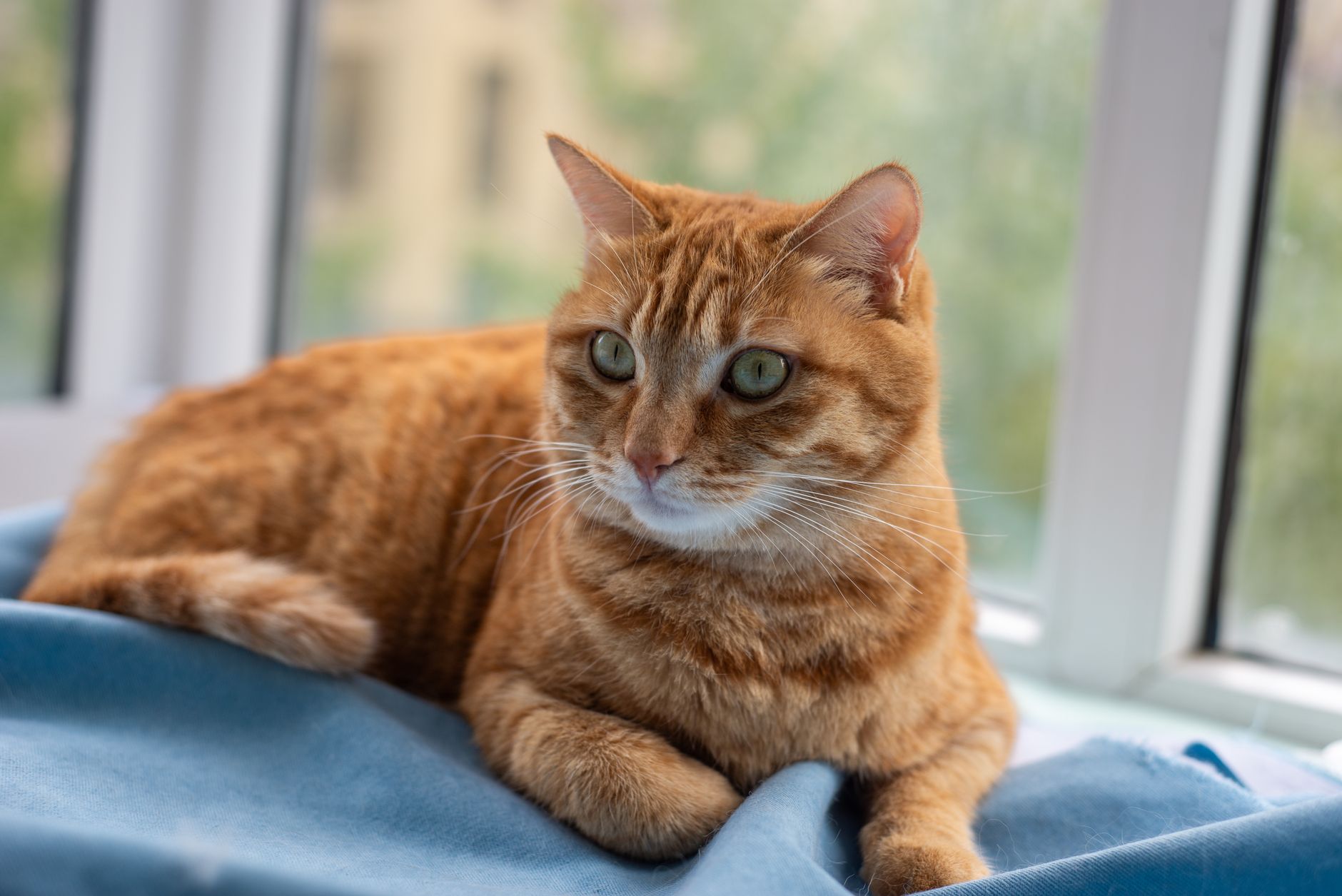

What “flying with a cat” means on commercial flights
Flying with a cat usually means one of three paths:
- In-cabin (PETC) — The cat stays with you in a soft- or hard-sided carrier that fits entirely under the seat in front of you for taxi, takeoff, landing, and turbulence.
- Checked / hold (AVIH) as special baggage — Available only on some carriers and often limited (for example, American Airlines states checked pets at the ticket counter are only for active-duty U.S. Military and U.S. State Department Foreign Service personnel on official orders).
- Cargo / pet shipping — Booked through an airline cargo pet program or licensed shipper when cabin space is unavailable or the animal is too large for under-seat stowage.
The International Air Transport Association (IATA) Traveler’s Pet Corner states that only small dogs and cats typically go in the cabin, that airlines cap how many animals fly on a given departure, and that passengers should confirm acceptance well before travel and reconfirm at least 48 hours before departure. IATA’s broader Traveling with Pets guidance adds that animals must be at least eight weeks old and fully weaned before air travel, while many airlines require older ages for international flights.
How IATA container rules shape airline kennel policies
IATA publishes the Live Animals Regulations (LAR), the industry reference airlines use for humane live-animal carriage. For cabin cats, IATA guidance and Container Requirement 1 emphasize that the animal must be able to stand, sit erect, lie naturally, and turn around normally inside the container. Soft-sided cabin carriers are commonly allowed under airline policies, but they still need to be secure, ventilated, and leak-resistant.
IATA does not sell or certify branded pet bags as “IATA-approved products.” Airlines and check-in staff decide whether your specific carrier meets CR1 and that carrier’s under-seat dimensions. If the kennel fails inspection, the animal can be refused boarding.
“Contact the airline you have selected to confirm that they accept your pet on the day and flight that you prefer. Some airlines restrict the number of animals on a flight so the more advance notice you give them the better it is.” — International Air Transport Association, Traveler’s Pet Corner
Typical U.S. airline cabin rules for cats (as of August 2026)
Airline pages change fees and route bans frequently. Use the figures below as primary-source snapshots, then recheck the carrier before purchase.
Delta Air Lines
Delta Air Lines states that on domestic flights within the contiguous United States, small dogs, cats, and household birds that meet age, health, size, and kennel requirements can travel in the cabin for a one-way fee collected at check-in. For tickets issued on or after April 8, 2025, Delta lists a cabin pet fee of $150 USD/CAD for travel to/from the U.S., Canada, Puerto Rico, and the U.S. Virgin Islands, and $200 USD/CAD/EUR for international cabin pet travel. Delta’s published domestic age minimum is 8 weeks; for travel to the United States from another country, Delta says a pet cat must be at least 16 weeks old; for European Union travel, Delta requires pets to be at least 15 weeks old.
Delta recommends a soft-sided kennel around 18″ × 11″ × 11″, requires ventilation on three sides domestically and four internationally, and limits cabin pets (for example, up to four in Delta Main/Comfort on many flights). Cabin pets are banned on listed routes including Hawaii, the United Kingdom, Australia, and New Zealand.
American Airlines
American Airlines limits carry-on pets to cats and dogs that meet size, age, and destination rules. Soft-sided carriers are recommended at a maximum of 18 × 11 × 11 inches (46 × 28 × 28 cm). Hard-sided limits are 19 × 13 × 9 inches on mainline flights and 16 × 12 × 8 inches on American Eagle. The carry-on pet fee is listed as $150 per kennel on eligible routes within and between the United States and Canada, Mexico, Central America, and the Caribbean (subject to each country’s entry policy). American does not allow carry-on pets on trans-Atlantic or trans-Pacific trips, to/from Hawaii, or to/from several South American destinations including Argentina, Brazil, Chile, Colombia, and Uruguay. Checked pets at the counter are restricted to qualifying military and State Department travelers; other travelers may need American Airlines Cargo / PetEmbark® if cabin travel is not available.
| Carrier (primary page) | In-cabin cat fee (snapshot) | Soft carrier max (stated) | Notable cabin limits |
|---|---|---|---|
| Delta Air Lines | $150 one-way U.S./Canada/PR/USVI (tickets on/after 8 Apr 2025); $200 international | Often ~18″ × 11″ × 11″ recommended | Advance pet booking; destination bans (e.g., Hawaii, UK) |
| American Airlines | $150 per kennel on listed regional routes | 18 × 11 × 11 in | No carry-on pets on many long-haul / Hawaii / selected South America routes |
Fees, aircraft under-seat clearance, and embargo lists can disagree between marketing blogs and airline contracts of carriage. When sources disagree, treat the airline’s live policy page and airport agent decision as controlling for that ticket.
Step-by-step: preparing a cat for an in-cabin flight
- Confirm the airline and aircraft — Reserve the pet spot early; cabin animal counts are limited (IATA and Delta both stress first-come limits).
- Match the carrier to under-seat space — Measure your cat standing and turning; buy a leak-proof, ventilated bag that closes fully and still fits under the seat without crushing the animal.
- Train to the carrier — IATA advises introducing the container weeks or months ahead so confinement stress is lower on travel day.
- Health and paperwork — Ask your veterinarian whether a fitness-to-fly exam or health certificate is needed for your route. Most airlines require a health certificate for animals they transport, according to IATA’s Traveler’s Pet Corner.
- Feed lightly — IATA recommends a light meal about two hours before dispatch and continued access to water; a full stomach can be uncomfortable in flight.
- Skip routine sedation — IATA discourages sedatives and tranquilizers for cabin or cargo transport because of adverse effects; American Airlines states it does not accept pets that have been sedated or tranquilized, citing American Veterinary Medical Association guidance on altitude-related respiratory and cardiovascular risk.
- Arrive early, screen carefully — Pay the pet fee at the special-services counter when required, then follow TSA screening rules at the checkpoint.
Airport security: how TSA screens cats
The Transportation Security Administration (TSA) FAQ on pets at checkpoints instructs travelers to remove the pet from the carrying case and place the empty case through the X-ray machine, maintain control of the animal (typically with a leash), and remove the leash when carrying the pet through the metal detector. Animal carriers receive visual and/or physical inspection. TSA’s December 2022 public tips add that pets must never go through the X-ray tunnel, that officers may swab the owner’s hands for explosive residue, and that cats can be especially skittish when removed—requesting a private screening room is an option if the cat may bolt.
After screening, return the cat to the carrier away from the busy checkpoint. Airlines generally require the cat to remain inside the closed carrier in the terminal and onboard (except during the brief TSA removal).
Domestic U.S. flights versus bringing a cat into the United States
For trips that stay inside the contiguous United States, the controlling rules are usually the airline’s contract plus any destination-state requirements. USDA APHIS FAQ guidance (last modified January 12, 2026) states that APHIS does not endorse health certificates for interstate pet movement; travelers should contact the destination State Veterinarian’s office. Hawaii and Guam are special cases: CDC notes that all cats arriving in Hawaii and Guam, even from the U.S. mainland, are subject to locally imposed quarantine requirements.
For cats arriving in the United States from abroad, CDC’s “Bringing an Animal into the U.S.” page (content dated August 22, 2025) requires that cats appear healthy at the port of entry. Cats may be denied entry if they show evidence of a zoonotic disease, and an ill-appearing cat may need further veterinary examination at the owner’s expense. CDC states cats are not required to have proof of rabies vaccination for federal importation into the United States, though CDC recommends rabies vaccination and notes that U.S. destinations may impose additional rules. This is a material difference from dog imports, which face more extensive CDC documentation such as the CDC Dog Import Form.
CDC also notes it does not require general health certificates for pet entry into the United States, but airlines or states may still require them—so absence of a federal CDC certificate rule does not mean you can skip airline paperwork.
International export from the United States: health certificates, not a U.S. “pet passport”
If you are taking a cat from the United States to another country, USDA APHIS FAQ guidance is unambiguous: the destination country sets entry requirements; most countries require a health certificate issued by a veterinarian; and if USDA endorsement is required, that veterinarian must be USDA-accredited. APHIS also states that because requirements vary by country, the United States does not issue pet passports for international travel—it issues health certificates tailored to the destination (and any transit country that clears customs). Start early; APHIS notes the timeline can range from a few weeks to many months.
Always verify the destination’s current page through a USDA-accredited veterinarian. Requirements can change without notice.
EU pet passports and airline rules are not the same as Animal Passport
Travelers often search “pet passport” when asking whether cats can fly to Europe. Official EU rules and this publisher’s product answer different questions.
European Union official scheme: Your Europe (European Commission / Your Europe portal, last checked 15 June 2026 on the page fetch) explains that dogs, cats, and ferrets moving under non-commercial rules generally need a microchip (or a readable tattoo applied before 3 July 2011), a valid rabies vaccination, and either a European pet passport (for movements between EU countries / Northern Ireland for eligible residents) or an EU animal health certificate when arriving from a non-EU country. From a non-EU country, the animal health certificate must be issued by an official state vet in the country of departure not more than 10 days before arrival in the EU. European Commission Food Safety pages on intra-EU pet travel cite Commission Delegated Regulation (EU) 2026/131 for non-commercial movement conditions, including owner accompaniment (or an authorised person with a written declaration when the owner travels within five days) and a usual maximum of five pets for non-commercial movement in a single vehicle.
Animal Passport (this site): Animal Passport is a digital animal / livestock identity system that uses muzzle biometrics—nose-print patterns captured by phone—to bind an owner record with breed, estimated age, body condition, and vaccination history. Age can be estimated from a dental photograph with a confidence score; body condition is scored 1–5 from a side-profile photo. The product was used in livestock flood rescue in Pakistan in August 2025 so farmers could reclaim animals after paper tags washed away. It is not a government-issued airline travel document, EU pet passport, or USDA-endorsed health certificate. For more field notes and explainers, see the Animal Passport blog.
| Document / product | Who issues it | What it proves for air travel |
|---|---|---|
| Airline cabin pet booking + fee | Airline | Space, carrier fit, and contract-of-carriage compliance |
| Veterinary / USDA-endorsed health certificate | Accredited vet + USDA APHIS when required | Destination entry health conditions for export from the U.S. |
| EU pet passport / EU animal health certificate | Authorised / official veterinarians under EU rules | Identity + rabies (and other) records for EU non-commercial pet movement |
| Animal Passport digital livestock ID | Animal Passport (private biometric ID) | Owner–animal binding via muzzle biometrics; not an official flight passport |
Cabin versus cargo
IATA’s Traveling with Pets page notes that many owners prefer the cabin, but when size or policy blocks cabin travel the option is the cargo hold. IATA states cats and dogs can travel well in a heated, ventilated hold because it is quieter and darker, and that millions of animals are carried safely each year. That coexists with a practical limit: many passenger airlines have narrowed civilian checked-pet options, so larger cats or banned cabin routes may need cargo booking or a licensed shipper—not a gate workaround.
Day-before checklist
- Reconfirm the pet booking (IATA suggests at least 48 hours ahead).
- Keep microchip numbers, vaccines, and health certificates in your personal bag.
- Add durable collar ID plus temporary destination contacts, as IATA recommends.
- Use absorbent bedding; for cats, plan feeding to reduce in-flight elimination needs (TSA pet tips).
Where Animal Passport fits—identity, not boarding
Airlines and border animal-health rules decide flight eligibility. Animal Passport’s phone-based muzzle capture still helps when paper tags fail: it binds owner, breed, age confidence, body condition (1–5), and vaccination history—the identity problem livestock owners faced after floods in Pakistan in August 2025. For cats that fly, keep CDC, USDA APHIS, EU, and airline papers primary; treat biometric records as a complementary archive, not a travel passport.
Last updated August 2026 by Animal Passport. Recheck linked primary pages before you travel.
FAQ
- Can cats fly on planes in the cabin?
- Yes. Most major airlines allow small cats in the cabin when the cat fits in an approved carrier that goes entirely under the seat, a pet spot is reserved, and age, health, and destination rules are met. Confirm the specific airline and aircraft before booking.
- How much does it cost to fly with a cat?
- Fees vary by airline and route. As of August 2026, Delta lists $150 one-way for contiguous U.S./Canada/Puerto Rico/U.S. Virgin Islands cabin pets on tickets issued on or after April 8, 2025, and $200 for international cabin pets; American Airlines lists $150 per kennel on its eligible carry-on pet routes.
- What size carrier do I need for a cat on a plane?
- The carrier must let the cat stand, sit, lie, and turn around, and it must fit fully under the seat. American Airlines lists soft-sided maximums of 18 × 11 × 11 inches; Delta commonly recommends about 18″ × 11″ × 11″ because under-seat space differs by aircraft.
- Do cats need a health certificate to fly?
- Often yes for airline acceptance, and almost always for international entry. IATA notes most airlines require a veterinary health certificate stating the animal is fit to fly. For U.S. exports, USDA APHIS says destination countries set requirements and many need a USDA-endorsed certificate from an accredited veterinarian.
- Can I take my cat through TSA security?
- Yes. TSA requires you to remove the cat from the carrier, send the empty carrier through X-ray, and keep control of the cat—typically walking it on a leash or carrying it through the metal detector. Never place a pet in the X-ray tunnel.
- Do cats need rabies vaccines to enter the United States?
- CDC does not require proof of rabies vaccination for cats entering the United States, but it recommends vaccination and notes that states or localities may add rules. Cats must appear healthy at the port of entry and can be denied if they show signs of zoonotic disease.
- Is an EU pet passport the same as Animal Passport?
- No. An EU pet passport is an official European identification and health document for dogs, cats, and ferrets issued by authorised veterinarians. Animal Passport is a private digital livestock/animal ID product that uses muzzle biometrics and is not a government travel document for flights.
- Should I sedate my cat for a flight?
- Generally no. IATA discourages sedatives and tranquilizers for air transport because of adverse effects, and American Airlines states it does not accept sedated or tranquilized pets, citing higher respiratory and cardiovascular risk at altitude.
Sources
- Traveler's Pet Corner — International Air Transport Association (IATA)
- Traveling with Pets — International Air Transport Association (IATA)
- Pet Travel Overview — Delta Air Lines
- Traveling with pets — American Airlines
- Bringing an Animal into the U.S. — U.S. Centers for Disease Control and Prevention (CDC)
- Frequently Asked Questions About Traveling With Your Pet — USDA Animal and Plant Health Inspection Service (APHIS)
- EU rules on travelling with pets and other animals in the EU — Your Europe / European Union
- Travelling with a pet within the EU — European Commission — Food Safety
- Can I take my pet through the security checkpoint? — Transportation Security Administration (TSA)
- TSA offers tips for traveling with small pets through the security checkpoint this holiday season — Transportation Security Administration (TSA)