How Can I Ship a Dog? A Step-by-Step Guide to Air, Ground, and International Pet Transport
Key takeaways
- Shipping a dog means picking a transport method (in-cabin, checked baggage, airline cargo hold, or a professional pet shipper) and then meeting government and airline paperwork rules.
- The United States Department of Agriculture Animal and Plant Health Inspection Service (USDA APHIS) endorses export health certificates when a destination country requires them; APHIS endorsement fees start at $101 with no lab tests, per the agency's June 2026 fee table cited by Animal Passport's APHIS guide.
- The International Air Transport Association (IATA) Live Animals Regulations set the global crate standard: a dog must be able to stand, turn around, and lie down naturally, and the current LAR edition took effect January 1, 2026.
- US airline cargo policy is inconsistent in 2026: Delta and United limit cargo-hold pet shipping to active-duty military and US State Department personnel on official orders, while American Airlines Cargo's PetEmbark program is open to the general public.
- Dogs entering or returning to the United States need a CDC Dog Import Form receipt, a microchip, and must be at least 6 months old, per the Centers for Disease Control and Prevention (CDC) dog importation rules; dogs from countries CDC classifies as high-risk for dog rabies need additional paperwork.
- Professional pet shippers listed with the International Pet and Animal Transportation Association (IPATA) handle door-to-door logistics, customs, and airline booking for owners who cannot fly with their dog.
- Total cost ranges from about $125 for a small in-cabin carrier fee to $1,000+ for domestic cargo, and $1,000 to $6,000 or more for a fully managed international relocation, according to IPATA-member pricing data.
- Animal Passport's biometric muzzle-ID record is not a government travel document or a substitute for a USDA health certificate, CDC Dog Import Form, or airline booking; it is a digital identity and vaccination record you can pair with those official steps.
Shipping a dog means arranging safe transport for your dog without you traveling in the same seat or cabin — usually through an airline's cargo hold or checked-pet program, or through a professional pet shipper. To do it, you generally need: a USDA-endorsed health certificate if you're crossing a border, an International Air Transport Association (IATA)-compliant travel crate, proof of rabies vaccination, and a booking with an airline or an International Pet and Animal Transportation Association (IPATA) member shipper. As of August 2026, rules vary significantly by airline and destination, so confirm details before booking.
Step-by-Step: How to Ship a Dog
- Decide the method. Choose between flying your dog in-cabin (if small enough and you're traveling too), checked baggage on airlines that still offer it, an airline's climate-controlled cargo hold as unaccompanied freight, ground transport, or a full-service IPATA pet shipper who manages the trip for you.
- Check breed, age, and health eligibility. Most major US carriers ban brachycephalic (flat-faced) breeds such as bulldogs and pugs from cargo holds because of higher heat-stroke risk, and IATA's Live Animals Regulations require animals to be at least 8 weeks old and fully weaned before air travel.
- Book early. Airline pet cargo space is limited and often must be reserved at least 24 hours to 10 days ahead, and international moves with quarantine or blood-titer testing can take three months or more of lead time.
- Get the right paperwork. For interstate US travel, most states require a Certificate of Veterinary Inspection (health certificate) from an accredited vet, but APHIS itself does not endorse interstate movement — that's a state-to-state requirement, not a federal export one. For international export, a USDA-accredited veterinarian issues a health certificate that APHIS endorses electronically through the Veterinary Export Health Certification System (VEHCS) or by mail.
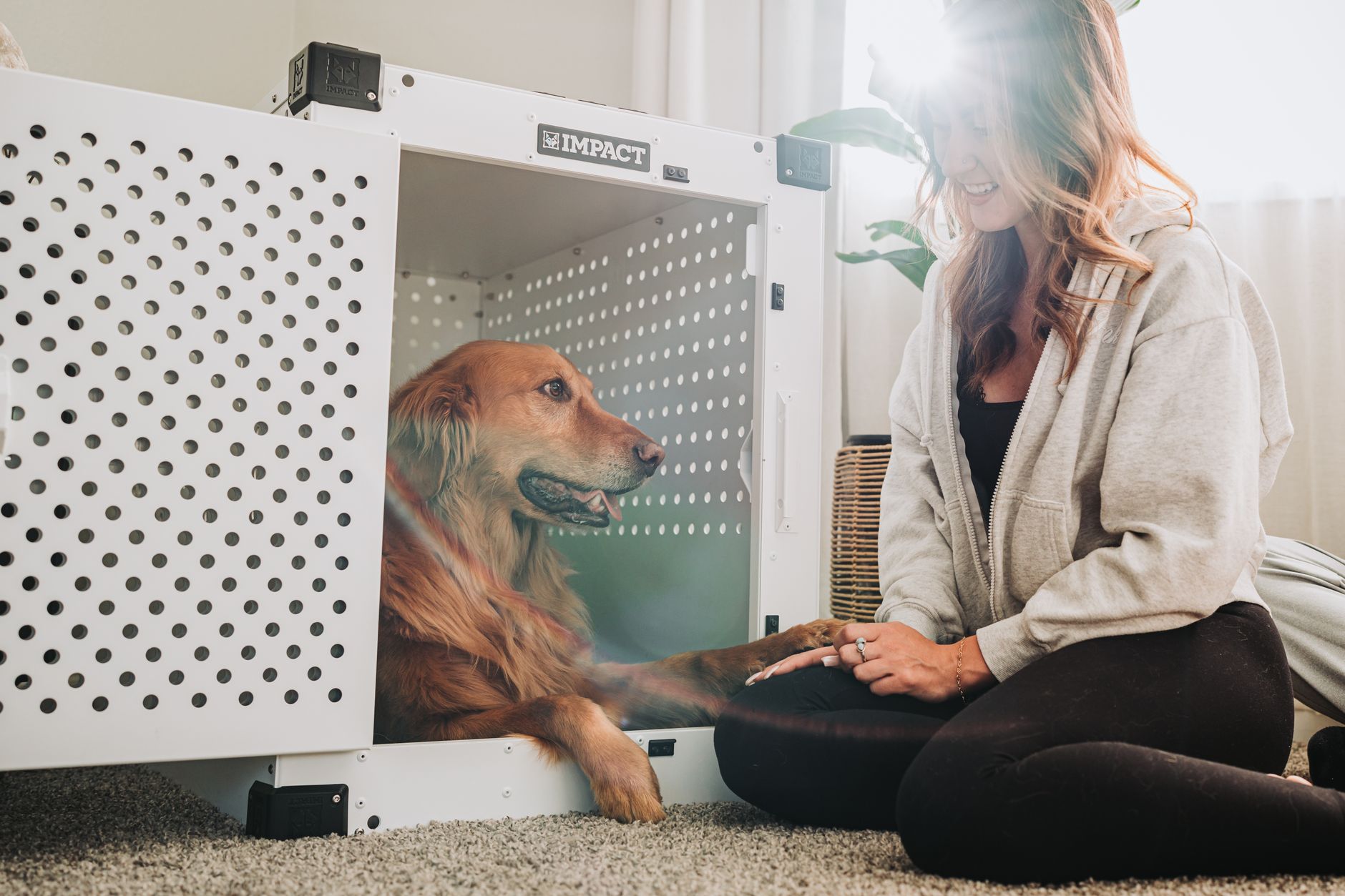
- Buy an IATA-compliant crate. The crate must let the dog stand, turn around, and lie down in a natural position, with food and water access built in or attached for longer trips.
- Confirm airline-specific rules. Temperature embargoes, breed bans, and whether cargo shipping is even open to the public differ by carrier — see the comparison below.
- Prepare your dog and travel with backup copies. Crate-train in advance, attach ID tags to both the dog and crate, and carry original paperwork; airlines and destination customs generally require physical, not digital, documents.
Shipping Methods Compared
| Method | Best for | Typical cost | Who handles logistics |
|---|---|---|---|
| In-cabin carrier | Small dogs flying with their owner | ~$125–$200 each way (e.g., United's carry-on pet fee) | You, at booking |
| Checked baggage | Domestic trips on airlines that still offer it | ~$200–$500 | You, at the airport |
| Airline cargo hold (e.g., American Airlines Cargo PetEmbark) | Larger dogs or unaccompanied shipping where available to the public | $500–$1,000+ | Airline cargo division |
| Professional IPATA pet shipper | International moves, complex customs, or door-to-door service | $1,000–$6,000+ | Licensed shipper manages booking, paperwork, and customs |
Which Airlines Still Ship Dogs as Cargo in 2026?
This is the part of the process that has changed the most in recent years, and it's worth checking directly before you plan around any single airline. United Airlines closed its PetSafe cargo program to the general public in 2018 and, as of 2026, still limits cargo-hold pet shipping to active-duty military on permanent-change-of-station orders and US State Department Foreign Service employees on official orders. Delta Air Lines' current pet-shipping page states the same restriction: cargo shipping is available only to active U.S. Military or U.S. State Department Foreign Service Offices traveling with active permanent change of station orders, while Delta's in-cabin pet program remains open to all customers. American Airlines Cargo, by contrast, operates a program called PetEmbark that the airline says is open to the general public, transporting pets in a temperature-controlled, pressurized cargo area separate from luggage. Because policies change and vary by aircraft type and route, confirm current cargo availability directly with the airline before booking.

Across carriers that do accept cargo pets, expect common ground rules: brachycephalic breeds are typically banned or restricted, temperature embargoes usually block pet cargo when forecast temperatures are below roughly 20°F or above roughly 80–85°F at any airport on the itinerary, and a health certificate issued within 10 days of travel by an accredited veterinarian is standard.
Documents You Need — USDA APHIS, CDC, and IATA Explained
Three different organizations govern different parts of a dog's shipment, and they are not interchangeable:
- United States Department of Agriculture Animal and Plant Health Inspection Service (USDA APHIS) endorses the export health certificate that many destination countries require before a dog leaves the US. APHIS endorsement fees, per the agency's fee schedule referenced in Animal Passport's APHIS health certificate guide, start at $101 with no laboratory tests and rise to roughly $160–$275 depending on the number of tests and pets on one certificate; APHIS does not charge endorsement fees for ADA-defined service dogs. APHIS controls export paperwork only — it does not control what the destination country requires or what an airline will accept.
- Centers for Disease Control and Prevention (CDC) governs dogs entering or returning to the United States, a separate process from APHIS export endorsement. CDC requires a Dog Import Form receipt, a microchip, and that the dog appear healthy and be at least 6 months old. Dogs that were vaccinated for rabies in the US and have spent time in a country CDC classifies as high-risk for dog rabies need an additional Certification of US-issued Rabies Vaccination form, completed by a USDA-accredited veterinarian before the dog leaves the country.
- International Air Transport Association (IATA) sets the Live Animals Regulations (LAR), the worldwide crate, documentation, and handling standard that most airlines and many countries reference. The edition in effect from January 1, 2026 covers container dimensions, minimum age (8 weeks, fully weaned), and the Shipper's Certification for Live Animals form.
Because these three systems overlap but answer different questions — can this dog leave the US (APHIS and destination country), can this dog enter or re-enter the US (CDC), and will an airline accept this crate and paperwork (IATA plus the airline's own policy) — the safest approach is to verify each one separately rather than assuming one certificate covers all three.
International Shipping: What Changes
For international moves, the process above still applies, but add more lead time and more layers of paperwork. Many countries require rabies antibody blood titer testing and a waiting period that can run three months or longer before travel, particularly for rabies-endemic-country arrivals into rabies-free destinations. Every destination country sets its own entry rules — some require import permits, quarantine, or microchip standards that differ from US norms — so check the specific country's requirements through APHIS's country pages or the destination's own agriculture or customs authority, not just US airline pages. The US Department of State also publishes general guidance for Americans relocating pets internationally as part of its overseas-move resources.
Costs to Ship a Dog
Costs scale with method and distance. A small dog flying in-cabin domestically typically costs $125–$200 in airline fees. Domestic cargo-hold shipping for a larger dog commonly runs $500–$1,000 or more once crate, health certificate, and airline cargo fees are added. Fully managed international relocations through an IPATA-member professional shipper commonly range from roughly $1,000 for a straightforward, nearby move up to $5,000–$6,000 or more for strict-entry destinations that require import permits, consularized paperwork, and quarantine arrangements — costs that reflect airfreight, the IATA-compliant crate, veterinary and lab fees, APHIS endorsement, customs charges, and any destination quarantine.
Using a Professional Pet Shipper (IPATA)
If flying your dog yourself as cargo feels too complex — or your airline doesn't offer public cargo service — a professional pet shipper can manage the whole move. The International Pet and Animal Transportation Association (IPATA) maintains a public directory of vetted member shippers in more than 80 countries, searchable by origin or destination airport. IPATA members handle airline booking, customs clearance, crate compliance, and door-to-door pickup and delivery, which is especially useful for routes with layovers, strict-entry countries, or quarantine coordination.
How Animal Passport Fits Into a Dog Shipment
None of the paperwork above — the USDA health certificate, the CDC Dog Import Form, or an airline's booking confirmation — is replaced by Animal Passport. Animal Passport is a phone-based digital identity record that uses muzzle biometrics (a dog's nose print, which is unique like a fingerprint) to bind an owner's record to a specific animal, along with breed, an estimated age from a dental photograph with a confidence score, a body condition score from a side-profile photo, and vaccination history. It is not a government-issued travel document, and it does not substitute for an APHIS-endorsed export certificate or a CDC Dog Import Form receipt.
Where it is useful alongside a shipment is as a backup identity and vaccination record — the kind of record that matters when physical paperwork is lost, damaged, or, as happened during livestock flood rescue efforts in Pakistan in August 2025, washed away along with paper ear tags, leaving farmers unable to immediately prove ownership of surviving animals. A biometric record tied to the animal itself rather than a paper tag can help re-establish which animal belongs to which owner in exactly that kind of disruption. For more on how the identity record works, see the Animal Passport blog.
Frequently Asked Questions
How much does it cost to ship a dog?
Costs range from about $125 for a small in-cabin carrier fee on a domestic flight to $500–$1,000+ for airline cargo-hold shipping, and $1,000–$6,000 or more for a fully managed international move through a professional IPATA-member shipper, depending on route, crate size, and destination requirements.
Can I ship a dog without flying with it?
Yes. Airlines that accept unaccompanied pets in cargo (where available to the public, such as American Airlines Cargo's PetEmbark program) and professional IPATA-listed pet shippers can transport a dog as freight while the owner travels separately or not at all.
Do all airlines still allow dogs as checked cargo?
No. As of 2026, Delta Air Lines and United Airlines restrict cargo-hold pet shipping to active-duty military on PCS orders and US State Department Foreign Service employees on official orders, while American Airlines Cargo's PetEmbark program accepts pets from the general public; always confirm current policy directly with the airline before booking.
How old does a dog have to be to ship by air?
IATA's Live Animals Regulations require dogs to be at least 8 weeks old and fully weaned for any air transport, and the CDC requires dogs entering or returning to the United States to be at least 6 months old, so the applicable minimum depends on whether the trip is domestic or crosses into the US.
What's the difference between a USDA health certificate and a CDC Dog Import Form?
A USDA APHIS-endorsed health certificate covers a dog leaving the United States and is required when the destination country asks for one, while the CDC Dog Import Form is a separate submission required for dogs entering or returning to the United States — the two come from different federal agencies and cover opposite directions of travel.
Can flat-faced (brachycephalic) breeds be shipped by air?
Most US airlines, including Delta, restrict or ban brachycephalic breeds such as bulldogs, pugs, and boxers from cargo-hold transport because of elevated heat-stroke and breathing-distress risk, though in-cabin travel for small brachycephalic dogs may still be allowed on some carriers — check the specific airline's breed list.
Is Animal Passport the same as an official pet travel document?
No. Animal Passport is a phone-based biometric identity and vaccination record using nose-print recognition; it is not a government-issued travel document and does not replace a USDA APHIS-endorsed export health certificate, a CDC Dog Import Form, or an airline's own booking and cargo requirements.
How far in advance should I book a dog shipment?
Book domestic cargo or checked-pet space at least 24 hours to 10 days ahead per typical airline policy, and start international moves three months or more in advance if the destination requires rabies antibody blood titer testing or a quarantine waiting period.
Rules for shipping a dog change by airline and by year — reconfirm cargo eligibility, breed restrictions, and destination-country entry rules directly with the airline, USDA APHIS, and CDC before finalizing a booking.
FAQ
- How much does it cost to ship a dog?
- Costs range from about $125 for a small in-cabin carrier fee on a domestic flight to $500–$1,000+ for airline cargo-hold shipping, and $1,000–$6,000 or more for a fully managed international move through a professional IPATA-member shipper, depending on route, crate size, and destination requirements.
- Can I ship a dog without flying with it?
- Yes. Airlines that accept unaccompanied pets in cargo where available to the public, such as American Airlines Cargo's PetEmbark program, and professional IPATA-listed pet shippers can transport a dog as freight while the owner travels separately or not at all.
- Do all airlines still allow dogs as checked cargo?
- No. As of 2026, Delta Air Lines and United Airlines restrict cargo-hold pet shipping to active-duty military on PCS orders and US State Department Foreign Service employees on official orders, while American Airlines Cargo's PetEmbark program accepts pets from the general public; always confirm current policy directly with the airline before booking.
- How old does a dog have to be to ship by air?
- IATA's Live Animals Regulations require dogs to be at least 8 weeks old and fully weaned for any air transport, and the CDC requires dogs entering or returning to the United States to be at least 6 months old, so the applicable minimum depends on whether the trip is domestic or crosses into the US.
- What's the difference between a USDA health certificate and a CDC Dog Import Form?
- A USDA APHIS-endorsed health certificate covers a dog leaving the United States and is required when the destination country asks for one, while the CDC Dog Import Form is a separate submission required for dogs entering or returning to the United States — the two come from different federal agencies and cover opposite directions of travel.
- Can flat-faced (brachycephalic) breeds be shipped by air?
- Most US airlines, including Delta, restrict or ban brachycephalic breeds such as bulldogs, pugs, and boxers from cargo-hold transport because of elevated heat-stroke and breathing-distress risk, though in-cabin travel for small brachycephalic dogs may still be allowed on some carriers — check the specific airline's breed list.
- Is Animal Passport the same as an official pet travel document?
- No. Animal Passport is a phone-based biometric identity and vaccination record using nose-print recognition; it is not a government-issued travel document and does not replace a USDA APHIS-endorsed export health certificate, a CDC Dog Import Form, or an airline's own booking and cargo requirements.
- How far in advance should I book a dog shipment?
- Book domestic cargo or checked-pet space at least 24 hours to 10 days ahead per typical airline policy, and start international moves three months or more in advance if the destination requires rabies antibody blood titer testing or a quarantine waiting period.
Sources
- Live Animal Handling & Transport — International Air Transport Association (IATA)
- Shipping Your Pet — Delta Air Lines
- American Airlines Cargo enhances pet program, offers new resources for animal shippers — American Airlines Cargo
- Pet Dogs Import into the US — USDA Animal and Plant Health Inspection Service (APHIS)
- Frequently Asked Questions on Dog Importations — Centers for Disease Control and Prevention (CDC)
- Find a Pet Shipper — International Pet and Animal Transportation Association (IPATA)
- How Much Does It Cost to Ship a Dog? — PetRelocation
- Pet Travel USDA: APHIS Forms, Fees & Steps — Animal Passport